June 30th, 2026 | 07:05 CEST
For Industry, It Is a Matter of Survival: thyssenkrupp Under Pressure, BYD With Advantages - Can Strategic Resources Provide the Rescue?
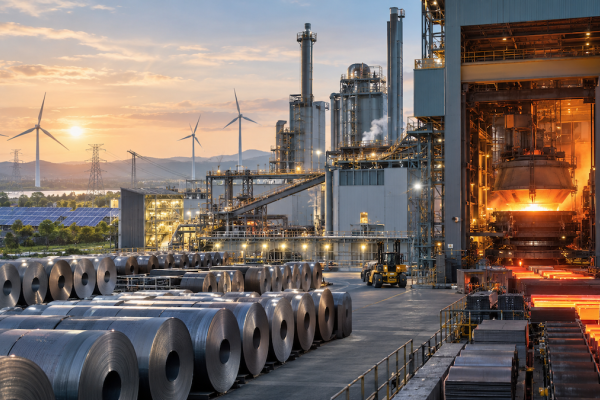
Many long-established industrial companies are facing intense pressure: their business models are undergoing structural change, supply chains are being reorganized, and international competition is increasing. European heavy industry, in particular, is at a turning point, as higher energy costs in Europe, especially in Germany, and stricter decarbonization requirements force companies to adapt their production processes. At the same time, Asian technology groups are pushing aggressively into global markets, often with fully vertically integrated structures and clear advantages in the race for raw materials. This is placing immense pressure on traditional European companies to restructure and innovate. We examine the overall situation and highlight potential opportunities for investors.
time to read: 4 minutes | Author: Nico Popp
ISIN: STRATEGIC RESOURCES INC | CA86277X4093 | TSXV: SR , THYSSENKRUPP AG O.N. | DE0007500001 , BYD CO. LTD H YC 1 | CNE100000296
Table of contents:
Author

Nico Popp
At home in Southern Germany, the passionate stock exchange expert has been accompanying the capital markets for about twenty years. With a soft spot for smaller companies, he is constantly on the lookout for exciting investment stories.
Tag cloud
Shares cloud
thyssenkrupp: Between Restructuring and Green Visions
thyssenkrupp is one of Germany's long-established conglomerates and, as part of its "ACES 2030" strategy, is pursuing a far-reaching restructuring to become a financial holding company. The goal is to have a less complex structure. This transformation is taking place under exceptional financial circumstances, as the group posted a net loss of EUR 334 million in the first quarter of fiscal year 2025/2026. This loss is primarily attributable to restructuring expenses of EUR 401 million for the Steel Europe segment—a large portion of which is related to the planned reduction of up to 11,000 jobs. To ease its financial burden, management has already accelerated the spin-off of operating units. The marine division thyssenkrupp Marine Systems (TKMS) is now listed on the MDAX, with the parent company holding a 51% majority stake. In addition, thyssenkrupp plans to spin off 49% of its materials and trading subsidiary, tk accelis, to its shareholders before the end of this year, while sales talks regarding the struggling steel division with Indian competitor Jindal Steel International have been temporarily suspended. For its groundbreaking "tkH2Steel" decarbonization concept, which will cost thyssenkrupp around EUR 3 billion, the company secured EUR 2 billion in government funding. While financing appears to be secured, there is another bottleneck: the hydrogen-based direct reduction plant planned for 2026/2027 requires high-purity iron ore with a minimum iron content of 67%. Such direct-reduction deposits are rare worldwide, forcing the group to form new strategic alliances.
BYD Expands into Europe Thanks to Vertical Integration
The Chinese electric vehicle giant BYD is rapidly expanding into Europe, leveraging its vertical integration as a competitive advantage. From semiconductor manufacturing to software development to battery production, carried out by its subsidiary FinDreams Battery, the company controls nearly every stage of automotive production in-house, at least in part. The patented LFP-based "Blade Battery" enabled the company to overtake its US rival Tesla by selling 2.26 million electric vehicles in 2025. To avoid impending EU punitive tariffs on Chinese imports, the group is investing in Szeged, Hungary, where the planned annual capacity of up to 200,000 vehicles is to be ramped up gradually. To secure local supply chains, BYD signed a strategic cooperation agreement with the Austrian group voestalpine to supply decarbonized, high-quality steel. Since a single vehicle can consume up to 83 kg of copper, the Chinese company is also partnering with the BHP Group and CATL. It is actively involved in electrifying heavy mining equipment to directly influence the supply chain's sustainability metrics. This demonstrates that the environmental footprint along the value chain is of great importance to corporations.
Strategic Resources: Making Clean Supply Chains Possible
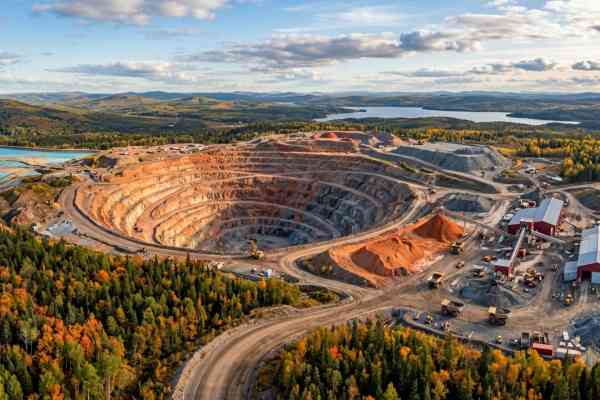
The Canadian commodities company Strategic Resources positions itself as a problem-solver for an industry undergoing transformation. The company is developing the BlackRock project in the Canadian province of Québec, which is already at the construction-ready phase. Thanks to hydropower, the project benefits from extremely low electricity costs of just CAD 0.04 per kWh. This represents a decisive cost advantage for the planned production of DR-grade iron ore pellets. In Phase 1, the company plans to build a pelletizing plant in the deep-water port of Port Saguenay with an initial capacity of 4 million metric tonnes of pellets per year, with the federal and provincial governments supporting the infrastructure through a CAD 111 million multi-user conveyor belt system. According to a feasibility study conducted in accordance with the NI 43-101 mining standard, which evaluated the entire project—comprising the mine and processing plant—in 2022, the project has a net present value of CAD 1.93 billion after taxes and an IRR of 18.2%. Estimated operating costs for pellet production are just over USD 16 per metric tonne, which, at current market prices fluctuating around USD 50, would result in attractive margins. The project is secured by a ten-year off-take agreement with Javelin Global Commodities, which also includes a three-year credit line of up to USD 150 million.
Strategic Resources Has Even More to Offer—From Green Steel to Battery Anodes
In addition to its core project, Strategic Resources is also advancing several additional initiatives. As early as 2024, the EU selected the company's historic Mustavaara project in Finland for the AVANTIS research program, which is funded with a total of EUR 5 million and aims to reduce Europe's dependence on imports of vanadium and titanium. A memorandum of understanding signed in April 2026 with battery developer Tyfast Energy is considered another key milestone. The partnership is intended to qualify Canadian vanadium oxide from Strategic Resources for use in Tyfast's lithium-vanadium oxide (LVO) anode material, thereby helping to establish a closed North American value chain. Compared to conventional graphite anodes, which are prone to failure in harsh environments or at low temperatures, the crystalline structure of vanadium oxides is expected to enable, according to Tyfast Energy, charging speeds up to ten times faster, a lifespan of over 10,000 charge cycles, and strong cold-weather performance down to -20 °C.
Conclusion: Raw Materials Are Key – Strategic Resources Perfectly Positioned
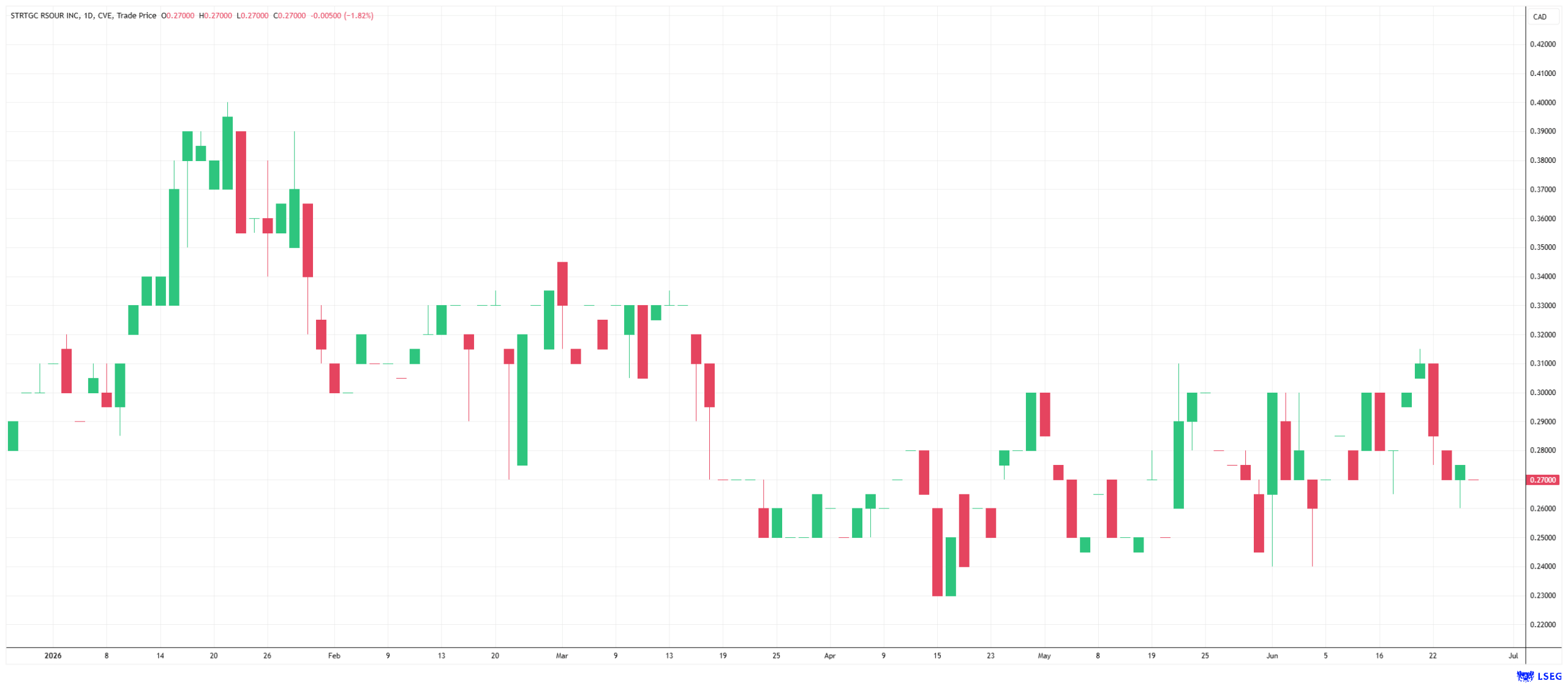
The state of the industry clearly demonstrates that this transformation cannot be achieved without access to raw materials. While thyssenkrupp struggles with immense cost pressures and BYD rapidly establishes factories and supply chains across Europe, Strategic Resources is positioning itself as a problem-solver. The BlackRock project stands out thanks to its favourable conditions, government backing in Québec, and a net present value of CAD 1.93 billion after taxes. Given this outlook, the stock is a clear candidate for the watchlist.
Watch YouTube videoConflict of interest
Pursuant to §85 of the German Securities Trading Act (WpHG), we point out that Apaton Finance GmbH as well as partners, authors or employees of Apaton Finance GmbH (hereinafter referred to as "Relevant Persons") may hold shares or other financial instruments of the aforementioned companies in the future or may bet on rising or falling prices and thus a conflict of interest may arise in the future. The Relevant Persons reserve the right to buy or sell shares or other financial instruments of the Company at any time (hereinafter each a "Transaction"). Transactions may, under certain circumstances, influence the respective price of the shares or other financial instruments of the Company.
In addition, Apaton Finance GmbH is active in the context of the preparation and publication of the reporting in paid contractual relationships.
For this reason, there is a concrete conflict of interest.
The above information on existing conflicts of interest applies to all types and forms of publication used by Apaton Finance GmbH for publications on companies.
Risk notice
Apaton Finance GmbH offers editors, agencies and companies the opportunity to publish commentaries, interviews, summaries, news and the like on news.financial. These contents are exclusively for the information of the readers and do not represent any call to action or recommendations, neither explicitly nor implicitly they are to be understood as an assurance of possible price developments. The contents do not replace individual expert investment advice and do not constitute an offer to sell the discussed share(s) or other financial instruments, nor an invitation to buy or sell such.
The content is expressly not a financial analysis, but a journalistic or advertising text. Readers or users who make investment decisions or carry out transactions on the basis of the information provided here do so entirely at their own risk. No contractual relationship is established between Apaton Finance GmbH and its readers or the users of its offers, as our information only refers to the company and not to the investment decision of the reader or user.
The acquisition of financial instruments involves high risks, which can lead to the total loss of the invested capital. The information published by Apaton Finance GmbH and its authors is based on careful research. Nevertheless, no liability is assumed for financial losses or a content-related guarantee for the topicality, correctness, appropriateness and completeness of the content provided here. Please also note our Terms of use.