May 27th, 2026 | 08:00 CEST
Energy Security in Southeast Asia: Import Dependency Weighs on Toyota and Intel — dynaCERT Benefits
The countries of Southeast Asia are under pressure: geopolitical instability in the Middle East, soaring fuel costs, and regulatory requirements for decarbonization are forcing established industrial giants to reevaluate their production sites and supply chains. Vietnam's economy, which recorded robust growth of around 8% last year, is revealing significant vulnerability in the current crisis. Since processed crude oil must be imported almost entirely from Kuwait, transportation disruptions have led to shortages, driving diesel prices up by 70% or more since February. This price shock directly impacts the export-oriented manufacturing industry and also drives up logistics costs. For example, rail transport has become more expensive. Since the power grid also faces significant capacity constraints, agile solution providers offering immediate relief are coming into focus.
time to read: 3 minutes | Author: Nico Popp
ISIN: DYNACERT INC. | CA26780A1084 | TSX: DYA , OTCQB: DYFSF , TOYOTA MOTOR CORP. | JP3633400001 , INTEL CORP. DL-_001 | US4581401001
Table of contents:
Author

Nico Popp
At home in Southern Germany, the passionate stock exchange expert has been accompanying the capital markets for about twenty years. With a soft spot for smaller companies, he is constantly on the lookout for exciting investment stories.
Tag cloud
Shares cloud
Toyota: Technology-Agile Expansion Meets Margin Pressure
Toyota is pursuing a diversified electric mobility strategy in which hybrid vehicles and fuel cell systems play a key role alongside pure battery-electric vehicles. To anchor this strategy regionally in the Asian market, Toyota Motor Vietnam is planning a new production facility in Phu Tho Province on a 35,000 sqm site. For the first phase through 2028, the Group plans to invest approximately USD 359.2 million to increase annual capacity by 15,000 hybrid vehicles. Despite a strong operating cash flow of 3,696.9 billion JPY in the past fiscal year, the Group is facing significant margin pressure on the stock market. The stock corrected in German trading from its high of EUR 21.21 to currently around EUR 16.41, heavily weighed down by a disappointing earnings forecast for fiscal year 2027 and looming US trade tariffs. To boost internal profitability and lower the Group's break-even point, Toyota is pursuing a restructuring, during which financial expert Kenta Kon was appointed as the new President and CEO.
Intel: Consolidation and Expansion of Chip Manufacturing
Semiconductor manufacturer Intel has firmly established its role as an industrial cornerstone in Vietnam, where it focuses on complex packaging and the construction and testing of high-performance chips. The Saigon Hi-Tech Park is home to the company's largest assembly and testing facility in its global network. The facility is considered the largest assembly and test site in Intel's global network and is the heart of Intel's worldwide packaging operations. The export value of the Vietnamese subsidiary is expected to reach a new record of USD 14.60 billion in 2026, with projected growth of 25%. At the corporate level, however, Intel posted a net loss of USD 0.27 billion on revenue of USD 52.90 billion in fiscal year 2025. This shows that the chip giant is under pressure despite the AI boom.
dynaCERT: Patented Efficiency for the Vietnamese Transportation Sector
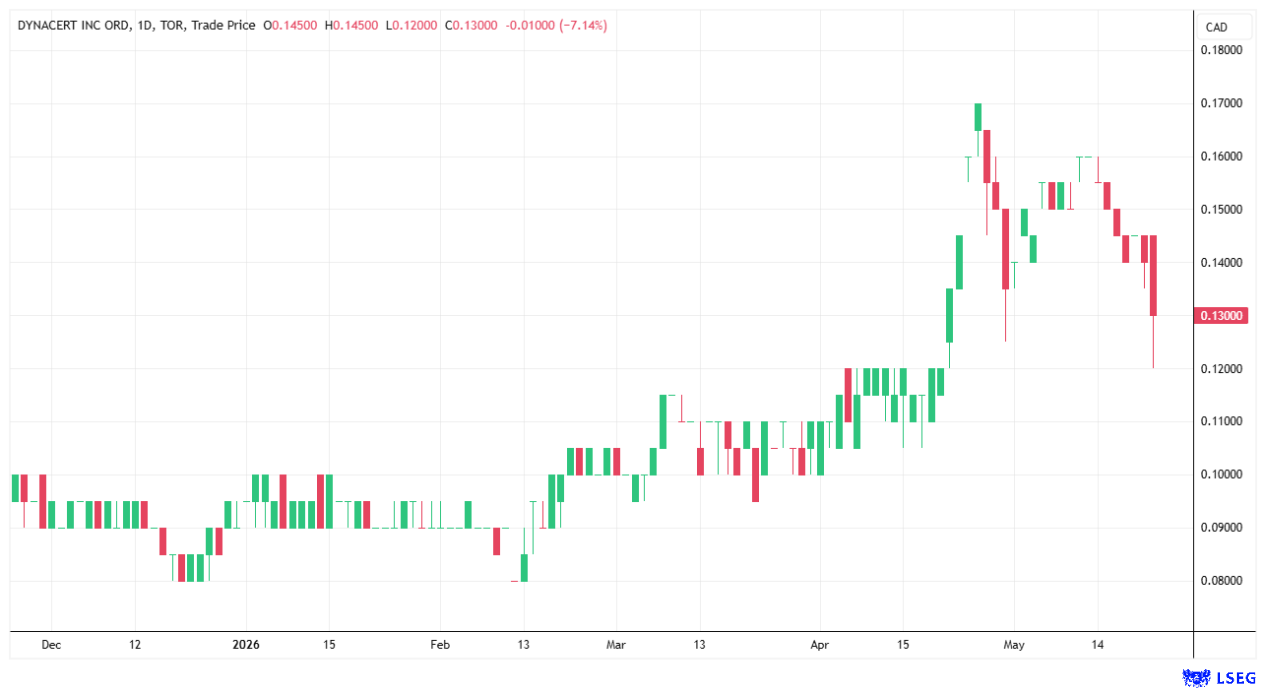
In an environment characterized by high energy costs, particularly in Vietnam and other growth markets, the Canadian cleantech company dynaCERT is positioning itself as a solution provider with its patented HydraGEN technology. The Vietnamese logistics sector has a fleet of over 3.5 million diesel-powered heavy-duty vehicles and construction machines that cannot be electrified in the short term due to a lack of capital resources. dynaCERT's hardware can be installed immediately and offers fleet operators cost savings in the face of high diesel prices. At the same time, the system reduces toxic nitrogen oxide emissions by up to 88%. Through its proprietary telematics platform HydraLytica, dynaCERT sells data subscriptions to capture tamper-proof data in accordance with the internationally recognized Verra methodology and generate tradable CO₂ credits.
Local Alliances and Personnel Decisions for Scaling
To get off the ground in Vietnam, dynaCERT has entered into a strategic alliance with Ho Chi Minh City University of Technology and is negotiating service contracts with regional energy suppliers. Should annual sales volume in the region exceed 1,000 units, dynaCERT is prepared to establish its own assembly plant in Vietnam, which would further reduce production costs. The expansion is being driven in part by CEO Kevin Unrath, who brings his extensive experience from MAN Truck & Bus to the table.
Conclusion: Analysts Expect Profitability and See Upside Potential
For dynaCERT, the combination of hardware sales and recurring data revenue remains the central part of the investment case. Analysts at the German research firm GBC predicted as early as last year that revenue could grow to CAD 21 million by 2026 on the back of telematics-driven data integration, but that forecast should now be viewed as dated analyst opinion rather than a current valuation basis. However, the overall conditions for dynaCERT have not deteriorated over the past year. In an environment where companies are desperately seeking ESG solutions that deliver quick results, dynaCERT is a sought-after solution provider. The stock remains a candidate for the watchlist.
Watch YouTube videoConflict of interest
Pursuant to §85 of the German Securities Trading Act (WpHG), we point out that Apaton Finance GmbH as well as partners, authors or employees of Apaton Finance GmbH (hereinafter referred to as "Relevant Persons") may hold shares or other financial instruments of the aforementioned companies in the future or may bet on rising or falling prices and thus a conflict of interest may arise in the future. The Relevant Persons reserve the right to buy or sell shares or other financial instruments of the Company at any time (hereinafter each a "Transaction"). Transactions may, under certain circumstances, influence the respective price of the shares or other financial instruments of the Company.
In addition, Apaton Finance GmbH is active in the context of the preparation and publication of the reporting in paid contractual relationships.
For this reason, there is a concrete conflict of interest.
The above information on existing conflicts of interest applies to all types and forms of publication used by Apaton Finance GmbH for publications on companies.
Risk notice
Apaton Finance GmbH offers editors, agencies and companies the opportunity to publish commentaries, interviews, summaries, news and the like on news.financial. These contents are exclusively for the information of the readers and do not represent any call to action or recommendations, neither explicitly nor implicitly they are to be understood as an assurance of possible price developments. The contents do not replace individual expert investment advice and do not constitute an offer to sell the discussed share(s) or other financial instruments, nor an invitation to buy or sell such.
The content is expressly not a financial analysis, but a journalistic or advertising text. Readers or users who make investment decisions or carry out transactions on the basis of the information provided here do so entirely at their own risk. No contractual relationship is established between Apaton Finance GmbH and its readers or the users of its offers, as our information only refers to the company and not to the investment decision of the reader or user.
The acquisition of financial instruments involves high risks, which can lead to the total loss of the invested capital. The information published by Apaton Finance GmbH and its authors is based on careful research. Nevertheless, no liability is assumed for financial losses or a content-related guarantee for the topicality, correctness, appropriateness and completeness of the content provided here. Please also note our Terms of use.