May 19th, 2026 | 07:30 CEST
Bottlenecks in the Hydrogen Network: What Linde and BASF Could Learn from A.H.T. Syngas
The "green" transformation of the European chemical industry is in danger of failing. Although the Federal Network Agency approved the German core hydrogen network—which is set to grow gradually to 9,040 km of hydrogen pipelines between 2025 and 2032—the actual rollout of this critical hydrogen route is not proceeding as planned. Without the rapid expansion of key hydrogen pipelines, the industry's transformation goals are virtually unattainable. While the infrastructure is slow in coming, regulatory pressure continues to intensify under the European RED III Directive. As delays mount in large-scale infrastructure projects, energy-intensive industrial companies are increasingly being forced to explore alternative solutions. Decentralized solutions are emerging as viable options. One company that could attract growing attention from both industry players and investors is A.H.T. Syngas.
time to read: 3 minutes | Author: Nico Popp
ISIN: LINDE PLC | IE000S9YS762 , A.H.T. SYNGAS TECH. EO 1 | NL0010872388 , BASF SE NA O.N. | DE000BASF111
Table of contents:
Author

Nico Popp
At home in Southern Germany, the passionate stock exchange expert has been accompanying the capital markets for about twenty years. With a soft spot for smaller companies, he is constantly on the lookout for exciting investment stories.
Tag cloud
Shares cloud
Regulatory Pressure and the Hydrogen Network as a Dead End
The pressure on large industrial consumers is intensifying due to European legislation. The RED III Directive stipulates that by 2030, at least 42.5% and by 2035 as much as 60% of the hydrogen consumed in industry must come from renewable sources. According to calculations by industry analysts at Wood Mackenzie, however, the EU currently has a production capacity of only around 78,000 tons of green hydrogen per year. To meet the legal milestones by 2030, however, a staggering 2.9 million tons per year would be required. This would require investments of an estimated EUR 71 billion, which is unrealistic given the current economic climate. This is likely one reason why 26 out of 27 member states have not fully transposed the directive into national law on time, prompting the European Commission to initiate infringement proceedings. However, it is unclear whether a compromise with less stringent requirements will ultimately be reached.
Linde and BASF: Industry Leaders Face Reality
Large corporations are attempting to resolve the situation through their own investments. Linde traditionally operates according to the "Build-Own-Operate model," in which the company itself invests in production facilities directly on customers' sites and secures stable, inflation-protected cash flows through long-term off-take agreements. For example, Linde is currently investing approximately USD 150 million in an on-site facility for H2 Green Steel in Sweden to supply the plant there starting in 2026, as well as over USD 400 million in an on-site facility in Louisiana for an ammonia project.
Chemical giant BASF SE is also under pressure to act, as hydrogen is an indispensable raw material for the synthesis of ammonia, methanol, and plastics. The Ludwigshafen-based company is relying on the integrated model at its sites and is attempting to build up its own hydrogen capacities. In March, the company commissioned a 54-megawatt water electrolyzer at its main plant to produce up to 8,000 tons of green hydrogen annually for its own use. This project was classified as an important European IPCEI project and received more than EUR 100 million in funding from the Federal Ministry for Economic Affairs and Energy and the state of Rhineland-Palatinate, while BASF itself contributed only around EUR 25 million. However, what works for BASF does not solve the problems faced by smaller companies that lack such options. This is where A.H.T. Syngas comes into play.
A.H.T. Syngas Technology: German Gas Pioneer Offers Promising Alternative
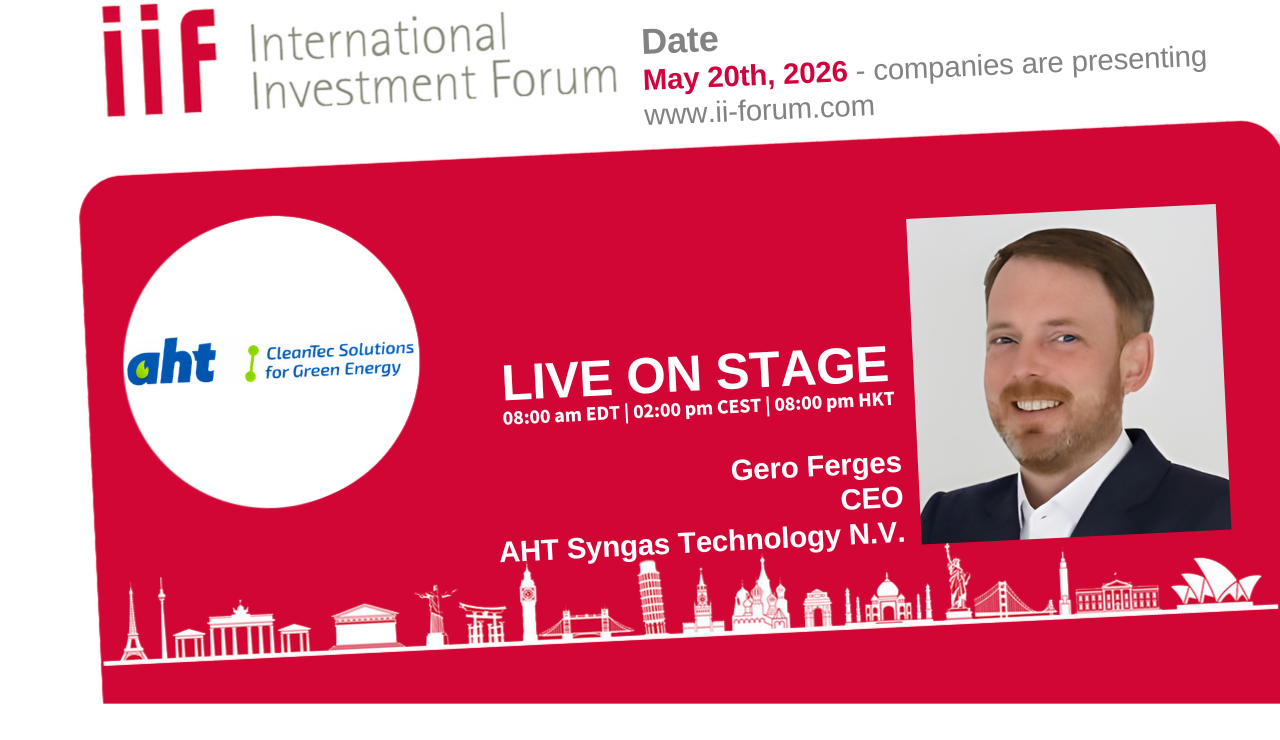
A.H.T. Syngas Technology sees itself as a highly specialized system integrator for decentralized energy plants in the range between 200 kW and 15 MW. While Linde and BASF operate at the megawatt level, they often lack solutions for smaller businesses that do not have access to the future core grid or large amounts of energy. A.H.T. has the expertise to produce high-purity hydrogen directly from decentralized biomass gasification plants. Combined with its know-how in the preparation and homogenization of biogenic residues, A.H.T. masters the entire value chain of self-sufficient on-site gas production.
Its unique selling point is the patented dual-fire gasification reactor, which does not suffer from the classic material-related problems of conventional fixed-bed gasifiers. As a result, A.H.T.'s approach produces a clean product gas with a stable hydrogen content of over 40%, which can be utilized without complex chemical purification steps. The system even allows for the use of low-grade feedstocks such as sewage sludge, wood waste, or fermentation residues. This way, waste can be turned into energy or even a valuable raw material.
Conclusion: A.H.T. Syngas Solves the Industry's Most Pressing Problems
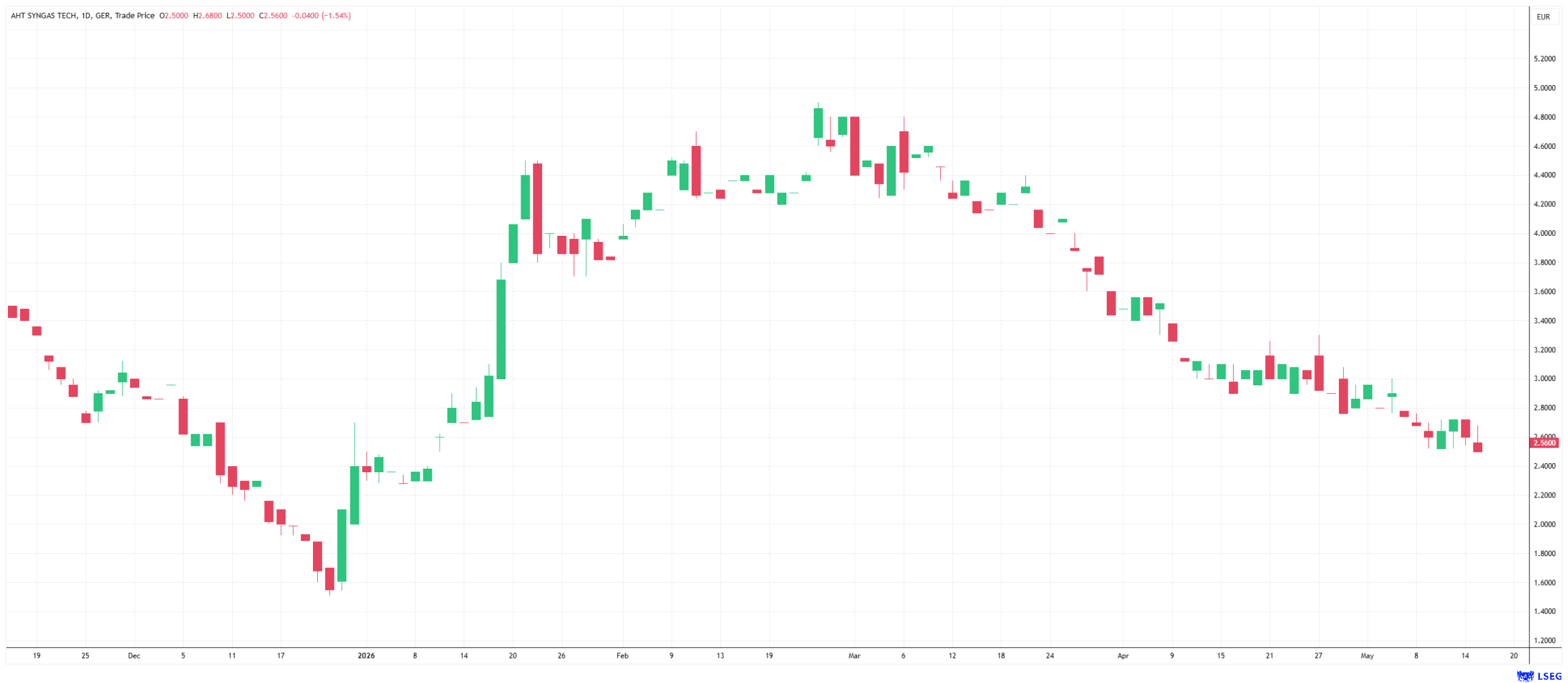
The challenges in expanding hydrogen infrastructure in Germany demonstrate that smaller, innovative players like A.H.T. are urgently needed. With its self-sufficient on-site plants, the company already offers solutions for small and medium-sized industrial enterprises. In their research updates, analysts at GBC AG confirm the stock's upside potential and estimate its fair value at EUR 8.50, representing significant upside from the current price of around EUR 2.56. As soon as the RED III Directive takes effect and is fully implemented at the national level, A.H.T. will see significant growth potential—including takeover speculation. The stock is an exciting turnaround story that fits perfectly with the current climate.
Watch YouTube videoConflict of interest
Pursuant to §85 of the German Securities Trading Act (WpHG), we point out that Apaton Finance GmbH as well as partners, authors or employees of Apaton Finance GmbH (hereinafter referred to as "Relevant Persons") may hold shares or other financial instruments of the aforementioned companies in the future or may bet on rising or falling prices and thus a conflict of interest may arise in the future. The Relevant Persons reserve the right to buy or sell shares or other financial instruments of the Company at any time (hereinafter each a "Transaction"). Transactions may, under certain circumstances, influence the respective price of the shares or other financial instruments of the Company.
In addition, Apaton Finance GmbH is active in the context of the preparation and publication of the reporting in paid contractual relationships.
For this reason, there is a concrete conflict of interest.
The above information on existing conflicts of interest applies to all types and forms of publication used by Apaton Finance GmbH for publications on companies.
Risk notice
Apaton Finance GmbH offers editors, agencies and companies the opportunity to publish commentaries, interviews, summaries, news and the like on news.financial. These contents are exclusively for the information of the readers and do not represent any call to action or recommendations, neither explicitly nor implicitly they are to be understood as an assurance of possible price developments. The contents do not replace individual expert investment advice and do not constitute an offer to sell the discussed share(s) or other financial instruments, nor an invitation to buy or sell such.
The content is expressly not a financial analysis, but a journalistic or advertising text. Readers or users who make investment decisions or carry out transactions on the basis of the information provided here do so entirely at their own risk. No contractual relationship is established between Apaton Finance GmbH and its readers or the users of its offers, as our information only refers to the company and not to the investment decision of the reader or user.
The acquisition of financial instruments involves high risks, which can lead to the total loss of the invested capital. The information published by Apaton Finance GmbH and its authors is based on careful research. Nevertheless, no liability is assumed for financial losses or a content-related guarantee for the topicality, correctness, appropriateness and completeness of the content provided here. Please also note our Terms of use.