May 4th, 2026 | 07:30 CEST
Alcoa, Strategic Resources, and Glencore: War and the Energy Transition Are Driving Business!
The energy transition and energy prices are arguably the most significant factors currently driving the stock market. The AI revolution and the trend toward sustainable energy production are forcing a reevaluation of the current approach. Added to this is the disruption of key production resources due to the war in the Persian Gulf. Whether it is oil, gas, aluminum, or fertilizers, the repercussions are likely to keep global trade occupied for quite some time. That is why it is worth taking a look at potential winners on the stock market. Alcoa, Strategic Resources, and Glencore could be among them.
time to read: 5 minutes | Author: Tarik Dede
ISIN: ALCOA CORP. O.N. | US0138721065 , GLENCORE PLC DL -_01 | JE00B4T3BW64 , STRATEGIC RESOURCES INC | CA86277X4093 | TSXV: SR
Table of contents:
Author

Tarik Dede
Even as a high school student in northern Germany, he developed a strong interest in the “Neuer Markt” and the dynamics of the equity markets. Small- and mid-cap companies were at the center of his focus from the very beginning. After completing his training as a certified bank clerk, he deepened his economic expertise through formal studies in economics as well as through various positions within Frankfurt’s financial sector. Today, he has been actively involved in the capital markets for more than 25 years, both professionally and as a private investor.
Tag cloud
Shares cloud
Alcoa: The War Profiteer
For years, Alcoa was not a favourite among most investors. Aluminum was not very "sexy," and unlike other metals, prices remained depressed for a long time. Accordingly, the stock has experienced significant price movements, albeit highly volatile. The war in the Persian Gulf has now dramatically changed conditions for the company. Just a few months before the war started, the stock began an upward trend that, surprisingly, stalled at the start of the war. Since then, the share has been trading sideways. Yet Alcoa is one of the biggest beneficiaries of this war. The US aluminum company is already receiving high demand from customers in Europe, the US, and Asia who normally source aluminum from the Middle East. Prices are currently rising and are likely to remain so for some time.
Alcoa has its plants far removed from the war zone (in the US, Canada and Mexico) and accounts for about 9% of global aluminum production. Outside of China, this share is even around 20%. Due to attacks on major smelters such as Al Taweelah in the Emirates and Alba in Bahrain, as well as the blockade of the Strait of Hormuz, the global aluminum market has slipped into a severe supply deficit. On the LME (London Metal Exchange), aluminum is trading near a four-year high. Among all industrial metals, it has shown the best performance since the start of the year, up around 18%.
When production in the Gulf will resume, and the material can be shipped, is currently anyone's guess, especially since the number of blockades has now doubled. Alcoa, as one of the few alternatives in the Western world, should benefit from this. The stock is trading around 15% below its annual high. In the first quarter alone, the company showed a clear increase in margins. And one advantage is currently likely being underestimated by the market: Alcoa produces its own alumina. The smelters in the Gulf, on the other hand, must import around 60% of the material. However, these imports are currently at a standstill, just like many facilities there.
Strategic Resources: Green Iron for the Steel Industry
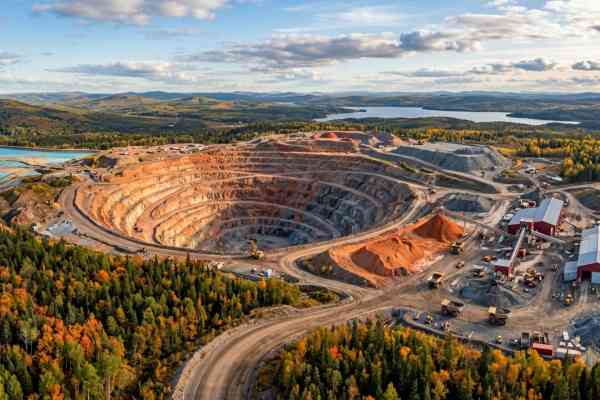
Secure supply chains are increasingly in demand, even in traditional industries such as steel and iron ore. Strategic Resources could benefit from this structural shift in Western industrial policy. The company is currently transforming from a pure-play explorer to a future producer of iron ore and iron pellets. The core asset is the BlackRock project in northern Québec. The deposit and planned concentrator site are located near Chibougamau. BlackRock stands out due to its distinctive geology. The ore is a Vanadium-Titanium-Magnetite (VTM). The metallurgical facility is located 380km away in Port Saguenay. During processing, high-purity pig iron is expected to be produced alongside vanadium and titanium, which can command premium prices on the global market. According to feasibility studies, the project is expected to achieve an average annual production of approximately 526,000 tonnes of pig iron.
A Step Toward Becoming a Processor
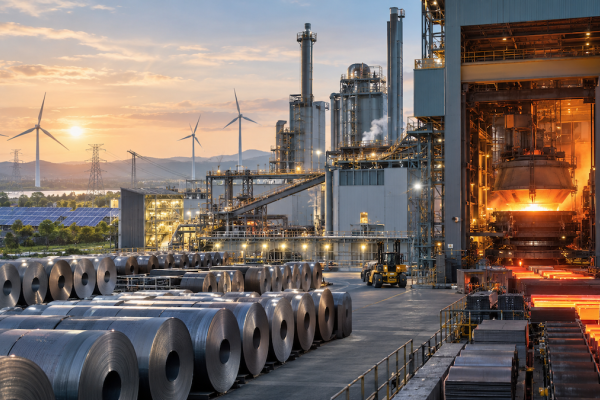
But Strategic Resources does not want to become just another mining company. The goal is to produce processed iron pellets. To this end, the company plans to develop a pelletizing plant at the port of Saguenay (Québec). Capacity is expected to reach 4 million tonnes per annum (mtpa) of iron pellets. These would be premium Direct Reduction (DR) grade pellets, used in low-emission steel production processes such as electric arc furnaces. The location offers a key logistical advantage. Saguenay is a deep-water port connected to the North American and European markets via the St. Lawrence River. The energy comes from Québec's vast hydroelectric grid, making production particularly low-emission.
Strategic Resources has already secured a major partner for this project. An agreement with Javelin Global Commodities was announced as early as the end of 2024. Under the terms of the agreement, Javelin will exclusively supply Strategic Resources with high-grade iron ore—which will serve as the feedstock for the planned pellet plant in the Port of Saguenay—until the BlackRock mine begins production. Javelin has also committed to purchasing 100% of the iron pellets produced, as well as future pig iron from the BlackRock project, and to marketing them globally. Financially, the partnership offers a major advantage, as Javelin is providing a USD 150 million working capital credit line. This secures liquidity for ongoing operations.
Strategic Resources' stock remains largely under the radar of many investors in North America and Europe. Its market capitalization is just under CAD 17 million. Four years ago, the stock price was about 12 times higher. Accordingly, there is significant potential here for bold investors with a long-term perspective.
Glencore: Strong Numbers
Many copper producers are currently facing production challenges. In Chile, the world's largest producer faces declining ore grades, and massive investments are required to maintain current output levels. Companies like Quantum and Freeport-McMoran are also reporting production issues. This makes Glencore a welcome development for the market. The company released its first-quarter production figures a few days ago (financial results are not yet available). And lo and behold: Glencore has increased its copper output by a whopping 19% to nearly 200,000 tons. This is due to improved ore grades at its African mines. The Switzerland-based commodities trader and mining group also reported higher output at its Antamina mine in Peru. Despite operational challenges and the closure of two Australian mines that had reached the end of their economic life, Glencore maintained its production forecast for 2026. And there was some good news on the cost front as well: According to CEO Gary Nagle, the war in the Persian Gulf had only a limited impact on operations in the first quarter. However, pressure is emerging due to higher diesel and sulfuric acid prices. In this respect, 2026 could still prove challenging. The company had only returned to profitability in 2025 after several difficult years and celebrated a spectacular comeback.
In any case, investors remain optimistic for now. Glencore's stock has risen by around 50% since November and is holding at that high level. Should bad news emerge, however, profit-taking could be on the horizon.
Alcoa is a war profiteer, stepping into the breach where aluminum producers in the Gulf are falling short. Higher prices are improving margins, so the stock has further upside potential. Strategic Resources is a stock for a strategic portfolio. With low-emission iron pellet production, the Canadians aim to break into the global market. The low market capitalization and currently limited investor interest offer potential. Glencore, on the other hand, has had a strong run. However, if diesel and sulfuric acid prices remain high, profit-taking could occur here.
Conflict of interest
Pursuant to §85 of the German Securities Trading Act (WpHG), we point out that Apaton Finance GmbH as well as partners, authors or employees of Apaton Finance GmbH (hereinafter referred to as "Relevant Persons") may hold shares or other financial instruments of the aforementioned companies in the future or may bet on rising or falling prices and thus a conflict of interest may arise in the future. The Relevant Persons reserve the right to buy or sell shares or other financial instruments of the Company at any time (hereinafter each a "Transaction"). Transactions may, under certain circumstances, influence the respective price of the shares or other financial instruments of the Company.
In addition, Apaton Finance GmbH is active in the context of the preparation and publication of the reporting in paid contractual relationships.
For this reason, there is a concrete conflict of interest.
The above information on existing conflicts of interest applies to all types and forms of publication used by Apaton Finance GmbH for publications on companies.
Risk notice
Apaton Finance GmbH offers editors, agencies and companies the opportunity to publish commentaries, interviews, summaries, news and the like on news.financial. These contents are exclusively for the information of the readers and do not represent any call to action or recommendations, neither explicitly nor implicitly they are to be understood as an assurance of possible price developments. The contents do not replace individual expert investment advice and do not constitute an offer to sell the discussed share(s) or other financial instruments, nor an invitation to buy or sell such.
The content is expressly not a financial analysis, but a journalistic or advertising text. Readers or users who make investment decisions or carry out transactions on the basis of the information provided here do so entirely at their own risk. No contractual relationship is established between Apaton Finance GmbH and its readers or the users of its offers, as our information only refers to the company and not to the investment decision of the reader or user.
The acquisition of financial instruments involves high risks, which can lead to the total loss of the invested capital. The information published by Apaton Finance GmbH and its authors is based on careful research. Nevertheless, no liability is assumed for financial losses or a content-related guarantee for the topicality, correctness, appropriateness and completeness of the content provided here. Please also note our Terms of use.