October 16th, 2026 | 05:24 CEST
Turnaround or Bull Trap? ABO Energy, Pferdewetten, Lahontan Gold
Whether it is sharp share price movements following major contracts, the sensitive handling of regulator-ordered financial statement reviews, or the development of potentially valuable mineral deposits, the capital markets gradually separate the wheat from the chaff. While operational progress and strategic acquisitions can help restore confidence, pending restructuring proceedings and legacy balance sheet issues at another company call for caution. This report examines three fundamentally different listed stocks that span everything from revaluation potential to existential risks, and highlights where buying in or exiting could still be worthwhile now.
time to read: 7 minutes | Author: Stefan Bode
ISIN: Lahontan Gold Corp | CA50732M1014 , ABO Energy GmbH & Co KgaA | DE0005760029 , Pferdewetten de AG | DE000A2YN777
Author

Stefan Bode
A native of the Eichsfeld region in the heart of Germany, he has more than 30 years of experience in the capital markets, with broad expertise spanning financial markets, history, and geopolitics. He founded his own business more than 20 years ago while still a student and today advises clients, foundations, and asset managers across four continents.
Tag cloud
Shares cloud
Pferdewetten.de: New Accounting Correction – Share Stabilisation at Risk?
Pferdewetten.de shares are struggling to stabilise after a prolonged sell-off. At around EUR 2.20, the betting provider continues to trade well below earlier price levels. An ad hoc announcement published Monday evening has now put accounting in the spotlight. Despite operational progress, key questions therefore remain unanswered for investors.
On October 12, the Management Board decided to amend and restate the already adopted 2024 annual financial statements. This follows the ongoing financial reporting enforcement procedure by the financial regulator BaFin. Specifically, it concerns the valuation of loans and receivables due from affiliated companies. The separate financial statements reported financial assets of EUR 40.49 million, including EUR 38.70 million in loans to Group companies. Analyses to date indicate a need for corrections.
The required valuation adjustments and the periods to which they will be allocated have not yet been determined. Further impairment analyses and the auditor's supplementary audit are intended to clarify this. Potential effects on equity and the annual result will also be examined. According to the company, the figures in the 2024 IFRS consolidated financial statements remain unaffected because intragroup loans are eliminated there. Further potential knock-on effects are being examined separately. For investors, the key question remains when reliable results will be available.
On the operational front, pferdewetten.de had recently delivered better news. In August, the company reported a 25.4% increase in revenue to around EUR 35 million for the first half of 2026. EBITDA improved from minus EUR 0.20 million to plus EUR 3.03 million. Cost-cutting measures and the strategic realignment were therefore beginning to show their first effects. The full-year guidance confirmed at the time envisaged revenue of EUR 70 to 80 million and EBITDA of EUR 5 to 10 million. Recent operational improvements are an important bright spot, but they are no substitute for clarity on the outstanding corrections to earlier financial reporting.
From a technical perspective, this has not yet been enough for a convincing trend reversal. Following renewed losses from May to the end of July, the shares have regained some stability since August. At EUR 2.20, they are roughly at the 20-day moving average and just above the 50-day average at EUR 2.13. However, the longer-term picture remains weak. For an improvement, the share price would need to break sustainably above the resistance zone between EUR 2.20 and EUR 2.30. The 100-day moving average also runs through this area at around EUR 2.28. The next key hurdle lies around EUR 2.50, with the 200-day average at EUR 2.48. Only above this zone would a technical recovery toward EUR 3.00 become more plausible. By contrast, a fall back below EUR 2.00 would weaken the recent stabilisation.
Lahontan Gold: Preliminary Economic Assessment Highlights Santa Fe's Potential
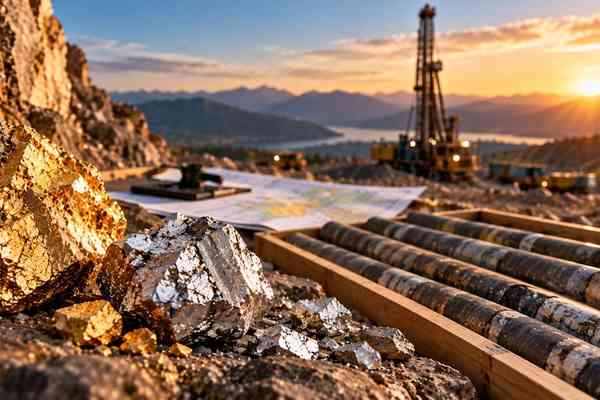
Despite a restrictive interest rate environment, persistent geopolitical risks and growing inflation concerns are supporting the gold price. It continues to trade steadily above USD 4,000 per troy ounce. Against this favourable macroeconomic backdrop, Lahontan Gold is progressing as planned from an exploration company towards becoming a future precious metals producer. The company, which operates in the mining-friendly US state of Nevada, is focused on the operational realignment of the formerly producing Santa Fe mine. This is due to resume operations by the end of 2027. In addition to established infrastructure, the project has 1.195 million ounces of gold equivalent in indicated resources and a further 1.190 million ounces in inferred resources. The recently announced strategic acquisition of Emergent Metals will expand the area to over 93 km². At the same time, future royalty payments were reduced by USD 1.73 million, and the shareholder structure changed with dilution of just 4.7%.
The updated preliminary economic assessment (PEA) presented this week provides quantitative evidence of the project's profitability over an 11-year mining period. In the base case of USD 3,600 per ounce of gold and USD 49 per ounce of silver, the study puts the after-tax net present value at a discount rate of 5% at an impressive USD 820 million. This corresponds to an internal rate of return of 40.1%. At the current spot price of USD 4,166 per troy ounce, this net value rises to USD 1.13 billion, and the internal rate of return to 50.4%. Projected total revenue over the mine life amounts to USD 3.68 billion, which would generate after-tax free cash flow of USD 1.32 billion. With initial capital expenditure of USD 172.0 million and a payback period of 3.7 years, these metrics underline solid capital discipline, with estimated all-in sustaining costs of USD 2,250 per ounce.
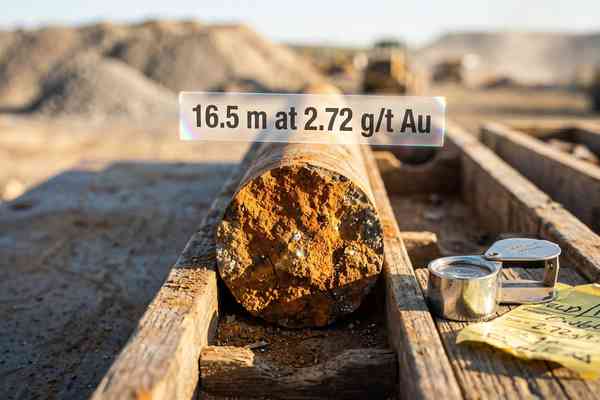
Operationally, the project benefits from average annual production of around 91,900 ounces of gold equivalent in the first three years. From the fourth year of operation, this is expected to rise to more than 112,500 ounces. The latest sonic drilling on the historic waste dumps promises additional leverage. This yielded average gold grades of 0.54 g/t, significantly exceeding the historic residual grades of 0.32 grams. Early cyanide leaching of this material could generate operating cash inflows ahead of schedule. If CEO Kimberly Ann implements this approach to processing the old waste material, external financing requirements would be reduced before the actual construction phase. The full submission of the mine plan of operations to the US authorities and the completion of the environmental baseline studies keep the permitting process on schedule for 2027. Supporting follow-up drilling in the integrated New York Canyon and West Santa Fe zones is also intended to expand the resource inventory.
The steady reduction in risk through operational successes has not yet been reflected in the capital markets. At a share price of CAD 0.34, the 432.5 million shares in issue imply a market capitalisation of just around CAD 147 million. This compares with an after-tax net present value that exceeds the current market capitalisation many times over. For institutional and private investors alike, the significant disparity between the fundamental project value and the stock market valuation offers a very attractive risk-reward profile. However, the company must also secure construction and environmental permits on schedule to further reduce risk. As the project transitions from the current development phase, which still involves extensive permitting, to a producing mining operation, the valuation discount to established peers is likely to narrow gradually.
ABO Energy: Up Over 290% in 7 Trading Days—Will the Sale of the Wind Farm Spark a Recovery?
ABO Energy shares are making a comeback with a strong recovery. On Monday, October 12, they rose by around 23% from Friday's close to EUR 3.20 and traded significantly higher again yesterday at around EUR 4.50. Since the October 6 close of around EUR 1.54, the share price has almost tripled in just seven trading days. Yet the path to sustained stabilisation remains challenging.
Swiss energy group BKW provides a concrete news catalyst. On Monday, it announced the acquisition of the Öhringen-Karlsfurt wind farm in Baden-Württemberg from ABO Energy. The purchase agreement was signed in early October. ABO Energy developed the project and is delivering it on a turnkey basis. The seven turbines have a combined capacity of 33.6 megawatts. Commissioning is scheduled for the first quarter of 2027. More than 80 gigawatt-hours of electricity are expected to be generated annually.
For the project developer, the sale represents operational progress. ABO Energy, formerly ABO Wind, develops and builds wind and solar farms as well as battery storage and hydrogen projects. Securing a buyer improves planning certainty for the project concerned. However, BKW's announcement does not disclose a purchase price. Therefore, it is not possible to quantify how strongly the sale will affect ABO Energy's liquidity and earnings. Nor does this news alone explain the entire recent share price rally.
The financial restructuring remains crucial. At the end of July, ABO Energy agreed with its financing partners to extend the standstill agreement until November 30, 2026. On behalf of the financing partners, Rothschild & Co. is drawing up proposals for a long-term financing solution. In May, the company announced that the draft restructuring report assessed it as fundamentally capable of being restructured. However, viable restructuring financing remains a prerequisite. The group no longer expects a positive result in 2026, but it has indicated a return to positive EBITDA in 2027.
From a technical perspective, the share price jump has improved the short-term outlook. The shares are back above the 20-day moving average at around EUR 2.90 and just above the 50-day moving average at EUR 3.25. The next test awaits at EUR 4.90. Here, the share price encounters the 200-day moving average. Beyond that, the zone between EUR 6.00 and EUR 6.20 is likely to act as a ceiling, as the market spent a considerable time there in the spring before the first slump occurred in June.
Conclusion
Although Pferdewetten.de is recording an operational recovery, an ordered correction of its 2024 accounts is noticeably hampering the technical stabilisation of its shares. Lahontan Gold benefits from the high gold price, its strategic acquisition and the updated PEA and offers significant re-rating potential. ABO Energy's share price doubled rapidly after a wind farm sale, but remains highly risky amid ongoing negotiations over restructuring financing.
Conflict of interest
Pursuant to §85 of the German Securities Trading Act (WpHG), we point out that Apaton Finance GmbH as well as partners, authors or employees of Apaton Finance GmbH (hereinafter referred to as "Relevant Persons") may hold shares or other financial instruments of the aforementioned companies in the future or may bet on rising or falling prices and thus a conflict of interest may arise in the future. The Relevant Persons reserve the right to buy or sell shares or other financial instruments of the Company at any time (hereinafter each a "Transaction"). Transactions may, under certain circumstances, influence the respective price of the shares or other financial instruments of the Company.
In addition, Apaton Finance GmbH is active in the context of the preparation and publication of the reporting in paid contractual relationships.
For this reason, there is a concrete conflict of interest.
The above information on existing conflicts of interest applies to all types and forms of publication used by Apaton Finance GmbH for publications on companies.
Risk notice
Apaton Finance GmbH offers editors, agencies and companies the opportunity to publish commentaries, interviews, summaries, news and the like on news.financial. These contents are exclusively for the information of the readers and do not represent any call to action or recommendations, neither explicitly nor implicitly they are to be understood as an assurance of possible price developments. The contents do not replace individual expert investment advice and do not constitute an offer to sell the discussed share(s) or other financial instruments, nor an invitation to buy or sell such.
The content is expressly not a financial analysis, but a journalistic or advertising text. Readers or users who make investment decisions or carry out transactions on the basis of the information provided here do so entirely at their own risk. No contractual relationship is established between Apaton Finance GmbH and its readers or the users of its offers, as our information only refers to the company and not to the investment decision of the reader or user.
The acquisition of financial instruments involves high risks, which can lead to the total loss of the invested capital. The information published by Apaton Finance GmbH and its authors is based on careful research. Nevertheless, no liability is assumed for financial losses or a content-related guarantee for the topicality, correctness, appropriateness and completeness of the content provided here. Please also note our Terms of use.