August 26th, 2026 | 10:00 CEST
The Focus Is on Nutrition, Not Microchips: What Is on the Menu at McDonald's, Bayer, MustGrow and Kraft Heinz?
Created and Published on Behalf of MustGrow Biologics Corp.
The stock market is many things, but it is hardly sustainable. Trends change as quickly as the weather—chips are all the rage today, but tomorrow they are out of favor. Funnily enough, the lines of reasoning are similar whether the market is rising or falling. However, sustainability is of paramount importance in the food production sector and among publicly traded companies in it. This is because a consistent ESG focus in global food production has evolved from a mere image factor to an established guarantee of success. A recent study by the McKinsey Global Institute impressively demonstrates that companies with strong ESG structures have more resilient supply chains in the long term and enjoy significantly higher consumer loyalty. Giants like McDonald's and Kraft Heinz are driving this transformation by increasingly focusing on recyclable packaging, nature-based farming, and ethical sourcing of raw materials. However, this green transition would be virtually inconceivable without innovative suppliers and trailblazers at the base of the value chain. This is where the agricultural giant Bayer comes into play, laying the foundation for lower-emission crops through targeted investments in biological crop protection and regenerative agriculture. As an agile driver of innovation, the Canadian company MustGrow Biologics is tapping into this trend and revolutionizing the market with all-natural active ingredients derived from the mustard plant. It is worth taking a closer look at what really matters!
time to read: 5 minutes | Author: André Will-Laudien
ISIN: MUSTGROW BIOLOGICS CORP. | CA62822A1030 | TSXV: MGRO , OTCQB: MGROF , MCDONALDS CORP. DL-_01 | US5801351017 , BAYER AG NA O.N. | DE000BAY0017 , KRAFT HEINZ CO.DL -_01 | US5007541064
Table of contents:
Author

André Will-Laudien
Born in Munich, he first studied economics and graduated in business administration at the Ludwig-Maximilians-University in 1995. As he was involved with the stock market at a very early stage, he now has more than 30 years of experience in the capital markets.
Tag cloud
Shares cloud
McDonald's and Kraft Heinz: It All Comes Down to Production and Sourcing
McDonald's, as a fast-food chain, is rarely mentioned in the context of conscious eating. But first impressions can be deceiving. To remain resilient in the long term, the company is heavily committed to sustainable production methods and is making targeted investments in regenerative agriculture. A key ESG project is the planned reduction of methane emissions in the global beef supply chain. In addition, management is pushing to transition all packaging to 100% recyclable or certified materials. By 2028, the global restaurant network is also set to be further modernized to combine operational efficiency with environmental standards. Investors are increasingly rewarding this strategic focus on a transparent and future-proof sourcing policy. As a result, the fast-food giant exceeded analysts' expectations in Q2 with an adjusted earnings per share of USD 3.38. Global system sales climbed to a remarkable USD 37 billion during the same period, representing about 5% growth. Despite persistently weak customer traffic in its US home market, strong international business stabilized the fast-food giant's overall results. Experts on the LSEG platform see about 17% upside potential over 12 months at a share price of USD 272.**
Food giant Kraft Heinz is also making a strong push toward sustainable business practices. As part of its ESG agenda, Kraft Heinz is advancing decarbonization efforts and gradually transitioning its European production facilities to 100% green electricity. A strict code of conduct for suppliers also guarantees deforestation-free sourcing of raw materials for core products such as ketchup and sauces. Through "surgical" optimization of its supply chains, the company is not only reducing logistics costs but also actively lowering its carbon footprint. The focus on sustainable ingredients secures the company's long-term market share in an environment characterized by climate risks. In Q2, the group exceeded the financial community's earnings forecasts, reporting adjusted EPS of USD 0.56. Net revenue totaled USD 6.26 billion, with emerging markets in particular standing out as growth drivers, posting a 10.4% increase in revenue. In light of changing consumer behavior, the company announced that it would increase its brand investments to approximately USD 700 million in 2026. Analysts currently suspect this will result in higher costs rather than new revenue growth.
MustGrow Biologics: Bayer's Endorsement Takes the Story to the Next Level
Depleted soils, extreme droughts, and stricter regulations are forcing the agriculture of the future to rethink its approach radically. At the heart of this green transition, MustGrow Biologics acts as a visionary pioneer that has decoded the genetic defense system of mustard for modern crop protection. Its innovative flagship biological soil fertility product, TerraSante™, breathes new life into depleted soils and improves yields of valuable crops using purely biological methods. A groundbreaking study in the journal Cell Host & Microbe supports this biological approach and shows that a vital soil microbiome is the absolute foundation for sustainable global food security. MustGrow is leading this forward-looking charge, with its sales story gaining rapid momentum in 2026. In the US, the organic product is already winning over farmers with registrations in 10 states, where it excels in premium crops such as strawberries and potatoes. Following a solid transition year, analysts forecast noticeable revenue growth from approximately CAD 4.50 million this year to a spectacular CAD 31.56 million by 2028. At the same time, the analysts forecast gross margins to surge from 23% to 48% thanks to clever economies of scale. The real magic, however, lies in the rapid transformation from a small technology startup to a highly profitable global player in protected biologics.
IIF host Lyndsay Malchuk speaks with COO Colin Bletsky about the future of biofertilizers and their advantages over conventional methods.
According to analyst calculations, the company could potentially generate an EBITDA of CAD 8.46 million by 2028, marking a spectacular turnaround in a very short time. But that is not all—with the pre-registered biopesticide candidate TerraMG™, the Canadian company already has its next ace up its sleeve. This highly effective organic shield specifically treats nematodes and harmful soil-borne diseases, securing enormous long-term growth opportunities. To achieve a global breakthrough, MustGrow has secured an exclusive license and collaboration agreement with chemical giant Bayer as a powerful partner for Europe, the Middle East, and Africa (EMEA). The company has now proudly announced that it has received its first milestone payment from Bayer as compensation for successful product developments. This financial and technological accolade impressively validates the effectiveness of the mustard technology on the international stage. As part of the licensing deal, Bayer is investing in regulatory approvals and marketing, thereby relieving MustGrow of the financial risk.
According to MustGrow's estimates, Bayer could invest an estimated USD 35 to 40 million over the next 5 to 7 years to advance the approval and commercialization of TerraMG™. The best part for investors is that this immense leverage for MustGrow comes with virtually no additional costs. This agricultural triumph is backed by a massive protective wall of nearly 110 granted and pending patents for various formulations. The stock offers a compelling story in the Crop Science sector at a modest CAD 32 million valuation — roughly equal to GBC's projected 2028 revenue.
Borken Breeding Station Meets Biotech: How Bayer Is Countering Climate Stress with AI-Powered Corn and MustGrow
At its latest press conference at the breeding station in Borken, Leverkusen-based agricultural giant Bayer is fully committed to innovations such as AI-supported precision breeding, new corn varieties with stable yields, and the biological bird repellent Ibisio. At the same time, the company's headquarters announced a partnership with MustGrow in the field of sustainable agriculture. This brings things full circle, as the partnership is based on successful technical product developments under an existing and exclusive licensing and cooperation agreement. Bayer thereby secures direct access to the groundbreaking, mustard-based biocontrol technology TerraMG™ in Europe, the Middle East, and Africa (EMEA). While Bayer is presenting new short-corn hybrids and the biostimulant Yoalo for optimized nutrient supply in Borken, MustGrow's technology perfectly complements the product portfolio in the area of biological soil protection. This strategic symbiosis impressively demonstrates that Bayer intends to address the pressing issues of climate stress and pest pressure not only with traditional chemicals but increasingly through the power of natural active ingredients.
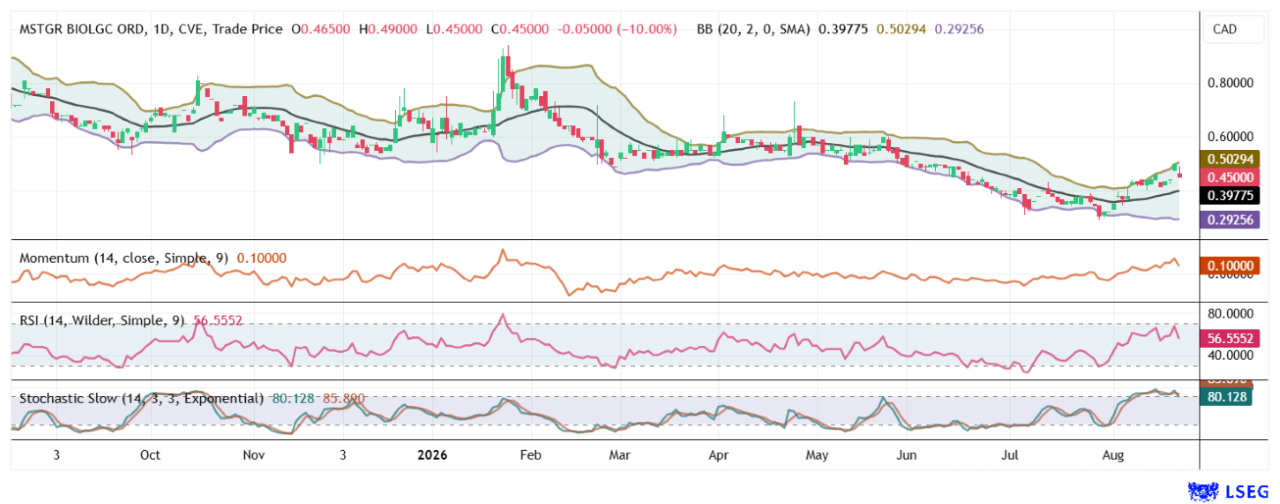
The financial markets have been noticeably volatile in recent days and are reacting sensitively to short-term developments. Amid the seasonally typical, quieter summer months, however, the contours of new market trends for the remainder of the trading year are already taking shape. In particular, the recent noticeable relief in the energy markets is creating a positive underlying mood on the stock exchanges. The food sector is also back in the spotlight. Major corporations such as Bayer, McDonald's, and Kraft Heinz are gaining momentum in this stable environment and once again attracting increased investor attention. At the same time, the global debate on sustainable production methods is drawing attention to specialized innovation leaders such as MustGrow. A balanced investment strategy creates a risk-mitigating portfolio effect.
Conflict of interest
Pursuant to §85 of the German Securities Trading Act (WpHG), we point out that Apaton Finance GmbH as well as partners, authors or employees of Apaton Finance GmbH (hereinafter referred to as "Relevant Persons") currently hold or hold shares or other financial instruments of the aforementioned companies and speculate on their price developments. In this respect, they intend to sell or acquire shares or other financial instruments of the companies (hereinafter each referred to as a "Transaction"). Transactions may thereby influence the respective price of the shares or other financial instruments of the Company.
In this respect, there is a concrete conflict of interest in the reporting on the companies.
In addition, Apaton Finance GmbH is active in the context of the preparation and publication of the reporting in paid contractual relationships.
For this reason, there is also a concrete conflict of interest.
The above information on existing conflicts of interest applies to all types and forms of publication used by Apaton Finance GmbH for publications on companies.
Risk notice
Apaton Finance GmbH offers editors, agencies and companies the opportunity to publish commentaries, interviews, summaries, news and the like on news.financial. These contents are exclusively for the information of the readers and do not represent any call to action or recommendations, neither explicitly nor implicitly they are to be understood as an assurance of possible price developments. The contents do not replace individual expert investment advice and do not constitute an offer to sell the discussed share(s) or other financial instruments, nor an invitation to buy or sell such.
The content is expressly not a financial analysis, but a journalistic or advertising text. Readers or users who make investment decisions or carry out transactions on the basis of the information provided here do so entirely at their own risk. No contractual relationship is established between Apaton Finance GmbH and its readers or the users of its offers, as our information only refers to the company and not to the investment decision of the reader or user.
The acquisition of financial instruments involves high risks, which can lead to the total loss of the invested capital. The information published by Apaton Finance GmbH and its authors is based on careful research. Nevertheless, no liability is assumed for financial losses or a content-related guarantee for the topicality, correctness, appropriateness and completeness of the content provided here. Please also note our Terms of use.