June 17th, 2026 | 06:40 CEST
The Direct Path to High-Purity Silicon: How HPQ Silicon Boosts Efficiency for Companies Like Wacker Chemie and Panasonic
Low-quality anode materials, high energy prices, and the Chinese monopoly on complex processes—the situation surrounding the supply of high-performance battery cells and their raw materials is forcing the industry to take action. To increase the energy density of next-generation electric vehicle batteries, the automotive industry needs to transition from conventional graphite anodes to high-purity silicon anode materials. Graphite systems are reaching their physical limits, while silicon compounds promise a theoretical charge capacity up to 10 times higher. However, since established multi-step synthesis processes are complex and expensive, the focus is shifting toward low-carbon, energy-efficient alternatives. We explain the background and introduce a solution.
time to read: 3 minutes | Author: Nico Popp
ISIN: HPQ SILICON INC | CA40444L1031 | TSXV: HPQ , OTCQB: HPQFF , WACKER CHEMIE O.N. | DE000WCH8881 , PANASONIC CORP. | JP3866800000
Table of contents:
Author

Nico Popp
At home in Southern Germany, the passionate stock exchange expert has been accompanying the capital markets for about twenty years. With a soft spot for smaller companies, he is constantly on the lookout for exciting investment stories.
Tag cloud
Shares cloud
Wacker Chemie: Radical Restructuring to Counter Asian Competition
The German specialty chemicals group Wacker Chemie operates a traditional industrial model but is suffering from an extreme decline in margins in the solar silicon segment due to Chinese overcapacity. In light of high electricity prices in Germany, the company launched the PACE cost-cutting program to reduce annual costs by over EUR 300 million and cut more than 1,500 jobs. To free up additional financial leeway for specialty applications, management placed approximately 2.1 million shares of the subsidiary Siltronic AG in May, raising EUR 188 million. The company reported annual revenue of EUR 5.49 billion in 2025 but posted a net loss of EUR 805 million due to significant write-downs. To maintain market share in the future, the group holds a strategic 25% stake in the British anode specialist Nexeon.
Panasonic: Out with Automotive, Costs Under Scrutiny
The Japanese industrial giant Panasonic generates its revenue in the energy sector primarily through the manufacture of lithium-ion cells. But here, too, margins are meagre at only around 7%. Under the leadership of Group CEO Yuki Kusumi, the group is implementing a sweeping restructuring plan in the current fiscal year, in which management is cutting approximately 12,000 jobs worldwide and incurring one-time restructuring expenses of JPY 174.5 billion. To cushion the cyclical weakness of the automotive sector, the company is pushing ahead with the spin-off of its automotive division and diversifying its portfolio toward large-scale stationary storage systems for AI data centers. Efficiency gains would therefore be welcome for Panasonic. Innovations in anodes offer potential.
HPQ Silicon: Innovative Process with Tangible Benefits
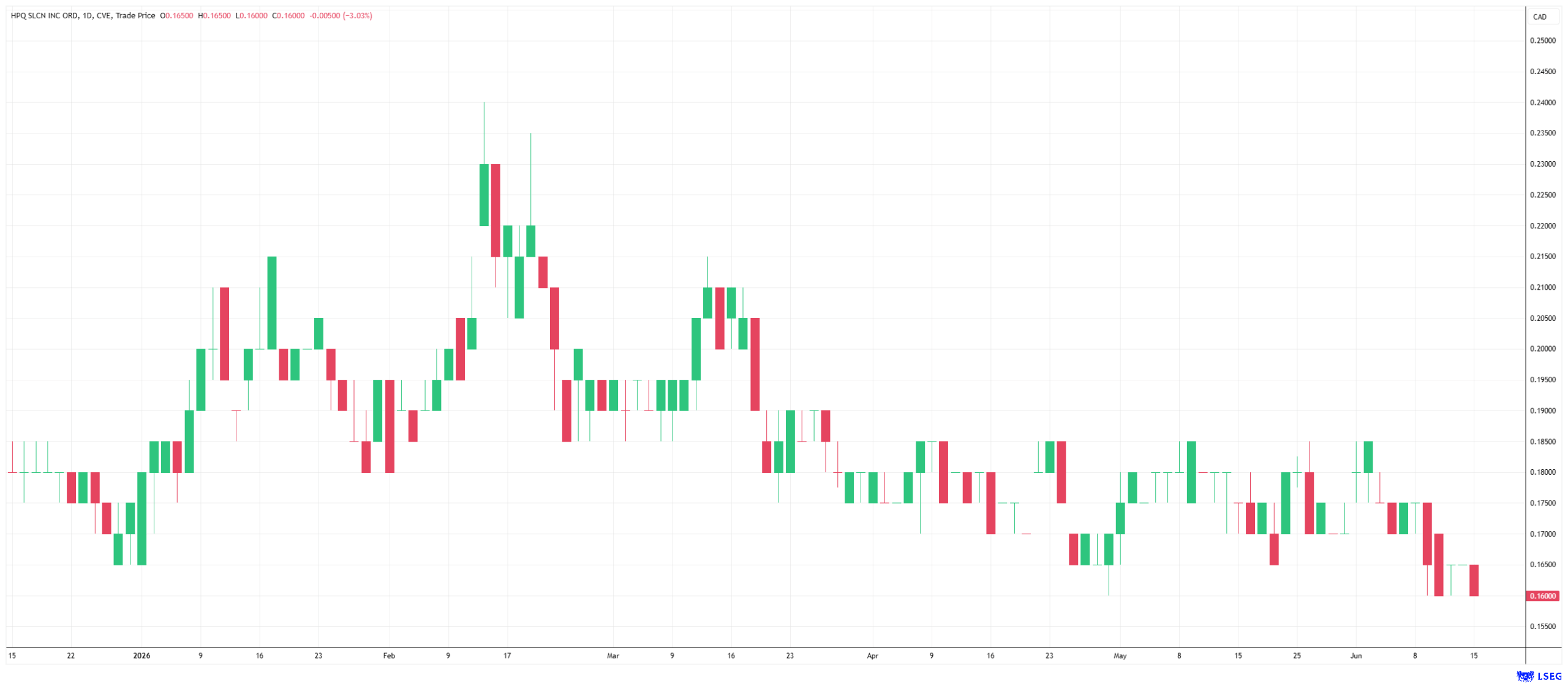
The Canadian cleantech company HPQ Silicon acts as a technology licensor for environmentally friendly specialty silicon materials and as a specialized materials producer. The patented PUREVAP™ system, developed in collaboration with PyroGenesis, converts quartz sand directly into high-purity silicon metal in a single plasma-vacuum process, reducing raw material requirements by over 25% compared to industry standard while simultaneously lowering energy consumption. In extensive stress tests on industrially manufactured 18650 cells, the GEN3 batteries modified with the Novacium material demonstrated outstanding stability. After 1,000 continuous charge cycles, the cells delivered over 3,000 mAh, retaining approximately 80% of their initial capacity. In contrast, Panasonic's premium NCR18650GA cell dropped to 70% residual capacity after only about 300 cycles. While such comparative tests can only roughly simulate real-world scenarios, they nevertheless provide insight into the potential of innovative processes. This is all the more true when there are tangible cost advantages as well.
HPQ Silicon: Using Subsidies to Scale Up Commercially
To move from validating a new technology to commercial-scale production, management is currently concentrating all resources and securing non-dilutive subsidies. The silicon anode project is receiving up to CAD 3 million in funding from the Canadian federal government, intended to cover the investment costs of an initial production facility with an annual capacity of 50 metric tons. For the parallel fumed silica business under the subsidiary HPQ Silica Polvere, a Memorandum of Understanding (MOU) executed in February 2026 establishes a joint venture framework to secure project financing for a 1,000-metric-ton commercial facility valued at over CAD 27 million, while a letter of intent (LOI) announced in July 2024 with the German chemical company Evonik represents a critical operational step toward validating this technology.
Conclusion: Precedence Research Forecasts Explosive Market Growth Through 2035
The silicon sector is gaining momentum due to intense pressure to innovate, as the automotive industry pushes for ever-greater performance. According to Precedence Research, the global market for silicon anode batteries most recently grew to approximately USD 540 million and is expected to rise to over USD 26 billion by 2035. This growth would correspond to an average annual growth rate of around 47%. Since the nano-silicon powders produced by HPQ meet industry requirements, as validated in the laboratory, the young company is in an excellent position. Since management itself holds around 7% of the shares, HPQ shareholders are in the same boat as the company's leaders. HPQ Silicon is a promising company that tech-savvy investors should take a closer look at.
Watch YouTube videoConflict of interest
Pursuant to §85 of the German Securities Trading Act (WpHG), we point out that Apaton Finance GmbH as well as partners, authors or employees of Apaton Finance GmbH (hereinafter referred to as "Relevant Persons") may hold shares or other financial instruments of the aforementioned companies in the future or may bet on rising or falling prices and thus a conflict of interest may arise in the future. The Relevant Persons reserve the right to buy or sell shares or other financial instruments of the Company at any time (hereinafter each a "Transaction"). Transactions may, under certain circumstances, influence the respective price of the shares or other financial instruments of the Company.
In addition, Apaton Finance GmbH is active in the context of the preparation and publication of the reporting in paid contractual relationships.
For this reason, there is a concrete conflict of interest.
The above information on existing conflicts of interest applies to all types and forms of publication used by Apaton Finance GmbH for publications on companies.
Risk notice
Apaton Finance GmbH offers editors, agencies and companies the opportunity to publish commentaries, interviews, summaries, news and the like on news.financial. These contents are exclusively for the information of the readers and do not represent any call to action or recommendations, neither explicitly nor implicitly they are to be understood as an assurance of possible price developments. The contents do not replace individual expert investment advice and do not constitute an offer to sell the discussed share(s) or other financial instruments, nor an invitation to buy or sell such.
The content is expressly not a financial analysis, but a journalistic or advertising text. Readers or users who make investment decisions or carry out transactions on the basis of the information provided here do so entirely at their own risk. No contractual relationship is established between Apaton Finance GmbH and its readers or the users of its offers, as our information only refers to the company and not to the investment decision of the reader or user.
The acquisition of financial instruments involves high risks, which can lead to the total loss of the invested capital. The information published by Apaton Finance GmbH and its authors is based on careful research. Nevertheless, no liability is assumed for financial losses or a content-related guarantee for the topicality, correctness, appropriateness and completeness of the content provided here. Please also note our Terms of use.