September 11th, 2026 | 08:10 CEST
The Anode Is the Key: How Ferroglobe, Wacker Chemie and HPQ Silicon Aim to Break China's Market Dominance
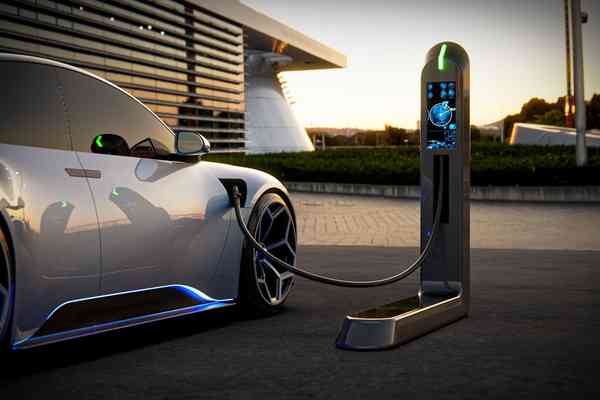
Anyone getting into an electric vehicle today takes a range of several hundred kilometres and fast charging on the highway for granted. Yet while EVs may be relatively straightforward to use today, their supply chains have weak points. While Western buyers focused for years on cathode metals such as lithium and cobalt, Beijing has secured almost complete control over the anode. Without graphite from the Far East, nearly every Western battery factory would currently be at a standstill. The International Energy Agency (IEA) puts China's share of global anode material production capacity at 97%. For the West, the way forward lies in innovative materials such as silicon and its smart application. We take a closer look at innovative business models.
time to read: 3 minutes | Author: Nico Popp
ISIN: FERROGLOBE PLC DL 7_50 | GB00BYW6GV68 , WACKER CHEMIE O.N. | DE000WCH8881 , HPQ SILICON INC | CA40444L1031 | TSXV: HPQ , OTCQB: HPQFF
Table of contents:
Author

Nico Popp
At home in Southern Germany, the passionate stock exchange expert has been accompanying the capital markets for about twenty years. With a soft spot for smaller companies, he is constantly on the lookout for exciting investment stories.
Tag cloud
Shares cloud
Ferroglobe Scores with Nano-Coated Metallurgical Silicon
Ferroglobe offers a lot to help Western industry break free from its dependence on China. The company relies on its own production facilities and smelters in North America and Europe. Instead of using the expensive chemical vapor deposition process, Ferroglobe purifies commercially available silicon entirely without acid treatments. In this thermal process, Ferroglobe's purified silicon metal reaches 99.995% purity. The material is then mechanically ground to micrometre size. To prevent silicon's dreaded swelling during the charging cycle, Ferroglobe partnered with the California-based specialist Coreshell. Its nanocoating wraps around the particles like an elastic protective shield and prevents electrolyte decomposition. Together, the partners presented automotive-grade 60-Ah battery cells whose anode consists of 80% silicon and retained over 90% of its initial capacity after more than 475 cycles. On a per-kilogram basis, this recycled silicon costs about 50% less than synthetic graphite. This shows that innovation is possible.
Wacker Chemie: Joining Forces Against Beijing's Market Power
Wacker Chemie, based in Munich, is taking a different approach. As the only major European manufacturer of ultra-high-purity silicon for the semiconductor and solar industries, this long-established Bavarian company operates several production sites. A company-owned silicon metal smelter in Holla, Norway, ensures the supply of raw materials. Thanks to the use of Norwegian hydropower, Wacker Chemie's silicon production is likely to emit less CO₂ than many comparable facilities in China—though Wacker has not provided specific comparative figures on this. However, Wacker Chemie does not limit itself to the silicon business alone but is strategically positioning itself across the entire value chain. To enter large-scale production, Wacker Chemie has held a 25% strategic stake in the British battery specialist Nexeon since September 2019.
HPQ Silicon: Reaching Record Levels Thanks to Plasma Technology
While major corporations are modifying existing facilities, HPQ Silicon in Montreal, Canada, is taking a fundamentally new approach. Together with plasma specialist PyroGenesis, the company completely bypasses the complex, multi-step processing of metallurgical silicon. At the heart of the Canadian company's technology is the patented PUREVAP process. The quartz reduction reactor converts quartz directly into high-purity silicon metal, with purity levels ranging from 99.9% to 99.99%, in a single, continuous process step. Thanks to its energy efficiency, HPQ Silicon's reactor significantly reduces electricity consumption compared to conventional arc furnaces. This is where the Nano Silicon Reactor comes in, which immediately converts the liquid silicon into nanopowder and nanowires via plasma gas atomization—eliminating the need for mechanical grinding.

The French subsidiary Novacium, based in Lyon, handles the refinement of the material into production-ready anodes. Novacium combines surface-modified silicon particles with synthetic graphite to create high-strength hybrid materials. **In endurance tests using standardized 18650 cells, Novacium's GEN3 material still exhibited a capacity of around 80% after 1,000 cycles. Meanwhile, HPQ has already tested the fourth generation and has once again made progress. A notable feature of HPQ's products is the completely linear decline in performance, which allows battery management systems to make precise calculations and get the most out of the batteries.
HPQ Silicon: Expansion Plans and Batteries for the Military
HPQ Silicon is not content with just laboratory successes; it is developing commercial supply chains. Under the brand name HPQ ENDURA+, the Canadian company has already delivered its first demonstration batches of cylindrical cells in the 18650 and 21700 form factors to partners in the automotive and defence industries. For use in unmanned aerial vehicles, the company is accelerating its pace even further. Using advanced GEN4 composite materials, HPQ Silicon's batteries in drone battery packs achieved an energy density of 395 Wh/kg. To tap into the lucrative European market, HPQ Silicon is relying on collaborations with established local industry partners to eventually establish large-scale production of silicon-based anode materials in Europe.
Although concrete construction plans are still pending, European demand, which HPQ itself estimates at around 300,000 metric tons of silicon anode material by 2030, underscores the strategic importance of such partnerships. Since the modular plasma reactors require a manageable investment compared to massive chemical plants, HPQ Silicon's approach could have a promising future. Given the regulatory tailwind for technologies that make Western industry less dependent on imports and the investments in defence, HPQ Silicon appears to be well-positioned. Investors may want to take a closer look at the stock.
Watch YouTube videoConflict of interest
Pursuant to §85 of the German Securities Trading Act (WpHG), we point out that Apaton Finance GmbH as well as partners, authors or employees of Apaton Finance GmbH (hereinafter referred to as "Relevant Persons") may hold shares or other financial instruments of the aforementioned companies in the future or may bet on rising or falling prices and thus a conflict of interest may arise in the future. The Relevant Persons reserve the right to buy or sell shares or other financial instruments of the Company at any time (hereinafter each a "Transaction"). Transactions may, under certain circumstances, influence the respective price of the shares or other financial instruments of the Company.
In addition, Apaton Finance GmbH is active in the context of the preparation and publication of the reporting in paid contractual relationships.
For this reason, there is a concrete conflict of interest.
The above information on existing conflicts of interest applies to all types and forms of publication used by Apaton Finance GmbH for publications on companies.
Risk notice
Apaton Finance GmbH offers editors, agencies and companies the opportunity to publish commentaries, interviews, summaries, news and the like on news.financial. These contents are exclusively for the information of the readers and do not represent any call to action or recommendations, neither explicitly nor implicitly they are to be understood as an assurance of possible price developments. The contents do not replace individual expert investment advice and do not constitute an offer to sell the discussed share(s) or other financial instruments, nor an invitation to buy or sell such.
The content is expressly not a financial analysis, but a journalistic or advertising text. Readers or users who make investment decisions or carry out transactions on the basis of the information provided here do so entirely at their own risk. No contractual relationship is established between Apaton Finance GmbH and its readers or the users of its offers, as our information only refers to the company and not to the investment decision of the reader or user.
The acquisition of financial instruments involves high risks, which can lead to the total loss of the invested capital. The information published by Apaton Finance GmbH and its authors is based on careful research. Nevertheless, no liability is assumed for financial losses or a content-related guarantee for the topicality, correctness, appropriateness and completeness of the content provided here. Please also note our Terms of use.