
nuclear

Commented by Armin Schulz on May 29th, 2026 | 09:25 CEST
BP, American Atomics, NextEra Energy: Iran Conflict Highlights the Importance of a Diversified Energy Mix for the Future
Oil prices fluctuate in step with the threats in the Middle East, and a full-scale conflict with Iran would be the ultimate stress test for our energy supply. But the real turning point is happening elsewhere. Artificial intelligence consumes electricity like a small town—every large language model, every mining data center. Electric vehicles and robotic factories are further multiplying demand. The result: an unprecedented need for baseload-capable, clean energy. Wind and solar alone cannot meet this demand. That is why nuclear power is experiencing a renaissance—and presenting savvy investors with a historic opportunity. Three companies embody this trend in radically different ways: BP, a beneficiary of the Iran war; American Atomics, a pure-play uranium explorer; and NextEra Energy, a green giant.
Read

Commented by Nico Popp on May 26th, 2026 | 06:50 CEST
Meta and Cameco's Hunger for Uranium—Solutions from Sandstone: Why America's AI Infrastructure Also Depends on American Atomics
AI's energy appetite is enormous—and is reaching its limits in many areas. While the exponential increase in the computing power of AI models is pushing the capacity limits of power grids, the US Department of Energy forecasts that data centers could account for up to 12% of the total grid load in the US by 2030. Since volatile renewable energy sources cannot guarantee the baseload for gigawatt-class data centers, nuclear power is taking center stage. We examine how Meta and others view nuclear energy, the challenges hyperscalers must overcome, and why there are strong arguments for uranium from the US.
Read
Commented by Fabian Lorenz on May 25th, 2026 | 09:20 CEST
D-Wave Stock Explodes! When Will American Atomics Follow? Is Siemens Energy Headed Above EUR 200?
Things can move quickly sometimes. For a while, it seemed as though quantum-computing stocks were being overshadowed by the AI hype. Then, on Thursday, the breakout finally came. Shares of D-Wave, for example, skyrocketed by 36% within just two trading days, suggesting that the recent consolidation phase may now be over. An explosive upward trend appears long overdue in the uranium sector as well. Investments in new nuclear power plants are being made worldwide. The US Department of Energy, for instance, plans to increase domestic uranium production from currently around 2 million pounds annually to 20 million pounds by 2033. American Atomics could benefit significantly from this development. In a recent interview, the company's founder highlighted the opportunities emerging across the sector. The company also controls several promising projects within the US. The AI boom in the US is also driving Siemens Energy. Analysts have raised their price targets further and currently see no end to the ongoing boom.
Read

Commented by André Will-Laudien on May 22nd, 2026 | 07:20 CEST
AI data centers need nuclear power — 70-100% more energy by 2050! Spotlight on American Atomics, SAP, and ServiceNow
The global economy is in the midst of a new infrastructure supercycle, in which the new source of productivity is being sought in the widespread use of digitalization and AI. The physical foundations of extensive AI use are creating unprecedented demand for system components related to energy generation and storage. Electricity, grids, cooling, and raw materials—the demand seems endless. Yet just a few years ago, climate goals were still a major concern. With the explosive growth in demand from data centers, not only are energy sources like nuclear power coming to the fore, but also critical metals for turbines, cables, storage systems, and chips. Goldman Sachs expects data center electricity demand to more than double by the end of the decade—a scenario that makes CO₂-free baseload power a matter of strategic survival. Although nuclear power plants have been largely dismissed in the EU, they are once again moving to the center of the debate as reliable electricity suppliers and are becoming serious partners for tech companies. A deeper look is worthwhile.
Read

Commented by Stefan Feulner on May 18th, 2026 | 07:15 CEST
SolarEdge, American Atomics, Verbio – The Battle for the Future of Energy Begins Now
Global energy demand is skyrocketing. AI data centers, electric mobility, and advancing digitalization, in particular, are driving electricity consumption to ever-new record levels. At the same time, existing supply systems are coming under increasing pressure. This is currently creating enormous opportunities across several future-oriented industries simultaneously. While uranium and nuclear fuel supplies could benefit from the renaissance of nuclear energy, modern storage technologies, solar infrastructure, and alternative energy sources are also coming back into sharp focus for investors. Government subsidy programs, geopolitical tensions, and infrastructure investments worth billions could give rise to new favourites in the long term.
Read
Commented by Armin Schulz on May 18th, 2026 | 07:10 CEST
The Billion-Dollar Opportunity of Base Load Power: Why RWE, Standard Uranium, and Cameco Are the Hidden Winners of the AI Boom
The insatiable appetite of AI data centers, electric vehicles, and digital networks is driving global electricity demand to record levels. Suddenly, it is not just the carbon footprint that matters, but above all, round-the-clock power availability. The return of nuclear power as a reliable baseload is being discussed again—and is giving savvy investors a second chance. While some are betting on stable grids, others are searching for tomorrow's raw materials or are already controlling the supply chains. Three completely different companies are positioned right at this intersection: RWE, Standard Uranium, and Cameco.
Read
Commented by Nico Popp on May 12th, 2026 | 07:15 CEST
Nuclear Power for AI: How Amazon, Paladin Energy, and Standard Uranium Are Fueling the New Uranium Supercycle
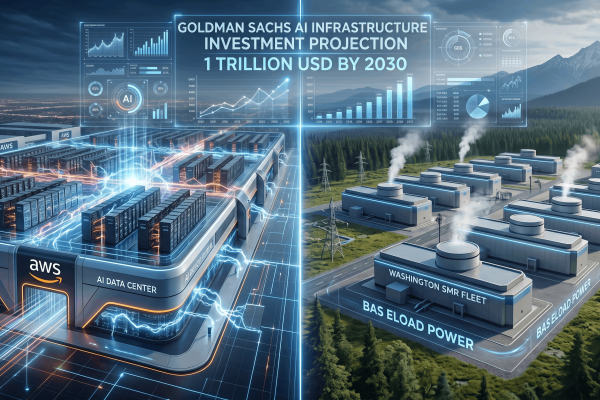
The world is changing at an ever-faster pace. While the first phase of decarbonization was primarily driven by renewable energy from wind and solar power, the unprecedented rise of AI models has exposed a weakness in this strategy - the lack of carbon-free baseload power. For this reason, alliances are now forming between the tech giants of Silicon Valley and the resource pioneers of Canada's Athabasca Basin. The goal: to secure the future of digital infrastructure. The global energy landscape is thus at a turning point where purely ideological debate is giving way to harsh economic reality. While the years following the Paris Agreement were marked by ambitious goals, the current decade is defined by industrial sovereignty and profitability. We highlight opportunities.
Read

Commented by Tarik Dede on May 7th, 2026 | 08:40 CEST
Geopolitical Winners: Kinross Gold, Standard Uranium, and Lynas Rare Earths
The conflict in the Persian Gulf has overshadowed many geopolitical issues, but it has also brought some problem areas to light. One thing is clear: the world is building new supply chains, especially the West. Lynas Rare Earths is in pole position in the rare earths market as the largest producer outside China. Standard Uranium, in turn, can benefit from the boom in energy demand and the shift by many countries back to nuclear energy. Not least, more and more countries and central banks are shunning the dollar. Who wants to be blackmailed by Washington? Accordingly, gold producers like Kinross Gold find themselves in a sweet spot, as the latest quarterly figures also show.
Read
Commented by Nico Popp on April 29th, 2026 | 11:05 CEST
Powering the AI Revolution: OpenAI, Amazon, and Nuclear Pioneer American Atomics
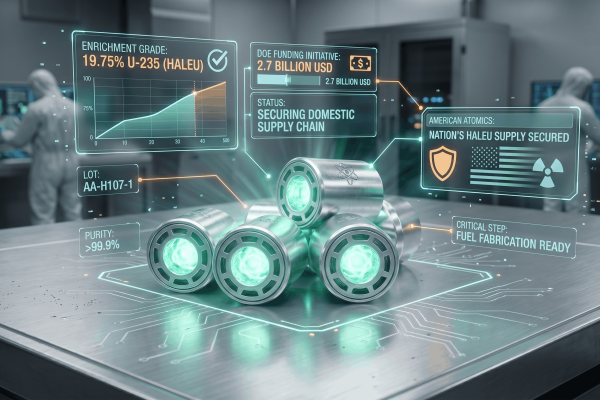
The global economy is currently undergoing a fundamental transformation that experts describe as the beginning of a new infrastructure supercycle. While software innovations and platform economies have been at the forefront in recent decades, the rapid development of artificial intelligence (AI) has shifted the focus to the tangible prerequisites of digitalization: energy and computing power. The hunger for electricity triggered by the next generation of Large Language Models (LLMs) and autonomous AI agents is forging new alliances: Leading technology conglomerates and the nuclear industry have long been joining forces. According to recent analyses by Goldman Sachs, data center energy demand worldwide will more than double by the end of the decade, making the search for CO₂-free baseload power an existential issue for Silicon Valley. We shed light on this trend and highlight opportunities.
Read

Commented by Mario Hose on April 29th, 2026 | 07:20 CEST
Hot Plays for Tomorrow's Power Supply: Are Siemens Energy, Nordex, and Standard Uranium About to Take Off?
Big money follows the power. While the major players in wind and grid technology, like Siemens Energy and Nordex, are finally regaining profitability after years of uncertainty, a smaller player in the far north of Canada is quietly preparing to move up the ranks. It is no longer just about green promises, but about hard market data and strategic raw material security. Can the German heavyweights sustain their upward momentum? And is Standard Uranium, after a painfully long sideways phase, really on the verge of doubling? We have analyzed the latest developments and highlighted why these three stocks could be set to move right now. The market is still catching its breath—but the calm before the storm may pass faster than many investors expect. Read on to see what signals the sector is sending at this moment.
Read