
geopolitics

Commented by Lars Winter on August 11th, 2026 | 07:45 CEST
Almonty Industries, Deutz, and GFT: Strong Upside Potential Thanks to Tungsten, Defense, and AI
Commodities, defense, and artificial intelligence are among the major stock market themes of our time. Three companies are currently making headlines in these areas. With its new tungsten mine in South Korea, Almonty Industries has evolved from a project developer to a producer. Engine manufacturer Deutz is establishing a second pillar in the defense sector through a multi-billion-euro acquisition. And software specialist GFT is demonstrating for the first time on a large scale that it can generate revenue with its own AI solutions. Three stocks with strong drivers for price growth—but very different risks.
Read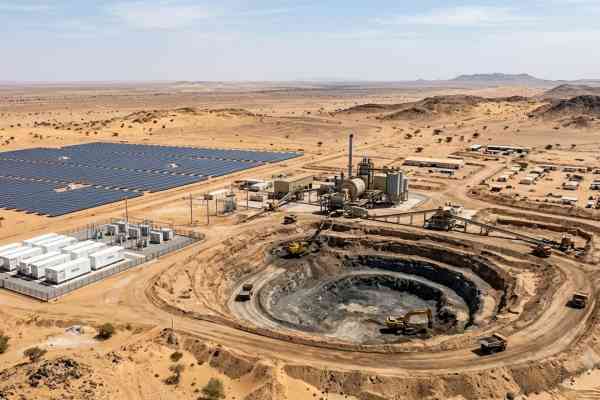
Commented by Tarik Dede on August 11th, 2026 | 07:40 CEST
Commodity Stocks on the Verge of a Breakout? First Majestic Silver, Globex Mining and B2Gold in Focus
Until recently, markets largely took it for granted that US interest rates would rise this year. But several factors now point in the opposite direction, not least Donald Trump's calls for lower rates. More importantly, the economic data is increasingly arguing against a rate hike, even though inflation remains elevated and above the Federal Reserve's target range. Most recently, it was the weak US jobs data that fueled the markets. Instead of creating new jobs, the US economy is currently seeing employment decline. For precious metals, this provided an additional boost following an already strong start to the week. Investors may therefore want to position themselves early, as the next rally in the sector could already be underway. Today, we take a closer look at First Majestic Silver, Globex Mining and B2Gold.
Read
Commented by Stefan Bode on August 10th, 2026 | 07:35 CEST
Beneficiaries of the New Security Landscape: Can Three Technology and Defense Stocks Continue to Soar? BAE Systems, RTX, and Volatus Aerospace
Rising global defence budgets and growing civil aviation are fueling international stock markets. Billion-dollar defence contracts and investments in security infrastructure are driving record profits across the sector. From autonomous drone systems to state-of-the-art military technology, three companies are currently demonstrating their enormous earning power with strong order books, robust margins, and new all-time highs. Read on to discover which developments are supporting this upward trend.
Read
Commented by Fabian Lorenz on August 10th, 2026 | 07:05 CEST
Tungsten Shortage Makes Headlines and Offers 100% Upside Potential: Almonty Industries, Indus Holding, and Lockheed Martin in Focus
China dominates the global tungsten market, and the West is increasingly feeling the consequences. The NZZ warns of a dangerous dependence on critical raw materials, while export controls and a lack of alternative sources are further exacerbating supply issues. This is precisely where Almonty Industries comes in. The company operates tungsten mines in Portugal and South Korea, with another operation in the US expected to come online soon. At the same time, tungsten prices are surging. According to Indus CEO Johannes Schmidt, tungsten carbide prices have roughly tripled since the beginning of the year. Almonty is not the only company benefiting from this development. Indus Holding, an investment company with exposure to the sector, has already raised its full-year guidance twice. The US military buildup is driving additional demand. With ammunition stockpiles running low, the Trump administration is putting pressure on Lockheed Martin and other defence contractors. For investors, the tungsten boom may have only just begun.
Read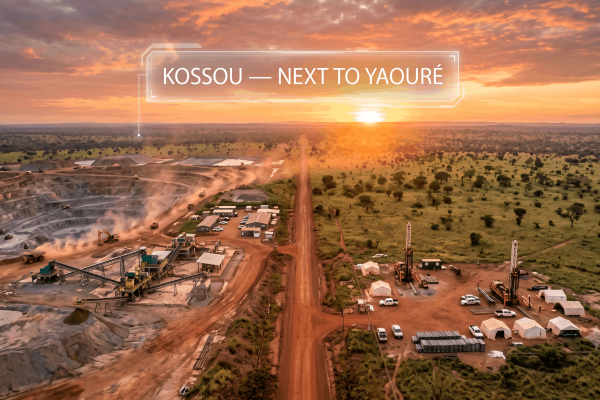
Commented by Nico Popp on August 7th, 2026 | 08:40 CEST
A New Gold Story in the West: How Endeavour Mining and Perseus Mining Are Expanding in West Africa – Could Kobo Resources Be the Next Gold Discovery?
Anyone traveling through West Africa sees a region in the midst of transformation. For years, traditional mining jurisdictions such as Guinea, Ghana, and Burkina Faso dominated gold production, while Côte d'Ivoire remained largely overlooked despite its substantial mineral endowment. That picture is now changing. Reliable infrastructure, an increasingly attractive regulatory framework, and growing investor confidence are drawing fresh capital into the country. As established mining operations seek to replenish their reserves, agile exploration companies are positioning themselves to discover and develop the next generation of gold mines in Côte d'Ivoire. For investors, this evolving landscape is creating compelling new opportunities.
Read
Commented by Fabian Lorenz on August 7th, 2026 | 07:15 CEST
Rheinmetall Challenges TKMS! Renk Shares Jump 20%, While Volatus Aerospace Unveils New Drone Application
Renk shares have gained about 20% in value in just a few days. Yesterday, the company released its half-year results, which delivered a mixed picture. The key question now is whether the recent rally still has room to run. Meanwhile, DroneShield shares have surged by nearly 30% in recent trading. Even so, Volatus Aerospace has outperformed so far in 2026, and the drone specialist's shares may still offer additional upside potential. The latest announcement shows that the Canadian company's growth opportunities are strong not only in the military sector but also in the civilian sector. In the future, Volatus plans to deploy autonomous heavy-lift aircraft for wildfire suppression, disaster response, and a range of other government applications across Canada, further strengthening its position in the rapidly expanding market for commercial and public-sector drone services.
Read
Commented by André Will-Laudien on August 6th, 2026 | 07:10 CEST
Use the Pullback in Gold as a Buying Opportunity? 100% Upside with Barrick Mining, Desert Gold, TUI, and Lufthansa
Every day, we are bombarded with headlines about wars, conflicts, and human tragedies—who has the heart to think about vacation right now? Yet it is precisely in moments like these that taking a break can be more valuable than ever. Investors have been navigating a maze of geopolitical uncertainty for years. Yet, the stock markets have so far shown remarkable resilience—because there are always sectors that come into sharp focus during times of crisis. Precious metals like gold and silver have confidently weathered the inflationary spikes following the COVID-19 pandemic. Historical data shows that gold has generated positive real returns during all periods of inflation—averaging about 6.2% per year over the long term, and as high as 8.8% during periods of high inflation. The travel sector, on the other hand, is on an emotional roller coaster. Current conflicts, particularly in the Middle East, are leading to declines in bookings, rising energy prices, and uncertainty among both travelers and providers. If an itinerary is too risky, plans must be changed at the last minute. But as soon as the situation eases, catch-up effects follow. What has worked in recent years is back on the agenda: buy when the world seems to be falling apart.
Read
Commented by Armin Schulz on August 5th, 2026 | 07:05 CEST
How Almonty Industries, Rheinmetall, and RTX Are Driving the New Defense Supercycle—and Why the Correction Could Be an Opportunity
The New York Post recently reported that, according to experts, the US does not have enough missiles to protect its troops in the Middle East in the event of a protracted war with Iran. This means that the West has largely depleted its ammunition stockpiles. A defense supercycle is on the horizon, forcing nations to become self-sufficient. This rapid depletion is revealing a critical bottleneck. The dwindling availability of tungsten, whose price has skyrocketed, threatens to jeopardize resupply efforts. We take a look at tungsten supplier Almonty Industries, then examine the European defense giant Rheinmetall, and conclude with the technological leader of the US missile industry, RTX.
Read
Commented by Tarik Dede on August 4th, 2026 | 07:15 CEST
Commodity Stocks with Potential: Endeavour Silver, Almonty Industries, and Agnico Eagle in the Spotlight
Interest rates, bond yields, and oil prices continue to shape market sentiment. Although the Federal Reserve left interest rates unchanged last week, market pressure remains high. The new trading week began with another rise in bond yields, further increasing the cost of refinancing US government debt, which has now surpassed USD 40 trillion. Against this backdrop, the US can ill afford a sustained period of higher interest rates. For commodity markets, however, the environment could prove supportive. Many mining and resource stocks have retreated significantly following the correction earlier this year, potentially creating attractive entry opportunities. We therefore take a closer look at Agnico Eagle, Almonty Industries, and Endeavour Silver and examine where investors may find value.
Read
Commented by Carsten Mainitz on August 3rd, 2026 | 07:40 CEST
Drones, Data, Industrial Intelligence: How These Promising Trends Are Paying Off for Volatus Aerospace, Palantir, and Schaeffler
AI is revolutionizing numerous industries. Robotics and automation are accelerating, and the resulting trends reinforce one another. At the same time, massive geopolitical shifts are resulting not only in rising defence spending but also in a shift in priorities toward (technological) sovereignty, resilient supply chains, and securing (digital) infrastructure. Palantir provides the technical foundation for many of these areas. Schaeffler is synonymous with expertise in industrial manufacturing. Volatus Aerospace, on the other hand, combines multifaceted expertise into a high-growth ecosystem. As an integrated provider of autonomous aviation systems, reconnaissance, software, training, and defence technologies, the Canadian company is benefiting significantly from a surge in orders from the NATO community. Proprietary platforms are driving growth and making it more scalable while margins rise.
Read