
Uranium
Commented by Stefan Feulner on July 20th, 2026 | 07:05 CEST
Cameco, American Atomics, and ElringKlinger Make a Splash
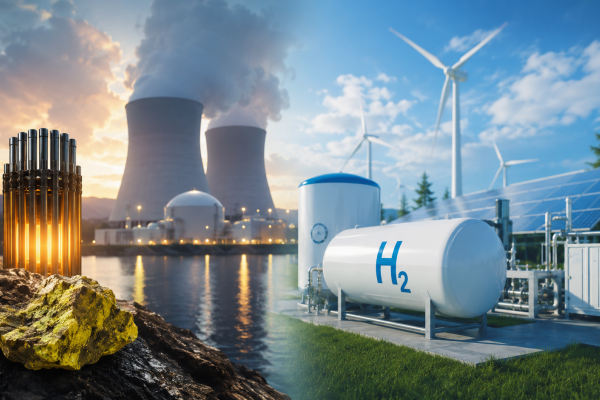
The next long-term investment trend is taking shape in the capital markets. While many investors focus on short-term price fluctuations, future markets worth billions are emerging in the background. The expansion of nuclear energy, the industrial use of hydrogen, and the development of independent raw material and supply chains are gaining momentum worldwide. At the same time, the transformation of the automotive industry is opening up new opportunities in the global auto parts business. Companies that benefit early on from these structural developments could be poised for a sustained revaluation.
Read
Commented by Fabian Lorenz on July 17th, 2026 | 09:00 CEST
The End of Siemens Energy? SMA Solar Looks Ahead with Confidence! American Atomics: A Stock for the Uranium Rally!
The stage appears to be set for another uranium rally. Prices are rising again, while experts expect a significant expansion of global nuclear power capacity—and, with it, growing uranium demand. Against this backdrop, American Atomics stands out as an attractive speculative addition to a diversified portfolio. Two exciting projects in the US are expected to generate news flow in the second half of the year and drive the stock higher. Until nuclear power plants can fully meet the soaring energy demands of artificial intelligence, data centers will rely heavily on gas-fired power generation. This is the foundation of Siemens Energy's success. Now, one of Germany's most impressive growth stories of recent years is set to continue under a new corporate name. Meanwhile, SMA Solar is staging a comeback. In a recent interview, the company's CEO explains how the solar company is positioned and looks confidently toward the future. Analysts see further upside potential.
Read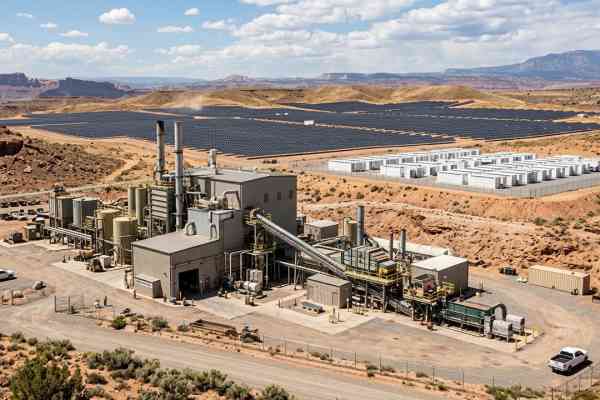
Commented by Tarik Dede on July 15th, 2026 | 11:10 CEST
The Perfect Storm: Wars Are Driving Energy Stocks Like Occidental Petroleum, American Atomics, and First Solar
The war in the Persian Gulf is escalating again. There appears to be no chance of a peaceful resolution between the warring parties at this time. Meanwhile, refineries in Russia are burning, which is also jeopardizing diesel supply in Germany. Prices for oil, gas, and other energy commodities are rising again. The markets have reacted swiftly, driving up shares in the energy sector. One thing is clear: a precarious situation is unfolding, especially as oil reserves are dwindling even in the US, despite record-high production there. However, the high prices also encourage us to look beyond the oil market. The comeback of nuclear energy and the continued rise of solar power offer opportunities. That is why we are taking a look today at the stocks of Occidental Petroleum, American Atomics, and First Solar.
Read
Commented by Armin Schulz on July 14th, 2026 | 07:35 CEST
Green Steel, Vanadium Batteries, and Uranium: thyssenkrupp, Strategic Resources, and Energy Fuels Power Industry 4.0
The old saying that crises create the greatest opportunities appears to be playing out once again in the commodity markets of 2026. While the global economy continues to struggle for stability, sharp moves in the prices of gold, oil, and other raw materials are highlighting growing uncertainty for investors. In the commodities sector, China has often established a kind of monopoly. As a result, Western governments and companies are increasingly seeking alternative sources of strategically important raw materials. Green steel, vanadium batteries, electric mobility, wind power, defense systems, and next-generation energy infrastructure all depend on secure and reliable supplies. In this article, we take a closer look at thyssenkrupp as a major industrial consumer, alongside Strategic Resources and Energy Fuels, two companies positioned to benefit as suppliers of critical materials.
Read
Commented by André Will-Laudien on July 13th, 2026 | 07:35 CEST
Nuclear Energy 3.0: Computing Power for AI and the Cloud – Standard Uranium, AMD, Broadcom, and SpaceX Can Deliver
According to McKinsey's forecasts, massive data center capacity will be needed to fully support global AI growth through 2030. In total, the high-tech industry will need to invest approximately USD 5.2 billion in AI infrastructure alone. At the same time, the International Energy Agency (IEA) forecasts that global electricity demand for the required computing power will more than double to 945 terawatt-hours. In this highly capital-intensive environment, AMD and Broadcom are positioning themselves as challengers in the chip market, while SpaceX is attracting visionary attention with its connectivity services and space-based energy concepts. Slightly upstream, but serving as an important bridge, is the uranium industry—a raw material that is in high demand for the construction of the next generation of power plants. Who is best positioned in this market?
Read
Commented by Nico Popp on July 9th, 2026 | 07:00 CEST
Why the Base Load Bottleneck Threatens SpaceX and Amazon—and How Standard Uranium Stands to Benefit
When you pick up your smartphone from your nightstand in the morning, you rarely give a thought to the massive infrastructure behind the scenes. But the brave new digital world of global data streams and machine-learning algorithms has an energy-hungry, and sometimes dirty, secret. Artificial intelligence consumes so much electricity that power grids are collapsing one after another. When computing power needs to keep pace with AI innovations, solar farms are no longer enough. Base load power is needed—and nuclear power provides it. So high-tech needs uranium, and that is exactly what brings the tech elite together with resource companies. We explain the connections and highlight the opportunities.
Read
Commented by Matthias Schomber on July 7th, 2026 | 07:00 CEST
Auto and Combustion-Engine Crisis Meets Nuclear Power: Volkswagen and BMW Under Pressure - American Atomics on the Verge of a Breakout?
Germany's automotive industry has reached yet another low point in its ongoing crisis. Thousands of jobs are at risk. The country has long since surrendered its technological leadership to the Chinese. Policymakers have already driven the final nail into the coffin, and the casket is practically halfway into the ground. Yet, as the saying goes, hope dies last. Perhaps Volkswagen, BMW, and Germany's other automakers can still turn the tide and stage something of a resurrection. Or the grave may simply be filled in, marking the beginning of a prolonged decline—or even a permanent one. Volkswagen and BMW continue to struggle with structural challenges, shrinking margins, and weakening international markets. Investors should increasingly reconsider where they allocate their capital. Traditional safe bets no longer offer the same reassurance, and attention is inevitably shifting toward entirely different sectors benefiting from strong political support. This is precisely where the US uranium industry could emerge as a major beneficiary, with smaller players such as American Atomics also seeking to position themselves to help meet the world's rapidly growing energy demand. It is a paradigm shift that undoubtedly carries significant risks—but also presents tangible opportunities.
Read
Commented by Armin Schulz on July 3rd, 2026 | 08:40 CEST
A Multi-Billion AI Infrastructure Boom: Secure a Decisive Edge Now with Standard Uranium, AMD, and Super Micro Computer
The AI revolution is shifting its focus. While public debate continues to revolve around algorithms and cloud platforms, the true center of power has long since shifted to the depths of physical infrastructure. After all, without sufficient energy, high-performance chips, and scalable server architectures, even the best AI code remains ineffective. The exploding power demand of modern data centers is turning uranium into a strategic resource, while semiconductor supply chains groan under immense demand, and system integration is becoming the new supreme discipline. Whoever controls these three pillars of the digital future holds the key to the industry's next phase of growth. We take a closer look at one candidate from each sector: Standard Uranium, AMD, and Super Micro Computer.
Read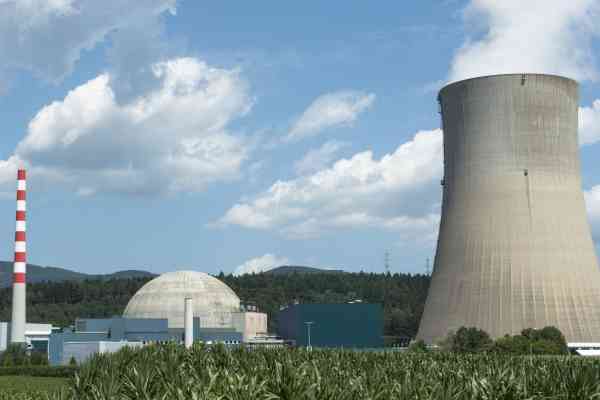
Commented by Armin Schulz on July 1st, 2026 | 06:55 CEST
Cameco, American Atomics, and Centrus Energy: How to Capitalize on the Revaluation of the Entire Sector
The uranium market is currently undergoing not just another commodity boom, but a strategic realignment across the entire value chain. Security of supply and industrial sovereignty have long since elevated nuclear fuel to a matter of national security. For investors, the focus is shifting from the mere spot price to critical bottlenecks in processing and enrichment. The actual value creation no longer occurs solely in the ground, but rather where ore is transformed into usable fuel. Whoever controls these key nodes secures the margins. Cameco, American Atomics, and Centrus Energy demonstrate how stability, leverage, and strategic scarcity can be profitably combined within the same market environment.
Read
Commented by Fabian Lorenz on June 30th, 2026 | 07:20 CEST
The US Is Pumping Billions into the Market! Uranium Stocks Like Cameco and American Atomics Are Back! What About Plug Power?
Uranium stocks are poised for a comeback. The US government is providing billions to build nuclear power plants faster and more affordably. The spot price for uranium is still low; however, one expert sees momentum and forecasts a significant price increase. Cameco should benefit from this as a core investment. American Atomics could be poised for outperformance. The Canadian explorer is working on an integrated uranium value chain in North America. Its projects in the US states of Utah and Colorado are promising. And what about Plug Power? The stock lost over 35% of its value in June. Can the latest news halt the downward trend? Analysts see upside potential.
Read