May 19th, 2026 | 07:05 CEST
Supply Chain Collapse in Battery Raw Materials: Why Panasonic, Porsche, and Others Are Increasingly Dependent on HPQ Silicon's Silicon Technology
While the majority of investors are still focused on fluctuating energy prices, experienced investors have long been positioning themselves in the niche market of advanced silicon anodes. The reason is clear: traditional graphite anodes are reaching their performance and capacity limits in electric vehicles—particularly in the premium segment. Anyone aiming to enable driving ranges of well over 500 km combined with ultra-fast charging for spontaneous long-distance travel will ultimately have to rely on a shift in cell chemistry toward high-purity silicon. However, since the industrial-scale production of this raw material relies on an extremely energy-intensive, environmentally harmful supply chain that is almost entirely controlled by China, global market leaders like Panasonic are under pressure to reorganize their supply chains. This is precisely where the innovative company HPQ Silicon could become highly relevant.
time to read: 3 minutes | Author: Nico Popp
ISIN: HPQ SILICON INC | CA40444L1031 | TSXV: HPQ , OTCQB: HPQFF , PANASONIC CORP. | JP3866800000 , PORSCHE AG | DE000PAG9113
Table of contents:
Author

Nico Popp
At home in Southern Germany, the passionate stock exchange expert has been accompanying the capital markets for about twenty years. With a soft spot for smaller companies, he is constantly on the lookout for exciting investment stories.
Tag cloud
Shares cloud
Graphite and the Geopolitical Monopoly
The ongoing transformation in battery technology is rooted in the physical properties of the most common anode materials: silicon has a theoretical capacity of around 3,579 milliampere-hours per gram, exceeding the maximum capacity of conventional graphite—at just 372 milliampere-hours per gram—by nearly a factor of nine. An analysis by Grand View Research forecasts extremely dynamic growth for the global silicon-anode battery market through 2030, with a projected compound annual growth rate of 47.8%. According to the analysts, this development is being driven by rising demand for maximum performance in electric mobility. However, the industry has so far been hampered by a historically established production monopoly: more than 70% of the world's metallurgical silicon is produced in the People's Republic of China. Traditional, energy-intensive silicon production using the Siemens process highlights the immense pressure for more efficient alternatives. The process, dating back to 1899, is associated with high energy consumption and correspondingly high CO₂ emissions.
Panasonic and Porsche: Industry Leaders Under Pressure
The consequences of supply chains reliant on China are hitting major industrial groups hard. As one of the world's largest battery suppliers, Panasonic is under pressure to secure large quantities of high-purity, ESG-compliant silicon for its next-generation batteries. Panasonic's management plans to increase the energy density of its 2170 and 4680 cylindrical lithium-ion cells by a total of 25% by 2030 to defend its technological leadership against Asian competitors. To supply the US market, Panasonic is expanding regional manufacturing capacity, including a new Gigafactory in Kansas, scheduled to begin operations in 2026.

At the same time, premium automaker Porsche is relying on the latest technology to meet its customers' demands. The sports car manufacturer is working on a second generation of high-performance cells that use a silicon-dominated anode to drastically reduce internal resistance. This reduces charging time from 10% to 80% of total capacity to less than 15 minutes. Even though Porsche has recently given internal combustion engines priority again, the latest technology is what matters most, especially in the premium segment. However, in a significant strategic realignment, Porsche announced on May 8, 2026 the complete closure of its battery cell subsidiary Cellforce Group GmbH, withdrawing from in-house cell development and concentrating on module assembly and external cell procurement.
HPQ Silicon Delivers Innovation from the Quartz Reactor
The Canadian public company HPQ Silicon is considered an innovator in silicon technology. The company relies on its patented PUREVAP™ Quartz Reduction Reactor, which was developed in close cooperation with plasma technology specialist PyroGenesis Canada. This enables HPQ Silicon to reduce the energy required to convert quartzite into high-purity silicon by a full 75% compared to the traditional Siemens process. This is made possible by HPQ producing silicon with a purity of over 99.5% in a single step without complex intermediate stages. Furthermore, the approach stands out for its material efficiency—HPQ requires only 2.5 tons of quartzite to produce one ton of pure silicon. Conventional processes consume up to 6 tons of raw material.
HPQ Silicon in a Promising Phase
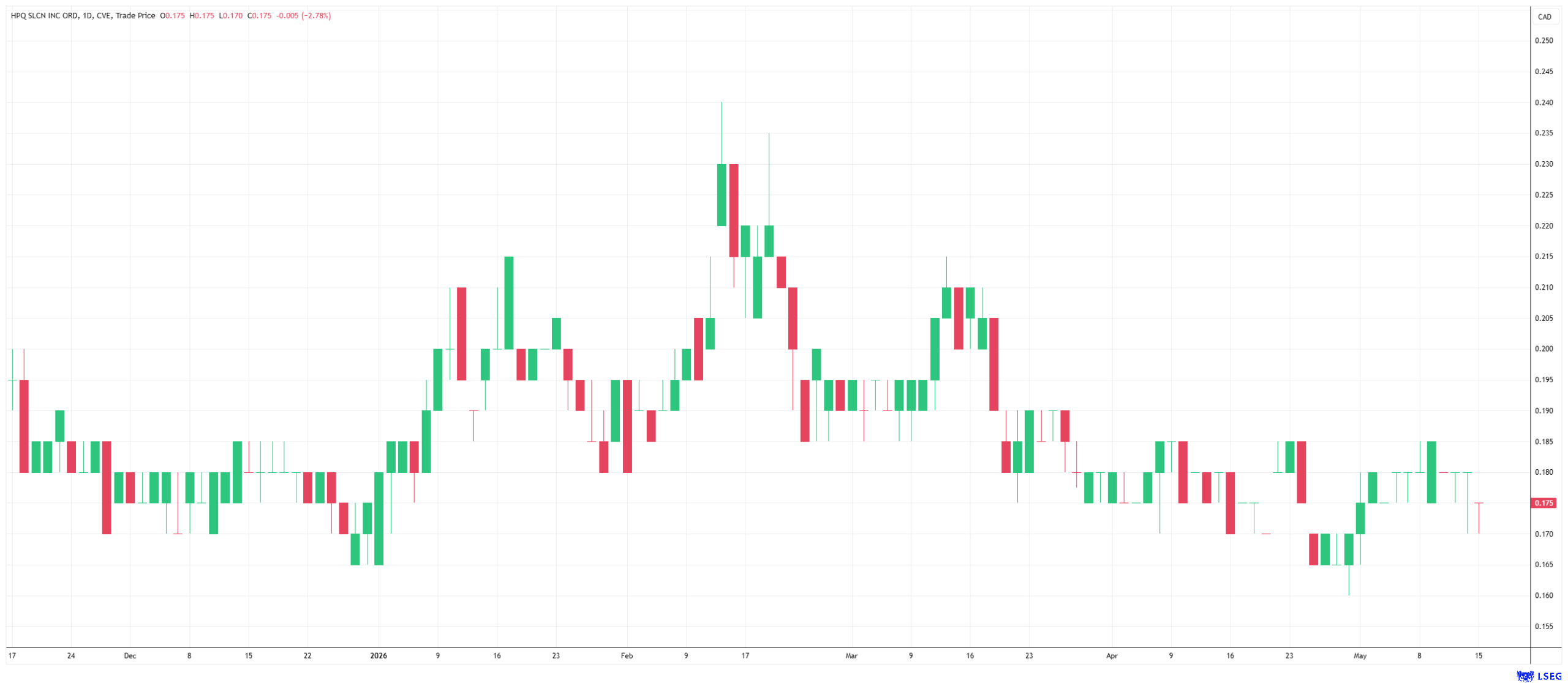
HPQ Silicon is currently valued at approximately CAD 80 million. The reason for this is the company's early stage, on the cusp of transitioning from the pilot phase to commercial production. This situation opens a window of opportunity for speculative investors, as HPQ's technology has already been partially validated through initial commercial supply agreements. Just recently, the company signed a memorandum of understanding (MOU) with a company in Northern Germany to explore the potential supply of the patented silicon material. To secure upcoming reactor operations, HPQ Silicon successfully completed a financing round totalling CAD 3.0 million via a non-brokered private placement, which was fully subscribed.
Conflict of interest
Pursuant to §85 of the German Securities Trading Act (WpHG), we point out that Apaton Finance GmbH as well as partners, authors or employees of Apaton Finance GmbH (hereinafter referred to as "Relevant Persons") may hold shares or other financial instruments of the aforementioned companies in the future or may bet on rising or falling prices and thus a conflict of interest may arise in the future. The Relevant Persons reserve the right to buy or sell shares or other financial instruments of the Company at any time (hereinafter each a "Transaction"). Transactions may, under certain circumstances, influence the respective price of the shares or other financial instruments of the Company.
In addition, Apaton Finance GmbH is active in the context of the preparation and publication of the reporting in paid contractual relationships.
For this reason, there is a concrete conflict of interest.
The above information on existing conflicts of interest applies to all types and forms of publication used by Apaton Finance GmbH for publications on companies.
Risk notice
Apaton Finance GmbH offers editors, agencies and companies the opportunity to publish commentaries, interviews, summaries, news and the like on news.financial. These contents are exclusively for the information of the readers and do not represent any call to action or recommendations, neither explicitly nor implicitly they are to be understood as an assurance of possible price developments. The contents do not replace individual expert investment advice and do not constitute an offer to sell the discussed share(s) or other financial instruments, nor an invitation to buy or sell such.
The content is expressly not a financial analysis, but a journalistic or advertising text. Readers or users who make investment decisions or carry out transactions on the basis of the information provided here do so entirely at their own risk. No contractual relationship is established between Apaton Finance GmbH and its readers or the users of its offers, as our information only refers to the company and not to the investment decision of the reader or user.
The acquisition of financial instruments involves high risks, which can lead to the total loss of the invested capital. The information published by Apaton Finance GmbH and its authors is based on careful research. Nevertheless, no liability is assumed for financial losses or a content-related guarantee for the topicality, correctness, appropriateness and completeness of the content provided here. Please also note our Terms of use.