October 27th, 2026 | 05:34 CET
Strong Stock Gains from the Green Transition! How Coca-Cola, Bayer, MustGrow and PepsiCo Are Preparing for the Future
Created and Published on Behalf of MustGrow Biologics Corp.
Despite regulatory progress, global food security remains precarious. According to a recent report by Welthungerhilfe and partner organisations, around a tenth of the world's population suffers from acute malnutrition. Global crises such as climate change and armed conflicts are further exacerbating the situation. Large corporations must therefore go beyond statutory minimum standards and guarantee fair purchase prices to strengthen the resilience of smallholder farms. Only by firmly linking corporate due diligence with sustainable farming practices can the UN Sustainable Development Goal of ending hunger be achieved in the long term. To steer multinational corporations' market power toward more sustainable practices, the European Union is increasingly turning to regulation. A key instrument is the EU Corporate Sustainability Due Diligence Directive (CSDDD), which, from 2026, is intended to require comprehensive compliance with human rights and environmental standards throughout the value chain. Large agricultural and food companies must therefore demonstrate that their suppliers do not destroy local livelihoods, such as access to clean drinking water or fertile land. For investors, these developments are creating a range of opportunities around an emerging megatrend. Allocating a portion of a portfolio to the food, beverage and crop science sectors may therefore make sense.
time to read: 5 minutes | Author: André Will-Laudien
ISIN: MustGrow Biologics Corp | CA62822A1030 , COCA-COLA CO. | US1912161007 , BAYER AG NA | DE000BAY0017 , PepsiCo Inc | US7134481081
Table of contents:
Author

André Will-Laudien
Born in Munich, he first studied economics and graduated in business administration at the Ludwig-Maximilians-University in 1995. As he was involved with the stock market at a very early stage, he now has more than 30 years of experience in the capital markets.
Tag cloud
Shares cloud
Coca-Cola: One brand, one promise
As one of the most influential players in the global food industry, The Coca-Cola Company exemplifies the immense responsibility that large corporations bear in tackling the global food problem. However, the brand promise of global refreshment and local value creation clashes sharply with the reality of resource scarcity in many regions of the Global South. To produce its world-famous beverage, the company draws on vast quantities of local freshwater reserves, jeopardising agricultural irrigation in water-scarce areas such as parts of India or Latin America. As a result of industrial bottling plants, groundwater levels fall, literally depriving local smallholder farmers of the basis for their livelihoods in growing essential staple foods.
At this interface, the European Union's new regulatory instruments exert their integrative effect. Under the EU's Corporate Sustainability Due Diligence Directive (CSDDD), even a US giant such as Coca-Cola must provide comprehensive evidence that it does not violate human rights to food and water along the entire supply chain for products sold on the European market. Consequently, sourcing agricultural commodities such as sugar cane is also subject to the strictest environmental assessments to prevent land grabbing and the destruction of sensitive ecosystems. The group has made ESG progress in recent years, but can do much more with its international influence. At USD 93.50, the share price is close to its all-time high. The 2027 P/E ratio stands at 26.3, and analysts see little remaining upside.
PepsiCo: Responsibility for global food security required
As the world's second-largest food and beverage group, PepsiCo also plays a key role in the global food problem, as its supply chain uses vast areas of agricultural land around the globe. With its pep+ sustainability strategy, the company is indeed making a concerted effort to transition millions of hectares of farmland to regenerative farming methods by 2030, but the reality of global sourcing reveals serious downsides. When agricultural groups drive down the cost of raw materials for the production of snacks and soft drinks, this often leads to extreme poverty in the producing countries and directly jeopardises local food security. Here, too, the CSDDD rules apply and will, in future, require globally operating groups to fulfil a duty of care backed by civil liability, under which they must actively prevent abuses by subcontractors and franchise partners. At the same time, the EU's EUDR regulation requires the company to ensure comprehensive digital traceability of critical raw materials such as palm oil. Although PepsiCo is seeking to limit the damage through technological innovations and water recycling initiatives, the fundamental problem remains. The US giant's shares have performed poorly this year, and it now even risks losing major customer KFC. With prices around USD 136, analysts on the LSEG platform still see upside to around USD 142.
Bringing the Green Revolution to Life: Can Bayer Accelerate MustGrow's Growth?
Stricter laws, such as the European Corporate Sustainability Due Diligence Directive (CSDDD), are reshaping the future of global agriculture. With stricter sustainability requirements, established chemical groups face immense pressure to find ecological alternatives for global crop protection. A pioneering study published in Nature Food shows how fundamental this shift is: soil health alone already influences 12% of all fluctuations in crop production worldwide.
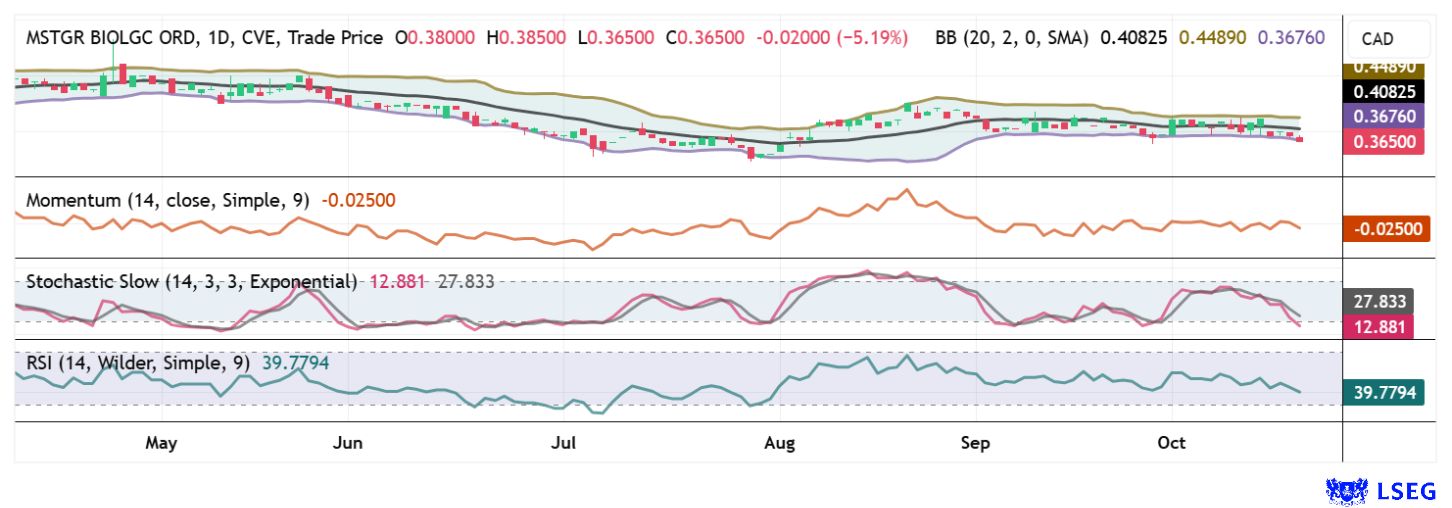
Crop science company MustGrow Biologics offers practical solutions based on natural mustard compounds. The two promising biological products TerraSante™ for soil fertility and the pre-registered TerraMG™ for crop protection precisely capture the spirit of the times. Operationally, the Canadian company is moving beyond the lab and into scalable production of TerraSante™. Although supply bottlenecks at contract manufacturers and costly air freight briefly held back TerraSante™ sales in the second quarter of 2026, the long-term market opportunities remain entirely unaffected. By mid-August, TerraSante™ revenue had already reached CAD 0.9 million, a substantial jump of over 46% compared with the entire previous year. With a strategic switch from expensive air freight to low-cost sea freight and new production lines, the company will quickly drive its operating margins toward its targets.
In October, COO Colin Bletsky provided fascinating insights into the company's medium-term growth strategy at the 20th International Investment Forum (IIF).
However, the ultimate game changer for the valuation could emerge from the exclusive partnership with agricultural giant Bayer for Europe, the Middle East and Africa. In August, the Canadian company received the first milestone payment from the German DAX-listed group. According to MustGrow's estimates, Bayer is expected to invest USD 35 million to USD 40 million over the next 5 to 7 years in the development, global regulatory approval and market launch of TerraMG™. Through the strategic sale of its low-margin third-party business, MustGrow Biologics has also sharpened its profile as a highly profitable, pure product platform. Thanks to CAD 1.4 million in licensing revenue from Bayer, the company recorded a net profit of CAD 0.4 million in the second quarter of 2026 despite logistical bottlenecks. Research firm GBC AG forecasts a significant revenue ramp-up, from the expected CAD 3.5 million in 2026 to over CAD 30 million by 2028. With around 110 granted or pending patents supporting its technology platform, MustGrow remains focused on developing solutions for global food security. With a market capitalisation of approximately CAD 27 million, the company combines an extensive research portfolio with a focus on sustainability in the crop science sector.
Note: MustGrow Biologics has announced an upcoming webcast panel discussion with Bayer AG featuring MustGrow's Chief Operating Officer, Colin Bletsky and Ralf Glaubitz, Head of Crop Protection Product Team Biologicals at Bayer's Crop Science division.
The "fireside chat" panel discussion will be broadcast on:
Wednesday, October 28, 2026, at 4:00 pm Eastern Standard Time / 9:00 pm Central European Time
Click here to register:
MustGrow's Colin Bletsky and Bayer's Ralf Glaubitz will discuss the global biological agriculture opportunity, the regulatory framework, and the future prospects of their partnership.
Conflict of interest
Pursuant to §85 of the German Securities Trading Act (WpHG), we point out that Apaton Finance GmbH as well as partners, authors or employees of Apaton Finance GmbH (hereinafter referred to as "Relevant Persons") currently hold or hold shares or other financial instruments of the aforementioned companies and speculate on their price developments. In this respect, they intend to sell or acquire shares or other financial instruments of the companies (hereinafter each referred to as a "Transaction"). Transactions may thereby influence the respective price of the shares or other financial instruments of the Company.
In this respect, there is a concrete conflict of interest in the reporting on the companies.
In addition, Apaton Finance GmbH is active in the context of the preparation and publication of the reporting in paid contractual relationships.
For this reason, there is also a concrete conflict of interest.
The above information on existing conflicts of interest applies to all types and forms of publication used by Apaton Finance GmbH for publications on companies.
Risk notice
Apaton Finance GmbH offers editors, agencies and companies the opportunity to publish commentaries, interviews, summaries, news and the like on news.financial. These contents are exclusively for the information of the readers and do not represent any call to action or recommendations, neither explicitly nor implicitly they are to be understood as an assurance of possible price developments. The contents do not replace individual expert investment advice and do not constitute an offer to sell the discussed share(s) or other financial instruments, nor an invitation to buy or sell such.
The content is expressly not a financial analysis, but a journalistic or advertising text. Readers or users who make investment decisions or carry out transactions on the basis of the information provided here do so entirely at their own risk. No contractual relationship is established between Apaton Finance GmbH and its readers or the users of its offers, as our information only refers to the company and not to the investment decision of the reader or user.
The acquisition of financial instruments involves high risks, which can lead to the total loss of the invested capital. The information published by Apaton Finance GmbH and its authors is based on careful research. Nevertheless, no liability is assumed for financial losses or a content-related guarantee for the topicality, correctness, appropriateness and completeness of the content provided here. Please also note our Terms of use.