December 11th, 2025 | 07:10 CET
Pasinex, thyssenkrupp, Umicore: How industry and smart mining are benefiting from zinc's comeback
Zinc leads a shadowy existence in many investors' portfolios – unjustifiably so. While lithium, rare earths, and copper are often hailed as the only raw materials of the future, a quiet but significant shift is taking place in the zinc market. Zinc is essential for modern infrastructure, indispensable for the energy transition and the refinement of steel. We shed light on why zinc should now be back on the watch list and how three completely different players, thyssenkrupp, Umicore and Pasinex Resources, are accompanying this dynamic.
time to read: 4 minutes | Author: Nico Popp
ISIN: PASINEX RESOURCES LTD. | CA70260R1082 , THYSSENKRUPP AG O.N. | DE0007500001 , UMICORE S.A. | BE0974320526
Table of contents:
Author

Nico Popp
At home in Southern Germany, the passionate stock exchange expert has been accompanying the capital markets for about twenty years. With a soft spot for smaller companies, he is constantly on the lookout for exciting investment stories.
Tag cloud
Shares cloud
No energy transition without zinc
The logic behind zinc's comeback is compelling but straightforward: durability means sustainability. Every ton of steel that does not rust or need to be replaced saves CO2. This is where thyssenkrupp comes in. The steel group is not only one of the largest consumers of zinc, but also drives technological development with products such as "ZM Ecoprotect®." These zinc-magnesium coatings are not only important for the automotive industry, but also for the substructures of solar parks, which have to withstand wind and weather for decades.
For investors, thyssenkrupp is the indicator of industrial demand. When the zinc baths are running in Duisburg, European industry is booming. The group shows that "green steel" means not only hydrogen in production, but also maximum corrosion protection in application. Without zinc, there can be no long-term energy transition – the calculation is that simple for the demand side.
Umicore: Closing the loop
While thyssenkrupp consumes the metal, Umicore shows what modern supply chains need to look like. The Belgian materials technology group has long since moved away from pure mining and is positioning itself as the global market leader in recycling and refining. When it comes to zinc, Umicore focuses on specialty chemicals and the recycling of zinc-containing residues from industry.
In a world where ESG criteria determine capital flows, Umicore's approach is the gold standard. The Belgians close the loop by recovering zinc from scrap and residues and returning it to high-value applications. For investors, Umicore is therefore a defensive "pick-and-shovel investment" that is less dependent on the volatile price of zinc on the stock market and benefits more from the structural trend toward a circular economy.
Pasinex Resources: The perfect business model for volatile markets
But where does the newly mined zinc that the market needs come from? This is where it gets exciting for opportunity-oriented investors. Mining worldwide is suffering from declining ore grades – many mines extract rock with only 4 to 6% zinc content. This makes them extremely vulnerable to price fluctuations and high energy costs. Pasinex Resources breaks out of this pattern and occupies a lucrative niche.
The Canadian company took complete control of the Pinargozu mine in Turkey in November 2025 after the Turkish authorities approved the share transfer. Previously, Pasinex had a 50/50 joint venture stake. The unique selling point of the project is the spectacularly high ore grade, which is often over 30% and can even reach 50% at peak levels. This enables the use of the "direct shipping ore" process: the ore is so rich that it can be sold directly from the mine to smelters – without the need for expensive and energy-intensive processing facilities on site.
This business model is very robust in the face of the volatility that is common in the zinc market. While conventional mines quickly slip into the red when zinc prices fall, the exceptionally high ore grade at Pasinex ensures operating margins of between 30% and 50%, as one ton of high-grade ore contains up to USD 1,300 in metal value, while mining costs remain constant at USD 200 to 300 per ton. However, if the zinc price rises, the leverage at Pasinex has a direct impact on profits. Further recent company announcements underscore that Pasinex is moving forward. In November 2025, the Turkish authorities approved the transfer of the Horzum shares to Pasinex Arama, giving Pasinex control over the Akkaya license area. This license is considered promising.
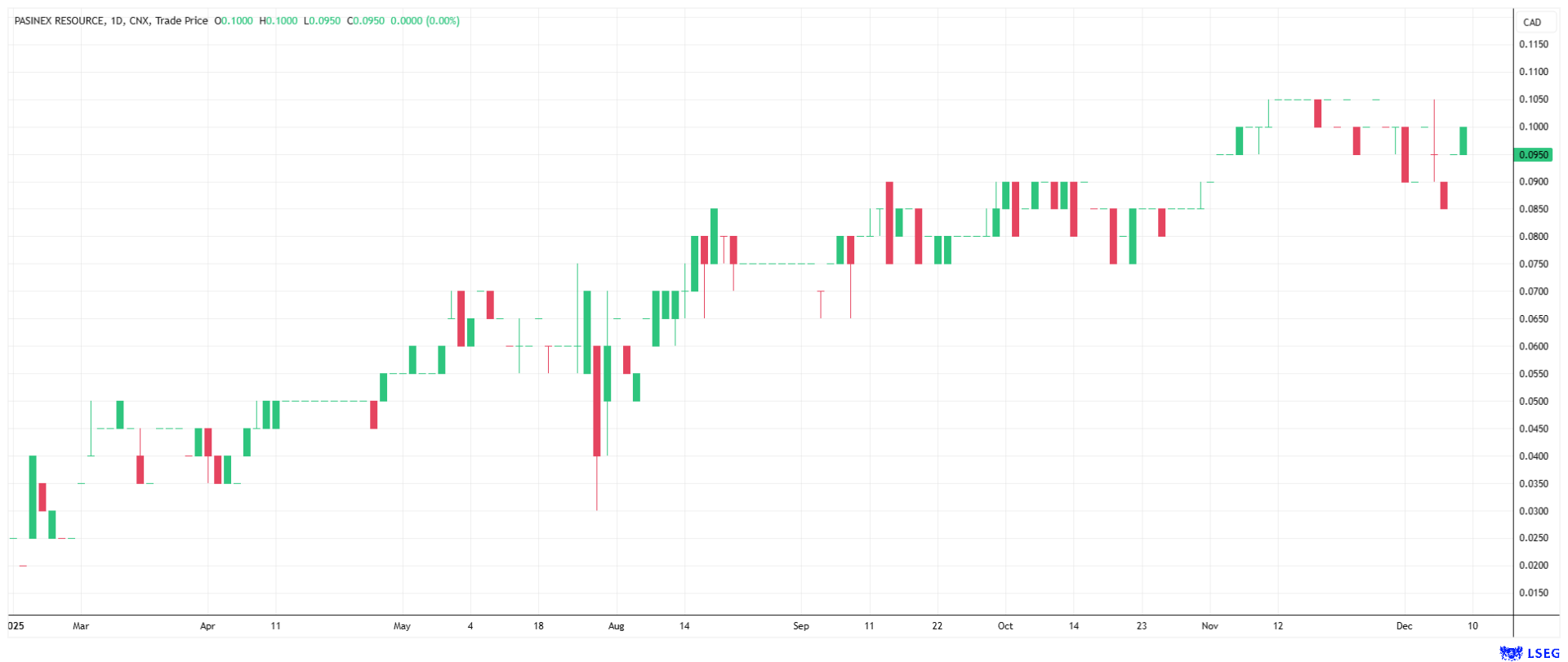
Pasinex promising thanks to innovative business model
Even before the Akkaya acquisition, Pasinex secured complete control of the Sarikaya zinc project in September, which is also located in Turkey, about 300 km from Pinargozu. Sarikaya has high-grade zinc contents of 30-50% and follows the same high-grade direct shipping ore concept. Production is scheduled to start in the first half of 2026. This means that Pasinex can significantly expand its portfolio in a short period of time. Another unique feature is that the Company uses cash flows from production to grow organically. This is rare in the junior mining sector.
Those who want to invest in zinc-related companies have various options. thyssenkrupp is a classic consumer – the Company is currently downsizing and could become a comeback story on the stock market in the medium term. Those who prefer sustainability and recycling should choose Umicore. However, if you are looking for direct leverage on the commodity and want to bet on a business model with a built-in "margin airbag," Pasinex Resources is the obvious choice. The combination of extremely high grades and low investment costs makes the Canadians an exciting alternative in a market that is poised for a structural upswing for various reasons. This assessment is consistent with the data: market research companies such as Future Market Insights forecast average annual growth of 6.4% for the zinc market through 2035 – driven by demand from the construction industry, the automotive industry, and renewable energy infrastructure.
Watch YouTube videoConflict of interest
Pursuant to §85 of the German Securities Trading Act (WpHG), we point out that Apaton Finance GmbH as well as partners, authors or employees of Apaton Finance GmbH (hereinafter referred to as "Relevant Persons") may hold shares or other financial instruments of the aforementioned companies in the future or may bet on rising or falling prices and thus a conflict of interest may arise in the future. The Relevant Persons reserve the right to buy or sell shares or other financial instruments of the Company at any time (hereinafter each a "Transaction"). Transactions may, under certain circumstances, influence the respective price of the shares or other financial instruments of the Company.
In addition, Apaton Finance GmbH is active in the context of the preparation and publication of the reporting in paid contractual relationships.
For this reason, there is a concrete conflict of interest.
The above information on existing conflicts of interest applies to all types and forms of publication used by Apaton Finance GmbH for publications on companies.
Risk notice
Apaton Finance GmbH offers editors, agencies and companies the opportunity to publish commentaries, interviews, summaries, news and the like on news.financial. These contents are exclusively for the information of the readers and do not represent any call to action or recommendations, neither explicitly nor implicitly they are to be understood as an assurance of possible price developments. The contents do not replace individual expert investment advice and do not constitute an offer to sell the discussed share(s) or other financial instruments, nor an invitation to buy or sell such.
The content is expressly not a financial analysis, but a journalistic or advertising text. Readers or users who make investment decisions or carry out transactions on the basis of the information provided here do so entirely at their own risk. No contractual relationship is established between Apaton Finance GmbH and its readers or the users of its offers, as our information only refers to the company and not to the investment decision of the reader or user.
The acquisition of financial instruments involves high risks, which can lead to the total loss of the invested capital. The information published by Apaton Finance GmbH and its authors is based on careful research. Nevertheless, no liability is assumed for financial losses or a content-related guarantee for the topicality, correctness, appropriateness and completeness of the content provided here. Please also note our Terms of use.