
Comments
Commented by Nico Popp on July 30th, 2026 | 09:40 CEST
Hydrogen Shake-Up: How NEL and Plug Power Are Streamlining Their Operations as dynaCERT Enters a Pivotal Phase
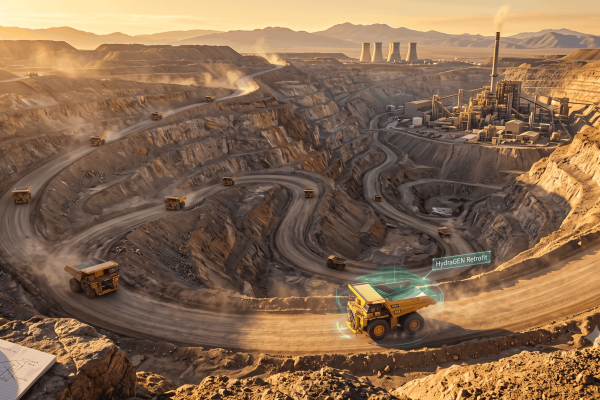
When heavy-duty trucks and massive mining equipment operate at full capacity for hours on end, they burn vast amounts of fossil fuels. While the energy and industrial sectors continue to push the transition towards cleaner alternatives, at least judging by media coverage, challenging conditions in the mining industry, high interest rates and economic uncertainty continue to delay many ambitious climate projects. Companies that are unable or unwilling to make large-scale investments are therefore looking for transitional solutions that can reduce operating costs while at least partially lowering emissions. We take a closer look at three companies that are well positioned to benefit from this trend.
Read
Commented by Stefan Bode on July 30th, 2026 | 09:35 CEST
Sector Rotation from AI to Fallen Angels? HPQ Silicon, Mercedes-Benz and PayPal
While the technology and semiconductor sectors are largely driven by innovations in high-density energy storage and the expansion of AI infrastructure, valuation multiples have recently appeared to be vastly overinflated. Consequently, selling pressure has recently increased on Amazon, Nvidia, Tesla, and others, while profit-taking from those stocks is now flowing back into other sectors and "fallen angels." Today, we'll take a closer look at three of these fascinating companies—ranging from an international payment provider to a German automaker to an innovator in battery technology. Read more here.
Read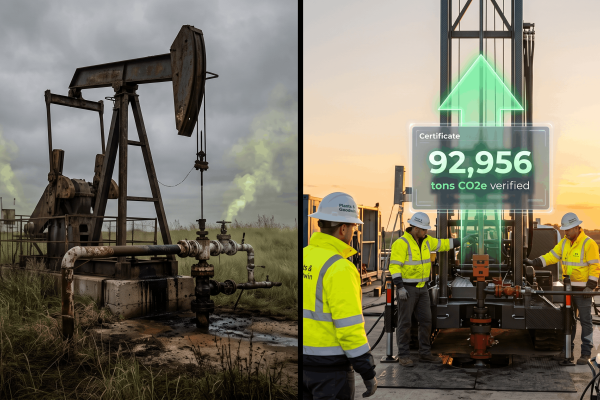
Commented by Nico Popp on July 30th, 2026 | 09:30 CEST
SpaceX's Environmental Mess, Occidental Petroleum's Battle Against Windmills, and Zefiro Methane's Billion-Dollar Opportunity
When SpaceX's rockets soar toward orbit, the public gazes spellbound at the evening sky. The fact that rocket launches release enormous amounts of greenhouse gases is only noted critically in passing. Yet even SpaceX is doing everything it can to reduce its environmental footprint. There is still plenty of potential for savings right here on Earth. Plugging abandoned and orphaned wells from the oil and gas industry is one such opportunity. If these avoided emissions are systematically tracked and converted into carbon credits, this would build a bridge between the traditional oil and gas industry and the space sector. We shed light on this development and show where investors can look for opportunities.
Read
Commented by André Will-Laudien on July 29th, 2026 | 07:50 CEST
Active Ingredients, Acquisitions and Spin-offs: Will Bayer, Novo Nordisk, BioNxt, or Evotec Become Top M&A Targets?
After years of consolidation, investors are asking: Will things start looking up again? The global life sciences sector is facing another massive wave of consolidation in 2026 as established pharmaceutical giants and agile biotech pioneers realign their businesses. Market dynamics remain high, but unfortunately, both sides are being exploited. So far, it has been predominantly speculative investors who are capitalizing on the current volatility. Following drastic share price losses and ongoing restructuring, the struggling Hamburg-based biotech company Evotec is increasingly in the crosshairs of financially strong acquirers seeking to acquire high-calibre drug discovery platforms at a bargain price. At the same time, BioNxt is attracting investor interest with its groundbreaking drug delivery systems and advanced clinical pipelines. Meanwhile, the market continues to speculate feverishly about a possible breakup or spin-off of individual divisions at the DAX-listed Bayer Group, which would massively increase its appeal to strategic buyers. On the other hand, Danish industry leader Novo Nordisk, driven by the sustained billion-dollar profits from its weight-loss portfolio, is acting as a financially powerful hunter in search of strategic acquisitions in the obesity and cardiovascular segments. For investors, this highly dynamic environment offers a rare opportunity to bet early on the year's hottest takeover candidates. What is the current status?
Read
Commented by Nico Popp on July 29th, 2026 | 07:45 CEST
Battery Metals Bottleneck: Volkswagen and BHP Under Pressure as Power Metallic Mines Faces Weeks of Truth
Electric vehicles are becoming an increasingly common sight on German roads, driven in part by the arrival of aggressively priced models from China. However, the rapid growth of electric mobility is placing mounting pressure on automotive supply chains. Automakers are grappling with volatile markets while becoming increasingly concerned about securing reliable access to critical raw materials. Commodities are no longer viewed as readily available inputs but as strategic assets essential to industrial competitiveness. This complex situation calls for new alliances: mining companies, major automakers, and dynamic project developers are pulling out all the stops to secure raw materials for the future.
Read
Commented by Armin Schulz on July 29th, 2026 | 07:40 CEST
Billion-Dollar Markets of Obesity, Oncology, and Neurology in Focus: Novo Nordisk, Vidac Pharma, and AbbVie
The healthcare industry of the future is driven by three major megatrends: obesity, oncology, and neurology. While the market for cancer drugs is heading toward nearly USD 700 billion and Alzheimer's therapies are booming, the GLP-1 boom has only just begun and has replaced oncology as the largest driver of pipeline value. But not every company will benefit equally from this momentum. The key difference lies in strategic focus and the ability to translate scientific milestones into market success. We take a look at three companies today—Novo Nordisk, Vidac Pharma, and AbbVie—each of which embodies one of these areas.
Read
Commented by Matthias Schomber on July 29th, 2026 | 07:35 CEST
Deutz, Jungheinrich, and Almonty: Where Investors Can Find Real Opportunities in the Market Right Now
The European industrial landscape is currently noticeably fragmented, which presents investors with difficult decisions about which stocks will perform well and which will perform poorly. While it has never been easy to make the right choice, as established, long-standing German corporations grapple with rising material costs, intense price pressure, and, in some cases, the aftermath of internal conflicts, interest is increasingly shifting toward companies in strategic niche markets, including the commodities and defense sectors. The stocks of Deutz and Jungheinrich reflect the current challenges facing the broader mechanical engineering sector, which is suffering from noticeable margin pressure despite solid order intake. Defense, however, is a buzzword that could boost the performance of one or two stocks in that sector—if handled skillfully. At the same time, the spotlight is on commodity stocks that are benefiting from global geopolitical upheavals. Almonty Industries, in particular, is drawing attention due to an exciting consolidation pattern on the charts. Can this tungsten heavyweight soon regain its former strength? This report examines the current situation of the three stocks and highlights where real opportunities might now be emerging!
Read
Commented by Fabian Lorenz on July 29th, 2026 | 07:30 CEST
Helsing IPO in 2027? Hensoldt Expands Drone Partnership as First Hydrogen Eyes Robotics Re-Rating
Could Helsing go public as early as next year? The defence technology company is currently valued at a whopping USD 18 billion. To justify that valuation, Helsing is developing, among other things, the CA-1 Europa autonomous combat aircraft. Hensoldt is supporting this effort, and the partnership was recently expanded. Meanwhile, First Hydrogen is broadening its business model. CEO Balraj Mann increasingly views autonomous systems as a key technology in light of changes in the defence, security, and disaster response sectors. By building in-house AI expertise, the company aims to further develop its UGV program for autonomous navigation, situational awareness, and counter-drone capabilities, while simultaneously expanding its strategy at the intersection of clean energy, mobility, and robotics. If successful, these initiatives could provide the catalyst for a re-rating of the company's shares.
Read
Commented by Lars Winter on July 29th, 2026 | 07:20 CEST
New Buy Recommendations for Evonik, Fuchs, and Zefiro Methane: Analysts See Price Potential of Over 240%
Fresh Buy recommendations are fueling new price momentum for Zefiro Methane, Evonik, and Fuchs. The outlook for Zefiro is particularly spectacular. Following the turnaround in its operating performance, GBC believes the stock could multiply in value. But analysts are also forecasting double-digit price gains for the two German chemical stocks. When analysts raise their forecasts and recommend buying a stock, it is often worth taking a closer look. It becomes particularly interesting when these optimistic assessments are backed up by surprisingly strong financial results. That is exactly the case right now with Zefiro Methane, Evonik, and Fuchs. While the two German companies are already operating profitably and impressing with strong quarterly results, Zefiro is only at the beginning of a potential revaluation. The upside potential is correspondingly greater, though the risk is higher as well.
Read
Commented by Jens Castner on July 29th, 2026 | 07:15 CEST
Oversold? Kostolany Buy Signals Emerge for Rheinmetall, Lahontan Gold and Coinbase
Hopes for a lasting ceasefire between the US and Iran are driving stock prices higher. Oil prices are falling, and inflation concerns are easing. Even in such a supportive environment, however, investors should avoid buying indiscriminately. Legendary investor André Kostolany coined the rule: when prices ignore bad news, panic selling has ended. In other words, those who wanted to sell have already done so. This pattern now appears to be emerging in three very different stocks. The German defence contractor Rheinmetall, the Canadian exploration company Lahontan Gold, and the US crypto platform Coinbase have all retreated significantly from their respective highs. Yet, each has recently absorbed negative news without suffering further meaningful declines—potentially signalling that sentiment has begun to stabilize.
Read