August 3rd, 2026 | 07:25 CEST
Opportunities & Risks in Q2 Financial Results: Adobe, Almonty Industries, Apple, Microsoft
From cloud computing to creative software and critical raw materials, several publicly traded heavyweights are now in the spotlight for investors. Following some sharp price movements, it remains to be seen whether operational strength and strategic decisions can stabilize valuations. The focus is on recurring revenue models, investment cycles, and who can profitably capitalize on the AI wave without excessively diluting margins and cash flows. At the same time, interest rates, currency fluctuations, and geopolitical risks are intensifying scrutiny of supply chains and the pricing power that still prevails. Should investors already be betting on a turnaround?
time to read: 8 minutes
|
Author:
Stefan Bode
ISIN:
ALMONTY INDUSTRIES INC. | CA0203987072 | TSX: AII , NASDAQ: ALM , ASX: AII , ADOBE INC. | US00724F1012 , APPLE INC. | US0378331005 , MICROSOFT DL-_00000625 | US5949181045
Table of contents:
Author

Stefan Bode
A native of the Eichsfeld region in the heart of Germany, he has more than 30 years of experience in the capital markets, with broad expertise spanning financial markets, history, and geopolitics. He founded his own business more than 20 years ago while still a student and today advises clients, foundations, and asset managers across four continents.
Tag cloud
Shares cloud
Adobe Shares Plummet: Can the AI Strategy Turn Things Around?
Adobe shares (WKN: 871981 | ISIN: US00724F1012 | Ticker: ADBE) have been among the weaker large-cap tech stocks so far in 2026. On Friday, trading closed at around USD 250.40. Since the start of the year, the stock has fallen by about 27%; over a 52-week period, the decline is around 29%, and its market capitalization still stands at just under USD 100 billion. This places Adobe roughly 240th among the world's most valuable publicly traded companies. Adobe is best known for programs such as Photoshop, Illustrator, Premiere Pro, and Acrobat, as well as for its offerings in advertising, customer data, and digital content. The software is primarily sold on a subscription basis, which generates a significant amount of recurring revenue.
The fiscal year ends on November 30, so the four quarters end in late February, May, August, and November, respectively. The second quarter of fiscal year 2026 thus ended on May 31. The company's operating performance was solid in the past quarter. Revenue rose 13% year-over-year to a record USD 6.62 billion. About 97% of that came from subscriptions. Operating profit increased by 6% to USD 2.24 billion, and Adobe's net income was USD 1.71 billion—slightly higher than a year earlier. Earnings per share, excluding special items, rose by as much as 18% to USD 5.96.
The key question now, however, is how Adobe will handle artificial intelligence in the future. New programs create images, videos, and designs in just a few seconds. This opens up a new market but could, in the long term, make traditional programs and expensive subscriptions, such as those offered by Adobe, less important. That is why the company is integrating AI directly into its well-known applications. The focus is on Firefly, which can be used to create or edit images, videos, and other content. According to Adobe, the new AI offerings are now generating more than USD 500 million on an annualized basis—three times as much as in the previous year. Firefly alone approached the USD 300 million mark. At the same time, the number of monthly users of the free creative offerings rose by more than 70% to over 90 million.
However, the free offerings are also a reason for investor caution. Adobe's strategy is to first attract a large user base and later convert them into paying customers. As a result, revenue from new paid subscriptions could grow more slowly in the short term. At the same time, competition from Canva, Figma, and AI offerings from OpenAI and Google is intensifying. The upcoming CEO transition and the departure of the CFO are also causing uncertainty.
Adobe itself remains confident and has raised its full-year revenue forecast to USD 26.50–26.60 billion. Excluding one-time items, earnings per share are expected to range from USD 24.35 to USD 24.45. At the current share price, this corresponds to roughly ten times that expected earnings figure. The next quarterly results are currently expected on September 10. From a technical analysis perspective, the long-term trend reversal has not yet been achieved. Although the stock managed to reclaim the 20-, 50-, and 100-day moving averages, it recently faltered in the USD 260 range. Above that level, at approximately USD 276 to USD 277, lies the important 200-day moving average. Only once this level is sustainably breached will the chart picture brighten significantly.
Almonty Industries: Tungsten Shortage Drives Expansion
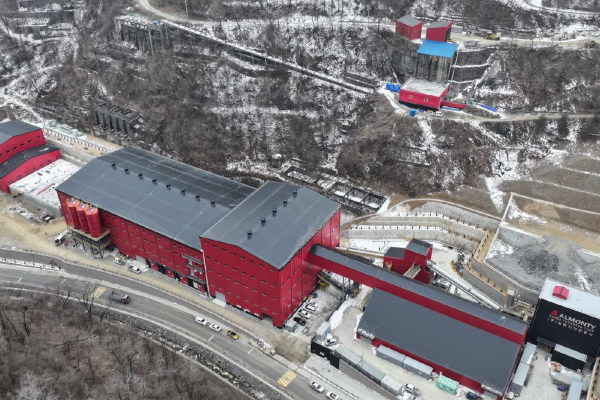
Against the backdrop of increasing geopolitical tensions and increasingly restrictive export controls, Almonty Industries (WKN: A414Q8 | ISIN: CA0203987072 | Ticker Symbol: ALI1) has positioned itself as a systemically important tungsten supplier for Western industry, with the aim of sustainably securing critical supply chains. A key catalyst for this development is the Sangdong mine in South Korea. In July 2026, the mine successfully completed its scheduled ramp-up to direct processing of tungsten ore. With this commissioning, the Group has completed its transformation into a major tungsten producer in geopolitically secure jurisdictions. This is underpinned by existing ore reserves of 139.7 million metric tons with an average tungsten content of 0.25%. This corresponds to a balance sheet value of approximately USD 68 million. This highly efficient Phase 1 mining process, which has now begun, lays the economic foundation for transforming these significant deposits into continuous cash flows over the coming decades.
The commercial visibility of this production increase is underpinned by the dramatic expansion of the strategic offtake agreement with Global Tungsten & Powders. This provides both companies, as well as institutional investors, with the highest degree of long-term planning certainty. The agreement, now extended to 21 years, increases the guaranteed total purchase volume by 40% to 4.41 million MTUs. At full capacity during the first phase of mining, this corresponds to a minimum annual delivery of 210,000 MTUs. In addition, a renegotiated pricing formula boosts Almonty Industries' operating margin. The average selling price is rising by 6.3%, generating at least USD 30 million in additional annual revenue for the company. To support this rapid growth on the balance sheet and prepare for further expansion, management successfully issued a convertible senior notes offering with a volume of USD 800 million in June 2026. The remaining net proceeds of USD 772.7 million will henceforth be used for efficient debt restructuring and to evaluate potential acquisitions in the tungsten sector, which continues to face a supply shortage. However, not all investors welcomed the significant increase in corporate liquidity resulting from the convertible notes, and more than 100 million shares have changed hands over the past two months.
To reduce administrative costs and consolidate trading liquidity on the primary stock exchanges, management recently announced the strategic delisting from the Australian Securities Exchange (ASX). From a macroeconomic perspective, the company continues to benefit from an extremely strong market environment. Driven by massive excess demand from the defence industry, prices for ammonium paratungstate have skyrocketed to a level of around USD 3,125 per MTU. Industry observers, however, view recent market corrections among commodity companies such as Almonty as a rare buying opportunity. This is primarily because the structural shortage of technology metals continues unabated! Accordingly, analysts see significant medium-term upside potential for Almonty shares and are setting price targets of up to CAD 38.90. Converted, this would correspond to a current value of approximately EUR 24.31 per share. Since the plans for a second expansion phase in South Korea have not even been capitalized on the balance sheet yet, the group continues to hold massive hidden reserves to meet growing global demand. The Gentung project in the United States, along with the company's projects on the Iberian Peninsula, are also receiving little attention from the market at present.
Microsoft and Apple at a Crossroads: Share Price, Growth Drivers, and Outlook
The stocks of tech giants Microsoft (WKN: 870747 | ISIN: US5949181045 | Ticker: MSFT) and Apple (WKN: 865985 | ISIN: US0378331005 | Ticker Symbol: APC) continue to present very different pictures in 2026. Microsoft has recently posted significant share price gains, driven primarily by growth in its cloud business and robust financial metrics. Apple, on the other hand, is sensitive to supply chain challenges and macroeconomic uncertainties, even though iPhone sales and service revenue ensure high profitability. While the focus in both cases is on margins, cash flow quality, and expected return on investment, regulations, supply chains, and political pressure—for example, in the EU—are also putting these companies under strain.
Microsoft exceeded analysts' expectations in the most recent quarter. Revenue and operating profit were significantly higher than the previous year's figures, and reported earnings per share showed substantial growth. The cloud division remained the key driver, particularly Azure, whose revenue growth continued to accelerate at a double-digit rate and exceeded the USD 100 billion mark for the first time in a full fiscal year. At the same time, the company benefited from valuation gains related to its investments in the AI sector, which had a positive impact on net income. Nevertheless, free cash flow remained under pressure as heavy investments in data centers and AI chips increased capital tied up. The outlook remains cautious but realistic. Revenue for the Azure business is expected to show moderate growth, and the cloud division is projected to continue growing on a currency-adjusted basis. From a technical analysis perspective, the picture has recently brightened, and the stock has broken above the 200-day moving average at USD 446. This momentum makes targets of USD 500 seem possible, while the next significant resistance level is not until USD 578.
Apple remains an "iPhone-first" company at its core, but the latest results show that the company is struggling with supply chain issues and still needs to learn how to navigate changing market expectations. The quarterly figures largely exceeded expectations. This was driven by strong iPhone sales and robust revenue contributions from the Mac and Services segments, but the outlook disappointed some market participants. Analysts view the price increases for memory and chips somewhat critically, as this could influence future demand patterns. While the Services division is also delivering growth, it falls short of some expectations when compared to the profits in the Hardware segment. The realignment of the leadership team with the upcoming CEO change also presents opportunities, but it brings uncertainties that, when in doubt, were recently used as a reason for profit-taking.
Among analysts, there are differing views and perspectives. Following the quarterly results, the major Swiss bank UBS maintains a "Neutral" rating on Apple with a moderate price target of USD 296, while Jefferies lowers its price target from USD 308.92 to USD 285.56. JPMorgan, on the other hand, maintains an "Overweight" rating on the stock but reduces its price target only slightly by USD 5 to USD 345.
Adobe's latest quarterly results show that the company has been able to capitalize on the disruption caused by AI and continues to gain subscribers. Nevertheless, market participants have been very cautious in recent quarters, sending the stock on a downward spiral—a trend that may now be coming to an end.
Although Almonty Industries has entered a corrective phase following a powerful bull run that saw the stock gain roughly 5,000% over the past two and a half years, a buy-limit order around the key support zone at USD 6.80 (approximately EUR 6.00) could offer an attractive long-term entry point.
Microsoft and Apple have different operational focuses, but both are heavily dependent on cloud computing, chips, services, and AI investments, as well as on the continued optimistic expectations of market participants.
Conflict of interest
Pursuant to §85 of the German Securities Trading Act (WpHG), we point out that Apaton Finance GmbH as well as partners, authors or employees of Apaton Finance GmbH (hereinafter referred to as "Relevant Persons") currently hold or hold shares or other financial instruments of the aforementioned companies and speculate on their price developments. In this respect, they intend to sell or acquire shares or other financial instruments of the companies (hereinafter each referred to as a "Transaction"). Transactions may thereby influence the respective price of the shares or other financial instruments of the Company.
In this respect, there is a concrete conflict of interest in the reporting on the companies.
In addition, Apaton Finance GmbH is active in the context of the preparation and publication of the reporting in paid contractual relationships.
For this reason, there is also a concrete conflict of interest.
The above information on existing conflicts of interest applies to all types and forms of publication used by Apaton Finance GmbH for publications on companies.
Risk notice
Apaton Finance GmbH offers editors, agencies and companies the opportunity to publish commentaries, interviews, summaries, news and the like on news.financial. These contents are exclusively for the information of the readers and do not represent any call to action or recommendations, neither explicitly nor implicitly they are to be understood as an assurance of possible price developments. The contents do not replace individual expert investment advice and do not constitute an offer to sell the discussed share(s) or other financial instruments, nor an invitation to buy or sell such.
The content is expressly not a financial analysis, but a journalistic or advertising text. Readers or users who make investment decisions or carry out transactions on the basis of the information provided here do so entirely at their own risk. No contractual relationship is established between Apaton Finance GmbH and its readers or the users of its offers, as our information only refers to the company and not to the investment decision of the reader or user.
The acquisition of financial instruments involves high risks, which can lead to the total loss of the invested capital. The information published by Apaton Finance GmbH and its authors is based on careful research. Nevertheless, no liability is assumed for financial losses or a content-related guarantee for the topicality, correctness, appropriateness and completeness of the content provided here. Please also note our Terms of use.