May 4th, 2026 | 07:25 CEST
ExxonMobil, Zefiro Methane, BP – A billion-dollar market explodes amid oil and climate concerns
Soaring energy prices, geopolitical tensions, and disrupted supply chains are driving the global market into a new phase of superprofits. While large corporations benefit from high oil prices and efficient trading, a multi-billion-dollar growth market centred on emissions reduction and methane management is emerging in parallel, offering significantly higher margins. Government subsidy programs and new technologies are further accelerating this development. Amid this tension between the energy crisis and climate pressure, extraordinary opportunities are opening up for the industry, ranging from short-term record profits to long-term scaling potential.
time to read: 4 minutes | Author: Stefan Feulner
ISIN: ZEFIRO METHANE CORP | CA98926D1069 | NEO: ZEFI , BP PLC DL-_25 | GB0007980591 , EXXON MOBIL CORP. | US30231G1022
Table of contents:
Author

Stefan Feulner
The native Franconian has more than 20 years of stock exchange experience and a broadly diversified network.
He is passionate about analyzing a wide variety of business models and investigating new trends.
Tag cloud
Shares cloud
BP in the Context of the Global Energy Crisis
The global energy market is currently experiencing extreme volatility, primarily driven by military conflicts in the Middle East. In particular, uncertainties surrounding Iran and the threat of the closure of key trade routes, such as the Strait of Hormuz, have caused a massive supply shortage. As a result, crude oil prices have stabilized at a very high level. These geopolitical conditions offer major energy companies a market environment that enables exceptionally high margins.
Amid this situation, BP reported first-quarter 2026 figures that far exceeded the financial sector's forecasts. The company increased its adjusted net income to approximately USD 3.2 billion, representing a massive jump from the USD 1.4 billion reported in the same period last year. This success is largely attributable to a highly efficient oil and customer products trading business. Despite minor production losses in the North Sea, increased production activities in the US and the Gulf of Mexico stabilized results and kept the group profitable.
A key pillar of CEO Meg O'Neill's current strategy is streamlining the portfolio to consistently reduce net debt, which recently stood at over USD 25 billion. A central step in this effort is the sale of the Gelsenkirchen refinery to the European operator Klesch. Through this sale and other structural measures, BP aims to reduce its annual costs significantly. Management is also responding to pressure from activist investors who are calling for a stronger focus on highly profitable core businesses.
These developments sparked significant optimism on the stock market. The share posted noticeable gains following the quarterly results and is approaching its all-time highs again. The outlook remains extremely positive. As long as geopolitical risks persist and energy prices remain high, experts forecast a potential record year for the company. However, the long-term challenge for BP will be to maintain a balance between the profitability of fossil fuels and expectations for sustainable corporate governance.
Zefiro Methane - Invisible Climate Killer Becomes a Cash Machine
The market for emissions reduction is rapidly gaining momentum. Stricter climate regulations, government incentive programs, and increasing pressure on companies to improve their carbon footprints are driving massive demand for scalable solutions. Methane, in particular, is coming into focus, as it is considered significantly more harmful to the climate than CO₂ and offers substantial leverage for short-term climate protection.
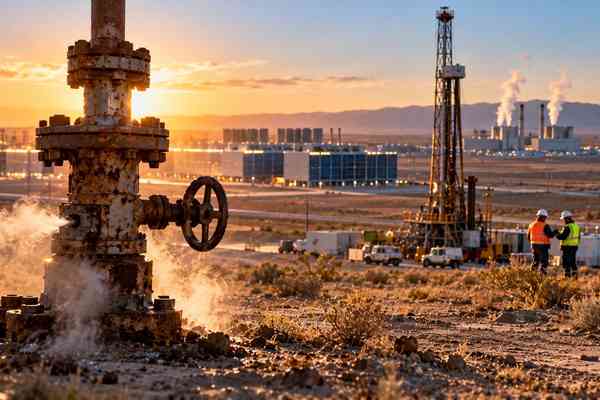
Zefiro Methane Corp. serves this niche and already reported remarkable revenue of USD 11 million in the past quarter. The company focuses on the plugging of abandoned and "orphan" oil and gas wells, as well as the measurement and monitoring of methane emissions. This creates an attractive business model with multiple revenue streams. In addition to government-funded contracts, Zefiro also generates CO₂ credits through emissions savings, which companies purchase to meet their climate targets. Particularly lucrative is the growing monitoring business, which promises significantly higher margins than the traditional core business.
Operationally, clear scaling is already evident. Hundreds of sealed wells, rising revenue, and a solid order backlog underscore the company's strong market position. At the same time, the combination of government support and a massive addressable market ensures long-term visibility. The expansion of high-margin technologies, such as specialized measurement methods and proprietary well-plugging solutions, could further accelerate profitability.
A recent milestone has now been reached in West Virginia. There, Zefiro has successfully completed all methane measurements for 849 wells, generating approximately USD 850,000 in revenue. An additional USD 450,000 from downstream measurements is already in the pipeline. Particularly noteworthy is the fact that margins were roughly twice as high as in the traditional well-closure business. By expanding this segment, Zefiro is not only strengthening its earnings power but is increasingly positioning itself as an integrated provider in the high-growth market for emissions management. The company's market capitalization currently stands at around EUR 30 million.
ExxonMobil - Resilience in Times of Crisis
The global energy sector is currently in an extremely tense phase. Geopolitical conflicts are driving crude oil prices significantly higher. Recent disruptions to key maritime trade routes have highlighted just how vulnerable international supply chains are to external shocks. Even if regional tensions ease, complex logistical hurdles prevent a swift return to normalcy. Shipping bottlenecks and insurance-related issues mean transport routes cannot be fully utilized again for quite some time, keeping prices high on the global market.
In the most recent quarter, the Texas-based company did indeed record a noticeable year-over-year decline in profits, from USD 7.71 billion to USD 4.18 billion, but it performed significantly better than most financial experts had predicted. In addition to favourable market prices, this development was driven by a targeted expansion of production capacity in secure regions, which effectively offset local shortfalls. At the same time, the group even managed to increase its total revenue slightly to over USD 85 billion. Accounting burdens from certain financial transactions that dampened profits are expected to be strategically reduced in the near future.
Looking ahead, the energy sector's outlook remains cautious. Industry experts firmly believe that reorganizing key trade routes and clearing transport backlogs will take considerable time before global oil flows function smoothly again.
For ExxonMobil, this means continued realignment of its logistics and more flexible inventory management. The company will continue to benefit from the lucrative price environment in the short term, but faces the ongoing challenge of strengthening its operational resilience against future crises.
BP is benefiting from the high-price environment and increasing its profits thanks to efficiency and portfolio focus. Zefiro Methane Corp. is growing dynamically in a high-margin climate niche. ExxonMobil Corporation is demonstrating resilience and leveraging the volatile environment to generate stable returns.
Conflict of interest
Pursuant to §85 of the German Securities Trading Act (WpHG), we point out that Apaton Finance GmbH as well as partners, authors or employees of Apaton Finance GmbH (hereinafter referred to as "Relevant Persons") may hold shares or other financial instruments of the aforementioned companies in the future or may bet on rising or falling prices and thus a conflict of interest may arise in the future. The Relevant Persons reserve the right to buy or sell shares or other financial instruments of the Company at any time (hereinafter each a "Transaction"). Transactions may, under certain circumstances, influence the respective price of the shares or other financial instruments of the Company.
In addition, Apaton Finance GmbH is active in the context of the preparation and publication of the reporting in paid contractual relationships.
For this reason, there is a concrete conflict of interest.
The above information on existing conflicts of interest applies to all types and forms of publication used by Apaton Finance GmbH for publications on companies.
Risk notice
Apaton Finance GmbH offers editors, agencies and companies the opportunity to publish commentaries, interviews, summaries, news and the like on news.financial. These contents are exclusively for the information of the readers and do not represent any call to action or recommendations, neither explicitly nor implicitly they are to be understood as an assurance of possible price developments. The contents do not replace individual expert investment advice and do not constitute an offer to sell the discussed share(s) or other financial instruments, nor an invitation to buy or sell such.
The content is expressly not a financial analysis, but a journalistic or advertising text. Readers or users who make investment decisions or carry out transactions on the basis of the information provided here do so entirely at their own risk. No contractual relationship is established between Apaton Finance GmbH and its readers or the users of its offers, as our information only refers to the company and not to the investment decision of the reader or user.
The acquisition of financial instruments involves high risks, which can lead to the total loss of the invested capital. The information published by Apaton Finance GmbH and its authors is based on careful research. Nevertheless, no liability is assumed for financial losses or a content-related guarantee for the topicality, correctness, appropriateness and completeness of the content provided here. Please also note our Terms of use.