February 19th, 2026 | 07:55 CET
Energy transition 2.0: Why CHAR Technologies is thinking much further ahead than Enviva and why Plug Power is still dreaming
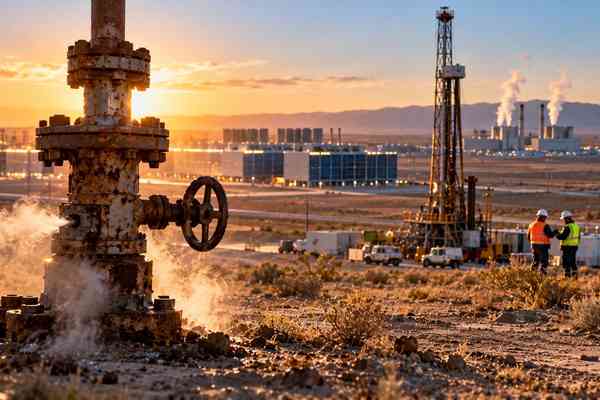
The global energy market has learned its lesson - electrons alone cannot save heavy industry. While wind turbines and solar parks are making power grids greener, steelmakers and gas suppliers face a physical dilemma: they need carbon molecules – just "green" ones. In this gigantic market for sectors that are difficult to decarbonize, former biomass giant Enviva has already proven that wood is a suitable energy source. But while Enviva has only burned pellets, CHAR Technologies is igniting the next stage of evolution. With their high-temperature pyrolysis (HTP) process, the Canadians are transforming simple biomass not only into heat, but into two high-value industrial products: biochar for the steel industry and renewable natural gas (RNG) for the grid. CHAR is thus delivering exactly the solution that visionaries like Plug Power are striving for with hydrogen, but can often only achieve with billions in investment in new infrastructure. CHAR Technologies uses the existing gas grid and earns money from day one.
time to read: 3 minutes | Author: Nico Popp
ISIN: CHAR Technologies Ltd. | CA15957L1040 , PLUG POWER INC. DL-_01 | US72919P2020
Table of contents:
Author

Nico Popp
At home in Southern Germany, the passionate stock exchange expert has been accompanying the capital markets for about twenty years. With a soft spot for smaller companies, he is constantly on the lookout for exciting investment stories.
Tag cloud
Shares cloud
Enviva as a trailblazer
The now insolvent company Enviva is considered a pioneer in biomass. As the former largest producer of industrial pellets, the company, which has since disappeared from the market, demonstrated that biomass is not a niche product for wood-burning stoves, but a base-load energy source for power plants in Europe and Asia. As the initially successful restructuring at the end of 2024 and the construction of the new plant in Epes, Alabama, showed, the demand for biomass remains unbroken. Enviva established supply chains, but the business model remained technically simple and unprofitable at its core, as wood was dried, pressed, and burned. The margin here was primarily in volume. The company was unable to achieve this critical mass. CHAR Technologies, on the other hand, uses the same raw material but refines it through technology into products with a much higher market value.
CHAR Technologies and double value creation
At the heart of CHAR is high-temperature pyrolysis (HTP). In this process, biomass is heated to over 800°C in the absence of oxygen. The result is chemical separation into two streams. One is CleanFyre™, a biochar that is considered an important building block for the steel industry. According to reports by the International Energy Agency (IEA), metallurgical coal demand must decline by 2030 in order to meet climate targets. Steel companies cannot simply run their blast furnaces on electricity; they need carbon to reduce iron ore. CHAR's biochar can partially replace fossil coking coal as a drop-in substitute in existing blast furnaces without steel mills having to convert their facilities. ArcelorMittal's entry into the market proves that this works. The global market leader has invested directly in CHAR through its XCarb™ Innovation Fund and secured supply rights through a long-term purchase agreement. Secondly, the pyrolysis process produces an energy-rich gas. CHAR purifies this gas into methane-rich RNG, which can be fed directly into the existing natural gas grid.
The Plug Power comparison: Reality beats vision
This is where the comparison with Plug Power gets exciting. Plug Power is a pioneer in the hydrogen economy and is building an impressive ecosystem of electrolysers and fuel cells. But the problem is infrastructure, as hydrogen cannot easily be transported in old natural gas pipelines, and the cost of green hydrogen is often still too high. CHAR Technologies completely circumvents this hurdle. Its RNG is chemically identical to natural gas. It does not require new pipelines, new heating systems for end customers, or billions in subsidies for grid expansion. It is the pragmatic, immediately available solution for decarbonizing gas grids. While Plug Power is building a new world, CHAR is decarbonizing the old one, which is often the more profitable business.
Commercialization is underway at CHAR: Thorold and Saint-Félicien
CHAR is no longer a theoretical story, as its flagship project in Thorold, Ontario, nears completion. As the company reported, Phase 1 of biochar production is already operational, and Phase 2 for RNG production is under construction. With a capacity of 10,000 tons of biochar and 500,000 gigajoules of RNG per year, Thorold is becoming a symbol of expansion. In addition, CHAR is pushing ahead with the project in Saint-Félicien, Quebec. In this region, the company benefits from extremely low electricity prices and a massive availability of biomass from the forestry industry. The model is highly scalable, because wherever there is wood waste and a gas network, a CHAR facility can be established.
Conclusion: CHAR Technologies combines the best of both worlds
For investors, CHAR Technologies offers a rare combination. You are investing in the demand for renewable solutions for industry, coupled with the technology multiple of a cleantech company. As with any technology ramp-up, there are risks associated with scaling, but the partnership with ArcelorMittal and support from Canadian government funds validate the technology. In a world desperately seeking solutions to make steel production "green" and gas networks climate-neutral, CHAR Technologies sits at the intersection of two markets worth billions of dollars. The stock is extremely exciting due to its promising business model.
Conflict of interest
Pursuant to §85 of the German Securities Trading Act (WpHG), we point out that Apaton Finance GmbH as well as partners, authors or employees of Apaton Finance GmbH (hereinafter referred to as "Relevant Persons") may hold shares or other financial instruments of the aforementioned companies in the future or may bet on rising or falling prices and thus a conflict of interest may arise in the future. The Relevant Persons reserve the right to buy or sell shares or other financial instruments of the Company at any time (hereinafter each a "Transaction"). Transactions may, under certain circumstances, influence the respective price of the shares or other financial instruments of the Company.
In addition, Apaton Finance GmbH is active in the context of the preparation and publication of the reporting in paid contractual relationships.
For this reason, there is a concrete conflict of interest.
The above information on existing conflicts of interest applies to all types and forms of publication used by Apaton Finance GmbH for publications on companies.
Risk notice
Apaton Finance GmbH offers editors, agencies and companies the opportunity to publish commentaries, interviews, summaries, news and the like on news.financial. These contents are exclusively for the information of the readers and do not represent any call to action or recommendations, neither explicitly nor implicitly they are to be understood as an assurance of possible price developments. The contents do not replace individual expert investment advice and do not constitute an offer to sell the discussed share(s) or other financial instruments, nor an invitation to buy or sell such.
The content is expressly not a financial analysis, but a journalistic or advertising text. Readers or users who make investment decisions or carry out transactions on the basis of the information provided here do so entirely at their own risk. No contractual relationship is established between Apaton Finance GmbH and its readers or the users of its offers, as our information only refers to the company and not to the investment decision of the reader or user.
The acquisition of financial instruments involves high risks, which can lead to the total loss of the invested capital. The information published by Apaton Finance GmbH and its authors is based on careful research. Nevertheless, no liability is assumed for financial losses or a content-related guarantee for the topicality, correctness, appropriateness and completeness of the content provided here. Please also note our Terms of use.