June 25th, 2026 | 07:30 CEST
Electromobility and the Structural Risk for BMW, Mercedes, and Volkswagen: Rock Tech Lithium Stock Poised for Revaluation
Electric vehicle sales in Europe continue to rise steadily. In the EU, new registrations of battery-electric passenger vehicles in the first five months of 2026 were up 35.7% compared to the same period last year. The market share of fully electric vehicles increased to 20.0%. In Germany, growth was even stronger at 40.9%, with BEVs reaching a market share of 23.9%. German manufacturers remain among the leaders in producing the most popular models. However, as with all European automakers, a structural risk persists: dependence on China for batteries. Without secure access to lithium and domestic conversion capacity, European automakers cannot fully control their electric-vehicle value chain. China could, at any time, effectively "turn off the tap" for its competitors. And this is where Rock Tech Lithium comes into play. The company has repositioned itself in recent years and aims to cover the value chain all the way down to battery-grade lithium chemicals. The stock could be poised for a spectacular comeback.
time to read: 5 minutes | Author: Fabian Lorenz
ISIN: ROCK TECH LITHIUM | CA77273P2017
Table of contents:
Author

Fabian Lorenz
For more than twenty years, the Cologne native has been intensively involved with the stock market, both professionally and privately. He is particularly passionate about national and international small and micro caps.
Tag cloud
Shares cloud
Rock Tech Lithium: Stock Poised for a Spectacular Comeback?
Is Rock Tech Lithium poised for a spectacular comeback? A few years ago, the company caused a sensation by announcing plans to establish the first lithium production facilities in Germany. Back then, the stock skyrocketed. But we are all well aware that such projects take time in this country, even when they are urgently needed. That is why Rock Tech Lithium is now also active in Canada. There, the conditions for establishing an integrated lithium value chain are significantly better. In an interview with the IIF, Executive Chairman Dirk Harbecke explains why Canada is now making faster progress in terms of permits, energy prices, and political support. In his view, this development has hardly been factored into the share price so far. Therefore, an exciting buying opportunity could arise for the stock.
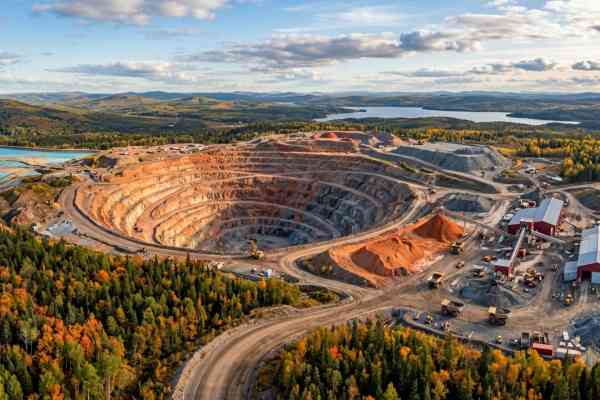
Rock Tech does not intend to limit itself to the role of a traditional mining operator in the future. With the Georgia Lake project in Ontario and the planned lithium converter in Red Rock, the company is pursuing a "mine-to-converter" strategy. The goal is not only to extract spodumene concentrate but also to handle the entire value chain in-house, all the way to battery-grade lithium chemicals. Harbecke points out that China controls around 90% of global lithium conversion. It is therefore crucial for Western battery supply chains to build their own processing capacities. "Canada is the place to be," says Harbecke, citing the combination of raw material deposits, affordable hydropower, and growing support from industrial policy.
According to management, Ontario in particular has emerged as an attractive location for critical raw materials projects. At the same time, European interest in Canadian raw materials is growing. Germany and other European countries are looking for reliable partners outside of China. Nevertheless, financing large projects remains a key challenge. Harbecke expects, however, that government programs and international investors—including sovereign wealth funds—could invest more heavily in Canadian raw material and processing projects in the future.
Operationally, Rock Tech is currently focused primarily on significantly improving the profitability of the Georgia Lake project. While the company communicated less aggressively about the project during the lithium market's downturn, it worked behind the scenes on process optimizations, cost structure, and technical design. The upcoming feasibility study is now expected to demonstrate that the originally anticipated capital expenditures (Capex) can be reduced by approximately 50%. Lower Capex, reduced financing costs, and declining operating costs could significantly improve project margins. At the same time, the company's own raw material base is intended to ensure supply security.
The coming months are therefore likely to be exciting. Rock Tech aims to complete the definitive feasibility study (DFS) for Georgia Lake by the end of 2026 and then make the final investment decision in early 2027. If everything goes according to plan, the mine could begin production around mid-2028. Harbecke believes Rock Tech could become one of the first lithium producers in Ontario. The demand outlook is based not only on electric vehicles but also on stationary battery storage, renewable energy, and backup solutions for data centers. Therefore, the current share price appears to offer an attractive entry opportunity.
https://youtu.be/4bWMsEsxK9s?si=NBTnk9jJhNwNlX8K
Electric Vehicles Are Growing in Popularity in Europe
The electric vehicle boom in Europe is gaining significant momentum in 2026. In the EU, 950,521 new battery-electric passenger vehicles were registered from January through May—a 35.7% increase compared to the same period last year. The market share of pure electric vehicles thus rose from 15.3% to 20.0%. One in five newly registered passenger vehicles in the EU was therefore purely electric. In addition to a broader model range, this growth is driven by new or revised subsidies and tax incentives in several key markets.
Germany saw particularly dynamic growth. A total of 283,949 new battery-electric passenger vehicles were registered in the first five months of 2026, representing a 40.9% increase. The BEV market share stood at 23.9%. In May alone, 59,969 all-electric vehicles hit the road—nearly 40% more than in the same month of the previous year. This means that one in four newly registered vehicles in Germany was electric. The German market thus remains a key growth driver for European electric mobility.
When it comes to specific models, it is clear that Tesla is no longer the undisputed leader. Across Europe, the Tesla Model Y was the best-selling electric vehicle in the first quarter, with approximately 51,700 registrations. It was followed by the Škoda Elroq with around 28,300 vehicles, the Tesla Model 3 with just under 26,500 units, the Renault 5 (including the Alpine A290), and the Škoda Enyaq. In Germany, the Škoda Elroq topped the BEV rankings with 10,399 new registrations. Behind it were the Tesla Model Y, the VW ID.3, the VW ID.7, and the Škoda Enyaq. The electric vehicle market is thus becoming increasingly diverse. Tesla remains strong, but European manufacturers are gaining significant ground with new, better-positioned models.
BMW aims to shake up the market with its New Class. In mid-April 2026, the premium automaker reported more than 50,000 new orders for the iX3 in Europe since its launch. More than half of all orders for the X3 series were for the all-electric variant. BMW itself spoke of demand exceeding its own expectations. At Mercedes, the signs are also positive, especially for the new electric CLA. Mercedes reported a 34% increase in BEV sales in Europe for the first quarter of 2026, and as much as 36% in Germany. At the same time, orders for battery-electric models in Europe more than doubled. The company specifically cites the electric CLA and the new electric versions of the GLC and GLB as key drivers.
The Structural Risk Facing BMW, Mercedes, and Volkswagen
Despite strong growth in electric vehicles, a structural risk remains for European manufacturers: their dependence on China for battery raw materials and, in particular, for lithium refining. Without secure access to lithium and their own refining capacities, European automakers cannot fully control the value creation of their electric vehicles. China dominates the processing of battery raw materials and could become a bottleneck at any time in the event of geopolitical tensions, export restrictions, or targeted price pressure—figuratively speaking, cutting off the "juice" to European manufacturers. Building their own supply chains, from mining through conversion to battery production, is therefore not just industrial policy but a strategic prerequisite for the long-term competitiveness of the European auto industry.
Rock Tech Lithium has repositioned itself. Progress in Canada is promising. The stock does not yet seem to be pricing this in. German automakers appear to be keeping pace with electric mobility. However, the strategic dependence on batteries as a key component must be eliminated.
Conflict of interest
Pursuant to §85 of the German Securities Trading Act (WpHG), we point out that Apaton Finance GmbH as well as partners, authors or employees of Apaton Finance GmbH (hereinafter referred to as "Relevant Persons") may hold shares or other financial instruments of the aforementioned companies in the future or may bet on rising or falling prices and thus a conflict of interest may arise in the future. The Relevant Persons reserve the right to buy or sell shares or other financial instruments of the Company at any time (hereinafter each a "Transaction"). Transactions may, under certain circumstances, influence the respective price of the shares or other financial instruments of the Company.
In addition, Apaton Finance GmbH is active in the context of the preparation and publication of the reporting in paid contractual relationships.
For this reason, there is a concrete conflict of interest.
The above information on existing conflicts of interest applies to all types and forms of publication used by Apaton Finance GmbH for publications on companies.
Risk notice
Apaton Finance GmbH offers editors, agencies and companies the opportunity to publish commentaries, interviews, summaries, news and the like on news.financial. These contents are exclusively for the information of the readers and do not represent any call to action or recommendations, neither explicitly nor implicitly they are to be understood as an assurance of possible price developments. The contents do not replace individual expert investment advice and do not constitute an offer to sell the discussed share(s) or other financial instruments, nor an invitation to buy or sell such.
The content is expressly not a financial analysis, but a journalistic or advertising text. Readers or users who make investment decisions or carry out transactions on the basis of the information provided here do so entirely at their own risk. No contractual relationship is established between Apaton Finance GmbH and its readers or the users of its offers, as our information only refers to the company and not to the investment decision of the reader or user.
The acquisition of financial instruments involves high risks, which can lead to the total loss of the invested capital. The information published by Apaton Finance GmbH and its authors is based on careful research. Nevertheless, no liability is assumed for financial losses or a content-related guarantee for the topicality, correctness, appropriateness and completeness of the content provided here. Please also note our Terms of use.