August 31st, 2026 | 07:15 CEST
Better Than Siemens Energy? These Stocks Are Benefiting From the US Market! 2G Energy, Tonies and Zefiro Methane with More Than 200% Upside Potential!
Created and published on behalf of Zefiro Methane
More than 1,000%. That is the performance of Siemens Energy shares since the beginning of 2024. The spectacular gains have been driven by the AI boom and its insatiable appetite for energy. But the company is now anything but cheap. We present three stocks poised for strong growth in the US. 2G Energy also aims to benefit from the AI boom. Its order intake is skyrocketing, and analysts see upside potential for the stock. Experts see more than 200% upside potential in Zefiro Methane. The company specializes in plugging abandoned wells and aims to become the market leader. The US government has allocated USD 4.7 billion for the purpose - and that is likely nowhere near enough. Thanks to strong growth in the US, Tonies could soon generate more than EUR 1 billion in annual revenue. Analysts consider recent concerns about profitability to be overblown and recommend buying the stock.
time to read: 5 minutes | Author: Fabian Lorenz
ISIN: ZEFIRO METHANE CORP | CA98926D1069 | NEO: ZEFI , TONIES SE | LU2333563281 , 2G ENERGY AG | DE000A0HL8N9
Table of contents:
Author

Fabian Lorenz
For more than twenty years, the Cologne native has been intensively involved with the stock market, both professionally and privately. He is particularly passionate about national and international small and micro caps.
Tag cloud
Shares cloud
Zefiro Methane: Over 200% Upside Potential
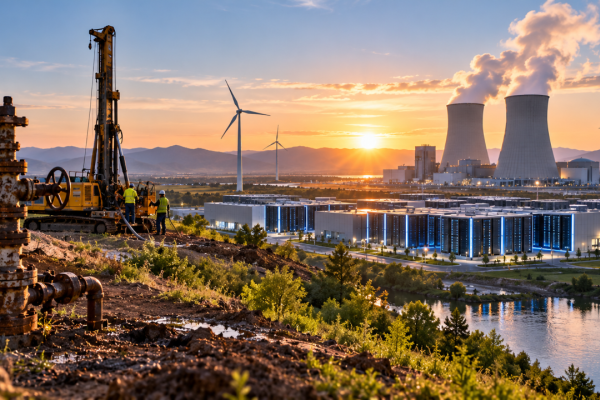
"The United States is littered with millions of wells that are just sitting there and leaking," explains Catherine Flax, CEO of Zefiro Methane, in an interview with the International Investment Forum. The company specializes in plugging these wells and aims to establish itself as the market leader in North America in the coming years.
The environmental, health, and safety risks should not be underestimated, as not only methane but also, in some cases, hydrogen sulphide or benzene escape from these orphaned wells. The consequences range from nausea and dizziness to contaminated groundwater and, in some cases, even explosions. Flax cites an office building that was constructed in the 1960s over an unplugged well. The escaping methane entered the building, making employees sick. The CEO illustrates the specific impact on the climate with a comparison: "Carbon dioxide is like high blood pressure; methane and other super pollutants, on the other hand, are like a heart attack." According to estimates, about 14 million Americans live within a mile of a leaking well.
Meanwhile, political and economic pressure to eliminate these dangers is growing. The US government has allocated USD 4.7 billion for this purpose. According to Flax, the program has bipartisan support because the remediation efforts not only protect the environment and public health but also restore land to usable condition. Companies cannot build residential buildings, data centers, or logistics centers on affected sites until existing wells have been properly plugged. Depending on the complexity, costs can reach several hundred thousand US dollars. Nevertheless, the government budget is far from sufficient. The USD 4.7 billion covers only about 2% of the estimated total cost of remediating all abandoned wells in the US.
It is therefore no surprise that analysts expect Zefiro to significantly increase its revenue and profits in the coming years. As early as fiscal year 2027/28 (ending June 30), revenue is projected to reach USD 66.85 million. Analysts expect operating profit (EBITDA) of USD 12.22 million and earnings per share of USD 0.05. Consequently, analysts estimate the stock's fair value at USD 1.50 and recommend buying. Zefiro shares are currently trading at around USD 0.45. In Germany, the stock is traded on Tradegate, among other platforms.
https://youtu.be/J332X4Xs_kk?si=iFjzDK1iMpilmyhO
Tonies: Billion-Euro Revenue Target in Sight
The US is emerging as Tonies' new growth engine. In North America, revenue rose 48% to EUR 104.3 million in the first half of 2026, significantly surpassing revenue in the DACH region for the first time. A growing retail presence, strong demand for the Toniebox 2, and popular content such as Disney, Pokémon, and Bluey are driving this expansion. The stock has lost 7.1% of its value over the past four weeks. Year-to-date, however, it is still up 12.70%. mwb research currently sees a buying opportunity.
Analysts consider the recent concerns about Tonies' profitability to be overblown. Although the 4-percentage-point increase in the revenue share of the lower-margin Toniebox temporarily weighed on the group's margin in the first half of the year, higher device sales are expanding the global user base. They are expected to generate additional revenue from the significantly more profitable figurines in the future. The established DACH region demonstrates just how profitable this business model can become, with an EBITDA margin of 24% in the first half of the year.
The negative free cash flow of EUR 64 million is also primarily attributable to timing effects. Tonies has deliberately built up inventory in order to launch the Toniebox Lite as well as new content from Pokémon, Bluey, and Hasbro in the important second half of the year. The sale of these products is expected to free up the capital tied up in inventory. Analysts therefore expect positive free cash flow for the full year and an EBITDA margin of around 15% in the second half of the year, up from 11% in the same period last year.
For 2026, mwb research forecasts revenue of EUR 765 million, EBITDA of EUR 77.9 million, and net income of EUR 41.6 million. By 2028, revenue is expected to rise to just under EUR 1.1 billion and net income to EUR 93.5 million. Analysts therefore view the recent weakness in the share price as a buying opportunity. They expect the stock to rise from its current level of EUR 11.70 to EUR 17.25.
2G Energy: Orders Exploding — Will the Stock Follow Suit Soon?
Since the start of this year, the AI boom has also caught up with Germany's 2G Energy. Between the end of March and the beginning of June, the stock surged from EUR 32 to EUR 74. The shares of the manufacturer of decentralized energy systems, including combined heat and power plants, containerized power plants, and large-scale heat pumps, subsequently consolidated to their current level of EUR 55.
With this business model, the company will also serve data centers in the US in the future. This is now also reflected in the order backlog. For the second quarter, 2G Energy reported a record order intake of EUR 422.4 million. This figure is nearly seven times the prior-year figure of EUR 54.1 million. In the first half of the year, order intake totaled EUR 479.4 million, compared to EUR 110.7 million in the same period last year. The main drivers were orders for data centers in the US. In North and Central America, orders totaling EUR 350.3 million were received in the second quarter. In addition, there are further reservations from customers on a broadly comparable scale. Delivery of the new orders is scheduled to begin in the fourth quarter, meaning that the first revenue is expected to be recognized as early as 2026.
The company notes that business is also developing positively outside North America. Order intake there rose by 57% to EUR 72.1 million, with the German biogas business in particular performing strongly, up 74% to EUR 37.9 million. The Executive Board therefore confirms its forecasts. For 2026, revenue is expected to be at the upper end of the EUR 440 to 490 million range, with an EBIT margin of 9.5 to 10.5%; for 2027, revenue of EUR 570 to 620 million and an EBIT margin of more than 11% are projected. A new assembly hall at the company's site in Heek, North Rhine-Westphalia, is expected to create additional capacity, generating at least EUR 300 million in additional annual revenue starting in 2028.
At the current share price of around EUR 55, 2G Energy has a market capitalization of approximately EUR 990 million. With expected revenue of up to EUR 630 million next year, the valuation does not seem particularly ambitious. Analysts share this view. SMC Research recently raised its price target from EUR 78 to EUR 80. First Berlin estimates the fair value at EUR 73.
The Bottom Line
Anyone who succeeds in the US has made it. Siemens Energy has demonstrated this impressively. Zefiro Methane operates in a niche that is all the more exciting. Billions are at stake, and the market is highly fragmented. It is not just analysts who think the stock is undervalued. 2G Energy also has enormous potential. At the moment, the momentum has slowed somewhat for many AI high-flyers, but considering next year's revenue, the stock is certainly not expensive. With Tonies, margin development should be monitored closely. It cannot be ruled out that, in the difficult economic environment, customers may be more inclined to opt for cheaper products.
Conflict of interest
Pursuant to §85 of the German Securities Trading Act (WpHG), we point out that Apaton Finance GmbH as well as partners, authors or employees of Apaton Finance GmbH (hereinafter referred to as "Relevant Persons") currently hold or hold shares or other financial instruments of the aforementioned companies and speculate on their price developments. In this respect, they intend to sell or acquire shares or other financial instruments of the companies (hereinafter each referred to as a "Transaction"). Transactions may thereby influence the respective price of the shares or other financial instruments of the Company.
In this respect, there is a concrete conflict of interest in the reporting on the companies.
In addition, Apaton Finance GmbH is active in the context of the preparation and publication of the reporting in paid contractual relationships.
For this reason, there is also a concrete conflict of interest.
The above information on existing conflicts of interest applies to all types and forms of publication used by Apaton Finance GmbH for publications on companies.
Risk notice
Apaton Finance GmbH offers editors, agencies and companies the opportunity to publish commentaries, interviews, summaries, news and the like on news.financial. These contents are exclusively for the information of the readers and do not represent any call to action or recommendations, neither explicitly nor implicitly they are to be understood as an assurance of possible price developments. The contents do not replace individual expert investment advice and do not constitute an offer to sell the discussed share(s) or other financial instruments, nor an invitation to buy or sell such.
The content is expressly not a financial analysis, but a journalistic or advertising text. Readers or users who make investment decisions or carry out transactions on the basis of the information provided here do so entirely at their own risk. No contractual relationship is established between Apaton Finance GmbH and its readers or the users of its offers, as our information only refers to the company and not to the investment decision of the reader or user.
The acquisition of financial instruments involves high risks, which can lead to the total loss of the invested capital. The information published by Apaton Finance GmbH and its authors is based on careful research. Nevertheless, no liability is assumed for financial losses or a content-related guarantee for the topicality, correctness, appropriateness and completeness of the content provided here. Please also note our Terms of use.