September 8th, 2026 | 07:30 CEST
Why the Oil Price Is Secondary for Zefiro Methane – and Why BP and Shell Now Urgently Need This Specialist
Created and Published on Behalf of Zefiro Methane Corp.
The renewed escalation in the Gulf has driven the price of Brent crude above USD 97, immediately putting the oil multinationals in the spotlight. While BP is benefiting directly from soaring revenues, one important factor should not be overlooked: methane reduction. Tightening US regulations are turning the plugging of old wells into a billion-dollar business, completely independent of the crude oil price. It is precisely in this niche that Zefiro Methane is growing, by plugging orphaned wells and thereby generating emission credits. Shell, in turn, needs these credits to improve its emissions-abatement balance sheet. We take a closer look at why BP, Zefiro Methane and Shell should now be on the radar of oil investors.
time to read: 5 minutes | Author: Armin Schulz
ISIN: ZEFIRO METHANE CORP | CA98926D1069 | NEO: ZEFI , BP PLC DL-_25 | GB0007980591 , Shell PLC | GB00BP6MXD84
Table of contents:
Author

Armin Schulz
Born in Mönchengladbach, he studied business administration in the Netherlands. In the course of his studies he came into contact with the stock exchange for the first time. He has more than 25 years of experience in stock market business.
Tag cloud
Shares cloud
Zefiro Methane: Benefiting From the US Infrastructure Transition
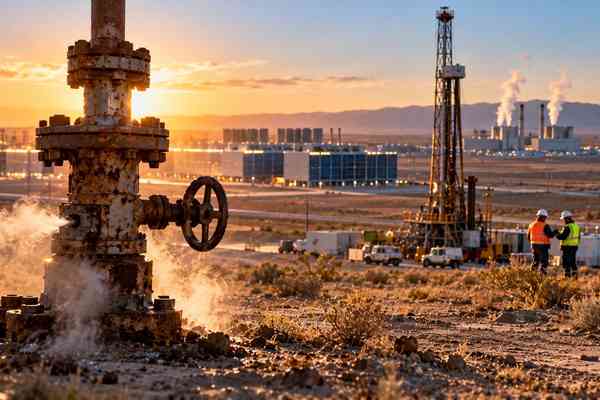
There are millions of decommissioned oil and gas wells on American soil, many of which have been abandoned and continue to release methane. This gas is considered more than 80 times as harmful to the climate as CO₂ and poses a risk to residents. The US government has allocated USD 4.7 billion for remediation. However, this enormous sum covers only around 2% of the actual need. A market worth several hundred billion dollars is waiting to be unlocked as these legacy liabilities are addressed. Zefiro Methane has been building expertise in this field for years and can now leverage that experience. A series of noteworthy developments in recent months shows that the company has positioned itself well.
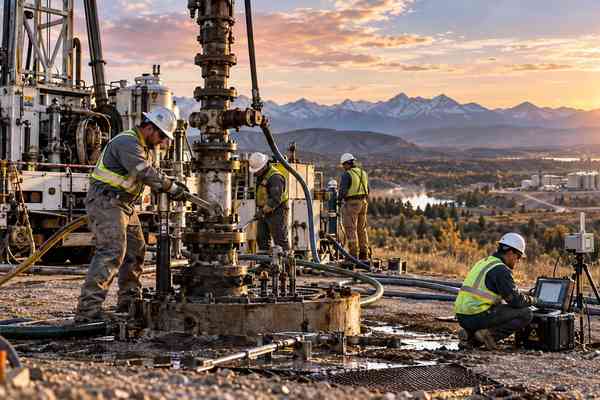
Zefiro has recently expanded its capacity through acquisitions. In total, its fleet has been expanded by five additional drilling rigs following the acquisition of equipment from Viking Well Service. The company is now active in 13 US states, enabling it to scale up its operations. The partnership with the Well Done Foundation, which operates in 18 states, could point to further expansion. A three-year framework agreement with the State of Ohio worth USD 19.6 million secures basic utilization through 2029. In addition, the high-margin methane monitoring business is gaining momentum; a contract in West Virginia has already generated USD 850,000. For 2025/26, management now expects revenue of around USD 55 million, following USD 33.2 million in the first nine months.
Zefiro links methane measurements to both physical remediation and the generation of certified emission credits. Ideally, this means a threefold cash flow. The company is receiving further tailwind from the explosive expansion of AI data centres. This is driving growing demand for secured building sites that cannot be used without well plugging and remediation. Analysts at GBC Research see considerable potential here and have set a target price of CAD 2.12 (around USD 1.50). With the current share price at CAD 0.63, there is plenty of room for the share price to rise to the target. The stock market has not yet priced in this growth scenario.
BP: A Strategic Change of Course
BP recently reported a methane intensity of 0.04% and a reduction in absolute emissions to 25 kilotonnes. These figures are virtually unheard of in the industry. However, satellite measurements in the Permian Basin differ significantly from these figures. There are allegations of systematic under-reporting, which carries regulatory risks. At the same time, the group is expanding its carbon credit business, most recently underpinned by the appointment of Wu Yue as head of China and the first carbon-offset LNG deliveries. Yet while these initiatives aim at sustainability, the group's focus is currently on a radical operational reorganization.
Under CEO Meg O'Neill, BP has acknowledged internal shortcomings. Production facility reliability fell to 92.4%, resulting in a 6% decline in production. Management's response is a strict cost-cutting program. The sale of the Gelsenkirchen refinery has already been completed, while the Archaea biogas business and further North Sea assets are still due to be sold. This is expected to raise between USD 15 and 16 billion by the end of 2026. Net debt has already been reduced to USD 22.3 billion. Share buybacks have therefore been suspended for shareholders. The focus is on strengthening the balance sheet rather than on rapid capital returns to investors.
The appointment of Ian Tyler as Chairman of the Board brings an end to a period of interim leadership. At the same time, BP is venturing back into Venezuela with the Loran gas field and is cooperating with Shell on exploration off the coast of Brazil. Analysts remain largely optimistic. Barclays and RBC have confirmed their "Buy" recommendations. On the one hand, geopolitical upheavals are generating record cash flows, but on the other, operational problems and the renewed strategic shift away from renewable energy are causing uncertainty. The coming quarters will show whether the new CEO can turn the company's fortunes around in the long term.
Shell: Between Methane Reduction and Portfolio Optimization
Shell, too, is undergoing a corporate restructuring. The energy giant has not only refined its methane emissions strategy but has also completed billion-dollar transactions that will reposition the company for the coming years. Management is deploying existing capital primarily towards high-margin production projects and liquefied natural gas. The recent certification of its entire production in the Gulf of Mexico, with the top 'Grade A' rating from MiQ, underscores Shell's ambitions in methane management. Between 2016 and 2025, the company reduced methane emissions there by 40%, despite an increase in production. In parallel, Shell is making strategic use of carbon credits, for example through the "Good Rice Alliance" in India.
The acquisition of the Canadian producer ARC Resources marks a milestone. For an equity value of around USD 13.9 billion, Shell has secured production of 370,000 barrels of oil equivalent per day in the Montney Basin. The deal is being paid for partly in cash and partly through the issuance of new shares. The company expects this to yield double-digit returns and, from 2027, a positive contribution to free cash flow per share. At the same time, Shell is pressing ahead with the sale of chemical plants in the US, which are expected to raise up to USD 8 billion. The European renewables business, with a capacity of 4 gigawatts, is also set to be sold to TotalEnergies. The proceeds from these sales are likely to free up additional capital for share buybacks and investments.
The second quarter of 2026 delivered the best quarterly performance since 2022, with an adjusted profit of USD 9.84 billion. Operating cash flow reached USD 21.4 billion. At the same time, Shell launched a share buyback program worth USD 3.5 billion, alongside a dividend of USD 0.3906 per share. Analysts are optimistic. Morgan Stanley raised its rating to "Overweight" with a price target of 3,780 pence, whilst Barclays raised its target to as high as 4,700 pence. The average price target among the 16 analysts surveyed by S&P Global is USD 97.77, with a range of USD 81.60 to USD 120.60. The average rating is "Buy", reflecting confidence in Shell's strategic reorientation.
Rising oil prices are filling the coffers of BP and Shell. Zefiro Methane, on the other hand, has tapped into a billion-dollar business unaffected by price fluctuations. The specialist is benefiting from regulatory pressure and AI infrastructure, rather than from the volatility of the crude oil market. BP must get its operational crisis under control despite high revenues and will need emissions allowances for its balance sheet, while Shell is driving its transformation forward with its billion-dollar deal and strong figures, but is also reliant on external credits.
Conflict of interest
Pursuant to §85 of the German Securities Trading Act (WpHG), we point out that Apaton Finance GmbH as well as partners, authors or employees of Apaton Finance GmbH (hereinafter referred to as "Relevant Persons") currently hold or hold shares or other financial instruments of the aforementioned companies and speculate on their price developments. In this respect, they intend to sell or acquire shares or other financial instruments of the companies (hereinafter each referred to as a "Transaction"). Transactions may thereby influence the respective price of the shares or other financial instruments of the Company.
In this respect, there is a concrete conflict of interest in the reporting on the companies.
In addition, Apaton Finance GmbH is active in the context of the preparation and publication of the reporting in paid contractual relationships.
For this reason, there is also a concrete conflict of interest.
The above information on existing conflicts of interest applies to all types and forms of publication used by Apaton Finance GmbH for publications on companies.
Risk notice
Apaton Finance GmbH offers editors, agencies and companies the opportunity to publish commentaries, interviews, summaries, news and the like on news.financial. These contents are exclusively for the information of the readers and do not represent any call to action or recommendations, neither explicitly nor implicitly they are to be understood as an assurance of possible price developments. The contents do not replace individual expert investment advice and do not constitute an offer to sell the discussed share(s) or other financial instruments, nor an invitation to buy or sell such.
The content is expressly not a financial analysis, but a journalistic or advertising text. Readers or users who make investment decisions or carry out transactions on the basis of the information provided here do so entirely at their own risk. No contractual relationship is established between Apaton Finance GmbH and its readers or the users of its offers, as our information only refers to the company and not to the investment decision of the reader or user.
The acquisition of financial instruments involves high risks, which can lead to the total loss of the invested capital. The information published by Apaton Finance GmbH and its authors is based on careful research. Nevertheless, no liability is assumed for financial losses or a content-related guarantee for the topicality, correctness, appropriateness and completeness of the content provided here. Please also note our Terms of use.