August 6th, 2026 | 07:10 CEST
Use the Pullback in Gold as a Buying Opportunity? 100% Upside with Barrick Mining, Desert Gold, TUI, and Lufthansa
Every day, we are bombarded with headlines about wars, conflicts, and human tragedies—who has the heart to think about vacation right now? Yet it is precisely in moments like these that taking a break can be more valuable than ever. Investors have been navigating a maze of geopolitical uncertainty for years. Yet, the stock markets have so far shown remarkable resilience—because there are always sectors that come into sharp focus during times of crisis. Precious metals like gold and silver have confidently weathered the inflationary spikes following the COVID-19 pandemic. Historical data shows that gold has generated positive real returns during all periods of inflation—averaging about 6.2% per year over the long term, and as high as 8.8% during periods of high inflation. The travel sector, on the other hand, is on an emotional roller coaster. Current conflicts, particularly in the Middle East, are leading to declines in bookings, rising energy prices, and uncertainty among both travelers and providers. If an itinerary is too risky, plans must be changed at the last minute. But as soon as the situation eases, catch-up effects follow. What has worked in recent years is back on the agenda: buy when the world seems to be falling apart.
time to read: 6 minutes | Author: André Will-Laudien
ISIN: BARRICK MINING CORPORATION | CA06849F1080 | NYSE: B , TSX: ABX , DESERT GOLD VENTURES | CA25039N4084 | TSXV: DAU , OTCQB: DAUGF , TUI AG NA O.N. | DE000TUAG505 , LUFTHANSA AG VNA O.N. | DE0008232125
Table of contents:
Author

André Will-Laudien
Born in Munich, he first studied economics and graduated in business administration at the Ludwig-Maximilians-University in 1995. As he was involved with the stock market at a very early stage, he now has more than 30 years of experience in the capital markets.
Tag cloud
Shares cloud
Barrick Mining: Strong Growth Potential Surrounding the North American Mining Giant
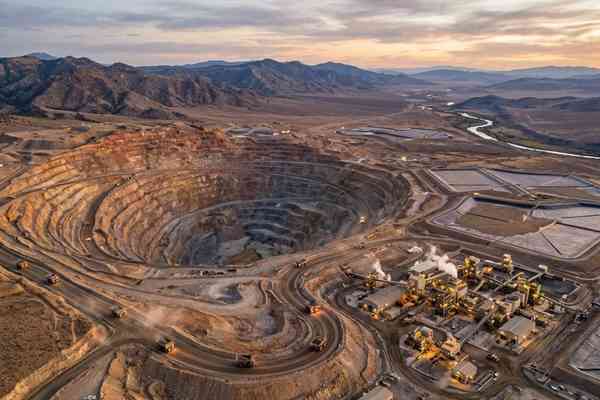
Gold is back in the headlines, and Barrick Mining is right at the center of it all. The recent agreement with the military government in Mali once again provides the company with clear growth prospects in West Africa. The license for the Loulo-Gounkoto complex has been extended by a decade, giving Barrick long-term planning certainty for one of the continent's most profitable mines. Up to 750,000 ounces of gold can be produced there annually; a return to full operational control will reignite the company's cash flows and set a new starting point for regional production. Business as usual, one might say!
Much more important to investors, however, is the discussion surrounding a possible spin-off of the company. After all, the rumour mill is currently in full swing again. Investors are speculating that a structural separation of the North American operations from the international portfolio could make the value of individual business segments more transparent. Barrick is currently considering an initial public offering (IPO) of its North American business by the end of 2026, in which a minority stake of 10 to 15% would be sold, while the group would retain control. However, the plans depend on the approval of partner Newmont, which filed a formal dispute in February 2026 over production declines at the Nevada Gold Mines. It remains to be seen whether strategic advantages and operational efficiency gains will justify such a complex restructuring.
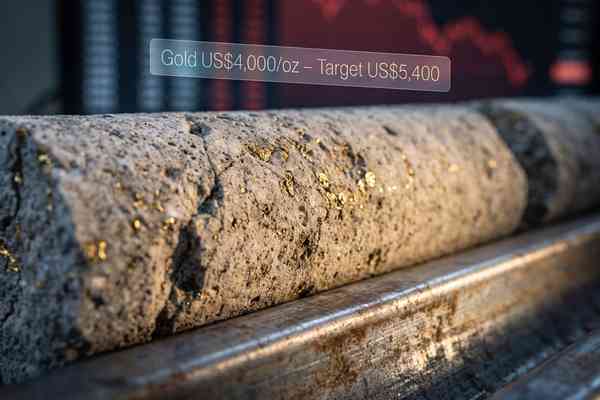
The latest Q2 figures underscore the momentum gained: Barrick reported gold production of 797,000 ounces, up about 5% from the previous quarter. At the same time, copper production increased by a remarkable 37% to 59,000 metric tons. For the full year 2026, Barrick plans to produce 2.90 to 3.25 million ounces of gold and 190,000 to 220,000 metric tons of copper. Copper production could really take off starting in 2029, when Reko Diq in Pakistan, one of the world's largest undeveloped copper deposits, begins operations. Barrick has currently suspended development of the project due to several security incidents, but the resource is substantial and is expected to be fully realized. Investors should keep in mind: with 4 million ounces of production and gold prices between USD 4,000 and USD 5,000, additional EBIT of USD 6 to USD 8 billion could be achieved. A 77% increase in share price in just one year is rare for a mining giant of this magnitude, but perhaps this marks only the beginning of a complete revaluation. The 2027 P/E ratio stands at just 8.5, a historically low figure for Barrick.
Desert Gold: Full Steam Ahead
In the heart of West Africa, where the mining industry currently serves as a fundamental driver of local gross domestic product and feeds massive sovereign wealth funds, more agile players are also realizing their potential. For example, the Canadian exploration company Desert Gold Ventures is accelerating the development of its Barani-East project in western Mali through a methodically sound and capital-disciplined approach. Strategically located, the junior explorer operates not far from industry giants such as Barrick and B2Gold, directly on the mineralized Senegal-Mali Shear Zone (SMSZ), which offers significant geological synergies and infrastructural advantages.
Current operational steps are focused on preparatory infrastructure measures, while a modular processing plant is being manufactured simultaneously. This facility is initially designed to handle an hourly throughput capacity of approximately 10 metric tons of ore and is expected to be expanded to about 50 metric tons in the future. A recent feasibility study for the SMSZ area serves as a solid foundation for this mine development; based on an ounce price of USD 2,850, it yields a post-tax net present value of approximately USD 61 million and promises an impressive internal rate of return of 57%. Should precious metal markets continue to rise, the analysis forecasts a significant increase in the property's value to over USD 124 million, even though the calculated total production costs amount to a moderate USD 1,137 per troy ounce. Over the estimated operational lifespan of one decade, management anticipates total production of 113,100 ounces of gold, whereas the initial investment of approximately USD 20 million remains relatively low.
Mali is currently the continent's second-largest gold producer, with record revenues in the mining sector, which is why Desert Gold is specifically focused on rapidly generating operational cash flow and consequently scaling up commercial production step by step. The phased development strategy significantly minimizes financial risks during the start-up phase and allows for highly flexible adjustment of production volumes based on future drilling successes and liquidity options. Furthermore, the property holds monumental potential for unexpected discoveries, as the profitability calculations to date cover only a fraction of the entire claim.
Management is further bolstering its regional diversification through the Tiegba Gold project in Côte d'Ivoire, a country currently boasting robust GDP growth of over 6% and whose government aims to increase gold production to over 60 metric tons. Ivorian legislation offers an extremely investor-friendly environment, which is likely to facilitate additional, rapid discoveries. The company recently demonstrated its drive by completing a massively oversubscribed capital increase totaling approximately CAD 7.18 million, thereby fully funding the upcoming development phases and securing the transition to the production phase. The share price surged to CAD 0.11 and is now showing clear signs of a dynamic upward trend. Research firm GBC has set a price target of CAD 0.93 over the next 12 to 24 months.
CEO Jared Scharf outlined these upcoming milestones in West Africa during the 18th International Investment Forum.
TUI and Lufthansa: Mixed Signals from the Executive Suites
Travel giant TUI and airline group Lufthansa had to contend with significant headwinds in Q2. Consequently, the reactions from their executive boards were completely different. The tourism group TUI bravely weathered the geopolitical upheavals in the Middle East and, thanks to strong demand for cruises and hotels, managed to limit the seasonally typical adjusted operating EBIT loss to EUR 188.3 million. In light of this operational turnaround, the TUI Executive Board expressed optimism and, despite having cautiously suspended its revenue forecast, continues to target an ambitious EBIT range of EUR 1.1 to 1.4 billion for the full year.
In contrast, Lufthansa came under intense pressure as a significant increase in kerosene costs of EUR 750 million, along with high strike-related costs, severely impacted its earnings. Although the airline posted record revenue of EUR 11.1 billion, adjusted operating profit plummeted by more than half in the second quarter to a meagre EUR 383 million. CEO Carsten Spohr contritely admitted that the continued high global demand for travel and higher ticket prices were unable to fully offset the enormous cost increases at the core brand. Consequently, Lufthansa management pulled the plug and lowered its full-year operating forecast for adjusted EBIT to a more conservative range of EUR 1.7 to 2.2 billion. To cushion the headwinds, Spohr is now placing a strong emphasis on an internal turnaround program that calls for more efficient fleet management and productivity measures.
While TUI investors are looking forward to the first dividend in five years and a new share buyback program following the best winter quarter in the company's history, Lufthansa's management is warning of persistently high volatility and even shorter passenger booking cycles. After hitting a low in the spring, TUI shares have steadily stabilized around the EUR 7 mark, whereas Lufthansa shares suffered a sharp drop of over 10% to EUR 8.20 following the earnings release. On the LSEG Refinitiv platform, however, analysts are optimistic and are setting 12-month price targets averaging EUR 10.15 for TUI and EUR 9.90 for Lufthansa.
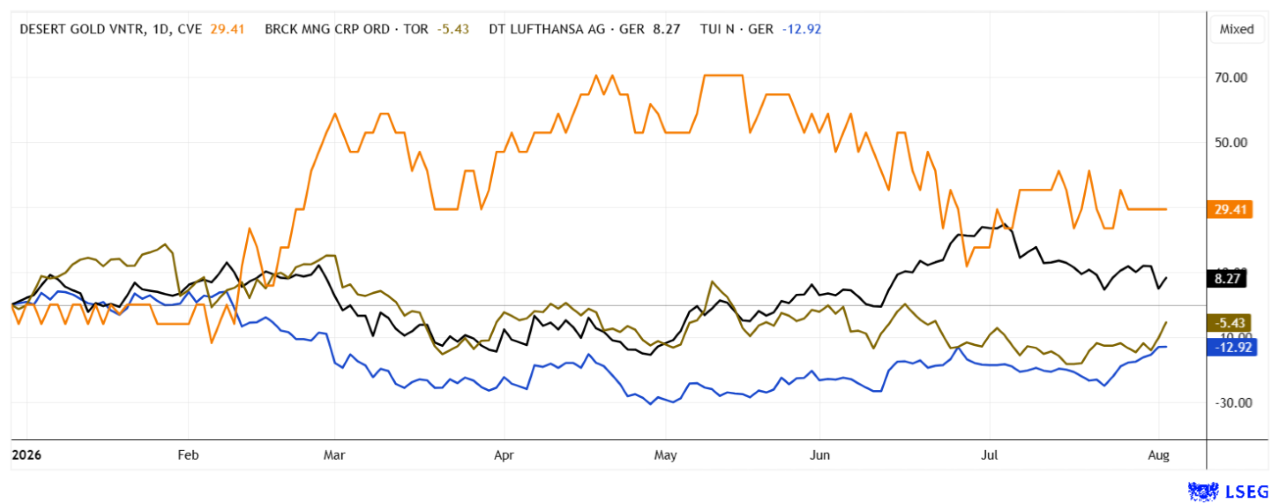
Volatility seems set to become the "Word of the Year" for 2026. In the wake of negotiations with Iran, the price of Brent crude oil fell from nearly USD 120 back down to about USD 80 per barrel; some experts had predicted it would reach USD 200. Stock indices are fluctuating wildly, with no clear direction in sight. Investors should maintain a steady hand and a balanced approach during this period. Gold is currently proving itself once again as a safe haven, and the battered tourism sector also offers good opportunities once things settle down.
Conflict of interest
Pursuant to §85 of the German Securities Trading Act (WpHG), we point out that Apaton Finance GmbH as well as partners, authors or employees of Apaton Finance GmbH (hereinafter referred to as "Relevant Persons") currently hold or hold shares or other financial instruments of the aforementioned companies and speculate on their price developments. In this respect, they intend to sell or acquire shares or other financial instruments of the companies (hereinafter each referred to as a "Transaction"). Transactions may thereby influence the respective price of the shares or other financial instruments of the Company.
In this respect, there is a concrete conflict of interest in the reporting on the companies.
In addition, Apaton Finance GmbH is active in the context of the preparation and publication of the reporting in paid contractual relationships.
For this reason, there is also a concrete conflict of interest.
The above information on existing conflicts of interest applies to all types and forms of publication used by Apaton Finance GmbH for publications on companies.
Risk notice
Apaton Finance GmbH offers editors, agencies and companies the opportunity to publish commentaries, interviews, summaries, news and the like on news.financial. These contents are exclusively for the information of the readers and do not represent any call to action or recommendations, neither explicitly nor implicitly they are to be understood as an assurance of possible price developments. The contents do not replace individual expert investment advice and do not constitute an offer to sell the discussed share(s) or other financial instruments, nor an invitation to buy or sell such.
The content is expressly not a financial analysis, but a journalistic or advertising text. Readers or users who make investment decisions or carry out transactions on the basis of the information provided here do so entirely at their own risk. No contractual relationship is established between Apaton Finance GmbH and its readers or the users of its offers, as our information only refers to the company and not to the investment decision of the reader or user.
The acquisition of financial instruments involves high risks, which can lead to the total loss of the invested capital. The information published by Apaton Finance GmbH and its authors is based on careful research. Nevertheless, no liability is assumed for financial losses or a content-related guarantee for the topicality, correctness, appropriateness and completeness of the content provided here. Please also note our Terms of use.