June 29th, 2026 | 06:35 CEST
The Cleanup Artists: Zefiro Methane, 374Water, Befesa, and the Multi-Billion-Dollar Market for Contaminated Sites
Burning faucets, contaminated groundwater, toxic dust from steel furnaces - industry leaves behind contaminated sites that conventional disposal solutions are powerless to address. Three companies have identified a market niche precisely in this area. Zefiro Methane plugs millions of abandoned wells in the US, 374Water eliminates "forever chemicals," and Befesa turns the toxic filter dust from the steel industry into usable zinc. The logic behind all three business models is the same: the more severe the environmental damage, the larger the market and strict regulation becomes a revenue driver here, rather than a risk factor as in other industries.
time to read: 9 minutes | Author: Jens Castner
ISIN: ZEFIRO METHANE CORP | CA98926D1069 | NEO: ZEFI , BEFESA S.A. ORD. O.N. | LU1704650164 , 374WATER INC | US88583P2039 | NASDAQ: SCWO
Table of contents:
Author
Jens Castner
The Nuremberg native brings over three decades of capital markets experience, backed by a career shaped by deep market insight and a genuine passion for investing. His journey began in 1994 through an investment club among colleagues – a formative experience that sparked a lifelong dedication to identifying compelling investment opportunities.
Following senior editorial roles at Nürnberger Nachrichten, €uro am Sonntag, and €uro, he went on to serve as Editor-in-Chief of the renowned investor magazine Börse Online from 2014, where he played a key role in shaping high-quality financial journalism for a broad investor audience.
Tag cloud
Shares cloud
Zefiro Methane: Abandoned Wells
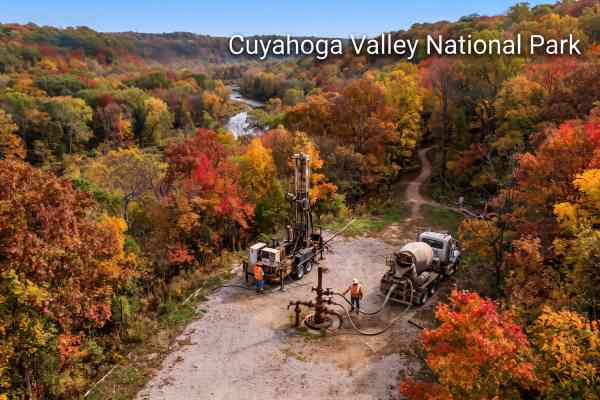
Time and again, images like these make headlines around the world: burning faucets in American kitchens, with gas suddenly gushing from the pipes. In isolated cases, the legacy of the oil and gas industry has even caused entire homes to go up in flames. Public protests are on the rise. But these are the spectacular exceptions. As a rule, the problem plays out behind the scenes—and that is exactly where Zefiro Methane comes in. In the US, millions of decommissioned, abandoned oil and gas wells are releasing methane into the atmosphere—a greenhouse gas that, in the short term, causes many times more climate damage than CO₂. This forgotten legacy problem has become the business foundation for the company, headquartered in Vancouver, Canada. Through its US subsidiary Plants & Goodwin (P&G), a long-established firm with over 50 years of experience in plugging wells, Zefiro possesses the operational clout that this niche market has lacked until now.
The government is providing a tailwind. Through the Infrastructure Investment and Jobs Act (IIJA), the US government is allocating USD 4.7 billion to properly plug abandoned and orphaned wells—a predictable, politically secure foundation for orders. According to their own figures, Zefiro and P&G are securing approximately 25% of the projects put out to bid in key regions. The total volume of the US market for the remediation of an estimated minimum of 2.2 million abandoned wells is, however, estimated at USD 400 to 600 billion. Crucially, this market position has now evolved into a sustainable business. In the first nine months of the current fiscal year, Zefiro generated record revenue of USD 33.2 million—a 36% increase over the previous year—and reported a positive adjusted operating profit (EBITDA) for the third consecutive time. This is particularly noteworthy because the winter half-year is traditionally the slow season in this business due to weather conditions. The shift into the black is thus no longer a one-time effect but a stable trend.
A second revenue stream promises the greatest value growth. Zefiro measures methane emissions before and after plugging, has the prevented climate damage verified through the renowned American Carbon Registry certification program, and receives CO₂ credits in return, which are sold via preliminary agreements to international trading firms such as EDF Trading. This market for voluntary CO₂ offset credits is still in its infancy—an option value that is barely visible in the current figures. Operationally, the pace has picked up noticeably recently. With the acquisition of equipment from Viking Well Services, Zefiro expanded its presence to 13 US states and secured four new major clients in the energy sector, including three publicly traded corporations with a combined market capitalization of over USD 140 billion. In Ohio, a three-year contract worth USD 19.6 million is currently underway; in mid-June, additional government-funded contracts totaling USD 2.4 million for twelve wells were added.
374Water: Using Pressure and Heat to Combat Persistent Chemicals
Zefiro prevents a forgotten gas from escaping into the atmosphere; at the US company 374Water, the focus is on a contaminant that does not escape but remains—practically forever. The focus is on PFAS (per- and polyfluoroalkyl substances), also known as "forever chemicals" due to their persistence. They are found in firefighting foams, nonstick coatings like Teflon, and countless other everyday products. These substances accumulate in soil, groundwater, and the human body, and they hardly break down naturally. With stricter limits in place, pressure is mounting not only to capture them but to eliminate them permanently—and that is exactly what 374Water's business model is based on. The process is called supercritical water oxidation. Under high pressure and at temperatures above 374 °C (hence the company name), water is brought into a state between liquid and gas, in which organic pollutants decompose almost completely. The key difference from conventional methods is that the pollutants are actually destroyed, rather than merely displaced or bound. In independently verified tests, validated by the engineering firm Arcadis and supported by an innovation unit of the US Department of Defense, the destruction rate exceeded 99.9%.
Nevertheless, there is still some way to go before the business becomes viable. A pilot project has been underway at the Iron Bridge wastewater treatment plant in Orlando since late 2024. This was followed in early 2026 by a contract, initially set to run for five years, for the full expansion into a permanent destruction hub, which is expected to generate annual revenue of USD 3 to USD 5 million during its initial operational phase. With co-investors, a much higher figure is possible in the long term. However, the latest figures demonstrate just how early a stage the business is still in. In the first quarter of 2026, revenue stood at just USD 0.55 million, with a net loss of USD 4.57 million. At least the gross margin improved significantly, from 25% to 63%. Building the infrastructure, therefore, continues to cost more than the operating business generates—the North Carolina-based company relies on fresh capital for expansion.
Nevertheless, the market potential is considerable. The US market for sewage sludge disposal alone is estimated at over USD 2 billion, and the liability risks associated with PFAS are increasingly driving municipalities, industry, and government agencies to take action. A partnership with the waste management company Crystal Clean paves the way for access to lucrative government contracts—such as the remediation of contaminated military sites. On the US technology exchange Nasdaq, however, 374Water remains a micro-cap company with a market capitalization of around USD 35 million and a correspondingly high risk-reward profile.
Befesa: How Toxic Dust Becomes a Valuable Raw Material
No less dangerous than PFAS are the residues produced during steel production in electric arc furnaces: filter dust containing zinc and heavy metals, which is classified as hazardous waste and must not be landfilled. Tackling this legacy problem from heavy industry is Befesa. In rotary kilns, the dust is processed using the rolling process to produce rolled oxide, a zinc-rich precursor that can be used as a substitute for newly mined ores. A second pillar of the Luxembourg-based company's business is the recycling of salt slag and residual materials from the aluminum industry. The company was launched in 1987 as a spin-off from Metallgesellschaft under the name Berzelius Umwelt Service (B.U.S.). The company's key operational hubs are located in Ratingen near Düsseldorf and in Bilbao.
The figures from the SDAX-listed company reflect stability. In the first quarter of 2026, adjusted EBITDA stood at EUR 57.9 million, an increase of 4% compared to the same period last year. Net income rose by 11% to EUR 20.7 million, while the debt-to-EBITDA ratio fell for the eighth consecutive quarter to 2.25 times operating income. Management has mitigated the biggest risk factor, fluctuating zinc prices, through price hedging. Against this backdrop, the recent share price performance is noteworthy. From just over EUR 36 in mid-May, the stock fell to around EUR 30 by the end of June despite strong commodity prices. Despite a recent sharp correction, aluminum is trading at USD 3,180/t, about a quarter higher than 12 months ago, and the zinc price reached a three-year high of over USD 3,600/t just a few days ago. Part of the decline can be attributed to the ex-dividend adjustment, as the dividend—which was increased from EUR 0.64 to 1.00—was deducted from the share price on June 17. The remainder of the correction is likely due to the prospect of rising zinc smelting fees—the fee that zinc smelters retain when purchasing rolled oxide—in the US and higher energy costs in Europe, which have been further fueled by the Iran conflict. Added to this is management's rather conservative forecast, which anticipates EBITDA of EUR 250 to 270 million for the full year. Stock market investors had apparently expected more.
The business is cyclical and dependent on industrial conditions, which is why the secondary aluminum segment is recovering only tentatively. This is offset by structural tailwinds in the steel dust recycling business. The steel industry's shift to electric arc furnaces and stricter environmental regulations in the EU are driving growth in the volume of recyclable waste materials—a trend for which the expansion of the Bernburg plant in Saxony-Anhalt and the development of new capacity in the US are already well-positioned. For investors, this presents a rare opportunity: a profitable, low-debt market leader whose stock has fallen, while business and raw material prices remain stable. Most analyst firms' price targets hover around the EUR 40 mark, and the major Swiss bank UBS even considers EUR 46 achievable.
Three Environmental Problems, Three Solutions, Three Risk Profiles
As different as the three companies may be, one principle unites them: they profit from cleaning up industrial contamination—forgotten wells, persistent chemicals, and residues from heavy industry. For investors, however, these are three fundamentally different investments that can be ranked according to their stage of maturity. At the beginning of this scale is 374Water. The company has a technologically validated solution, but it is still in the early stages of commercialization. The revenue is low, the business is operating at a loss, and it relies on fresh capital. Based on the current Nasdaq price of USD 1.93, the market capitalization is approximately USD 35 million. In Germany, the stock is only tradable over-the-counter through Lang & Schwarz. Anyone investing here is betting on the company's ability to scale up—with a correspondingly high level of risk.
Zefiro is a few crucial steps ahead. The difference lies not only in having reached the operational break-even point but also in the professionalism of its capital market presence. At the helm is a team with a Wall Street background: CEO Catherine Flax, like other high-profile Zefiro executives, comes from the major US bank JPMorgan. The actual value driver—the business with voluntary CO₂ credits—is also still in its infancy. With a market capitalization of about CAD 60 million, Zefiro remains a penny stock, carrying the associated risk of low trading volumes. In Stuttgart, for example, the share price plummeted last Friday from over EUR 0.40 to EUR 0.36 for no apparent reason, while the stock showed no signs of weakness on its home exchange in Toronto. Speculative investors can use such unexplained dips as an entry point. Although, as with 374Water, there are so far hardly any reliable analyst estimates on which to base a valuation using a price-to-earnings (P/E) ratio, the more the problem of abandoned methane-emitting facilities enters the public consciousness and the louder the protests become, the more brokers and research firms are likely to focus their attention on this small problem-solver.
This is precisely where the contrast with Befesa lies. With a market capitalization of just over EUR 1.2 billion, the SDAX-listed company is many times larger than the two North American firms and is covered by several renowned banks. Consensus estimates predict earnings per share of EUR 2.50 for 2026 and EUR 2.65 for 2027. This translates to a moderate P/E ratio of between 11 and 12. The dividend yield is just over 3% and, based on the current share price, is expected to rise to over 4% in the coming years. In this case as well, the current weakness in the share price could present a buying opportunity for long-term investors.
Conflict of interest
Pursuant to §85 of the German Securities Trading Act (WpHG), we point out that Apaton Finance GmbH as well as partners, authors or employees of Apaton Finance GmbH (hereinafter referred to as "Relevant Persons") may hold shares or other financial instruments of the aforementioned companies in the future or may bet on rising or falling prices and thus a conflict of interest may arise in the future. The Relevant Persons reserve the right to buy or sell shares or other financial instruments of the Company at any time (hereinafter each a "Transaction"). Transactions may, under certain circumstances, influence the respective price of the shares or other financial instruments of the Company.
In addition, Apaton Finance GmbH is active in the context of the preparation and publication of the reporting in paid contractual relationships.
For this reason, there is a concrete conflict of interest.
The above information on existing conflicts of interest applies to all types and forms of publication used by Apaton Finance GmbH for publications on companies.
Risk notice
Apaton Finance GmbH offers editors, agencies and companies the opportunity to publish commentaries, interviews, summaries, news and the like on news.financial. These contents are exclusively for the information of the readers and do not represent any call to action or recommendations, neither explicitly nor implicitly they are to be understood as an assurance of possible price developments. The contents do not replace individual expert investment advice and do not constitute an offer to sell the discussed share(s) or other financial instruments, nor an invitation to buy or sell such.
The content is expressly not a financial analysis, but a journalistic or advertising text. Readers or users who make investment decisions or carry out transactions on the basis of the information provided here do so entirely at their own risk. No contractual relationship is established between Apaton Finance GmbH and its readers or the users of its offers, as our information only refers to the company and not to the investment decision of the reader or user.
The acquisition of financial instruments involves high risks, which can lead to the total loss of the invested capital. The information published by Apaton Finance GmbH and its authors is based on careful research. Nevertheless, no liability is assumed for financial losses or a content-related guarantee for the topicality, correctness, appropriateness and completeness of the content provided here. Please also note our Terms of use.