
decarbonization

Commented by Fabian Lorenz on August 20th, 2026 | 07:35 CEST
Insider Alert, Shock and Opportunity in These Stocks: HelloFresh, Steyr Motors and Standard Uranium
Alarm bells are ringing at HelloFresh. The stock has lost 50% so far this year. Fewer customers are placing orders, and earnings are deep in the red. Is there still hope? From the board's perspective, apparently not—the CEO has been selling shares. At Standard Uranium, on the other hand, a strategic investor has come on board—and for good reason. The uranium market is poised for strong growth, while Standard Uranium has once again reported strong drilling results. The stock is still lagging behind this trend—for now. Steyr Motors, meanwhile, has shocked its shareholders. After takeover speculation had already quickly evaporated, the company hit investors with another surprise this week in the form of a profit warning. Orders from the defense sector are proving to be both a blessing and a curse. Is now the time to buy?
Read

Commented by Stefan Feulner on August 17th, 2026 | 07:25 CEST
BYD, dynaCERT, Lucid: New Models and New Markets Fuel Share Price Potential
The mobility transition is in full swing, but the internal combustion engine will not disappear overnight. While electric vehicle manufacturers are making inroads with new models, longer ranges, and ever-shorter charging times, millions of trucks, construction machines, and industrial power units worldwide will remain in use for years to come. This creates a massive transition market. New propulsion systems must grow, while existing engines must become more efficient and produce fewer emissions. Three companies are tackling different aspects of this transformation.
Read

Commented by André Will-Laudien on August 14th, 2026 | 08:20 CEST
Drones, Energy Crisis and NASDAQ! DroneShield, HPQ Silicon, Siemens Energy and Nordex in Focus
All quiet on the western front! Whether it is war, bankruptcies, or new tariffs, the party goes on! The drone sector, booming thanks to increased defence spending, stands in stark contrast to the simmering EU energy crisis, which continues to pose major challenges for Brussels. Counter-drone specialist DroneShield is experiencing a massive surge in demand and orders in the field of electronic warfare, yet its share price is falling significantly. Canadian company HPQ Silicon is also benefiting from the West's need to independently establish critical supply chains for high-purity silicon and innovative battery materials. Siemens Energy also sits at the epicentre of the infrastructure transition, with its historically full order books serving as an unshakable engine of growth amid the energy crunch. This sustained rebound is flanked by Hamburg-based wind power pioneer Nordex, which is reporting double-digit margin improvements. This compelling combination of high-tech defence, clean energy generation, and raw material sovereignty is attracting substantial capital directly into investors' coffers. We take a closer look at four future-oriented sector favourites.
Read

Commented by Stefan Feulner on August 10th, 2026 | 07:10 CEST
Albemarle, HPQ Silicon, Fluence Energy: Battery Boom Poised for the Next Price Surge
The battery market is entering an exciting phase. While the lithium sector is making a surprisingly strong comeback after a long slump, new battery technologies are reaching key milestones on the path to commercialization. At the same time, it is becoming increasingly clear that even booming future markets are not immune to short-term setbacks. Amid record demand, billions in investments, and operational challenges, opportunities are now emerging that many investors may still be underestimating.
Read

Commented by Carsten Mainitz on August 5th, 2026 | 09:10 CEST
The New Gold Rush Is Nuclear Energy: How American Atomics Could Benefit from the AI Boom Driven by Microsoft, Amazon, and SAP
Microsoft and Amazon are engaged in a multi-billion-dollar race to expand their AI capabilities. The two tech giants' strong quarterly results have recently electrified Wall Street. Investors celebrated the successful monetization of AI cloud services and full order books. The figures from the German software company SAP were also well received. The rapid expansion of cloud platforms and AI data centers is not only devouring investments on a previously unseen scale but also consuming enormous amounts of electricity. Against this backdrop, nuclear energy is experiencing a renaissance. It reliably and consistently provides the necessary baseload power while producing virtually no CO₂ emissions. This evolving landscape creates a compelling market opportunity for companies such as American Atomics. The Canadian company is in the process of establishing a vertically integrated North American nuclear fuel supply chain and is achieving key milestones.
Read

Commented by Stefan Bode on July 29th, 2026 | 07:00 CEST
US Uranium Independence in Focus, T-Mobile US Under Pressure, Volkswagen Cuts Forecast – American Atomics, Deutsche Telekom, Porsche
The Iran war and the potential for escalation into neighbouring countries remain firmly on investors' radar despite the temporary pause in US air strikes. This report examines current developments at companies from various sectors that are currently attracting market attention. Whether it is strategic realignments to secure critical raw materials, turbulent share price reactions among telecommunications giants following earnings season, or the margin challenges facing European automakers in the Asian market—the latest market data offers plenty of potential for volatility. Find out which fundamental metrics and trends are now becoming decisive for investors.
Read

Commented by Armin Schulz on July 28th, 2026 | 10:05 CEST
Multi-Billion Dollar Saudi Nuclear Deal: Cameco, American Atomics and Constellation Energy in Focus
Driven by AI data centres and industrial transformation, soaring global energy demand is thrusting nuclear power back to the forefront of energy policy. The multi-billion-dollar US-Saudi agreement is not a superficial diplomatic gesture, but a 30-year economic stimulus program for the entire nuclear value chain. The true return on the nuclear energy renaissance lies not in the reactor coolers themselves, but in the companies that secure the supply, scale the technology, and capture the returns from capacity markets. This is precisely where a closer look at Cameco, American Atomics, and Constellation Energy is particularly worthwhile.
Read

Commented by André Will-Laudien on July 28th, 2026 | 07:40 CEST
Energy Power Shift: US on the Rise, EU Under Pressure – A Look at Standard Uranium, E.ON, ITM, and Plug Power
The next wave of the AI revolution will be decided not by algorithms, but by megawatts. The US energy agency, the IEA, projects that data center electricity consumption will rise to just under 1,000 TWh by 2030. An analysis by Goldman Sachs goes even further, forecasting that electricity demand driven by AI workloads could rise by up to 160% over the same period. This brings an often-underestimated question to the forefront of the capital markets: Who will supply the energy for the digital age? Utilities like E.ON and hydrogen specialists such as ITM Power and Plug Power are small cogs in a large machine room. Countries like China, the US, and the dynamic EU member Poland have recognized the challenges and are mobilizing for their next phase of nuclear expansion. The race for electricity is on, and it will determine who will be among the big winners in the AI era. Globally, uranium production remains concentrated in just a few regions. This makes the market vulnerable to supply disruptions, permitting risks, and geopolitical disruptions. Standard Uranium demonstrates what consistent exploration can look like at a time when demand for uranium to fuel new power plant capacity is rising. It is worth taking a closer look.
Read
Commented by Nico Popp on July 28th, 2026 | 07:35 CEST
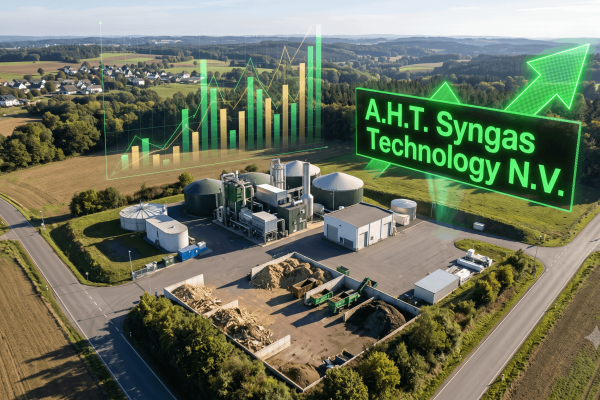
Hydrogen Setback: BASF and Linde Focus on Large-Scale Projects—Could Decentralized Solutions Put A.H.T. Syngas in the Spotlight?
The energy transition is unstoppable. Even industrial companies can no longer avoid finding innovative solutions involving synthesis gas or hydrogen. To meet the rapidly rising demand for green hydrogen in particular, policymakers and corporations are relying on pipelines and large-scale projects. The European RED III directive requires the chemical industry to achieve a 42% share of green hydrogen by 2030—which, according to market researchers, will require investments in the double-digit billions. However, since the expansion of Germany's pipeline network is proceeding slowly, many companies are facing a supply gap. The industry is addressing this gap in two ways: large corporations are focusing on large-scale solutions, while specialized providers such as A.H.T. Syngas are advancing decentralized solutions. We examine the situation and highlight opportunities.
Read

Commented by Nico Popp on July 24th, 2026 | 08:50 CEST
Cameco Had to Buy Uranium on the Open Market – NexGen Opts Out of Offtake Agreements – Standard Uranium Receives a "Gift"
Now Saudi Arabia has entered the picture as well. The recent nuclear deal with the US underscores that nuclear power is on the rise. The reason is clear: AI data centers require climate-neutral baseload power. However, nuclear reactors need uranium fuel—and uranium is anything but abundant. At the same time, Western sanctions against Russian uranium are further tightening an already constrained global supply. Amid this supply gap, a remote region in northern Canada is increasingly attracting investor attention. The Athabasca Basin is home to the world's largest uranium deposits. While established industry leaders and advanced developers already command multi-billion-dollar valuations, investors are searching for the next discovered success stories in the world's premier uranium district. We take a closer look at the investment landscape in the Athabasca Basin.
Read