June 23rd, 2026 | 07:40 CEST
Aurubis, Power Metallic Mines, Vale: Eric Sprott Bets on the Next Copper Winner
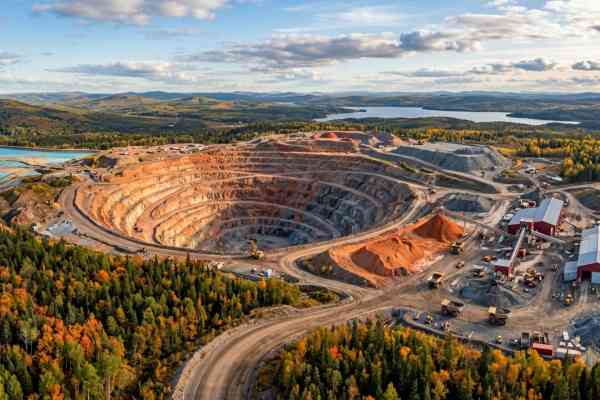
The copper market is heading toward a historic supply shortage. While AI data centers, electric mobility, and global grid expansion are driving demand to record levels, there is a lack of new large-scale projects to meet that demand. Experts therefore expect a structural deficit to persist for years to come. This presents an extraordinary opportunity for companies with high-grade deposits in secure mining regions. Whoever controls the right deposits could be among the big winners of the coming commodities cycle.
time to read: 5 minutes | Author: Stefan Feulner
ISIN: POWER METALLIC MINES INC. | CA73929R1055 | TSXV: PNPN , OTCBB: PNPNF , AURUBIS AG | DE0006766504 , VALE S.A. | BRVALEACNOR0
Table of contents:
Author

Stefan Feulner
The native Franconian has more than 20 years of stock exchange experience and a broadly diversified network.
He is passionate about analyzing a wide variety of business models and investigating new trends.
Tag cloud
Shares cloud
Power Metallic Mines Makes a Splash
Eric Sprott's investment in Power Metallic Mines is likely to be seen as a true seal of approval in the commodities industry. When one of the most successful commodities investors of the past decades injects fresh capital, institutional investors take notice. For Power Metallic, this vote of confidence comes at a time when conditions for copper projects could hardly be better. The expansion of power grids, data centers for artificial intelligence, and global electrification are driving a structural increase in demand for this industrial metal, while new large-scale mines remain scarce.
Power Metallic Mines sits atop a treasure trove in Québec that is likely to surface increasingly in the coming months. The approximately 313 km² Nisk polymetallic project is considered a geological rarity and hosts copper, nickel, and valuable platinum group metals. The Lion Zone, in particular, is attracting attention. Several drill holes have yielded exceptionally high-grade intervals, including 22 m at 11.5% copper equivalent (CuEq) and 39 m at 5.7% CuEq. These grades are many times higher than those found in many producing copper mines worldwide.
The deposit's high metallurgical quality provides additional momentum. Studies indicate copper recovery rates of around 95%, which are significantly better than originally projected. At the same time, the company is pushing ahead with exploration at full speed. Modern technologies such as quantum magnetometers and seismic tomography are intended to assess the deposit's potential with greater precision and enable additional discoveries.
Positive catalysts are also mounting on the corporate front. The recently completed CAD 28.2 million financing significantly strengthens the balance sheet. Eric Sprott, one of the sector's best-known investors, participated in the round, investing approximately CAD 2 million. The funds will be directed toward the further development of Nisk and additional exploration activities. The first resource estimate is expected as early as this summer, followed by a preliminary economic assessment at the end of the fiscal year. Added to this is the planned Nasdaq listing, which could significantly increase the company's international visibility.
Given a market capitalization of approximately CAD 286 million, the risk-reward ratio appears attractive to many investors. Should the upcoming studies confirm the deposit's potential, Power Metallic Mines could emerge as one of North America's most exciting copper stories. The GBC analysts' price target of CAD 3 illustrates the upside potential currently attributed to the company. Investors can currently purchase a share for around CAD 1.10.
Aurubis: Green Million-Investment
The importance of copper, driven by new technologies, is growing significantly. Above all, the recycling of the material is essential. A leading company in this industry is Aurubis, which recently reported its second-quarter interim results, initially causing some disappointment in the capital markets. Instead of the EUR 6.51 billion in revenue forecast by industry experts, the group reported only EUR 6.04 billion. Earnings per share also fell short of the targeted EUR 2.32, coming in at EUR 2.15, causing the share price to drop by 4%.
Nevertheless, a look at the operational details reveals strong resilience. Operating profit before taxes climbed by 15% from the previous period to EUR 121 million. This development is largely driven by a thriving business in the recycling of resources. Accordingly, management is looking ahead to the remainder of the half-year with confidence and anticipates rising earnings.
In parallel with these financial aspects, the raw materials processor is accelerating its environmental transformation. At its Hanseatic headquarters, state-of-the-art filter technology recently entered regular operation. This system, unparalleled in the global industry, curbs emissions of hard-to-capture pollutants. In addition to air pollution control, this multi-million project also serves economic interests. Filtered-out metal particles flow directly back into the internal value chain, thereby conserving resources and generating additional profits.
Market observers have mixed views on the company's overall situation. Experts at Warburg Research are bullish and have raised their fair value target for the stock from EUR 176 to 209. Among other factors, they cite high market prices for the lucrative byproduct sulfuric acid, as well as structural investment cycles in the energy and defence sectors. UBS analysts, on the other hand, rate the stock as "Neutral." While they confirm a solid quarter and see strong tailwinds from tight global sulfuric acid supplies, they are maintaining their neutral rating for the time being.
Vale: Transformation in Mining
The appetite for AI has long since spread across the Pacific. Mining giant Vale, for example, has launched a highly digitized facility at its Itabira site in Brazil. There, thousands of sensors continuously collect operational data. This information is processed by artificial intelligence systems to immediately regulate hundreds of parameters related to iron ore production. Initial analyses show a one-quarter increase in productivity, while the proportion of unused iron in the tailings has been significantly reduced. In addition to high resource efficiency—which enables the recycling of nearly all process water—staff benefit from higher safety standards, thanks to the relocation of plant control systems away from the mining areas.
Another technological and strategic focus is on reducing climate-damaging emissions. To this end, the Group is allocating funds equivalent to just over USD 2.5 billion. The largest portion of this budget is being directed toward the construction of new processing centers that use lower-emission processes, such as producing iron ore briquettes. The remaining funds are earmarked for retrofitting existing sites and research. Without the necessary technical adjustments, management expects significant additional costs beginning in the coming decade from statutory CO₂ taxes, which could far exceed current expenses.
Analysts at RBC Capital currently rate the company's stock as "Sector Perform" and set a target price of USD 15 per share. The base metals division is highlighted as a particular positive. After reviewing North American mining sites, the experts anticipate that this sector will contribute nearly one-third of the group's operating profit by 2030.
For investors, copper remains one of the most exciting commodity markets in the coming years. While Power Metallic Mines boasts high-grade discoveries, a prominent anchor investor, and several near-term catalysts, Aurubis benefits from the growing importance of copper recycling and rising operational efficiency. Vale, in turn, demonstrates how digitalization and decarbonization can sustainably strengthen the profitability of a commodities giant. All three companies are well-positioned in different ways to benefit from the structural trends surrounding electrification, AI, and infrastructure investments.
Conflict of interest
Pursuant to §85 of the German Securities Trading Act (WpHG), we point out that Apaton Finance GmbH as well as partners, authors or employees of Apaton Finance GmbH (hereinafter referred to as "Relevant Persons") may hold shares or other financial instruments of the aforementioned companies in the future or may bet on rising or falling prices and thus a conflict of interest may arise in the future. The Relevant Persons reserve the right to buy or sell shares or other financial instruments of the Company at any time (hereinafter each a "Transaction"). Transactions may, under certain circumstances, influence the respective price of the shares or other financial instruments of the Company.
In addition, Apaton Finance GmbH is active in the context of the preparation and publication of the reporting in paid contractual relationships.
For this reason, there is a concrete conflict of interest.
The above information on existing conflicts of interest applies to all types and forms of publication used by Apaton Finance GmbH for publications on companies.
Risk notice
Apaton Finance GmbH offers editors, agencies and companies the opportunity to publish commentaries, interviews, summaries, news and the like on news.financial. These contents are exclusively for the information of the readers and do not represent any call to action or recommendations, neither explicitly nor implicitly they are to be understood as an assurance of possible price developments. The contents do not replace individual expert investment advice and do not constitute an offer to sell the discussed share(s) or other financial instruments, nor an invitation to buy or sell such.
The content is expressly not a financial analysis, but a journalistic or advertising text. Readers or users who make investment decisions or carry out transactions on the basis of the information provided here do so entirely at their own risk. No contractual relationship is established between Apaton Finance GmbH and its readers or the users of its offers, as our information only refers to the company and not to the investment decision of the reader or user.
The acquisition of financial instruments involves high risks, which can lead to the total loss of the invested capital. The information published by Apaton Finance GmbH and its authors is based on careful research. Nevertheless, no liability is assumed for financial losses or a content-related guarantee for the topicality, correctness, appropriateness and completeness of the content provided here. Please also note our Terms of use.