August 20th, 2026 | 07:30 CEST
Stock Market Reality Check: When the Numbers Alone Are No Longer Enough – Infineon, Klarna and MustGrow Biologics
Created and Published on Behalf of MustGrow Biologics Corp.
Between sharp sell-offs and opportunities to scale, it becomes clear just how quickly the stock market reassesses expectations. One company suddenly delivers profits—and is still punished because its outlook turns lower. A growth stock must raise fresh capital to meet strong demand. And in the cyclical semiconductor industry, solid quarterly results are often not enough when bond yields rise and risk appetite shifts. For investors looking to understand what is really driving these market moves, the underlying pattern becomes clear.
time to read: 7 minutes | Author: Stefan Bode
ISIN: MUSTGROW BIOLOGICS CORP. | CA62822A1030 | TSXV: MGRO , OTCQB: MGROF , INFINEON TECH.AG NA O.N. | DE0006231004 , KLARNA GROUP PLC | GB00BMHVL512
Table of contents:
Author

Stefan Bode
A native of the Eichsfeld region in the heart of Germany, he has more than 30 years of experience in the capital markets, with broad expertise spanning financial markets, history, and geopolitics. He founded his own business more than 20 years ago while still a student and today advises clients, foundations, and asset managers across four continents.
Tag cloud
Shares cloud
Klarna Plummets 22%: Profit Jump Not Enough for Investors
Klarna shares (WKN: A414N7 | ISIN: GB00BMHVL512 | Ticker: KLAR) fell by about 22% on Tuesday this week, closing at USD 15.06. Since the start of the year, the stock has already lost about 47%, while its market capitalization has fallen to around USD 5.7 billion. Compared with the offering price of USD 40 at its initial public offering in September 2025, the decline is more than 60%. Yet, surprisingly, Klarna posted a profit in the second quarter.
The Swedish fintech company, with its operational headquarters in Stockholm, operates a digital bank and a global payment network. Klarna is best known for its "Buy now, pay later" service. Customers can pay for purchases immediately, later, or in instalments. In addition, Klarna offers the Klarna Card, long-term financing, deposit accounts, memberships, and payment and advertising solutions for merchants. Klarna now has 120 million active customers and 1.21 million merchants in 26 countries.
In the second quarter of 2026, revenue rose 27% to USD 1.04 billion. The volume of goods processed grew by 18% to USD 36.6 billion. The US remained the strongest market, with volume growth of 27%. Operating profit reached USD 27 million, following a loss of USD 46 million in the prior year. On an adjusted basis, operating profit improved from USD 29 million to USD 91 million. Net income was USD 9 million, compared to a loss of USD 53 million a year earlier.
The first half of the year also showed progress. Revenue rose to USD 2.05 billion, operating profit reached USD 44 million, and net income was USD 10 million. At the same time, credit loss provisions totaled USD 378 million. In the second quarter, this accounted for 0.52% of merchandise volume, down from 0.56% in the same period a year earlier. Credit quality has thus improved slightly despite strong growth. The balance sheet as of June 30 shows cash and cash equivalents of USD 2.67 billion and marketable securities of USD 2.59 billion. Total customer receivables amounted to approximately USD 9.75 billion. Total assets of USD 17.77 billion were offset by liabilities of USD 15.10 billion and shareholders' equity of USD 2.67 billion. Customer deposits of USD 11.67 billion finance the majority of the business. Financial debt stood at USD 1.69 billion.
The main trigger for the share price plunge was the lowered forecast. Klarna now expects a merchandise volume of only USD 149 to USD 151 billion and revenue of USD 4.08 to USD 4.16 billion in 2026. Previously, the company had targeted more than USD 155 billion and over USD 4.34 billion, respectively. Weak consumer sentiment in Germany is weighing particularly heavily on the company. Klarna is becoming more profitable, but investors now doubt whether growth can meet previous expectations.
MustGrow Biologics: Approvals and Capital Increase for Scaling Up
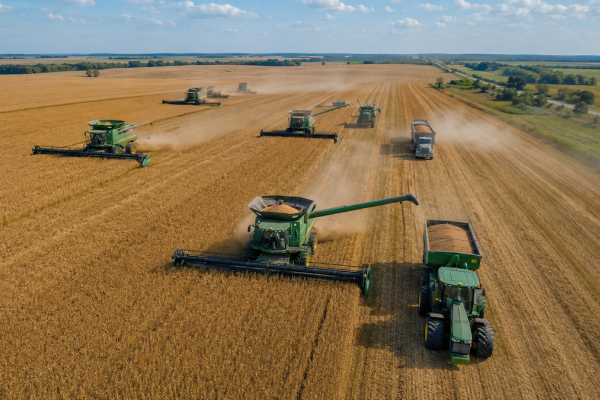
The investment story of MustGrow Biologics (WKN: A2PNS7 | ISIN: CA62822A1030 | Ticker Symbol: 0C0) revolves around mustard-based organic agricultural products—a market that benefits from stricter environmental regulations, the trend toward regenerative agriculture, and political pressure to reduce the use of chemical active ingredients. From an operational perspective, the company's approved flagship product, TerraSante™, will be particularly relevant in 2026. It is an organically certified biofertility product that is being gradually rolled out across various US states. In late May, MustGrow received registrations in Texas, Utah, and Montana. All three states have large areas dedicated to high-value crops, so the effects on yield and soil become economically measurable particularly quickly once the product is applied. In agriculture in particular, there is an increasing need to focus on input efficiency and water/nutrient management, and TerraSante™ precisely meets these requirements for farmers.
Financially, MustGrow remains in the transition phase between market launch and scaling. In the first quarter of 2026, the company reported initial revenue of CAD 100,000 from the newly launched product, achieving an immediate gross margin of 23.6%. At the same time, expenses from continuing operations totaled CAD 0.9 million, and the net loss was CAD 1.3 million—both of which represent improvements over the previous year, indicating cost discipline and a focus on the core business. As of March 31, 2026, cash and cash equivalents totaled CAD 0.4 million, and working capital stood at CAD 1.5 million; this underscores how heavily operational performance depends on sufficient working capital and ready-to-ship inventory. Management also pointed out short-term production and startup disruptions at contract manufacturers, noting that otherwise, significantly higher revenue could have been achieved due to high demand. Since MustGrow was caught off guard by the strong demand, the supply bottlenecks immediately revealed a typical scaling risk.
This is precisely why the latest capital raise was carried out—to enable the company to purchase the necessary raw materials in larger quantities. Originally, MustGrow intended to raise approximately CAD 2 million, but due to strong investor interest, the final amount reached approximately CAD 3.7 million. The new shares were placed at CAD 0.50 per share, plus a call option with an exercise price of CAD 0.70 and a term of 60 months. The funds are primarily intended to build inventory for TerraSante™ and provide working capital to meet high demand.
External momentum is provided by a research report from GBC AG, which issues a "Buy" recommendation and sets a price target of EUR 1.66 through December 31, 2027. The report outlines a revenue scenario of CAD 4.50 million in 2026, rising to CAD 31.56 million by 2028. Thanks to economies of scale, the gross margin is also expected to increase to as much as 48%. From current levels, GBC AG analysts believe a 664% increase by the end of 2027 is possible.
Infineon Down 7.6%: Global Chip Sell-off and SOX Under Pressure
Infineon shares (WKN: 623100 | ISIN: DE0006231004 | Ticker: IFX) came under heavy pressure at the start of the week. Since Monday's opening, the stock has lost about 11.4% to date. AIXTRON was also hit hard, falling about 8.7%, while SUSS MicroTec lost around 8% and Siltronic about 7%. Elmos Semiconductor, Jenoptik, and 2G Energy were also down significantly. With a market capitalization of around EUR 80.6 billion, Infineon is by far the largest German company in this group. This also weighed on the broader German stock market.
However, the bulk of the sell-off took place in the US. The PHLX Semiconductor Sector Index, or SOX for short, calculated by Nasdaq, tracks 30 large semiconductor companies traded in the US. These include Nvidia, AMD, Intel, Broadcom, and Micron. On August 18, the index temporarily lost more than 6%. All 30 stocks in the index were down. Memory chip and network equipment manufacturers such as Micron, SanDisk, Coherent, and Credo Technology fell particularly sharply.
Semiconductor stocks had previously been among the year's biggest winners. The SOX was still up about 70% from the start of the year. Just on Monday, the index had once again reached the threshold for a new bull market. The abrupt change in direction shows how nervous and driven by short-term positioning trading is at the moment.
From a technical analysis perspective, the picture has also darkened significantly. The 12,000-point mark did not hold, while the SOX simultaneously fell below its 20- and 50-day moving averages. The 100-day moving average currently stands at approximately 11,550 points. Below that, in the 11,000-point range, lies an important support level that had already held in May and July. If the market falls below this zone as well, the correction could extend toward the 200-day moving average at around 9,540 points. From the current level, that would represent another drop of approximately 20%. However, this is a possible technical scenario and not a certain forecast.
The main reasons cited are profit-taking following the strong AI rally and rising bond yields. The yield on 30-year US Treasury bonds reached its highest level since 2007. At the same time, oil prices rose after hopes for an agreement between the US and Iran diminished noticeably once again.
The sharp decline in Infineon's share price is therefore not due to the company itself, but rather to the general profit-taking and risk reduction initiated in the US. The company itself had reported record revenue of EUR 4.172 billion for its third fiscal quarter in early August. Segment earnings reached EUR 797 million, and the corresponding margin stood at 19.1%. For the final quarter, Infineon even expects revenue of around EUR 4.7 billion and a margin of approximately 23%. This creates a contrast between currently strong corporate results and a weak market environment. In the short term, the key factor for Infineon will likely be whether the S&P 500 stabilizes in the range between 11,550 and 11,000 points. If it fails to do so, pressure on the entire chip industry could persist.
Klarna slips despite a Q2 2026 profit, as a lowered outlook casts doubt on the company's growth prospects. MustGrow is scaling up TerraSante™ following US approvals, but must raise capital to finance the growth. Infineon is falling along with the SOX amid the global chip sell-off, even though record revenue and solid margins indicate operational stability.
Conflict of interest
Pursuant to §85 of the German Securities Trading Act (WpHG), we point out that Apaton Finance GmbH as well as partners, authors or employees of Apaton Finance GmbH (hereinafter referred to as "Relevant Persons") may hold shares or other financial instruments of the aforementioned companies in the future or may bet on rising or falling prices and thus a conflict of interest may arise in the future. The Relevant Persons reserve the right to buy or sell shares or other financial instruments of the Company at any time (hereinafter each a "Transaction"). Transactions may, under certain circumstances, influence the respective price of the shares or other financial instruments of the Company.
In addition, Apaton Finance GmbH is active in the context of the preparation and publication of the reporting in paid contractual relationships.
For this reason, there is a concrete conflict of interest.
The above information on existing conflicts of interest applies to all types and forms of publication used by Apaton Finance GmbH for publications on companies.
Risk notice
Apaton Finance GmbH offers editors, agencies and companies the opportunity to publish commentaries, interviews, summaries, news and the like on news.financial. These contents are exclusively for the information of the readers and do not represent any call to action or recommendations, neither explicitly nor implicitly they are to be understood as an assurance of possible price developments. The contents do not replace individual expert investment advice and do not constitute an offer to sell the discussed share(s) or other financial instruments, nor an invitation to buy or sell such.
The content is expressly not a financial analysis, but a journalistic or advertising text. Readers or users who make investment decisions or carry out transactions on the basis of the information provided here do so entirely at their own risk. No contractual relationship is established between Apaton Finance GmbH and its readers or the users of its offers, as our information only refers to the company and not to the investment decision of the reader or user.
The acquisition of financial instruments involves high risks, which can lead to the total loss of the invested capital. The information published by Apaton Finance GmbH and its authors is based on careful research. Nevertheless, no liability is assumed for financial losses or a content-related guarantee for the topicality, correctness, appropriateness and completeness of the content provided here. Please also note our Terms of use.