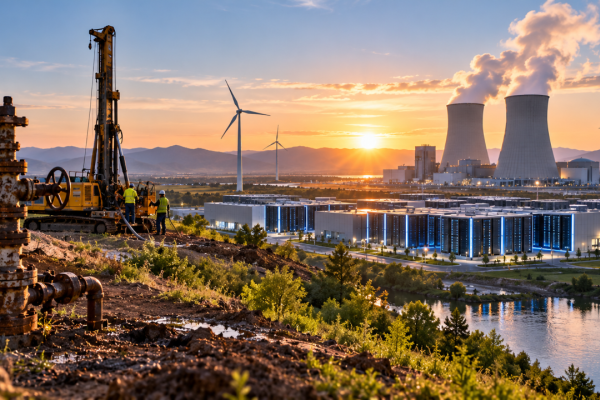
Renewable energy remains an attractive and structurally driven investment trend. The Paris climate targets and the commitment of many countries to climate neutrality by 2050 are increasing political and regulatory pressure. In addition to pure energy generation, availability, costs, and the production of energy directly at the point of demand are increasingly becoming the focus of industry and investors. Stocks such as Siemens Energy, which are benefiting from strong and sustained growth trends, performed brilliantly last year. Second- and third-tier companies positioned in promising segments, such as A.H.T. Syngas Technology, have so far received little attention from the market. Analysts believe the stock has significant catch-up potential. How can investors best position themselves?
time to read: 3 minutes | Author: Carsten Mainitz
ISIN: A.H.T. SYNGAS TECH. EO 1 | NL0010872388 , BASF SE NA O.N. | DE000BASF111 , SIEMENS ENERGY AG NA O.N. | DE000ENER6Y0
Table of contents:
Author

Carsten Mainitz
The native Rhineland-Palatinate has been a passionate market participant for more than 25 years. After studying business administration in Mannheim, he worked as a journalist, in equity sales and many years in equity research.
Tag cloud
Shares cloud
A.H.T Syngas Technology N.V. – Great catch-up potential
The clean tech company develops and builds decentralized, climate-friendly biomass power plants and syngas plants. Syngas or synthegas is a combustible gas mixture consisting mainly of hydrogen and carbon monoxide. It is produced by the thermochemical conversion of carbonaceous feedstocks such as biomass, waste, sewage sludge, or coal under oxygen-deficient conditions and at high temperatures.
Syngas thus combines climate protection and security of supply. It enables the use of domestic raw materials, replaces fossil natural gas, is flexible in its application, and is particularly suitable for decentralized, industrial energy solutions. The process thus differs from energy production in biogas plants, where biological fermentation takes place at low temperatures. Syngas is more technologically sophisticated, but significantly more versatile and scalable.
Technologically, the Company focuses on the patented R116 double-fire gas generator. This allows not only different types of wood to be processed, but also other substitute materials such as fermentation residues, sewage sludge, or manure. For users, this means a significant reduction in electricity costs and a short payback period for their investments.
A.H.T. is currently in a transformation phase, evolving from a traditional plant manufacturer to an operator of its own energy plants and thus also an energy supplier. This "contracting" extends the value chain and enables recurring revenues and higher returns to be achieved.
The past year proved to be difficult, as there were painful project delays in Japan, the most important geographical market. The Company is now taking strategic countermeasures and pushing ahead with activities in Europe and expanding its business model. The Company recently obtained the necessary funds very quickly through a convertible bond of EUR 2 million from institutional investors.
The market for natural gas replacement solutions and low-greenhouse energy production in Europe is predicted to have a bright future. According to experts at MarketResearchFuture.com, the syngas market is expected to nearly double to USD 33.4 billion by 2035, growing significantly faster than conventional gas demand.
The Company is currently valued at around EUR 5 million, with a share price of EUR 2.30. The latest update from the analysis firm GBC highlights the potential of the ongoing transformation process. The experts rate the share as a "Buy" with a target price of EUR 8.50.
Siemens Energy – Still on the list of favorites
The energy technology group's shares rose by almost 140% last year, ranking second in the performance ranking of the leading German index. Siemens Energy's business is booming across the board – from gas turbines to grid technology. Strong demand trends prompted the Company to significantly raise its medium-term revenue and margin targets last November. The Germans also announced dividend payments and a share buyback program worth EUR 6 billion.
The shares are trading close to their all-time high of EUR 127, giving the Company a market capitalization of around EUR 109 billion. The majority of analysts remain bullish on the stock. The experts at US bank JPMorgan stand out in particular, rating the stock with a price target of EUR 160 and placing it on their "Analyst Focus List," highlighting its high free cash flow generation.
BASF – Significant jump in profits expected in 2026, analysts still skeptical
The Germans are among the world's largest chemical manufacturers. BASF produces basic and specialty chemicals for industries such as automotive, construction, electronics, and agriculture. The shares ended last year with only a slight gain. Analysts remain skeptical about the industry in the current year due to structural and economic challenges and predict an upside of less than 10% for the stock over the next 12 months.
Experts expect revenue of EUR 61.2 billion for the past year, which is expected to rise slightly in the current year. However, the decisive factor is the forecast profit growth from EUR 1.6 billion to EUR 2.8 billion. This will reduce the P/E ratio to a moderate 2026 level of 12. The dividend yield of 5% continues to speak in favor of the stock.
The Ludwigshafen-based company has several points of contact with the syngas sector. Syngas is a fundamental building block and is used as a key precursor for many products. It also plays a role in energy generation, the production of synthetic fuels, and the development of low-CO₂ industrial processes.
Syngas is a climate-friendly, base-load-capable substitute for fossil natural gas, enabling industry, municipalities, and energy suppliers to achieve stable, scalable, and economically attractive revenue models. A.H.T. is a specialist in this field. The Company is currently undergoing a promising transformation process that offers excellent potential. Analysts at GBC have set a price target of EUR 8.50 – a significant upside from the current level of EUR 2.30. Siemens Energy is benefiting from sustained demand trends and is also recommended as a "Buy" by analysts. Despite its moderate valuation and attractive dividend yield, BASF is only a "Hold" position according to experts.
Conflict of interest
Pursuant to §85 of the German Securities Trading Act (WpHG), we point out that Apaton Finance GmbH as well as partners, authors or employees of Apaton Finance GmbH (hereinafter referred to as "Relevant Persons") may hold shares or other financial instruments of the aforementioned companies in the future or may bet on rising or falling prices and thus a conflict of interest may arise in the future. The Relevant Persons reserve the right to buy or sell shares or other financial instruments of the Company at any time (hereinafter each a "Transaction"). Transactions may, under certain circumstances, influence the respective price of the shares or other financial instruments of the Company.
In addition, Apaton Finance GmbH is active in the context of the preparation and publication of the reporting in paid contractual relationships.
For this reason, there is a concrete conflict of interest.
The above information on existing conflicts of interest applies to all types and forms of publication used by Apaton Finance GmbH for publications on companies.
Risk notice
Apaton Finance GmbH offers editors, agencies and companies the opportunity to publish commentaries, interviews, summaries, news and the like on news.financial. These contents are exclusively for the information of the readers and do not represent any call to action or recommendations, neither explicitly nor implicitly they are to be understood as an assurance of possible price developments. The contents do not replace individual expert investment advice and do not constitute an offer to sell the discussed share(s) or other financial instruments, nor an invitation to buy or sell such.
The content is expressly not a financial analysis, but a journalistic or advertising text. Readers or users who make investment decisions or carry out transactions on the basis of the information provided here do so entirely at their own risk. No contractual relationship is established between Apaton Finance GmbH and its readers or the users of its offers, as our information only refers to the company and not to the investment decision of the reader or user.
The acquisition of financial instruments involves high risks, which can lead to the total loss of the invested capital. The information published by Apaton Finance GmbH and its authors is based on careful research. Nevertheless, no liability is assumed for financial losses or a content-related guarantee for the topicality, correctness, appropriateness and completeness of the content provided here. Please also note our Terms of use.