July 28th, 2026 | 10:05 CEST
Multi-Billion Dollar Saudi Nuclear Deal: Cameco, American Atomics and Constellation Energy in Focus
Driven by AI data centres and industrial transformation, soaring global energy demand is thrusting nuclear power back to the forefront of energy policy. The multi-billion-dollar US-Saudi agreement is not a superficial diplomatic gesture, but a 30-year economic stimulus program for the entire nuclear value chain. The true return on the nuclear energy renaissance lies not in the reactor coolers themselves, but in the companies that secure the supply, scale the technology, and capture the returns from capacity markets. This is precisely where a closer look at Cameco, American Atomics, and Constellation Energy is particularly worthwhile.
time to read: 5 minutes | Author: Armin Schulz
ISIN: CAMECO CORP. | CA13321L1085 , AMERICAN ATOMICS INC | CA0240301089 | CSE: NUKE , CONSTELLATION ENERGY CORPORATION | US21037T1097 | NASDAQ: CEG
Table of contents:
Author

Armin Schulz
Born in Mönchengladbach, he studied business administration in the Netherlands. In the course of his studies he came into contact with the stock exchange for the first time. He has more than 25 years of experience in stock market business.
Tag cloud
Shares cloud
Cameco: Setting a Strategic Course for Growth
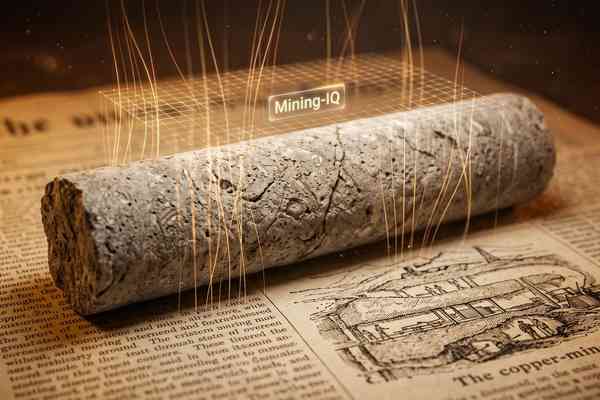
The temporary production halt at the Cigar Lake mine proved to be a brief setback. Just two weeks after the shutdown due to technical issues at the Orano McClean Lake mill, production is back in full swing. The annual forecast of 17.5 to 18.0 million pounds of uranium remains unchanged. At the same time, Cameco has further strengthened its position in its highest-grade mining asset. The acquisition of TEPCO's 5% stake in the Cigar Lake joint venture increases Cameco's own stake to approximately 57.4%. The transaction, valued at approximately USD 116 million, underscores the asset's importance; with reserves of 172.4 million pounds, it is expected to remain in production well into the next decade.
The real game-changer for Cameco, however, lies in its growing services business. The recent DOE commitment of up to USD 17.5 billion for 10 AP1000 reactors catapults Westinghouse to the center of the US nuclear revival, though it remains subject to certain conditions. Goldman Sachs estimates the EBITDA potential per reactor at approximately USD 225 million over 12 years. While uranium mining is subject to cyclical price fluctuations, reactor operations generate stable revenue over decades from fuel supplies, maintenance, and spare parts. As a 49% owner, Cameco participates in this value chain. This transforms the company from a pure mining operator into a nuclear services provider.
The first-quarter figures already provided a glimpse of this potential. Westinghouse's contribution to adjusted EBITDA rose by just under 33% to CAD 122 million. At the same time, Cameco reduced external uranium purchases to a minimum. With internal production costs of USD 34 per pound compared to market prices of USD 110 per pound, this represents a massive margin advantage. Market expectations for the upcoming Q2 results on July 31 appear moderate, with estimated EBITDA of CAD 441 million and earnings per share of CAD 0.37. The key factors will be whether production returns to full capacity and whether Westinghouse continues its growth trend. The strategic direction is sound. The shares are currently trading at approximately USD 87.86.
American Atomics: Structural Change in the US Nuclear Sector
The US faces a fundamental dilemma. While energy demand is expected to rise by 28% by 2030 due to the AI boom and the massive expansion of data centers, domestic uranium production has shrunk to a minimum. In 2023, US reactors consumed 32 million pounds of uranium, while domestic production stood at just 50,000 pounds—a self-sufficiency rate of less than 0.2%. Dependence on Russian enrichment remains high despite political efforts. In 2024, 81% of the required separation work units were sourced from abroad, with one-fifth of that from Russia.
This is exactly where American Atomics comes in. On July 16, the company published a NI 43-101-compliant technical report for the Lisbon Valley East project in Utah. The area's historical significance is considerable. Between 1950 and 1990, the Lisbon Valley produced approximately 80 million pounds of uranium from a 26-km-long rock belt. What makes this unique is that mining took place exclusively on the western side. The eastern side of the deposit was displaced by a geological fault by more than 700 m and has remained largely unexplored. However, drilling data from oil and gas wells have revealed significantly elevated gamma radiation in 28 of 51 boreholes, precisely within the geological horizons where uranium mineralization was expected.
The company does not pursue a one-dimensional exploration strategy. Recent personnel decisions underscore this approach. In July, Jolene Molitoris, former administrator of the Federal Railroad Administration, was appointed to the advisory board. She is expected to assist in implementing a hub-and-spoke production model designed to economically develop several smaller deposits via a central processing plant. This is complemented by the company's membership in the US Department of Energy's DPA Fuel Cycle Consortium, which coordinates the domestic fuel supply under the Defence Production Act. Political support thus appears to be a foregone conclusion. The shares are currently trading at around CAD 0.18.
Constellation Energy: From AI Supplier to Broad-Based Power Partner
The recent nuclear energy agreement between Constellation Energy and Walmart for 176 MW from the Dresden Clean Energy Center is more than just a footnote. For the first time, a retailer is purchasing nuclear power directly—and for a highly automated cold storage facility that relies on a reliable 24/7 supply. While tech companies dominate the market, steel, chemical, and oil companies are also showing increasing interest in carbon-free baseload power. The Clean Energy Buyers Association has counted over 20 comparable agreements since 2021, more than half of them in 2025 alone. As the country's largest operator of nuclear power plants, Constellation is thus positioning itself not only as a supplier to data centers but also as a strategic partner for a broader range of industries.
The acquisition of Calpine in January made Constellation the largest US electricity producer with 55 GW of capacity, 22 GW of which comes from nuclear power. The nuclear fleet most recently achieved a capacity factor of 92.3%. The cost advantage is crucial. Nuclear fuel costs USD 6–7 per MWh, while natural gas prices fluctuate widely. This margin secures Constellation a structural advantage that is already paying off in long-term contracts with Microsoft and Meta. The investment in Blue Energy and its SMR technology also demonstrates that the company is actively shaping the future of nuclear energy.
With expected earnings per share (EPS) of USD 11–12 for 2026, the P/E ratio is approximately 23. Core earnings are projected to grow by over 20% annually through 2029. If the electricity-price-dependent "Enhanced" component is factored in, EPS could rise to USD 17–18. The biggest opportunity lies in the 147 TWh of non-contracted nuclear power; each additional long-term agreement could contribute USD 1.50–4.00 to earnings. Despite political risks, Constellation remains a compelling investment thanks to a statutory price floor and growing demand for reliable baseload power. The stock is currently trading at around USD 274.35.
The USD 30 billion agreement with Saudi Arabia marks the start of the nuclear renaissance, and three companies are ideally positioned to benefit. Cameco is transforming itself from a pure-play uranium producer into a high-margin nuclear services provider and is benefiting twice over from the Westinghouse boom. American Atomics is addressing the US's critical supply gap with its Lisbon Valley project and has excellent political connections. Constellation Energy is securing long-term returns as an electricity partner for industrial and tech companies. The real returns of this decade will come not only from the commodity itself, but from controlling the value chain.
Conflict of interest
Pursuant to §85 of the German Securities Trading Act (WpHG), we point out that Apaton Finance GmbH as well as partners, authors or employees of Apaton Finance GmbH (hereinafter referred to as "Relevant Persons") currently hold or hold shares or other financial instruments of the aforementioned companies and speculate on their price developments. In this respect, they intend to sell or acquire shares or other financial instruments of the companies (hereinafter each referred to as a "Transaction"). Transactions may thereby influence the respective price of the shares or other financial instruments of the Company.
In this respect, there is a concrete conflict of interest in the reporting on the companies.
In addition, Apaton Finance GmbH is active in the context of the preparation and publication of the reporting in paid contractual relationships.
For this reason, there is also a concrete conflict of interest.
The above information on existing conflicts of interest applies to all types and forms of publication used by Apaton Finance GmbH for publications on companies.
Risk notice
Apaton Finance GmbH offers editors, agencies and companies the opportunity to publish commentaries, interviews, summaries, news and the like on news.financial. These contents are exclusively for the information of the readers and do not represent any call to action or recommendations, neither explicitly nor implicitly they are to be understood as an assurance of possible price developments. The contents do not replace individual expert investment advice and do not constitute an offer to sell the discussed share(s) or other financial instruments, nor an invitation to buy or sell such.
The content is expressly not a financial analysis, but a journalistic or advertising text. Readers or users who make investment decisions or carry out transactions on the basis of the information provided here do so entirely at their own risk. No contractual relationship is established between Apaton Finance GmbH and its readers or the users of its offers, as our information only refers to the company and not to the investment decision of the reader or user.
The acquisition of financial instruments involves high risks, which can lead to the total loss of the invested capital. The information published by Apaton Finance GmbH and its authors is based on careful research. Nevertheless, no liability is assumed for financial losses or a content-related guarantee for the topicality, correctness, appropriateness and completeness of the content provided here. Please also note our Terms of use.