April 19th, 2023 | 07:30 CEST
Morphosys, Defence Therapeutics, Moderna - The takeover wave keeps rolling
The biotechnology industry has seen a significant increase in acquisitions and mergers in recent months. Large pharmaceutical companies are looking to expand their portfolios to provide innovative solutions to unmet medical needs. The most recent example is Pfizer's acquisition of Seagen for USD 43 billion. With Big Pharma sitting on filled coffers, this is likely to be just the beginning.
time to read: 3 minutes | Author: Stefan Feulner
ISIN: MORPHOSYS AG O.N. | DE0006632003 , DEFENCE THERAPEUTICS INC | CA24463V1013 , MODERNA INC. DL-_0001 | US60770K1079
Table of contents:
Author

Stefan Feulner
The native Franconian has more than 20 years of stock exchange experience and a broadly diversified network.
He is passionate about analyzing a wide variety of business models and investigating new trends.
Tag cloud
Shares cloud
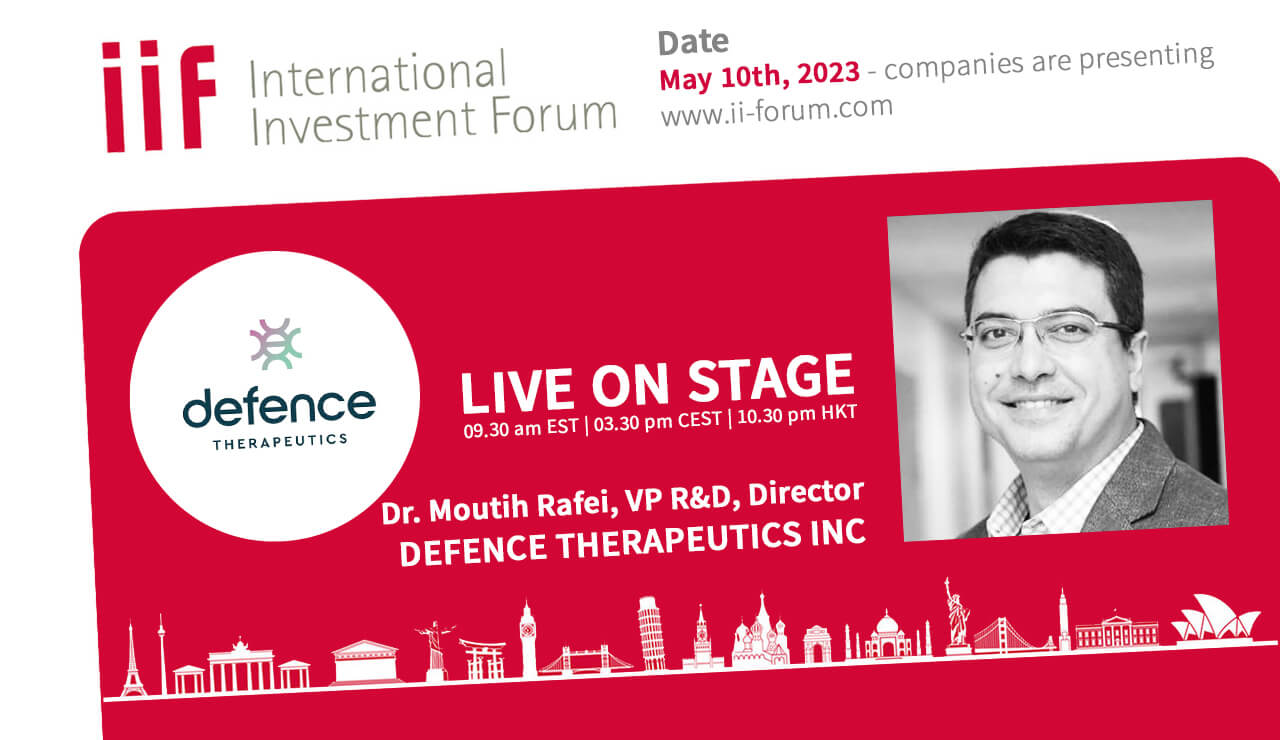
Defence Therapeutics - Takes landmark step
The goal of the Canadian biotech company is to further improve mRNA vaccines through its patented ACCUM™ technology. As a result, comparative studies have been launched, testing a "naked" mRNA vaccine against a combined mRNA vaccine with ACCUM™. The study has a duration of 6 weeks, and the team led by Defence Therapeutics CEO, Sébastian Plouffe, expects results soon. "These in-vivo tests are very important for our strategic growth as they will show how the ACCUM™ technology can be adapted to synergize with mRNA vaccines."
If the trial is successful, ACCUM™ technology will likely become a component of mRNA research in the future. In addition to developing the Company's own vaccine, Accum could thus be applied to third-party projects.
Moreover, Defence Therapeutics, with a stock market value of CAD 158.19 million, could become an attractive takeover candidate. The wave of acquisitions in the biotechnology sector has been happening for months. Most recently, the pharmaceutical giant Pfizer acquired Seagen, a company that can be classified in Defence Therapeutics' peer group. The purchase price amounted to USD 43 billion. The focus of the US company Seagen is to fight cancer through the use of antibody-drug conjugates.
Moderna - Hard hit
The shares of the pharmaceutical company slumped by more than 8% at the start of the week. As a result, the share price is moving into dangerous territory at USD 143.97. Because if the support area at USD 116 falls, there is a threat of a rapid sell-off in the direction of the 2020 high at USD 94.85.
The sharp correction was due to the publication of data from a midstage combination trial involving Moderna's mRNA cancer vaccine mRNA-4157 (V940) and Merck's Keytruda, specifically for melanoma or stage 3 and 4 skin cancer. The companies tested a combination of Merck's Keytruda and their personalized cancer vaccine in melanoma patients after surgery. After one year, more than 83% of patients had neither relapsed nor died. After 18 months, when almost 79% of the patients were still alive and cancer-free, the responses intensified. The results surpassed those of the non-combined drug Keytruda.
Still, the path forward for Moderna and Merck probably does not include accelerated approval, analysts said. The trial was only conducted with 157 patients. Moderna and Merck plan to start a Phase III trial with the personalized cancer vaccine this summer. The vaccine prepares the immune system to recognize the patient's own tumour cells. If it returns, this could give the immune system a chance to fight the cancer.
Morphosys - Looking for the bottom
The biotech company from Planegg near Munich had already experienced a sharp sell-off in the past two years. Since its peak on January 13, 2020, when it reached a high of EUR 146.30, the stock has lost over 90% of its value. Since the low of EUR 11.80 at the end of December last year, however, the share has initiated a significant countermovement and is currently trading at EUR 19.13. Once the high for the year at EUR 19.77 is overcome, a further rise, initially to the EUR 24.63 range, would be possible.
The biotech company received a tailwind from positive study results, which were published together with the distribution partner Incyte. According to the Company, the data from the five-year follow-up period of the Phase II L-MIND trial show "a prolonged and durable response to Monjuvi" in adult patients with relapsed or refractory diffuse large B-cell lymphoma. There were no new abnormalities in side effects, he said.
"Five-year data demonstrating durability of response are of great importance to oncologists when weighing the most appropriate treatment option for a patient. The prolonged and durable response rates observed in the L-MIND study in relapsed or refractory DLBCL patients after five years show that treatment with Monjuvi may potentially cure the disease," says Johannes Düll from the Medical Clinic and Polyclinic of the University Hospital of Würzburg.
The takeover wave in the biotech sector is rolling. Seagen, represented in the peer group with Defence Therapeutics, was acquired by Pfizer for USD 43 billion. Moderna's study results did not convince analysts. In contrast, Morphosys was able to report positive news with its partner Incyte.
Conflict of interest
Pursuant to §85 of the German Securities Trading Act (WpHG), we point out that Apaton Finance GmbH as well as partners, authors or employees of Apaton Finance GmbH (hereinafter referred to as "Relevant Persons") may hold shares or other financial instruments of the aforementioned companies in the future or may bet on rising or falling prices and thus a conflict of interest may arise in the future. The Relevant Persons reserve the right to buy or sell shares or other financial instruments of the Company at any time (hereinafter each a "Transaction"). Transactions may, under certain circumstances, influence the respective price of the shares or other financial instruments of the Company.
In addition, Apaton Finance GmbH is active in the context of the preparation and publication of the reporting in paid contractual relationships.
For this reason, there is a concrete conflict of interest.
The above information on existing conflicts of interest applies to all types and forms of publication used by Apaton Finance GmbH for publications on companies.
Risk notice
Apaton Finance GmbH offers editors, agencies and companies the opportunity to publish commentaries, interviews, summaries, news and the like on news.financial. These contents are exclusively for the information of the readers and do not represent any call to action or recommendations, neither explicitly nor implicitly they are to be understood as an assurance of possible price developments. The contents do not replace individual expert investment advice and do not constitute an offer to sell the discussed share(s) or other financial instruments, nor an invitation to buy or sell such.
The content is expressly not a financial analysis, but a journalistic or advertising text. Readers or users who make investment decisions or carry out transactions on the basis of the information provided here do so entirely at their own risk. No contractual relationship is established between Apaton Finance GmbH and its readers or the users of its offers, as our information only refers to the company and not to the investment decision of the reader or user.
The acquisition of financial instruments involves high risks, which can lead to the total loss of the invested capital. The information published by Apaton Finance GmbH and its authors is based on careful research. Nevertheless, no liability is assumed for financial losses or a content-related guarantee for the topicality, correctness, appropriateness and completeness of the content provided here. Please also note our Terms of use.