August 20th, 2026 | 07:35 CEST
Insider Alert, Shock and Opportunity in These Stocks: HelloFresh, Steyr Motors and Standard Uranium
Alarm bells are ringing at HelloFresh. The stock has lost 50% so far this year. Fewer customers are placing orders, and earnings are deep in the red. Is there still hope? From the board's perspective, apparently not—the CEO has been selling shares. At Standard Uranium, on the other hand, a strategic investor has come on board—and for good reason. The uranium market is poised for strong growth, while Standard Uranium has once again reported strong drilling results. The stock is still lagging behind this trend—for now. Steyr Motors, meanwhile, has shocked its shareholders. After takeover speculation had already quickly evaporated, the company hit investors with another surprise this week in the form of a profit warning. Orders from the defense sector are proving to be both a blessing and a curse. Is now the time to buy?
time to read: 5 minutes | Author: Fabian Lorenz
ISIN: HELLOFRESH SE INH O.N. | DE000A161408 , STANDARD URANIUM LTD. | CA85422Q8487 | TSXV: STND , OTCQB: STTDF , STEYR MOTORS AG | AT0000A3FW25
Table of contents:
Author

Fabian Lorenz
For more than twenty years, the Cologne native has been intensively involved with the stock market, both professionally and privately. He is particularly passionate about national and international small and micro caps.
Tag cloud
Shares cloud
Standard Uranium: Strong Results—When Will the Stock Soar?
"The stock market is to the economy as a dog is to its master. It runs ahead, comes back, runs ahead again—but in the end, both arrive at the same destination." This well-known analogy by stock market veteran André Kostolany can be applied to a company's share price and operational performance. And it fits Standard Uranium quite well at the moment. While the share price has lost more than 40% following a strong rally at the start of the year, the company is performing well operationally.
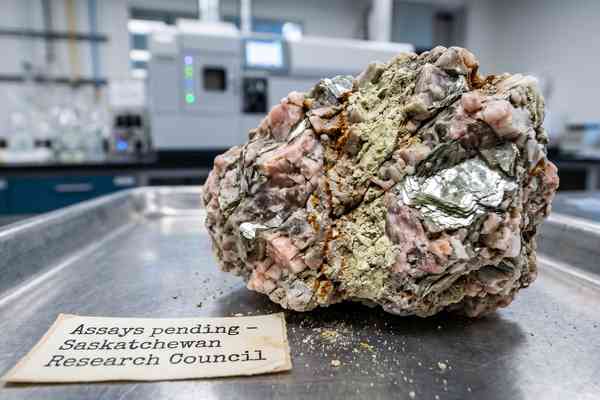
Standard Uranium is a Canadian uranium exploration company with an extensive project portfolio in the Athabasca Basin in Saskatchewan, one of the world's most significant regions for high-grade uranium deposits. Many of the target areas are located near major uranium discoveries but have so far been relatively little tested by drilling, thus offering further exploration potential.
The flagship project is Davidson River. It has gotten off to a promising start in the summer drilling program. The very first drill hole in the Bronco Corridor encountered several zones of elevated radioactivity, including peak readings of up to 1,650 counts per second. At the same time, the drill intersected structures rich in graphite and hydrothermal alteration. These geological features are of particular interest for uranium exploration. A total of two drill rigs are operating around the clock to test high-priority targets in the Warrior, Bronco, and Thunderbird corridors through August. The news flow this fall could be correspondingly positive.
Standard Uranium has achieved significant exploration successes at another project. In the first drilling program in more than 40 years at the Corvo Uranium Project in Saskatchewan, anomalous uranium was detected in all nine completed drill holes. Six of these holes contain several significantly enriched uranium intervals with grades ranging from 100 to 350 ppm. Also particularly encouraging are uranium-thorium ratios exceeding 2:1, which the company believes indicate a hydrothermal uranium deposit.
In addition, important associated elements were identified in several drill holes, which can serve as indicators in the search for higher-grade uranium mineralization. These include, among other things, an exceptionally high boron content of up to 13,600 ppm. The geological structures are also favourable. In one drill hole, elevated rare earth element (REE) contents of more than 0.1% TREO, including yttrium, were also detected. For management, these results thus confirm the existing exploration model and increase confidence in the project's further discovery potential.
Accordingly, Corvo is now to be systematically developed further. The next drilling phase is scheduled to focus on the already mineralized structures. In total, the project features more than 25 km of promising structural corridors with numerous targets that have not yet been tested and only shallow overburden. In addition, there are already known high-grade surface occurrences of up to 8.10% U3O8. Following the announcement, a strategic investor from Asia has invested USD 3 million.
https://youtu.be/Ip4xhV6gDD8?si=YJMW2ZOPtll2E6eB
HelloFresh: Alarm Bells Ring After Weak Results and Insider Selling
While Standard Uranium has attracted a strategic investor with positive drilling results, a HelloFresh executive is selling shares following weak quarterly results. This should set off alarm bells for investors.
HelloFresh once again suffered significant declines in revenue and earnings in the second quarter of 2026. Consolidated revenue fell by 7.8% on a currency-adjusted basis to approximately EUR 1.5 billion, while adjusted EBITDA declined from EUR 158.5 million to EUR 120.6 million.
What is alarming is that both the meal kit and ready-to-eat businesses are seeing revenue shrink. Furthermore, while the "Refresh" program appears to be showing initial positive effects among existing customers, its impact on the crucial acquisition of new customers has so far been limited.
For the full year, HelloFresh is maintaining its AEBITDA forecast of EUR 375 to 425 million. In terms of revenue, however, the group is now heading toward the lower end of the expected range of minus 3 to minus 6% on a currency-adjusted basis. In the coming quarters, the company must demonstrate that its strategy, combining cost discipline, higher average order values, and more focused marketing, is sufficient to halt the structural decline in orders and customer numbers. Only then can the decline in the share price be stopped. In the current year alone, the stock has lost 50% of its value and is now trading at just EUR 2.94. A year ago, the share price was still above EUR 8.
Another warning sign is that CEO Fabien Jacques Jérôme Simone sold shares at around EUR 3.40—totaling no less than EUR 340,000—immediately after the earnings release. He clearly sees no upside potential.
Steyr Motors Shocks Shareholders
Alarm bells are ringing at Steyr Motors. After takeover speculation quickly evaporated, the company also shocked its shareholders this week with a profit warning.
Steyr Motors has significantly scaled back its growth targets and completely scrapped its medium-term forecast for 2027. This is due to delays in international defense projects. As a result, approximately EUR 10 million in planned revenue was lost in the first half of the year alone. The company does not expect to be able to make up for this shortfall in the second half of the year either. For 2026, the company now expects revenue of only EUR 56 to 61 million, down from the previous forecast of EUR 75 to 95 million. At the same time, the expected EBIT margin is falling from at least 15% to 8%-12%.
The ambitious 2027 targets of approximately EUR 140 million in revenue and EUR 40 million in EBIT also no longer appear to be achievable. Although Steyr Motors emphasizes that underlying demand remains strong, significant revenue contributions are apparently being pushed back by one to two years. The growth story, as it stands, must therefore be significantly postponed, at least in timing.
The stock of the supplier of specialty engines for civilian and military applications plummeted from over EUR 33 to EUR 25 following the announcement. Since then, there has been a slight rebound to EUR 28. Just over a year ago, the share was still trading above EUR 55. Analysts are likely to react to the news next week and adjust their estimates.
The profit warning at Steyr demonstrates that government business can be both a blessing and a curse. Orders can be large, but in practice, implementation often takes longer. This is a particular challenge for small and medium-sized companies. Investors in Standard Uranium will need some patience. However, the entry of the strategic investor and the convincing drilling results strongly suggest that patience could pay off. With HelloFresh, there is currently no urgent need to buy. Even the management board is selling at this price level.
Conflict of interest
Pursuant to §85 of the German Securities Trading Act (WpHG), we point out that Apaton Finance GmbH as well as partners, authors or employees of Apaton Finance GmbH (hereinafter referred to as "Relevant Persons") may hold shares or other financial instruments of the aforementioned companies in the future or may bet on rising or falling prices and thus a conflict of interest may arise in the future. The Relevant Persons reserve the right to buy or sell shares or other financial instruments of the Company at any time (hereinafter each a "Transaction"). Transactions may, under certain circumstances, influence the respective price of the shares or other financial instruments of the Company.
In addition, Apaton Finance GmbH is active in the context of the preparation and publication of the reporting in paid contractual relationships.
For this reason, there is a concrete conflict of interest.
The above information on existing conflicts of interest applies to all types and forms of publication used by Apaton Finance GmbH for publications on companies.
Risk notice
Apaton Finance GmbH offers editors, agencies and companies the opportunity to publish commentaries, interviews, summaries, news and the like on news.financial. These contents are exclusively for the information of the readers and do not represent any call to action or recommendations, neither explicitly nor implicitly they are to be understood as an assurance of possible price developments. The contents do not replace individual expert investment advice and do not constitute an offer to sell the discussed share(s) or other financial instruments, nor an invitation to buy or sell such.
The content is expressly not a financial analysis, but a journalistic or advertising text. Readers or users who make investment decisions or carry out transactions on the basis of the information provided here do so entirely at their own risk. No contractual relationship is established between Apaton Finance GmbH and its readers or the users of its offers, as our information only refers to the company and not to the investment decision of the reader or user.
The acquisition of financial instruments involves high risks, which can lead to the total loss of the invested capital. The information published by Apaton Finance GmbH and its authors is based on careful research. Nevertheless, no liability is assumed for financial losses or a content-related guarantee for the topicality, correctness, appropriateness and completeness of the content provided here. Please also note our Terms of use.