May 11th, 2026 | 07:00 CEST
Hydrogen Transformation: Why dynaCERT Is Becoming Indispensable as a Bridge for Industry – Background on NEL and Caterpillar
The energy crisis is driving change. While experts from the International Energy Agency (IEA) and McKinsey make it clear that the 1.5-degree target is now virtually unattainable, a transformation process has also been set in motion across industry and logistics amid high energy prices. The ongoing tensions in the energy markets, exacerbated by geopolitical instability in key regions such as the Strait of Hormuz, have transformed hydrogen from a future-oriented topic into an economic imperative. In sectors considered difficult to transform, including heavy industry, the maritime sector, and heavy mining, there are few viable alternatives to energy sources such as hydrogen. By 2030, green hydrogen is expected to achieve cost parity with fossil fuels in many areas, provided the infrastructure is finally scaled up. But this is precisely where the problem lies: while the world waits for tomorrow's major infrastructure solutions, industry needs efficient bridge technologies today to remain competitive. One company is already on the market and is currently enjoying more popularity than ever.
time to read: 3 minutes | Author: Nico Popp
ISIN: DYNACERT INC. | CA26780A1084 | TSX: DYA , OTCQB: DYFSF , NEL ASA NK-_20 | NO0010081235 , CATERPILLAR INC. DL 1 | US1491231015
Table of contents:
Author

Nico Popp
At home in Southern Germany, the passionate stock exchange expert has been accompanying the capital markets for about twenty years. With a soft spot for smaller companies, he is constantly on the lookout for exciting investment stories.
Tag cloud
Shares cloud
Caterpillar: The Giant Is Strategically Dominating the Field
Caterpillar demonstrates how an industry heavyweight is using the hydrogen transition as a strategic lever to secure its market leadership. The company has significantly ramped up its research and development spending and is pursuing a consistent dual strategy. On one hand, Caterpillar is driving the development of 100% hydrogen-powered engines for heavy mining and stationary power generation. A technologically groundbreaking milestone is the large-scale demonstration project in cooperation with Microsoft, which uses hydrogen fuel cells to provide fail-safe backup for a data center. On the other hand, the company still offers internal combustion engines.
Caterpillar is leveraging its size and financial resources to set long-term industry standards, but these solutions often require massive investments in entirely new fleets and a refuelling infrastructure that does not yet exist. For many mid-sized logistics companies and mining operators, these requirements pose a significant hurdle in the short term, which is why the new generations of equipment will only gradually achieve a breakthrough.
NEL: The Infrastructure Bet with Extreme Staying Power
NEL remains a beacon of hope for the industrial-scale production of hydrogen. The company has massively expanded manufacturing capacity at its plants in Norway and the US to meet growing global demand for electrolyzers for ammonia and steel production. In the first quarter of this year, NEL recorded a record order backlog, driven largely by government-funded major projects in Europe and North America. Despite these remarkable operational successes, the stock continues to struggle with the long time it will take for these billion-dollar projects to become fully profitable—it seems as though investors have had enough of visions.
dynaCERT: Rapid efficiency gains without billion-dollar investments
Positioned at the intersection of the future and today's harsh reality, dynaCERT positions itself as a pragmatic and efficient solution provider. While Caterpillar designs new engines and NEL drives the large-scale production of the energy source, dynaCERT offers a solution with its patented HydraGEN™ technology that delivers measurable benefits immediately and without massive investments. The technology generates hydrogen and oxygen on demand via electrolysis directly on board a conventional internal combustion engine vehicle, thereby significantly optimizing the combustion process of conventional diesel engines. The result is impressive: up to 19% in fuel savings and over 50% in harmful emissions reductions.
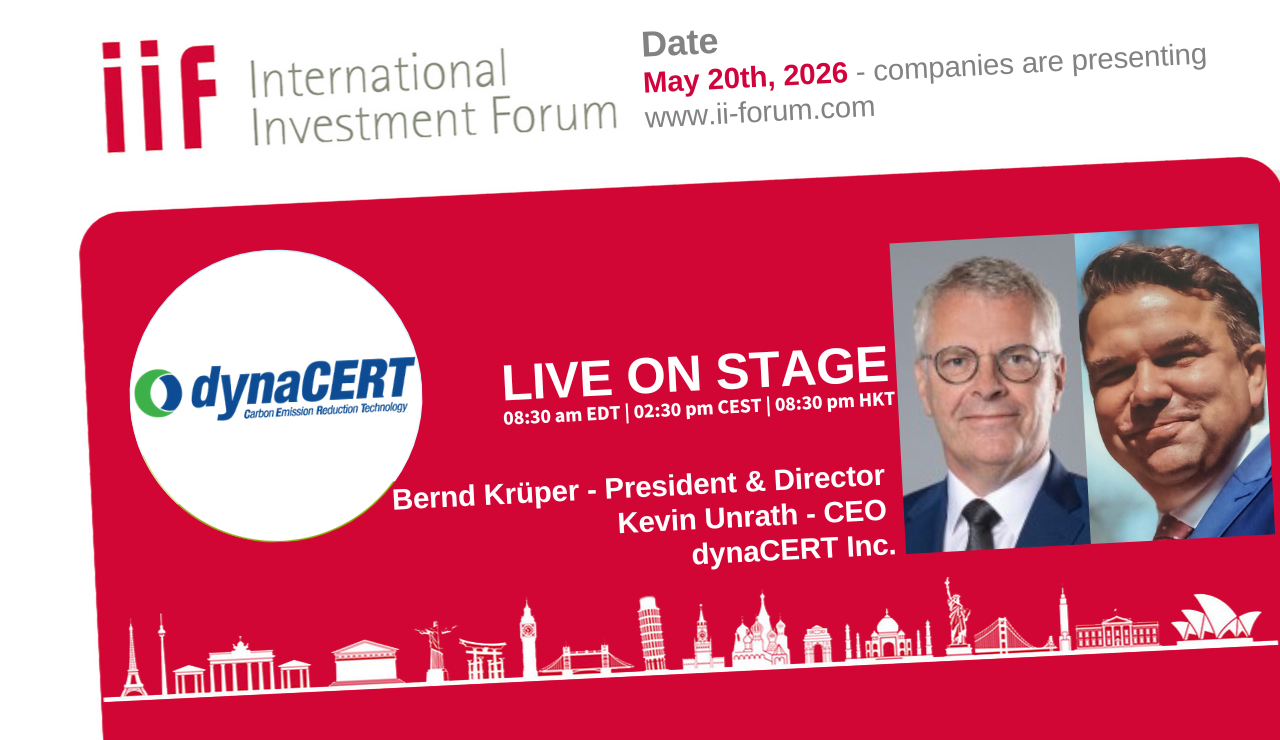
dynaCERT recently caused quite a stir in Vietnam, where the company is taking off through a strategic partnership in the Asian logistics and transportation sector. This expansion follows successful applications in the maritime sector and with heavy mining equipment, where dynaCERT has already proven that its systems operate reliably even under the harshest conditions. For operators of large fleets, the technology offers advantages: It helps achieve government climate targets while simultaneously significantly reducing operating costs—a "win-win" despite the energy crisis.
dynaCERT: The Role of Carbon Credits as a New Revenue Driver
An often-overlooked factor in the valuation of dynaCERT is its successful certification for carbon credits. Through the HydraLytica™ system, the company can measure and validate each vehicle's CO2 savings in real time. This has enabled dynaCERT to create an entirely new revenue stream, transforming the company from a pure hardware provider into a player in the lucrative market for emission rights. For companies facing ESG pressure, this is an advantage, as the investment in dynaCERT technology is partially offset by the sale of the generated certificates.
Conclusion: dynaCERT is facing a window of opportunity
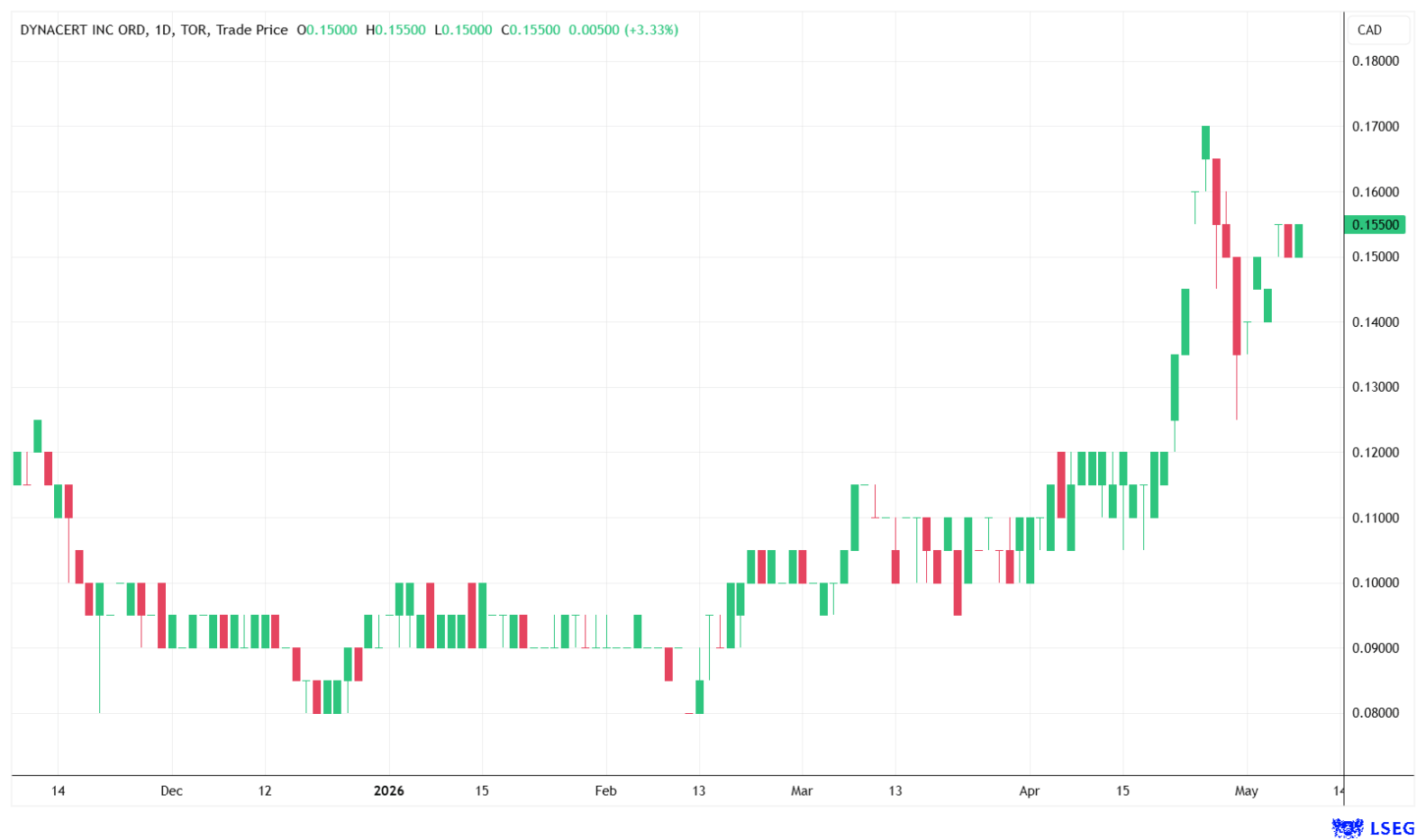
Market expectations through 2030 are clear: the demand for practical hydrogen solutions will rise exponentially. While investors find stability in a giant like Caterpillar and infrastructure potential in NEL, dynaCERT offers direct leverage in the here and now. Given the sustained pressure for transformation and persistently high energy prices, dynaCERT is strategically better positioned today than ever before. Investors looking for fast, innovative solutions that directly address the real challenges of logistics and heavy industry cannot ignore dynaCERT. Since market penetration in Asia is just beginning to gain momentum, the current situation surrounding dynaCERT's stock could present an opportunity for investors.
Conflict of interest
Pursuant to §85 of the German Securities Trading Act (WpHG), we point out that Apaton Finance GmbH as well as partners, authors or employees of Apaton Finance GmbH (hereinafter referred to as "Relevant Persons") may hold shares or other financial instruments of the aforementioned companies in the future or may bet on rising or falling prices and thus a conflict of interest may arise in the future. The Relevant Persons reserve the right to buy or sell shares or other financial instruments of the Company at any time (hereinafter each a "Transaction"). Transactions may, under certain circumstances, influence the respective price of the shares or other financial instruments of the Company.
In addition, Apaton Finance GmbH is active in the context of the preparation and publication of the reporting in paid contractual relationships.
For this reason, there is a concrete conflict of interest.
The above information on existing conflicts of interest applies to all types and forms of publication used by Apaton Finance GmbH for publications on companies.
Risk notice
Apaton Finance GmbH offers editors, agencies and companies the opportunity to publish commentaries, interviews, summaries, news and the like on news.financial. These contents are exclusively for the information of the readers and do not represent any call to action or recommendations, neither explicitly nor implicitly they are to be understood as an assurance of possible price developments. The contents do not replace individual expert investment advice and do not constitute an offer to sell the discussed share(s) or other financial instruments, nor an invitation to buy or sell such.
The content is expressly not a financial analysis, but a journalistic or advertising text. Readers or users who make investment decisions or carry out transactions on the basis of the information provided here do so entirely at their own risk. No contractual relationship is established between Apaton Finance GmbH and its readers or the users of its offers, as our information only refers to the company and not to the investment decision of the reader or user.
The acquisition of financial instruments involves high risks, which can lead to the total loss of the invested capital. The information published by Apaton Finance GmbH and its authors is based on careful research. Nevertheless, no liability is assumed for financial losses or a content-related guarantee for the topicality, correctness, appropriateness and completeness of the content provided here. Please also note our Terms of use.