February 4th, 2026 | 07:25 CET
Hydrogen explosion: How to cash in on the coming boom with Plug Power, dynaCERT, and Linde!
The next phase of the energy transition is taking shape. Driven by billions in subsidies and a political consensus on clean energy, hydrogen is on the verge of a decisive breakthrough. Falling costs for green hydrogen are meeting exploding demand from industry and transportation, while new technologies are overcoming old infrastructure hurdles. In this historic upheaval, three concrete investment opportunities are emerging that play different but essential roles. We analyze the current situation of Plug Power, dynaCERT, and Linde.
time to read: 4 minutes | Author: Armin Schulz
ISIN: PLUG POWER INC. DL-_01 | US72919P2020 , DYNACERT INC. | CA26780A1084 , LINDE PLC | IE000S9YS762
Table of contents:
Author

Armin Schulz
Born in Mönchengladbach, he studied business administration in the Netherlands. In the course of his studies he came into contact with the stock exchange for the first time. He has more than 25 years of experience in stock market business.
Tag cloud
Shares cloud
Plug Power – Financial course setting and operational opportunities
For investors in hydrogen specialist Plug Power, the first week of February 2026 will be marked by a decisive vote. The annual general meeting, postponed to February 5, will decide on doubling the authorized shares. Management under CEO Andy Marsh sees this as a necessary step to maintain financial flexibility for contractual obligations and future strategies. The alternative would be a reverse stock split, a measure that management expressly rejects. The votes cast so far show a close race, which requires the company to make additional efforts to mobilize support.
Apart from the turbulence on the capital markets, the operating business is showing signs of hope. The PEM electrolyser segment is experiencing dynamic growth, driven by large-scale projects such as the recently completed 100 MW installation in Portugal. A strategically promising new avenue is the entry into the data center market, where hydrogen solutions could be in demand as a reliable backup energy source. Nevertheless, significant losses continue to weigh on the balance sheet, and the need for fresh capital remains a key challenge on the road to achieving the desired profitability.
Despite the immediate hurdle, the fundamentals give cause for cautious optimism. The company's technological leadership in electrolysers is undisputed, and with projects on five continents, it is proving its scalability. The focus on more profitable segments and strict cost control are beginning to show results. If the financing issue is resolved at the annual general meeting, the focus could once again be fully on implementing this promising operational agenda. For risk-aware investors, it remains a speculative but potentially rewarding bet on the practical implementation of the hydrogen economy. The stock is currently trading at USD 2.08.
dynaCERT – Hydrogen as a turbo for diesel
Global heavy-duty transport is facing a dilemma. On the one hand, stricter climate regulations are pushing for change, while on the other hand, investments in completely new drive systems are expensive and time-consuming. This is precisely where dynaCERT comes into play. The Canadian company offers a pragmatic bridge solution with its retrofittable HydraGEN™ system. It uses electrolysis to generate small amounts of hydrogen directly on board and feeds it into the diesel engine. This makes fuel combustion more efficient and cleaner. For fleet operators, this means immediate lower fuel consumption and reduced emissions without having to replace the entire vehicle fleet.
The actual business model goes beyond pure hardware. Each system is connected to the HydraLytica™ telematics platform, which documents fuel and emission savings in real time. This data is not only valuable for fleet management, but also forms the basis for a potential second revenue stream: the generation of CO2 credits. dynaCERT has already received methodological certification for this. If this market becomes established, it could result in a scalable, recurring revenue channel that significantly increases profitability for customers and companies.
dynaCERT's strategy targets the enormous global fleet of existing diesel commercial vehicles. In markets such as heavy-duty transport or off-grid power supply, a rapid switch to alternative drive systems is unrealistic. This creates a long-term window of opportunity for efficiency technologies. Initial successes in demanding segments such as mining or in European ports serve as a reference and validate the approach.
For investors, dynaCERT is therefore a company that specializes in the decarbonization of existing diesel engines and thus has a huge market ahead of it. The share is currently trading at CAD 0.09.
Linde - Hydrogen: The quiet mainstay with a future
While many speculate about the future of hydrogen, Linde has long since established a profitable core business in this area. The company is not only a pure producer, but also controls the entire value chain, from production and liquefaction to transport. Its pragmatic approach is particularly interesting. Linde focuses on conventional, low-carbon, and green hydrogen production in parallel. This broad base ensures stable cash flows from today's industrial customers and, at the same time, positions the company ideally for the energy transition. The existing pipeline infrastructure represents a high barrier to entry.
Linde is the epitome of a boring but extremely effective company. The global market for industrial gases is growing steadily, and Linde is by far the largest player. The business concept is crucial for investors. Over the last five years, the company has not only steadily increased its revenue, but has also expanded its net profit even faster thanks to economies of scale and strict cost management. At the same time, the group is actively reducing the number of its outstanding shares through buybacks, which increases the remaining shareholders' share of profits.
Despite these solid fundamentals, Linde is currently trading at a slight discount compared to its own historical valuation benchmarks. The reason for this is the weakness of the global industrial economy, which accounts for two-thirds of its revenue. Many investors have simply written off the stock. This could present an opportunity. Structural demand for industrial gases remains intact, the healthcare and consumer products business offers stability, and the hydrogen division is growing in the background. For long-term investors, this could still be an ideal entry point into a high-quality company. The share price is currently trading at EUR 388.80.
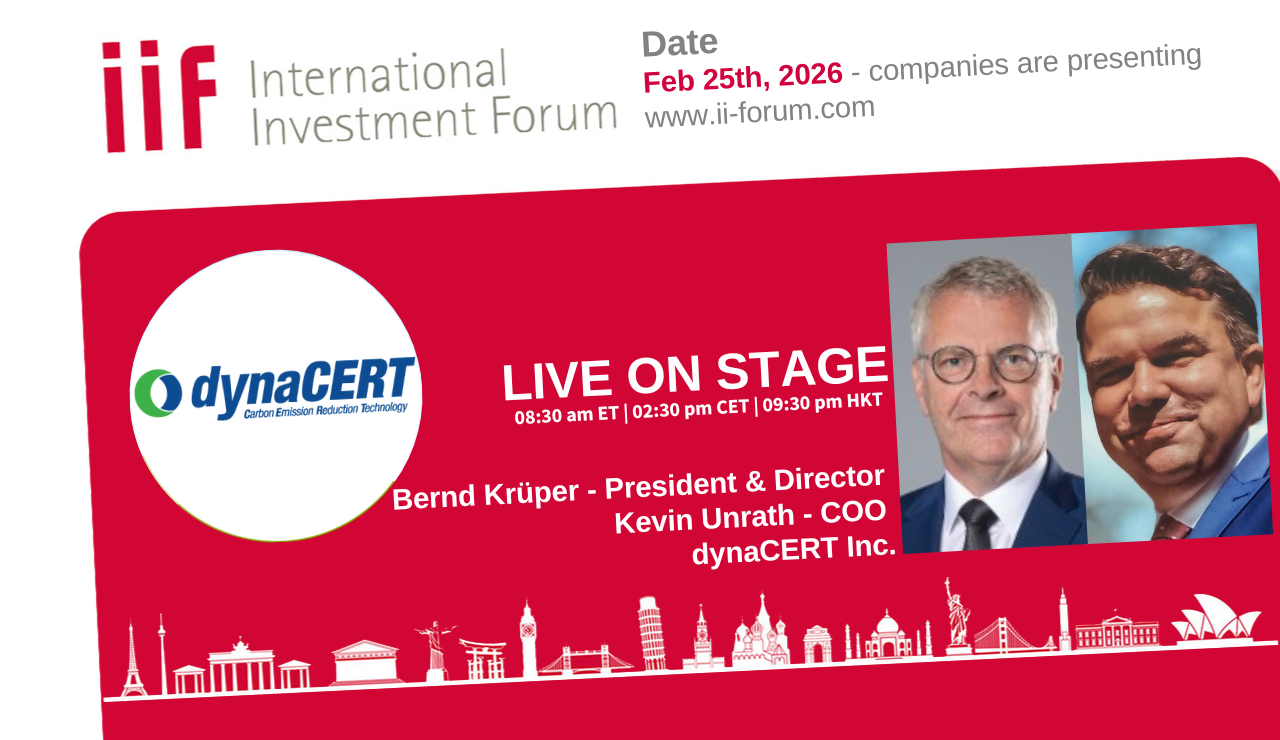
The upcoming hydrogen boom holds opportunities for a wide variety of companies. Plug Power is facing a decisive capital measure to finance its ambitious operational agenda and path to profitability. dynaCERT, with its retrofit technology, offers a pragmatic bridge solution for immediate emission reduction in the global diesel market. Linde, on the other hand, operates as a profitable, established group along the entire value chain and leverages its infrastructure for growth.
Conflict of interest
Pursuant to §85 of the German Securities Trading Act (WpHG), we point out that Apaton Finance GmbH as well as partners, authors or employees of Apaton Finance GmbH (hereinafter referred to as "Relevant Persons") currently hold or hold shares or other financial instruments of the aforementioned companies and speculate on their price developments. In this respect, they intend to sell or acquire shares or other financial instruments of the companies (hereinafter each referred to as a "Transaction"). Transactions may thereby influence the respective price of the shares or other financial instruments of the Company.
In this respect, there is a concrete conflict of interest in the reporting on the companies.
In addition, Apaton Finance GmbH is active in the context of the preparation and publication of the reporting in paid contractual relationships.
For this reason, there is also a concrete conflict of interest.
The above information on existing conflicts of interest applies to all types and forms of publication used by Apaton Finance GmbH for publications on companies.
Risk notice
Apaton Finance GmbH offers editors, agencies and companies the opportunity to publish commentaries, interviews, summaries, news and the like on news.financial. These contents are exclusively for the information of the readers and do not represent any call to action or recommendations, neither explicitly nor implicitly they are to be understood as an assurance of possible price developments. The contents do not replace individual expert investment advice and do not constitute an offer to sell the discussed share(s) or other financial instruments, nor an invitation to buy or sell such.
The content is expressly not a financial analysis, but a journalistic or advertising text. Readers or users who make investment decisions or carry out transactions on the basis of the information provided here do so entirely at their own risk. No contractual relationship is established between Apaton Finance GmbH and its readers or the users of its offers, as our information only refers to the company and not to the investment decision of the reader or user.
The acquisition of financial instruments involves high risks, which can lead to the total loss of the invested capital. The information published by Apaton Finance GmbH and its authors is based on careful research. Nevertheless, no liability is assumed for financial losses or a content-related guarantee for the topicality, correctness, appropriateness and completeness of the content provided here. Please also note our Terms of use.