May 11th, 2026 | 07:05 CEST
How Nel ASA, A.H.T. Syngas, and Occidental Petroleum Can Help Capitalize on the Energy Transition
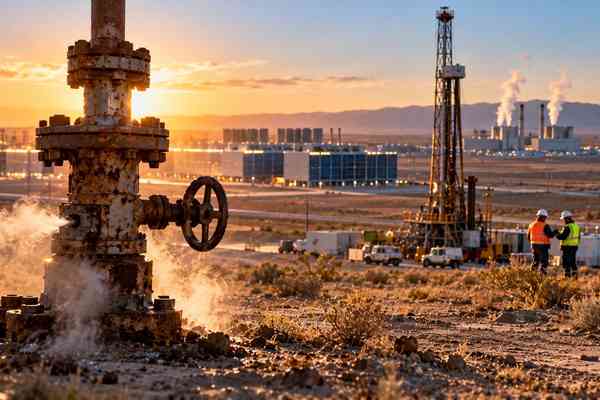
Since the strategic Strait of Hormuz in the Persian Gulf was blocked, gas prices have been climbing dramatically. Electricity bills for average households are rising by double digits, and industry is groaning under record-high energy costs. Brussels is countering with a multi-billion-euro acceleration program, but dependence on fossil fuel imports remains a sore spot. Green alternatives like hydrogen or synthetic gas are still too expensive, but the pressure is mounting. This is precisely where profit opportunities arise: with Nel ASA, which builds electrolyzers; A.H.T. Syngas, a specialist in biomass gasification; and Occidental Petroleum, which excels in CCS technology.
time to read: 5 minutes | Author: Armin Schulz
ISIN: A.H.T. SYNGAS TECH. EO 1 | NL0010872388 , NEL ASA NK-_20 | NO0010081235 , OCCIDENTAL PET. DL-_20 | US6745991058
Table of contents:
Author

Armin Schulz
Born in Mönchengladbach, he studied business administration in the Netherlands. In the course of his studies he came into contact with the stock exchange for the first time. He has more than 25 years of experience in stock market business.
Tag cloud
Shares cloud
Nel ASA - Between High-Tech Hope and a Slump in Orders
Nel ASA, the Norwegian hydrogen specialist, is caught in a classic innovation dilemma. While the company's leadership is presenting a revolutionary electrolyzer platform designed to finally make green hydrogen economically viable, the latest financial figures paint a different picture. Customers are holding back. Order intake plummeted by a whopping 73% to just NOK 85 million, and the total order backlog shrank to NOK 1.1 billion. It is a true paradox when technological progress meets operational drought. At least the chairman of the board bought back shares, which can be seen as a small sign of confidence.
The new alkaline pressure electrolysis platform is undoubtedly a milestone. After 8 years of development, the modular system is expected to reduce investment costs by 40–60%, to below USD 1,450 per kilowatt. By comparison, other industrial projects currently cost around USD 3,000. The EU is supporting industrialization at the Herøya site with up to EUR 135 million. An initial production capacity of 1 gigawatt (GW) per year is planned, with a long-term target of 4 GW. The first small orders for PEM systems were already received after the end of the quarter. It sounds promising, but the market still needs to be convinced.
The raw figures from the first quarter of 2026 dampen the euphoria. Revenue fell by 5% to NOK 148 million, while the operating result remained deep in the red at minus NOK 100 million. At least this represents a slight improvement over the previous year. The Alkaline division grew slightly, while the PEM segment slumped due to a lack of project deliveries. The company has costs under control, and the workforce has been reduced by up to 26%. With NOK 1.44 billion in liquidity, operations are secured through the end of 2026. The key question for investors now is whether the new technological promises can soon be translated into actual orders. The stock is currently trading at NOK 2.88.
A.H.T. Syngas - Three Drivers of Growth
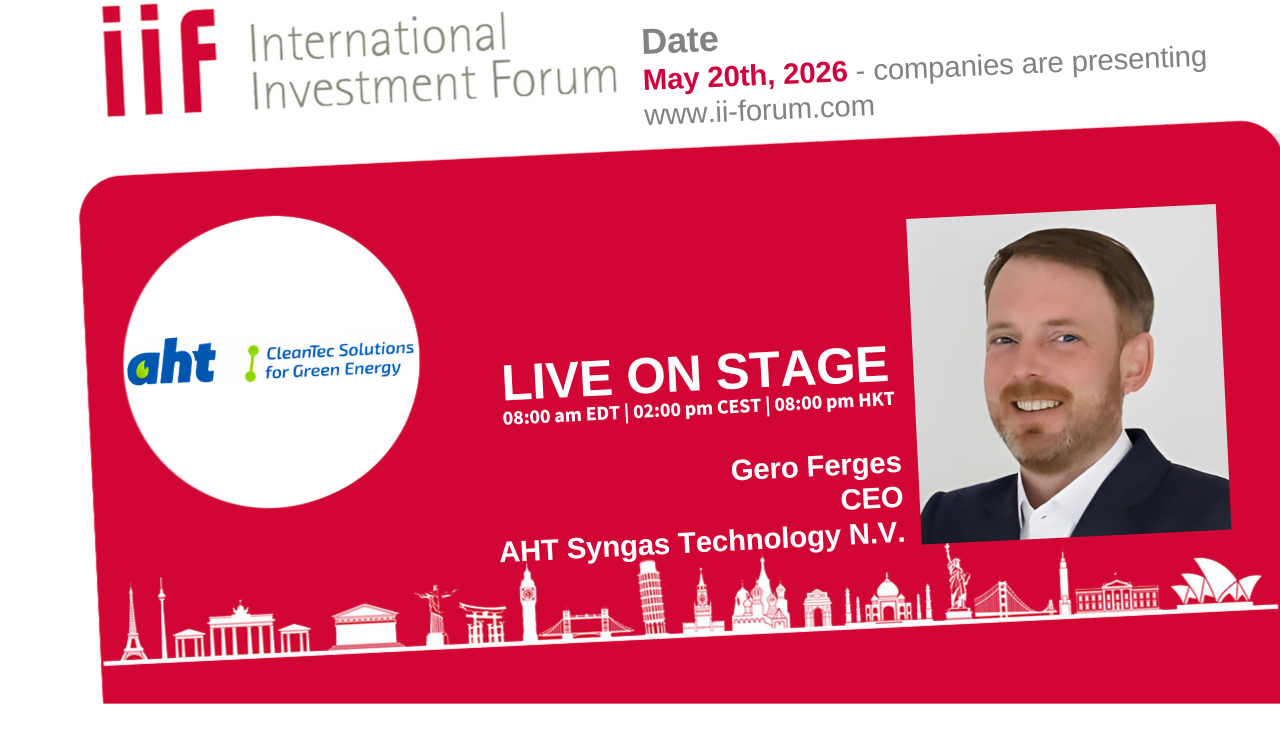
When people think of green energy, they picture solar fields or wind turbines. Yet biomass gasification is making a comeback. The Dutch company A.H.T. Syngas specializes in decentralized plants that produce synthesis gas from wood residues, sewage sludge, or production waste. The patented Twin-Fire process operates at over 1,000 degrees and produces clean gas. This gas is ideal as a substitute for natural gas in industry or as a stable complement to volatile renewable energy sources. It does not compete with food production but represents a true circular economy. The standardized modules can be scaled up quickly and, thanks to inventory, also reduce costs.
In March, the company secured an exclusive partnership with INNOTEC in Poland. The local expert is handling project development and permitting, bringing 17 projects to the table. Orders totalling over EUR 10 million are expected to be received this year. Poland is highly dependent on coal but possesses vast biomass resources. Political pressure to decarbonize is growing, while the market for renewable gases is still in its infancy. For the specialist, this presents a massive early-growth opportunity. Poland's energy plans call for expanding biomethane production to 1.1 billion cubic meters by 2030. This is an ideal environment for A.H.T. Syngas.
A breakthrough in green hydrogen was already achieved in February. The publicly funded BiDroGen project demonstrated a containerized shift stage that converts wood gas into high-purity hydrogen. A patent on oxygen gasification secures the approach. Production costs of EUR 4.40–7.98 per kg are significantly lower than those of electrolysis. Added to this are revenues from CO₂ credits. The market for permanent allowances is estimated to reach up to 60 million tons in demand by 2030. This makes decentralized, biogenic hydrogen production not only clean but also economically attractive for industrial customers. The stock is currently trading at EUR 2.60.
Occidental Petroleum - Between War Premium and Reality Check
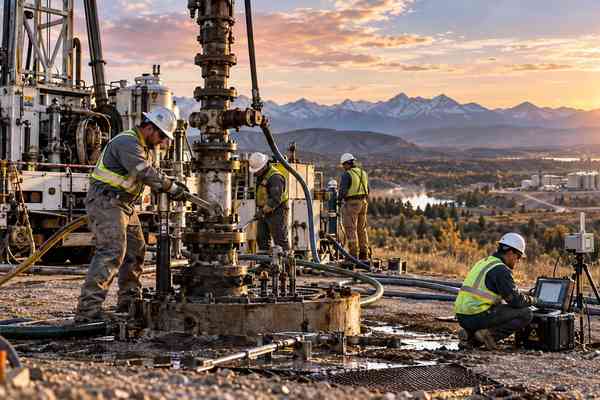
Occidental's Q1 2026 balance sheet reads like a turning point. The sale of the chemical division OxyChem to Berkshire Hathaway brought in nearly USD 10 billion. The money is being used to reduce debt. From over USD 20 billion at the start of 2025, debt now stands at USD 13.3 billion. The goal is USD 10 billion. The company's CCS technology, which filters CO₂ from the air and stores it underground, is set to become a second pillar of the business in the medium term. The Stratos project in Texas is planned as the world's largest direct air capture facility, but there have recently been technical issues with non-core components.
Production exceeded the company's own forecast at 1,426 million barrels of oil equivalent per day, while operating costs in the US fell to USD 7.85 per barrel. Free cash flow before working capital of USD 1.7 billion sounds good, but after accounting for receivables and derivative losses, the bottom line was just break-even. Occidental hedged against a drop below USD 55 using oil price collars, but missed out on the full rally as a result. Outgoing CEO Hollub and designated successor Jackson face the question of how much flexibility the company really needs.
The Iran conflict temporarily drove oil prices above USD 100. Occidental benefited, but only to a limited extent. Production in the Middle East, which accounts for about 15% of capacity, suffered from disruptions, and derivatives transactions cost USD 339 million before taxes. Analysts are divided. Goldman Sachs sees selling pressure, while Wells Fargo is optimistic. The outstanding Berkshire warrants with a strike price of just under USD 60 could further cap the stock price. Anyone buying in here is betting not only on oil but also on geopolitical normalization, which could take years or happen overnight. Currently, a share costs USD 53.03.
Nel ASA remains a risky hydrogen bet. The new technology lowers costs, but a slump in orders and losses are putting the brakes on its rapid rise. A.H.T. Syngas is banking on biomass gasification as a decentralized, cost-effective alternative. The Poland expansion opens an early growth window. Occidental Petroleum is using the oil price surge to reduce debt, while CCS technology is stalling technically.
Conflict of interest
Pursuant to §85 of the German Securities Trading Act (WpHG), we point out that Apaton Finance GmbH as well as partners, authors or employees of Apaton Finance GmbH (hereinafter referred to as "Relevant Persons") currently hold or hold shares or other financial instruments of the aforementioned companies and speculate on their price developments. In this respect, they intend to sell or acquire shares or other financial instruments of the companies (hereinafter each referred to as a "Transaction"). Transactions may thereby influence the respective price of the shares or other financial instruments of the Company.
In this respect, there is a concrete conflict of interest in the reporting on the companies.
In addition, Apaton Finance GmbH is active in the context of the preparation and publication of the reporting in paid contractual relationships.
For this reason, there is also a concrete conflict of interest.
The above information on existing conflicts of interest applies to all types and forms of publication used by Apaton Finance GmbH for publications on companies.
Risk notice
Apaton Finance GmbH offers editors, agencies and companies the opportunity to publish commentaries, interviews, summaries, news and the like on news.financial. These contents are exclusively for the information of the readers and do not represent any call to action or recommendations, neither explicitly nor implicitly they are to be understood as an assurance of possible price developments. The contents do not replace individual expert investment advice and do not constitute an offer to sell the discussed share(s) or other financial instruments, nor an invitation to buy or sell such.
The content is expressly not a financial analysis, but a journalistic or advertising text. Readers or users who make investment decisions or carry out transactions on the basis of the information provided here do so entirely at their own risk. No contractual relationship is established between Apaton Finance GmbH and its readers or the users of its offers, as our information only refers to the company and not to the investment decision of the reader or user.
The acquisition of financial instruments involves high risks, which can lead to the total loss of the invested capital. The information published by Apaton Finance GmbH and its authors is based on careful research. Nevertheless, no liability is assumed for financial losses or a content-related guarantee for the topicality, correctness, appropriateness and completeness of the content provided here. Please also note our Terms of use.