December 22nd, 2025 | 07:20 CET
Halo effect in Côte d'Ivoire: How Kobo Resources is maturing into the next big gold story in the shadow of Perseus and the Lundin Group
In the world of geologists and commodity prospectors, there is an unwritten law: the best finds are made in the shadow of existing world-class mines. Geology knows no license boundaries, and where millions of ounces of gold are already being mined, the probability of further discoveries is highest. This phenomenon, known as the "halo effect," is currently playing out in textbook fashion in Côte d'Ivoire. The West African country has become the new darling of international mining capital. While Australian producer Perseus Mining is demonstrating the enormous potential of the soil just a few kilometers away with the Yaouré mine, and Montage Gold is showing how attractive the region is to investors with the entry of the legendary Lundin Group, Kobo Resources is positioning itself right in between. For investors, the small explorer offers a rare opportunity to bet on the same geology and jurisdiction as the billion-dollar corporations, but with significantly more attractive leverage.
time to read: 3 minutes | Author: Nico Popp
ISIN: KOBO RESOURCES INC | CA49990B1040 , PERSEUS MINING LTD. | AU000000PRU3 , LUNDIN MINING CORP. | CA5503721063
Table of contents:
Author

Nico Popp
At home in Southern Germany, the passionate stock exchange expert has been accompanying the capital markets for about twenty years. With a soft spot for smaller companies, he is constantly on the lookout for exciting investment stories.
Tag cloud
Shares cloud
Perseus Mining provides the geological proof
To understand the potential of Kobo Resources, one must first look at its immediate neighbor. Perseus Mining operates the Yaouré mine, one of the most cost-effective and productive gold mines in West Africa. The mine is located about 15 to 20 km from Kobo's flagship Kossou project. Yaouré is operational proof that the geological structures in this region not only contain gold, but can also be mined profitably. Crucially for geologists, the mineralized zones that Perseus is mining have structural similarities to the targets that Kobo Resources is currently exploring on its own property.
The proximity to an existing processing plant fundamentally changes the economic calculation for an explorer like Kobo. Should Kobo Resources define a significant resource, as recent drill results suggest, the Company will not necessarily have to raise hundreds of millions of dollars for its own processing plant. In the mining industry, it is not uncommon for ore from satellite deposits to be transported to a major's central plant. Perseus Mining constantly needs new material to extend the life of Yaouré, which puts Kobo Resources in the position of an ideal takeover target or joint venture partner. The success of its neighbor thus validates its own exploration model and significantly reduces the entrepreneurial risk.
The accolade from the Lundin Group at Montage Gold
The latest deal at Montage Gold proves that Côte d'Ivoire is no longer considered an exotic risk area, but rather a first-class mining jurisdiction. The entry of the Lundin family, one of the world's most successful commodity dynasties, into Montage Gold is a clear signal to the entire sector. The Lundins are known for investing countercyclically in regions that are on the verge of an upswing. Their involvement in Montage Gold's Koné project has finally brought the country into the spotlight of major institutional investors.
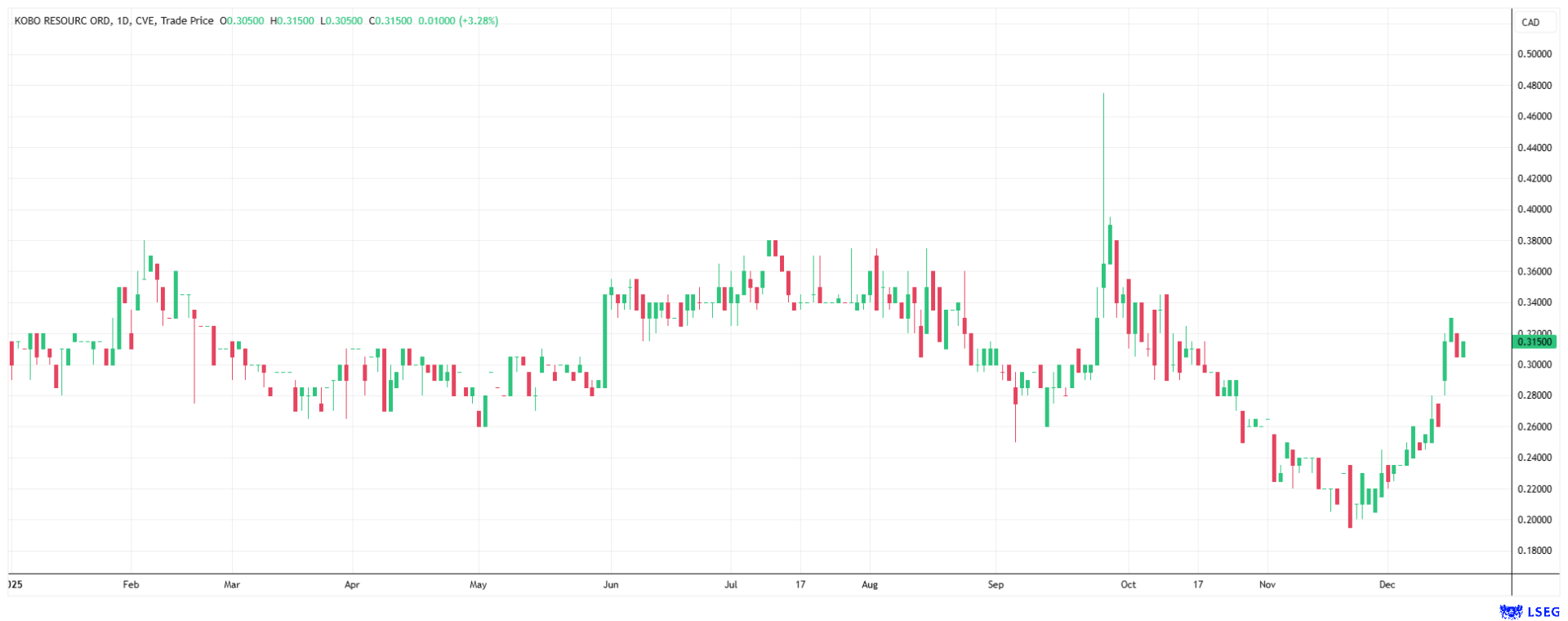
This influx of big capital is likely to have a direct "spillover effect" on Kobo Resources. When billionaire investors like the Lundins deem the political stability and legal framework of Côte d'Ivoire good enough to invest hundreds of millions there, it reduces the often-cited "Africa discount" for the valuation of companies operating there. Kobo Resources operates under the same mining law and in the same political reality as Montage Gold. However, the difference in valuation is still striking: while Montage Gold has already achieved a market capitalization that prices in future success thanks to the Lundins' validation, Kobo Resources is still largely flying under the radar of the general public. Investors are currently paying for the option of exploration success at Kobo, but are getting geopolitical validation from its neighbors virtually for free.
Kobo Resources: The ace up investors' sleeves
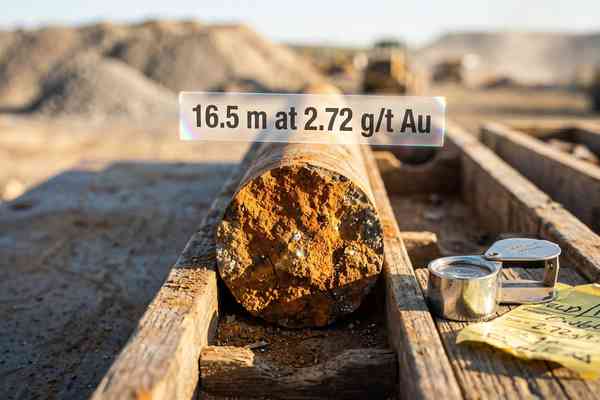
In this environment, Kobo Resources is like a speedboat among tankers. The Company controls 100% of its land package, which is a decisive strategic advantage in negotiations with potential partners. Exploration work to date on the Kossou project has shown that gold mineralization begins at surface and is high grade, which would drastically reduce the cost of potential mining.
Kobo's management takes a systematic approach to its exploration work. Instead of blindly drilling deep holes, it uses geological data to identify the foothills of the shear zones that make the neighboring Perseus mine so rich. For investors, this presents a clear scenario: Kobo Resources is the vehicle for participating in the value chain represented by Perseus and Montage Gold at a fraction of the capital investment. While the share prices of its neighbors already reflect production, Kobo still offers the leverage of discovery.
Good arguments for Kobo shares
If the thesis that the gold-bearing structures of Yaouré continue onto the Kossou property is confirmed, the market is likely to narrow the valuation gap with established producers in the region. At a time when gold is once again targeting new highs and Wall Street banks are announcing price targets above the USD 5,000 per ounce mark, the location advantage in one of the world's hottest gold provinces is a strong argument in favor of Kobo Resources.
Watch YouTube videoConflict of interest
Pursuant to §85 of the German Securities Trading Act (WpHG), we point out that Apaton Finance GmbH as well as partners, authors or employees of Apaton Finance GmbH (hereinafter referred to as "Relevant Persons") may hold shares or other financial instruments of the aforementioned companies in the future or may bet on rising or falling prices and thus a conflict of interest may arise in the future. The Relevant Persons reserve the right to buy or sell shares or other financial instruments of the Company at any time (hereinafter each a "Transaction"). Transactions may, under certain circumstances, influence the respective price of the shares or other financial instruments of the Company.
In addition, Apaton Finance GmbH is active in the context of the preparation and publication of the reporting in paid contractual relationships.
For this reason, there is a concrete conflict of interest.
The above information on existing conflicts of interest applies to all types and forms of publication used by Apaton Finance GmbH for publications on companies.
Risk notice
Apaton Finance GmbH offers editors, agencies and companies the opportunity to publish commentaries, interviews, summaries, news and the like on news.financial. These contents are exclusively for the information of the readers and do not represent any call to action or recommendations, neither explicitly nor implicitly they are to be understood as an assurance of possible price developments. The contents do not replace individual expert investment advice and do not constitute an offer to sell the discussed share(s) or other financial instruments, nor an invitation to buy or sell such.
The content is expressly not a financial analysis, but a journalistic or advertising text. Readers or users who make investment decisions or carry out transactions on the basis of the information provided here do so entirely at their own risk. No contractual relationship is established between Apaton Finance GmbH and its readers or the users of its offers, as our information only refers to the company and not to the investment decision of the reader or user.
The acquisition of financial instruments involves high risks, which can lead to the total loss of the invested capital. The information published by Apaton Finance GmbH and its authors is based on careful research. Nevertheless, no liability is assumed for financial losses or a content-related guarantee for the topicality, correctness, appropriateness and completeness of the content provided here. Please also note our Terms of use.