October 2nd, 2025 | 07:15 CEST
Graphite problem solvers with small valuation: SGL Carbon, Mercedes-Benz, Graphano Energy
Battery-grade graphite is classified as a critical element in both the US and the EU. The reason: supply chains have been too dependent on China. Recent geopolitical shifts have caused decision-makers on both sides of the Atlantic to rethink their approach to graphite and other critical raw materials. Secure sources are now in high demand. At the same time, sustainability and environmental protection remain key requirements for projects. In this article, we explain the latest developments in the graphite market and how investors can benefit from them.
time to read: 3 minutes | Author: Nico Popp
ISIN: SGL CARBON SE O.N. | DE0007235301 , MERCEDES-BENZ GROUP AG | DE0007100000 , Graphano Energy Ltd. | CA38867G2053
Table of contents:
Author

Nico Popp
At home in Southern Germany, the passionate stock exchange expert has been accompanying the capital markets for about twenty years. With a soft spot for smaller companies, he is constantly on the lookout for exciting investment stories.
Tag cloud
Shares cloud
Graphite crucial as anode material – Mercedes-Benz wants sustainable sources
Graphite is crucial for battery technology and is the dominant anode material in standard lithium-ion batteries. As a carbon mineral with a layered, hexagonal structure, it is characterized by conductivity, low hardness, and lower costs compared to other materials such as silicon or lithium metal. However, graphite today comes mainly from China. Vehicle manufacturers, who have long been in fierce competition with Chinese rivals such as BYD, can no longer afford this dependency. Companies like Mercedes-Benz are also turning to other sources of graphite for sustainability reasons. The Swabian automaker's "Ambition 2039" program aims to ensure that its entire new vehicle fleet is CO2-neutral over its lifetime. The key to this is, of course, electric models – and sustainable sources of graphite.
SGL Carbon: Synthetic graphite also requires mining
The company SGL Carbon, which is based not far from Mercedes-Benz in southern Germany and is one of the few companies in the world that can produce synthetic graphite for anode production, could play a decisive role in the supply of graphite. However, if you take a look behind the scenes, it quickly becomes clear that even companies like SGL Carbon are dependent on natural graphite. The battery additives with the brand name Sigracell consist of so-called expanded graphite. Natural graphite flakes are needed to produce this. It is also not entirely clear whether natural or synthetic graphite is the solution for electric vehicles. Both variants have their advantages. While synthetic graphite offers advantages in terms of charging speed, natural graphite provides higher storage capacities and lower costs. In addition, the synthetic variant is very energy-intensive to manufacture. Hybrid forms of synthetic and natural graphite are therefore increasingly becoming the gold standard in battery production.
Graphano Energy: Promising graphite projects in Quebec
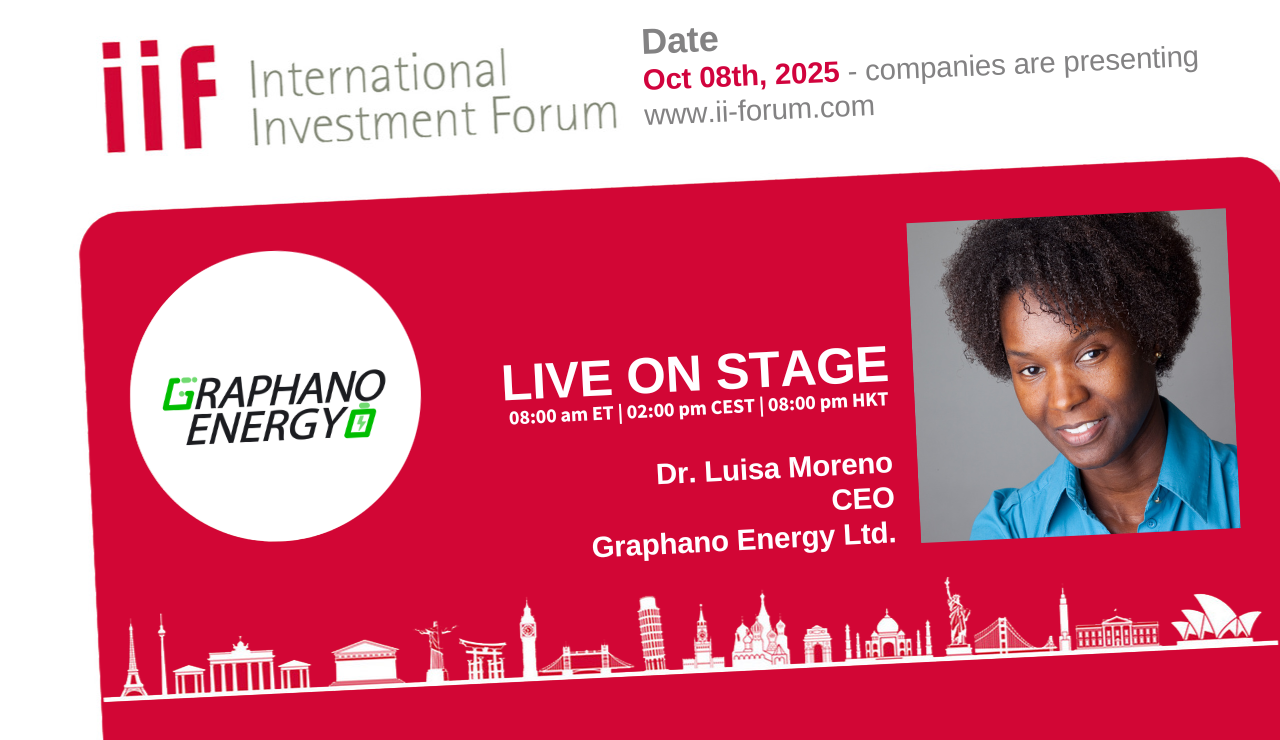
A potential supplier to SGL Carbon and Mercedes-Benz is the young Canadian company Graphano Energy, which operates two projects in the Canadian district of Quebec. Resource estimates in accordance with international mining standards are available for both projects, but these are currently being continuously expanded through further exploration work. Both projects are interesting in their own way. Some time ago, Graphano discovered the new Black Pearl graphite trend, at least 1,200 m long, in the Standard Mine project area. Forty-two samples showed an average graphite content of 13.2%. The Lac Aux Bouleaux (LAB) project is attractive due to its proximity to Canada's only graphite mine, Lac des Iles, which is operated by Northern Graphite. The associated processing plant is not operating at full capacity, which is why Graphano was able to enter into an agreement with Northern Graphite to share this facility. This agreement is worth its weight in gold for the young company: Firstly, it eliminates the need for investment and means that the construction of a new processing plant will not delay the potential start of production.
Given the growing pressure from major economies to secure new sources of critical raw materials, developments at Graphano could accelerate rapidly. While the primary focus this year remains on expanding resources, approval procedures, a feasibility study, and financing plans are already on the agenda for 2026. Production could begin immediately in the following years. Since a graphite-mining company already operates nearby, Graphano Energy should be well-positioned to integrate into international supply chains for this highly sought-after anode material. Global players such as Mercedes-Benz and SGL Carbon have Canada on their radar as a raw material source. Notably, SGL Carbon operated a graphite electrode production plant at its Lachute site in Quebec until 2014, and today maintains a presence at other North American locations.
Low valuation, news ahead: Investors should keep an eye on Graphano shares
The Graphano Energy share price reflects the Company's position as one of the great hopes for a stable supply of high-quality graphite for industry. After a rapid rise in the share price in the summer, things have now calmed down again somewhat. As the Company is still only valued at a low single-digit million figure, any further positive drilling results could lead to share price gains. As one of the few interesting graphite alternatives in North America, investors should definitely keep Graphano shares in mind – industry representatives and their knowledgeable advisors are also likely to be closely monitoring the project's progress.
Conflict of interest
Pursuant to §85 of the German Securities Trading Act (WpHG), we point out that Apaton Finance GmbH as well as partners, authors or employees of Apaton Finance GmbH (hereinafter referred to as "Relevant Persons") may hold shares or other financial instruments of the aforementioned companies in the future or may bet on rising or falling prices and thus a conflict of interest may arise in the future. The Relevant Persons reserve the right to buy or sell shares or other financial instruments of the Company at any time (hereinafter each a "Transaction"). Transactions may, under certain circumstances, influence the respective price of the shares or other financial instruments of the Company.
In addition, Apaton Finance GmbH is active in the context of the preparation and publication of the reporting in paid contractual relationships.
For this reason, there is a concrete conflict of interest.
The above information on existing conflicts of interest applies to all types and forms of publication used by Apaton Finance GmbH for publications on companies.
Risk notice
Apaton Finance GmbH offers editors, agencies and companies the opportunity to publish commentaries, interviews, summaries, news and the like on news.financial. These contents are exclusively for the information of the readers and do not represent any call to action or recommendations, neither explicitly nor implicitly they are to be understood as an assurance of possible price developments. The contents do not replace individual expert investment advice and do not constitute an offer to sell the discussed share(s) or other financial instruments, nor an invitation to buy or sell such.
The content is expressly not a financial analysis, but a journalistic or advertising text. Readers or users who make investment decisions or carry out transactions on the basis of the information provided here do so entirely at their own risk. No contractual relationship is established between Apaton Finance GmbH and its readers or the users of its offers, as our information only refers to the company and not to the investment decision of the reader or user.
The acquisition of financial instruments involves high risks, which can lead to the total loss of the invested capital. The information published by Apaton Finance GmbH and its authors is based on careful research. Nevertheless, no liability is assumed for financial losses or a content-related guarantee for the topicality, correctness, appropriateness and completeness of the content provided here. Please also note our Terms of use.