April 1st, 2026 | 07:30 CEST
From Turnaround to Modular Technology: SGL Carbon, IBU-tec, and NEO Battery Materials Under the Microscope
Anodes and cathodes, graphite, silicon, and iron phosphate: Anyone looking to profit on the stock market from megatrends like electric mobility or the booming drone and defense sectors will find specialized materials suppliers to be an exciting alternative to battery manufacturers and automotive groups. Three companies from this segment are the focus of our comparison: the Canadian-South Korean startup NEO Battery Materials, the East German specialty chemicals company IBU-tec, and the established materials group SGL Carbon. All three address the backbone of modern energy storage in very different ways.
time to read: 6 minutes
|
Author:
Mario Hose
ISIN:
NEO BATTERY MATERIALS LTD | CA62908A1003 | TSXV: NBM , OTC: NBMFF , IBU-TEC ADV.MATER. INH.ON | DE000A0XYHT5 , SGL CARBON SE O.N. | DE0007235301
Table of contents:
Author

Mario Hose
Born and raised in Hannover, Lower Saxony follows social and economic developments around the globe. As a passionate entrepreneur and columnist he explains and compares the most diverse business models as well as markets for interested stock traders.
Tag cloud
Shares cloud
Restructuring Candidate with a New Roadmap
As one of the few major manufacturers of synthetic graphite anode material in the Western world, SGL Carbon is an indispensable component of the supply chain for today's lithium-ion batteries. Its customers include well-known automakers and cell manufacturers. However, the 2025 fiscal year was anything but stellar for the Wiesbaden-based group: Revenue fell by 17.2% to EUR 850 million. The main reasons were the ongoing weak demand in the semiconductor industry and the withdrawal from loss-making carbon fiber operations, including plant closures in Portugal and the US.
In terms of adjusted operating profit before interest, taxes, depreciation, and amortization (EBITDA), SGL Carbon remained within its own forecast at EUR 135 million and a stable margin of 15.9%. Free cash flow also remained positive at EUR 37 million, while net debt fell to just under EUR 99 million. Nevertheless, the market had apparently expected more. The stock price has fallen by about a third since mid-February to most recently EUR 3.20. The reason for the disappointment lies primarily in the outlook. For 2026, SGL Carbon expects a further decline in revenue to EUR 720 to 770 million, as the full effect of the discontinued carbon fiber activities will only become apparent then.
Back to a Billion in Revenue
To create new opportunities, the management team led by CEO Andreas Klein presented the "SGL Growth 2030" strategy in March. Three areas are intended to complement the core business: specialty graphite for small modular reactors (SMRs), composite materials for the defense and drone industries, and components for aerospace. The goal is ambitious and, at the same time, typical of a genuine turnaround case. By 2030, SGL Carbon aims to reach the EUR 1 billion revenue mark again.
This makes the company a classic restructuring candidate. The balance sheet is solid with an equity ratio of 39%, free cash flow is positive, and based on a price-to-sales ratio of around 0.6, the stock appears undervalued. However, the weakness in the core semiconductor and automotive markets has not yet been overcome. For patient value investors, the appeal lies primarily in the fact that the transition from an old to a new industrial world could generate growth momentum once again.
European Battery Materials Champion on the Rise
While SGL Carbon has already made headway with its new growth program, IBU-tec advanced materials is eagerly awaiting April 15. Management, led by CEO Jörg Leinenbach, has invited a large press contingent for this day. In addition to a capital markets presentation, the agenda includes a tour of the LFP production facility at the Bitterfeld-Wolfen site. LFP stands for lithium iron phosphate, a cathode material in which IBU-tec sees the future of a "Made in Germany" battery value chain. The technology is considered particularly safe and durable and is primarily used in stationary energy storage systems and smaller electric vehicles. The company, headquartered in Weimar, is a specialty chemicals group with over 100 years of history that has consistently evolved into a key European supplier of battery materials. Its core business lies in thermal process engineering, specifically the processing of inorganic powders and granulates in rotary kilns and pulsating reactors.
The decisive catalyst came in October 2025 with a strategic agreement with PowerCo, the battery subsidiary of the Volkswagen Group. At the heart of the deal are a long-term supply contract and a Joint Development Agreement, which is expected to secure milestone payments for IBU-tec in the upper single-digit million-euro range as early as 2026—even before the new plant in Bitterfeld is fully operational. Starting in 2027, production is set to ramp up significantly, with full capacity of more than 15,000 tons of LFP cathode material per year planned by 2028.
Battery Business Drives Growth
The medium-term plan published by the company on March 16 is correspondingly ambitious. By 2030, IBU-tec expects revenues of at least EUR 120 to 140 million, nearly a threefold increase compared to 2025, with an EBITDA margin of 13 to 15%. The growth engine is almost exclusively the battery business, which alone is expected to contribute EUR 85 to 90 million in revenue. As early as 2025, the battery segment grew by 80% to EUR 17.7 million and was the key driver of profitability: The EBITDA margin jumped from 2% to 10.5%.
What makes the stock attractive to investors is the combination of growth and predictability. The revenue target for 2030 is already based on existing contracts; potential additional major customers are not even included in this figure. The share price rose by more than 150% within a year, but has recently taken a significant hit in the wake of the general market correction. For risk-aware growth investors with a medium-term horizon, IBU-tec is one of the most exciting German small-cap stories—though the concentration risk associated with PowerCo and VW should not be underestimated.
NEO Battery Materials – The Special Case with Leverage
NEO Battery Materials offers even more potential for the future, but also more risk. The Canadian company, with a production base in South Korea, specializes in silicon-based anode materials for lithium-ion batteries. The approach is simple but technically challenging: Conventional batteries use graphite as the anode material—see SGL Carbon. Silicon can theoretically store many times more lithium, but has so far failed due to the material's significant expansion during charging. NEO's patented NBMSiDE® process solves this problem with a cost-effective nanocoating based on metallurgical silicon and is designed to integrate seamlessly into existing production lines.
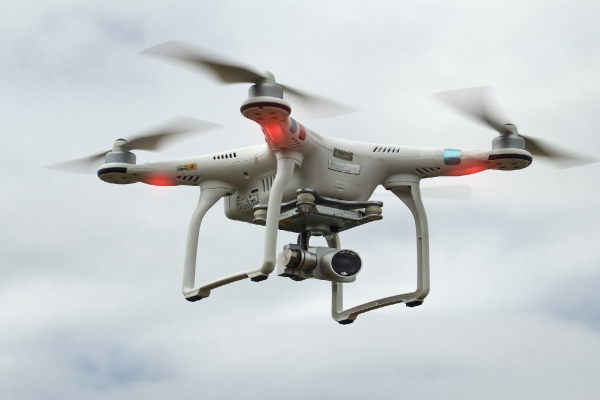
The company's latest milestones demonstrate its ability to make the leap from the research lab to industrial application. In March 2026, the management team led by CEO Spencer Huh signed a memorandum of understanding with AROKA, an affiliate of the South Korean Army, to jointly develop high-performance batteries for drones and robotic systems. Previously, the company had already secured supplier status with a Fortune 500 automaker—without any intermediaries. In live field tests, a surveillance drone equipped with NEO technology doubled its flight time from just under 30 to nearly 60 minutes, even in sub-zero temperatures. This was hailed as a minor sensation in industry.
Potential Competitive Advantage
For Western customers, another point is particularly attractive: NEO operates with a completely China-free supply chain. In times of geopolitical tensions and new procurement regulations, especially in the US, this can become a real competitive advantage. The new 1.3-hectare expansion facility in South Korea is scheduled to go into operation by the end of 2026 and will then enable an annual capacity of up to 500 MWh.
Unlike its German competitors, however, NEO Battery Materials is not yet generating any significant revenue. The company is reporting losses and needs capital to scale up. But that is precisely where the appeal lies: If silicon-based anode technology establishes itself as the new standard in battery production, the upside could be enormous. The stock has remained relatively stable despite recent market turbulence. The current price of just CAD 0.60 (EUR 0.38) leaves room for upside.
Conclusion: Fundamentals, Visibility, Speculation
All three companies play a role in the ecosystem of modern energy storage—but with entirely different approaches and risk profiles. SGL Carbon is one of the world's leading representatives of the "old battery world" and, as the sole Western supplier of synthetic graphite anode material, is structurally indispensable. With a market capitalization of just under EUR 400 million, the company operates in a completely different league than its two challengers, which weigh in at merely EUR 74 million (IBU-tec) and EUR 62 million (NEO), respectively. Those betting on the turnaround and new growth areas (SMR, defense, aerospace) will find SGL Carbon to be a value stock with a favorable valuation. IBU-tec offers a good risk-reward ratio in the mid-range: concrete growth, contractual planning security thanks to the PowerCo deal, and a clear goal through 2030. NEO Battery Materials is the highly speculative bet on a potential paradigm shift toward silicon anodes: barely any revenue, but groundbreaking technology, military partnerships, and geopolitical relevance due to its China-free supply chain. Those willing to bear the risk of a startup can reap disproportionately high rewards if it succeeds.
Conflict of interest
Pursuant to §85 of the German Securities Trading Act (WpHG), we point out that Apaton Finance GmbH as well as partners, authors or employees of Apaton Finance GmbH (hereinafter referred to as "Relevant Persons") currently hold or hold shares or other financial instruments of the aforementioned companies and speculate on their price developments. In this respect, they intend to sell or acquire shares or other financial instruments of the companies (hereinafter each referred to as a "Transaction"). Transactions may thereby influence the respective price of the shares or other financial instruments of the Company.
In this respect, there is a concrete conflict of interest in the reporting on the companies.
In addition, Apaton Finance GmbH is active in the context of the preparation and publication of the reporting in paid contractual relationships.
For this reason, there is also a concrete conflict of interest.
The above information on existing conflicts of interest applies to all types and forms of publication used by Apaton Finance GmbH for publications on companies.
Risk notice
Apaton Finance GmbH offers editors, agencies and companies the opportunity to publish commentaries, interviews, summaries, news and the like on news.financial. These contents are exclusively for the information of the readers and do not represent any call to action or recommendations, neither explicitly nor implicitly they are to be understood as an assurance of possible price developments. The contents do not replace individual expert investment advice and do not constitute an offer to sell the discussed share(s) or other financial instruments, nor an invitation to buy or sell such.
The content is expressly not a financial analysis, but a journalistic or advertising text. Readers or users who make investment decisions or carry out transactions on the basis of the information provided here do so entirely at their own risk. No contractual relationship is established between Apaton Finance GmbH and its readers or the users of its offers, as our information only refers to the company and not to the investment decision of the reader or user.
The acquisition of financial instruments involves high risks, which can lead to the total loss of the invested capital. The information published by Apaton Finance GmbH and its authors is based on careful research. Nevertheless, no liability is assumed for financial losses or a content-related guarantee for the topicality, correctness, appropriateness and completeness of the content provided here. Please also note our Terms of use.