October 1st, 2026 | 08:00 CEST
Beneath the Surface: Why the Market Is Overlooking the True Value of Nike, Desert Gold and Vonovia
With an iceberg, only the tip protrudes from the water; the vast majority remains hidden. The situation is similar right now with Nike, Desert Gold Ventures and Vonovia - their true value lies beneath the surface. Analysts estimate their fair value to be two to seven times their current stock prices. But how long will it take for the stock market to discover these hidden values? For Nike, the future outfitter of the German national soccer team, the moment of truth arrives today—even as the Nations League match between Germany and Serbia is underway in Munich. For Desert Gold, the upcoming start of production is likely to provide the impetus, while Vonovia must brace itself for a waiting game following the election results in Berlin.
time to read: 8 minutes | Author: Jens Castner
ISIN: DESERT GOLD VENTURES | CA25039N4084 | TSXV: DAU , OTCQB: DAUGF , VONOVIA SE NA O.N. | DE000A1ML7J1 , NIKE INC. B | US6541061031
Table of contents:
Author

Jens Castner
The Nuremberg native brings over three decades of capital markets experience, backed by a career shaped by deep market insight and a genuine passion for investing. His journey began in 1994 through an investment club among colleagues – a formative experience that sparked a lifelong dedication to identifying compelling investment opportunities.
Following senior editorial roles at Nürnberger Nachrichten, €uro am Sonntag, and €uro, he went on to serve as Editor-in-Chief of the renowned investor magazine Börse Online from 2014, where he played a key role in shaping high-quality financial journalism for a broad investor audience.
Tag cloud
Shares cloud
Nike: The Former Stock Market Star in Search of Form
Tonight at 8:45 pm, the German national soccer team will host Serbia in Munich. It is the third match under national team coach Jürgen Klopp—and one of the last in the jersey with the three stripes. After 77 years, the DFB's partnership with Adidas is coming to an end. Starting January 1, 2027, Nike will outfit the DFB, reportedly for more than EUR 100 million per year. A coincidence of events: As the final quarter-hour begins at the Allianz Arena, the new equipment supplier will report its figures for the past quarter. Nike needs a strong result even more urgently than the DFB team. The stock has lost more than 40% since the start of the year and is trading at around USD 36 (currently around EUR 31.50 on German exchanges). The US research firm Morningstar considers Nike to be significantly undervalued at this level. Analysts estimate the fair value at USD 94—well more than double the current price. They point to the brand's strength, which, in their view, has not suffered lasting damage despite catastrophic management errors. With innovations and fewer discounts, revenue and margins are expected to be significantly higher again in three years. The traditional financial metrics also appear unusually attractive. The price-to-earnings (P/E) ratio is around 20, compared to a 5-year average of over 30. The expected full-year dividend of USD 1.63 per share yields a return of just over 4.5%.
The problems are self-inflicted. Former CEO John Donahoe came from the tech industry and wanted to run Nike accordingly. He cut ties with numerous retailers and focused on sales via the app and company-owned stores. At the same time, Nike rested on its laurels with classics like Dunk and Air Force 1 instead of developing new running shoes. Competitors such as On, Hoka, and New Balance filled the gaps on sports store shelves. Marketing shifted from large-scale campaigns to small-scale online advertising. In the end, unsold merchandise piled up and could only be sold at steep discounts. Even more serious is the slump in China. There, domestic brands like Anta and Li-Ning are all the rage among young shoppers. In the fourth quarter of fiscal year 2025/26, regional revenue fell 17% on a currency-adjusted basis. Elliott Hill, a Nike veteran who once started as an intern, has been leading the company since fall 2024. Hill is repairing relationships with retailers, clearing out inventory, and investing in sports products again. In China, he has cut ties with hundreds of online retailers to regain control over pricing. This is initially costing the company revenue. In his own words, Hill sees Nike in the "middle innings" of its comeback—which, translated from baseball to soccer terms, means roughly halftime.
Expectations for the upcoming quarterly report are correspondingly low. Nike itself has announced a revenue decline in the low- to mid-single-digit percentage range. Analysts expect revenue of USD 11.3 billion on average, down from USD 11.7 billion in the same period last year. For earnings per share, the consensus forecast calls for a decline from USD 0.49 to USD 0.44. But there is hope: Jefferies reaffirmed its "Buy" rating and USD 75 price target shortly before the earnings release. Analyst Randal Konik expects USD 11.5 billion in revenue and USD 0.48 in earnings per share—higher than the market consensus. He bases his optimism on North America and the wholesale segment, where business is stabilizing. Cleared inventory is expected to drive the gross margin up for the first time in a long while. Whether that is enough for a turnaround remains to be seen tonight. The earnings are scheduled to be released around 10:15 pm CET as the final phase of trading gets underway in Munich.
Desert Gold: From Treasure Hunter to Producer
A discount of more than 50% to fair value sounds dramatic. At Desert Gold Ventures, the gap looks even more extreme. The Canadian company owns the 440 km² SMSZ project in western Mali, located along the Senegal-Mali Shear Zone. Major mines operated by Barrick, B2Gold and Allied Gold operate nearby. Including estimated resources, the project contains around 1.2 million ounces of gold. The Measured & Indicated resources alone amount to 336,800 ounces. At the current gold price of just over USD 4,000 per ounce, this would correspond to a value of about USD 1.35 billion. On the stock market, however, Desert Gold is valued at only about CAD 48 million, or about USD 34 million. That is just one-fortieth of the value. In addition, Desert Gold holds an option on 90% of the Tiegba Gold project in Côte d'Ivoire, which apparently is not factored into the current valuation at all.
Such a calculation, however, would be too simplistic. Gold in the ground is not gold in a vault. It must be mined and processed, which costs time and money. The grades average less than 1 g/t of rock. The preliminary economic assessment (PEA) from November 2025 is therefore more meaningful. Based on an assumed gold price of USD 2,850 per ounce, it shows a net present value after taxes of USD 61 million for the Barani and Gourbassi deposits within the SMSZ project, with an internal rate of return of 57%. At the actual price of USD 4,070, this figure rises to USD 124 million. The study estimates production costs at approximately USD 1,140 per ounce. According to the Augsburg-based research firm GBC Research, the stock is therefore trading well below its intrinsic value. The experts have set a price target of CAD 0.93 (EUR 0.59) per share. That is more than seven times the current price of CAD 0.13 (EUR 0.08). For 2027, GBC anticipates revenue of approximately USD 33 million and an operating profit before depreciation and amortization (EBITDA) of more than USD 20 million—all based on a gold price of USD 2,850, which is also a very conservative estimate.
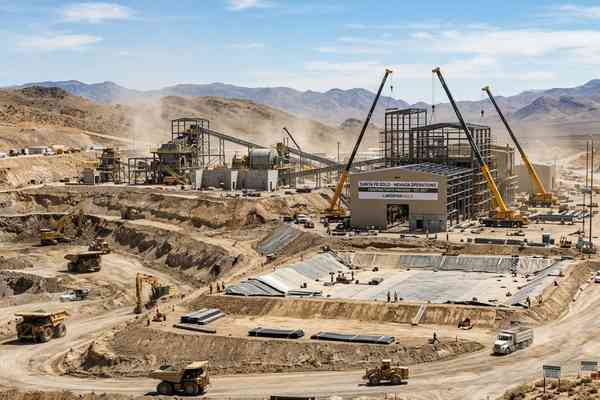
The upcoming start of production could trigger a re-rating. In mid-September, the gravity separation plant and a generator arrived at the Barani site. The plant uses water to separate the heavy gold from the lighter rock and is designed to process 200 metric tons of ore per day. Commissioning is scheduled for the end of October, with ramp-up to follow in November. The first gold is expected to be mined in the fourth quarter. "The delivery of the plant and the generator to Barani is a crucial milestone", says CEO Jared Scharf. He will outline the exact timeline on October 7 at the International Investment Forum, one of the most important virtual investor conferences for small-cap stocks, which is also open to retail investors.
https://us06web.zoom.us/webinar/register/WN_KxUBth5WSYagM_MwU_P4fw#/registration

However, the project is currently two to three months behind schedule. Delays in ocean freight and the rainy season have slowed Desert Gold down somewhat. Islamist groups have also recently blocked fuel shipments in West Africa. For Barani, however, no further delays are expected. Production is set to begin imminently as planned—and with it comes the point at which the company must no longer be valued as an explorer but as a producer.
Vonovia: Left-Wing Politics Versus Net Asset Value
Significant discounts on net asset value are not limited to West Africa. Germany's largest landlord, Vonovia, is a current example. On September 20, The Left won the Berlin House of Representatives election with 25.7%. Lead candidate Elif Eralp wants to implement a 2021 referendum and expropriate corporations with more than 3,000 apartments—albeit with compensation. "If The Left governs, nationalization will happen," she said on election night. Together with its subsidiary Deutsche Wohnen, Vonovia owns around 130,000 apartments in the capital.
Expropriation is by no means certain. The Left Party needs coalition partners, and talks with the Greens and the SPD are just getting underway. The legal requirements for compensation remain unclear. Federal Chancellor Friedrich Merz (CDU) wants to ban nationalization at the state level by law. Vonovia CEO Luka Mucic has invited the Left Party to talks. The company sees itself "as part of the solution to ease pressure on Berlin's housing market through new construction and affordable rents". Another source of uncertainty is interest rates. Financing costs are rising noticeably. And yields on German government bonds continue to climb, which is putting downward pressure on real estate valuations. Operationally, the business has been performing well recently. In the first half of the year, adjusted earnings before interest, taxes, depreciation, and amortization (EBITDA) climbed by 2.4% to EUR 1.46 billion. The vacancy rate stood at just 2.3%. According to the company, rents in Berlin, averaging EUR 8.26 per sqm, are well below the city's current market level. The handyman and energy services segment grew by 27.6%. The full-year forecast was confirmed; Vonovia only slightly lowered its rent growth target to around 4%.
The stock market has mercilessly priced in all negative factors. Vonovia has lost about a third of its value since the beginning of the year and is trading at just over EUR 17. The net asset value according to the EPRA industry standard stood at EUR 46.22 per share at the end of June—more than two and a half times the current share price. The EUR 1.25 dividend corresponds to a yield of just over 7%. The private bank Berenberg considers an expropriation unconstitutional and sets the price target at EUR 34.50. That would be almost exactly double the current price. However, investors will need patience. It could be some time before Berlin's governing coalition is clear and interest rates begin to fall again.
Conclusion: The Re-Rating Needs a Catalyst
Three stocks, three significant discounts to intrinsic value—and three very different reasons for them. In the case of Nike, the market doubts the comeback of a global brand that its own management has maneuvered into the sidelines. In the case of Desert Gold, the market simply has not discovered the hidden treasure yet. At Vonovia, the expropriation debate and rising interest rates are weighing on the share price, even though the core business is performing solidly. All three cases share one thing: a low share price becomes an opportunity when a specific event triggers a re-rating. For Nike, that could be tonight's earnings report; for Desert Gold, it could be the first gold from Barani. Vonovia, first and foremost, needs clarity from Berlin. The risk profiles therefore differ significantly. Nike and Vonovia compensate investors for the potential wait with dividend yields of 4.5% and 7%, respectively. Desert Gold, on the other hand, entices with the prospect of a tenfold increase in its share price. Investors will need a bit of courage in all three cases. As the saying goes, the final score is determined at the final whistle.
Conflict of interest
Pursuant to §85 of the German Securities Trading Act (WpHG), we point out that Apaton Finance GmbH as well as partners, authors or employees of Apaton Finance GmbH (hereinafter referred to as "Relevant Persons") may hold shares or other financial instruments of the aforementioned companies in the future or may bet on rising or falling prices and thus a conflict of interest may arise in the future. The Relevant Persons reserve the right to buy or sell shares or other financial instruments of the Company at any time (hereinafter each a "Transaction"). Transactions may, under certain circumstances, influence the respective price of the shares or other financial instruments of the Company.
In addition, Apaton Finance GmbH is active in the context of the preparation and publication of the reporting in paid contractual relationships.
For this reason, there is a concrete conflict of interest.
The above information on existing conflicts of interest applies to all types and forms of publication used by Apaton Finance GmbH for publications on companies.
Risk notice
Apaton Finance GmbH offers editors, agencies and companies the opportunity to publish commentaries, interviews, summaries, news and the like on news.financial. These contents are exclusively for the information of the readers and do not represent any call to action or recommendations, neither explicitly nor implicitly they are to be understood as an assurance of possible price developments. The contents do not replace individual expert investment advice and do not constitute an offer to sell the discussed share(s) or other financial instruments, nor an invitation to buy or sell such.
The content is expressly not a financial analysis, but a journalistic or advertising text. Readers or users who make investment decisions or carry out transactions on the basis of the information provided here do so entirely at their own risk. No contractual relationship is established between Apaton Finance GmbH and its readers or the users of its offers, as our information only refers to the company and not to the investment decision of the reader or user.
The acquisition of financial instruments involves high risks, which can lead to the total loss of the invested capital. The information published by Apaton Finance GmbH and its authors is based on careful research. Nevertheless, no liability is assumed for financial losses or a content-related guarantee for the topicality, correctness, appropriateness and completeness of the content provided here. Please also note our Terms of use.