February 9th, 2026 | 07:05 CET
Barrick Mining, RZOLV Technologies, ExxonMobil – Great opportunities after the price massacre
Following the abrupt end of the precious metals rally, opposing forces are colliding on the commodity markets. While gold and silver experienced a historic sell-off and even large producers came under massive pressure, the energy sector is proving to be surprisingly robust. Geopolitical tensions in the Middle East are fueling new concerns about global oil supplies and driving up risk premiums. At the same time, the continued high price of gold, despite the recent correction, is causing structural changes on the supply side. Producers are increasing their output, while environmental regulations and alternative processes are coming into sharper focus.
time to read: 4 minutes | Author: Stefan Feulner
ISIN: BARRICK MINING CORPORATION | CA06849F1080 , RZOLV TECHNOLOGIES INC | CA76091C1032 , EXXON MOBIL CORP. | US30231G1022
Table of contents:
Author

Stefan Feulner
The native Franconian has more than 20 years of stock exchange experience and a broadly diversified network.
He is passionate about analyzing a wide variety of business models and investigating new trends.
Tag cloud
Shares cloud
ExxonMobil – Oil price poised for rebound
After the precious metals rally came to an abrupt end, the oil price has been moving for weeks toward its downward trend that began after the high in February 2022. One of the key drivers of the recent rally is growing concern about an escalation between the US and Iran. Market participants, both traders and energy analysts, are increasingly pricing in the possibility that a military conflict could disrupt supplies, for example, through risks surrounding the Strait of Hormuz, a strategically important oil transport route.
Shares in oil giant ExxonMobil bucked the downward trend of the underlying asset. They reached a new all-time high at the end of December after the US was identified as the beneficiary of the "Venezuela deal," and continues to build on this with USD 141.30.
Last Friday, the energy giant reported that it had achieved a profit of USD 6.5 billion in the fourth quarter, corresponding to earnings of USD 1.53 per share. Net profit thus fell short of the previous year's USD 7.61 billion, but adjusted for one-off effects, USD 1.71 per share was reported, which was slightly above the USD 1.68 expected by analysts. However, revenue of USD 82.31 billion fell short of estimates. During the same period, net oil production rose to 5 million barrels per day, driven by the Permian Basin and offshore fields such as Guyana, setting a positive operational tone.
Uncertainties are once again coming from the political side. US President Donald Trump has declared that Exxon will be excluded from the reconstruction of the Venezuelan oil industry after Exxon's management described the country as "uninvestable" and made no clear commitments to return plans. With regard to the country with the largest known oil reserves, political expectations and geopolitical risks could weigh on the stock's valuation.
RZOLV Technologies – A green player in a billion-dollar market
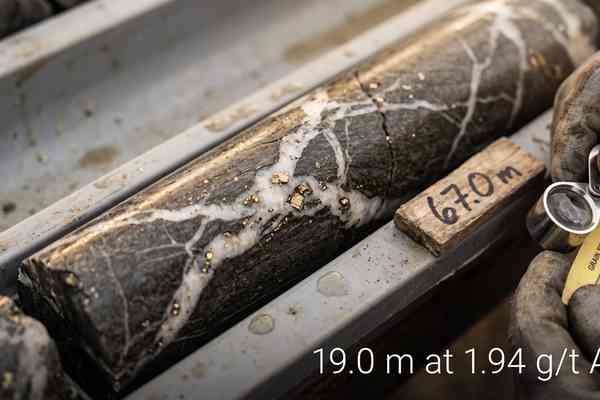
Despite the recent sell-off, the price of gold remains at a historically high level, creating strong incentives on the supply side. For gold producers, mining new ounces is more profitable than it has been in years. Higher selling prices improve margins, make previously unprofitable deposits economically viable, and accelerate investment decisions. Many mine operators are therefore increasing their production targets, reactivating projects, or pushing ahead with expansions of existing mines.
However, as activity increases, so do operational demands. Modern deposits are often more complex than in the past, and copper-bearing gold systems, sulfide ores, polymetallic materials, or concentrates are increasingly challenging traditional processing routes. At the same time, many jurisdictions are tightening environmental regulations and permitting conditions. Even large producers are therefore being forced to make their metallurgical concepts more flexible.
For decades, cyanide leaching has been the foundation of the gold industry. Its importance remains undisputed, but in certain applications, it reaches its limits in terms of efficiency, environmental impact, or permitting. This is precisely where complementary technologies come into focus. RZOLV Technologies positions itself as a technology partner rather than a disruptor. The greentech company has developed a proprietary, cyanide-free reagent system that can be used in parallel with existing processes, especially for materials that are outside the optimal range of cyanide.
Independent tests, including those conducted by SGS Laboratories, show strong gold dissolution and recovery of up to 98% under defined conditions, even in large-scale leaching scenarios. This provides operators with an additional option without having to fundamentally rebuild existing plants.
Last week, the company, valued at approximately CAD 32 million, announced the next step toward industrial application. RZOLV has entered into an operating agreement with Environmental Research and Development (ERD) to process mineralized material at ERD's patented mine site in Arizona.
RZOLV's technology will be used in an agitated leaching plant. The start-up will have a nominal throughput capacity of 50 tons per day of pre-sorted material. If operations are successful and performance is validated, the capacity will be expanded to around 100 tons per day.
The agreement aims to demonstrate the suitability of the technology for low-grade material under realistic operating conditions on site. Based on previous successful laboratory and large-scale trials, leaching behavior, solution management, and operational performance will be evaluated.
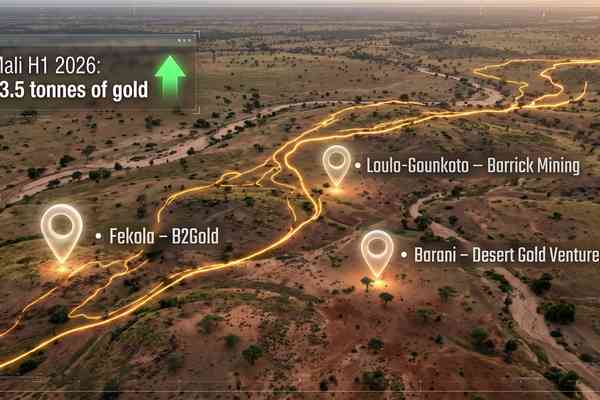
Barrick, Newmont, B2 Gold – Entry after the massacre?
The precious metals market experienced a historic shock. Gold and silver were literally sold off in recent days, resulting in one of the most volatile trading days in decades. Gold futures temporarily slipped below USD 4,700 per ounce before a brief counter-movement set in. The most actively traded April contract finally closed at USD 4,745, a daily loss of 11.4%. This marked gold's sharpest intraday decline since the early 1980s.
The movement in silver was even more dramatic. The precious metal lost more than USD 40 per ounce at times and plummeted by around 35% to USD 74. Although there was also a technical recovery here, renewed selling pushed the price down to USD 78.53 at the end of trading. With a daily loss of 35.9%, silver even marked the most significant percentage slump in its history.
All major producers were naturally caught up in the maelstrom. Newmont Corp lost around 11.50% to USD 112.35, Kinross Gold 13.77% to USD 31.56, and B2 Gold 11.71% to USD 4.90. Only the loss of industry giant Barrick Mining remained relatively contained at 3.14%.
It is doubtful that the prices that emerged after the initial sell-off already offer entry opportunities. The first wave of selling was too strong, so that after a brief respite, another downward spiral could follow. The 50 EMA for the gold price is currently at USD 3,756, while the 200 EMA is currently at USD 2,742.
The crash in the gold price dragged even the largest producers sharply lower, and further downside cannot be ruled out. By contrast, oil major ExxonMobil climbed to a new all-time high. RZOLV Technologies is entering a billion-dollar market with its alternative to sodium cyanide.
Conflict of interest
Pursuant to §85 of the German Securities Trading Act (WpHG), we point out that Apaton Finance GmbH as well as partners, authors or employees of Apaton Finance GmbH (hereinafter referred to as "Relevant Persons") may hold shares or other financial instruments of the aforementioned companies in the future or may bet on rising or falling prices and thus a conflict of interest may arise in the future. The Relevant Persons reserve the right to buy or sell shares or other financial instruments of the Company at any time (hereinafter each a "Transaction"). Transactions may, under certain circumstances, influence the respective price of the shares or other financial instruments of the Company.
In addition, Apaton Finance GmbH is active in the context of the preparation and publication of the reporting in paid contractual relationships.
For this reason, there is a concrete conflict of interest.
The above information on existing conflicts of interest applies to all types and forms of publication used by Apaton Finance GmbH for publications on companies.
Risk notice
Apaton Finance GmbH offers editors, agencies and companies the opportunity to publish commentaries, interviews, summaries, news and the like on news.financial. These contents are exclusively for the information of the readers and do not represent any call to action or recommendations, neither explicitly nor implicitly they are to be understood as an assurance of possible price developments. The contents do not replace individual expert investment advice and do not constitute an offer to sell the discussed share(s) or other financial instruments, nor an invitation to buy or sell such.
The content is expressly not a financial analysis, but a journalistic or advertising text. Readers or users who make investment decisions or carry out transactions on the basis of the information provided here do so entirely at their own risk. No contractual relationship is established between Apaton Finance GmbH and its readers or the users of its offers, as our information only refers to the company and not to the investment decision of the reader or user.
The acquisition of financial instruments involves high risks, which can lead to the total loss of the invested capital. The information published by Apaton Finance GmbH and its authors is based on careful research. Nevertheless, no liability is assumed for financial losses or a content-related guarantee for the topicality, correctness, appropriateness and completeness of the content provided here. Please also note our Terms of use.