May 12th, 2026 | 07:35 CEST
Ballard Power, dynaCERT, Ceres Power – The Downward Spiral Ends
Sentiment in the hydrogen sector is noticeably shifting. After months of sell-offs, many stocks are now benefiting from rising oil prices and growing concerns about the global energy supply. Hydrogen is regaining strategic importance, particularly in heavy-duty transportation and industrial applications. Investors are increasingly betting that governments and companies will continue to pursue their decarbonization goals despite the weak economy. The recent recovery of many hydrogen stocks has been correspondingly strong.
time to read: 4 minutes | Author: Stefan Feulner
ISIN: BALLARD PWR SYS | CA0585861085 , DYNACERT INC. | CA26780A1084 | TSX: DYA , OTCQB: DYFSF , CERES POWER HLDGS LS-_10 | GB00BG5KQW09
Table of contents:
Author

Stefan Feulner
The native Franconian has more than 20 years of stock exchange experience and a broadly diversified network.
He is passionate about analyzing a wide variety of business models and investigating new trends.
Tag cloud
Shares cloud
Ballard Power – A Positive Surprise
Ballard Power's financial results were surprisingly positive. The Canadian company exceeded earnings expectations with its first-quarter 2026 results, sending an important signal to the market. The loss per share was USD -0.04, significantly better than analysts' estimates of USD -0.06. Compared to the prior-year figure of USD -0.07, profitability improved noticeably. Revenue climbed 26% to USD 19.4 million, up from USD 15.4 million in the prior year. While revenue was slightly below expectations of USD 20.02 million, operational progress was particularly impressive.
Investors viewed it as particularly positive that Ballard has now achieved a positive gross margin for the third consecutive quarter. This improved to 14%. At the same time, operating cash burn fell by 65% to USD 7.8 million. Following the release of the figures, the stock temporarily surged by more than 23%. Since the interim low, the gain has now totalled just under 50%.
A major order from Europe is now providing additional momentum. Polish bus manufacturer Solaris is also relying on Ballard fuel cell modules for its next-generation hydrogen buses. The new FCMove-SC module with 75 kW peak power will be used in the future. The partnership, which has been in place for seven years, has also been extended. A previous order for 1,000 fuel cell modules will now run through 2029.
dynaCERT – Beneficiary of the Energy Crisis
Following the price declines of recent years, dynaCERT is once again showing strong signs of life. Since early February, the stock has more than doubled, peaking at CAD 0.17. Its market entry in Vietnam is currently drawing particular attention. The Southeast Asian country is under massive pressure due to sharply rising diesel prices. Around 60% of crude oil imports come from the Middle East, while the Iran conflict is further driving up energy prices. dynaCERT could benefit from this situation. The first pilot plants are already operating successfully in logistics centers in Ho Chi Minh City, Hanoi, and Hải Phòng. The expansion is supported, among other things, by partnerships with the Ho Chi Minh City University of Technology (HCMUT) and a leading Vietnamese oil and gas company. Vietnam could thus become a strategic bridgehead for the entire Asia-Pacific region.
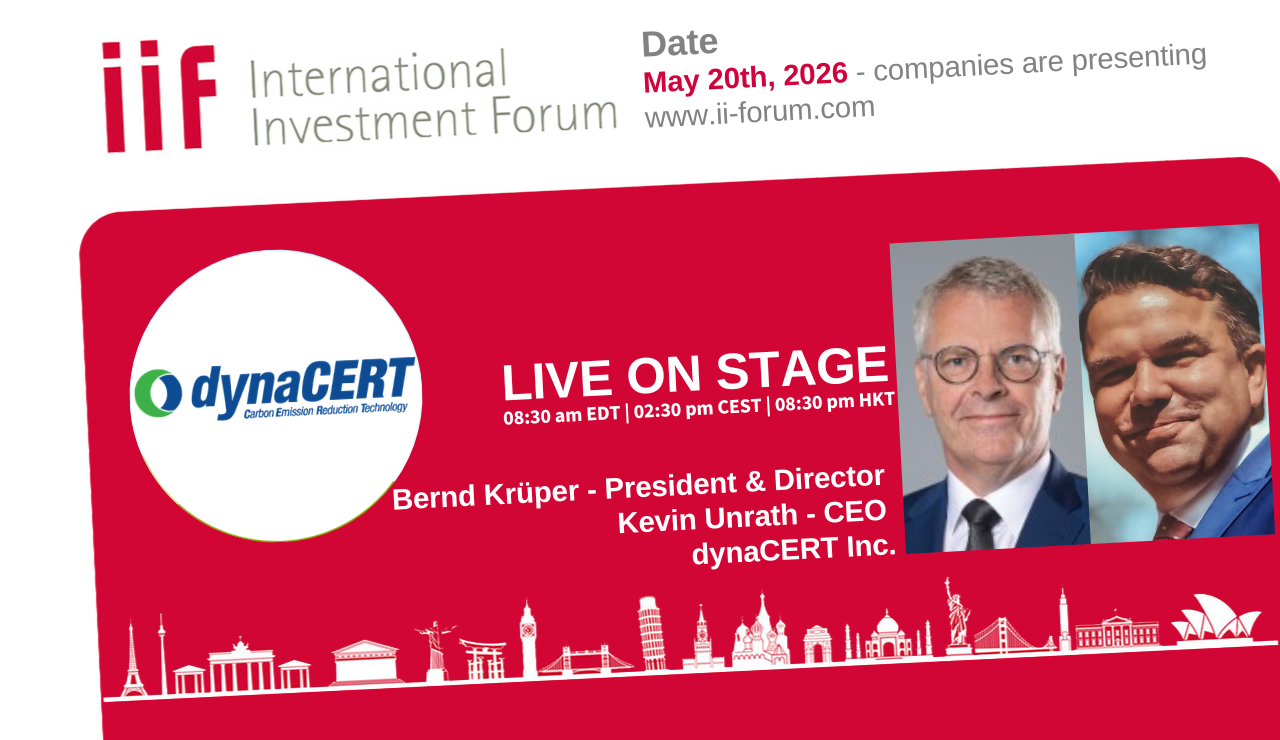
The company received an additional boost at the end of March following a leadership change at the top. After nearly 14 years, founder Jim Payne handed over the CEO position to Kevin Unrath, who previously served as COO. Payne remains with the company as Chairman, ensuring continuity while Unrath drives operational scaling. The market views the transition as a clear signal for the next phase of growth.
The focus remains on the patented HydraGEN technology. This involves generating hydrogen directly within the vehicle and blending it into the combustion process. This significantly improves the efficiency of existing diesel engines. According to the company, fuel savings of up to 19.2% are possible. At the same time, nitrogen oxides are reduced by up to 88% and particulate matter emissions by more than 50%. This creates a significant economic advantage for fleet operators, as the systems are expected to pay for themselves in about seven months.
The HydraLytica platform offers additional potential. It allows for the documentation of CO₂ emissions saved and, in the future, their monetization through certificates. With a presence in more than 55 countries and applications ranging from transportation to heavy industry, dynaCERT remains an exciting rebound candidate in the cleantech sector.
Ceres Power – Monster Rally
Ceres Power has also staged an impressive rebound in recent weeks. Since mid-April alone, the stock has risen by over 50% to a yearly high of GBP 768. In addition to the general recovery of many hydrogen stocks, this new momentum is primarily driven by rising expectations surrounding AI data centers and their enormous energy demands. Analysts see great potential, particularly in highly efficient fuel cell technologies, as traditional power grids are reaching their limits in many places.
Ceres recently received an additional boost from the launch of its new solid-oxide platform, "Ceres Endura." The technology was developed specifically for the decentralized power supply of data centers and industrial facilities. According to the company, system costs are expected to drop by about a third in scaled operations. At the same time, the platform achieves an electrical efficiency of over 65% in power generation. In combined heat and power applications, overall efficiency rises to more than 90%.
Technologically, Ceres focuses on high flexibility. The systems can already be operated with natural gas today, but are also designed to use hydrogen and other low-carbon fuels. Lower operating temperatures of 450 to 630 degrees Celsius allow for the use of more cost-effective and recyclable materials. Added to this is a stack lifespan of five years, which is particularly attractive to large industrial customers and operators of large data centers.
The company also sees enormous potential in the hydrogen market. In combination with industrial waste heat, "Endura" is expected to achieve approximately 30% higher efficiency than traditional low-temperature electrolysis processes. This could significantly reduce hydrogen production costs. Management estimates the global market potential for solid oxide technologies at 22 gigawatts by 2030.
Analysts are becoming increasingly optimistic. Jefferies recently raised its price target significantly, from GBP 480 to 920, citing opportunities in the AI sector. At the same time, Berenberg confirmed its "Buy" recommendation with a target of GBP 530.
Ballard Power is demonstrating that its operational turnaround is increasingly taking shape, with improved margins, declining cash burn, and new major orders. With its ready-to-deploy HydraGEN technology and strong growth in Vietnam, dynaCERT could become a major beneficiary of rising diesel prices. Ceres Power, in turn, is positioning itself with its Endura platform as a potential winner of the exploding energy demand driven by AI data centers and industrial applications.
Conflict of interest
Pursuant to §85 of the German Securities Trading Act (WpHG), we point out that Apaton Finance GmbH as well as partners, authors or employees of Apaton Finance GmbH (hereinafter referred to as "Relevant Persons") may hold shares or other financial instruments of the aforementioned companies in the future or may bet on rising or falling prices and thus a conflict of interest may arise in the future. The Relevant Persons reserve the right to buy or sell shares or other financial instruments of the Company at any time (hereinafter each a "Transaction"). Transactions may, under certain circumstances, influence the respective price of the shares or other financial instruments of the Company.
In addition, Apaton Finance GmbH is active in the context of the preparation and publication of the reporting in paid contractual relationships.
For this reason, there is a concrete conflict of interest.
The above information on existing conflicts of interest applies to all types and forms of publication used by Apaton Finance GmbH for publications on companies.
Risk notice
Apaton Finance GmbH offers editors, agencies and companies the opportunity to publish commentaries, interviews, summaries, news and the like on news.financial. These contents are exclusively for the information of the readers and do not represent any call to action or recommendations, neither explicitly nor implicitly they are to be understood as an assurance of possible price developments. The contents do not replace individual expert investment advice and do not constitute an offer to sell the discussed share(s) or other financial instruments, nor an invitation to buy or sell such.
The content is expressly not a financial analysis, but a journalistic or advertising text. Readers or users who make investment decisions or carry out transactions on the basis of the information provided here do so entirely at their own risk. No contractual relationship is established between Apaton Finance GmbH and its readers or the users of its offers, as our information only refers to the company and not to the investment decision of the reader or user.
The acquisition of financial instruments involves high risks, which can lead to the total loss of the invested capital. The information published by Apaton Finance GmbH and its authors is based on careful research. Nevertheless, no liability is assumed for financial losses or a content-related guarantee for the topicality, correctness, appropriateness and completeness of the content provided here. Please also note our Terms of use.