September 11th, 2026 | 08:35 CEST
At the Crossroads of AI, Commodities and Defence – Almonty Industries, Alphabet, Fortum OYJ and Rheinmetall
Amid the AI boom, commodity security, and defence pressures, new winners—but also new risks—are emerging on the stock market. Right now, it is becoming increasingly clear which business models will actually benefit from geopolitical tensions, investments worth billions, and structural shifts in demand. Investors seeking to understand the context behind the latest price movements will find in the following commentary three striking examples of just how closely politics, the capital markets, and operational developments are now intertwined.
time to read: 8 minutes | Author: Stefan Bode
ISIN: ALMONTY INDUSTRIES INC. | CA0203987072 | TSX: AII , NASDAQ: ALM , ASX: AII , FORTUM OYJ EO 3_40 | FI0009007132 , RHEINMETALL AG | DE0007030009
Table of contents:
Author

Stefan Bode
A native of the Eichsfeld region in the heart of Germany, he has more than 30 years of experience in the capital markets, with broad expertise spanning financial markets, history, and geopolitics. He founded his own business more than 20 years ago while still a student and today advises clients, foundations, and asset managers across four continents.
Tag cloud
Shares cloud
Fortum Soars 16%: Google Makes the Finnish Utility an AI Winner
On September 9, the stock of Fortum OYJ posted one of the most spectacular price jumps of the year. The stock rose 16.50% in Helsinki to EUR 24.90, reaching its highest level in four and a half years. Since the beginning of the year, Fortum shares are now up a solid 34%; over the past year, the increase has been as high as 66%. The catalyst is an extraordinary nuclear power deal with Alphabet.
The US technology conglomerate plans to invest at least EUR 13 billion in 2027 and 2028 to expand its AI infrastructure in Finland. This is Google's largest single investment in Europe to date. Three new data centres are set to be built in the northern part of the country. The cold climate reduces the energy required for cooling, while the stable power grid and largely low-carbon electricity generation make Finland an attractive location.
Fortum will be a key energy partner in this venture. The Finnish utility has signed a 22-year power supply agreement with Google. Deliveries will begin in 2028, initially with a smaller volume. From 2030 to 2049, Google plans to purchase up to 50% of the Loviisa nuclear power plant's capacity. For Google, this is its first nuclear power contract outside the US.
For Fortum, the agreement primarily means more predictable revenue. At the same time, it provides financial security for the modernization and operational life extension of the nuclear power plant through 2050. Both companies also intend to explore opportunities for new nuclear and renewable energy projects. If Fortum succeeds in attracting additional AI data centre operators as customers, this could become a new long-term growth driver.
Operating performance has also improved recently. In the first half of 2026, comparable operating profit rose from EUR 577 million to 627 million. Operating cash flow increased from EUR 656 million to 679 million. The second quarter, however, showed how dependent Fortum still is on electricity prices. Due to lower realized prices, comparable operating profit fell from EUR 115 million to 106 million.
From a technical analysis perspective, the surge is a clear signal. Fortum shares broke through their previous high of approximately EUR 22.80 and are now trading well above the MA 20, MA 50, MA 100, and MA 200 moving averages. These lines are tightly clustered between approximately EUR 20 and 20.50. The wide gap demonstrates the strength of the breakout, but in the short term also signals an overbought situation and increases the risk of profit-taking.
Investors should also note that no financial details of the electricity contract have been disclosed. Naturally, Google will not transfer the full EUR 13 billion to Fortum. The current share price is also above previous analyst targets, which averaged around EUR 18 and peaked at EUR 22 prior to the announcement. The Google deal significantly improves the long-term outlook, but after a 16% gain for the day, much of the upside is already priced in. The key question now is whether Fortum can develop this spectacular contract into a sustainably growing business with the AI industry.
Almonty: A Western Tungsten Player with Substance
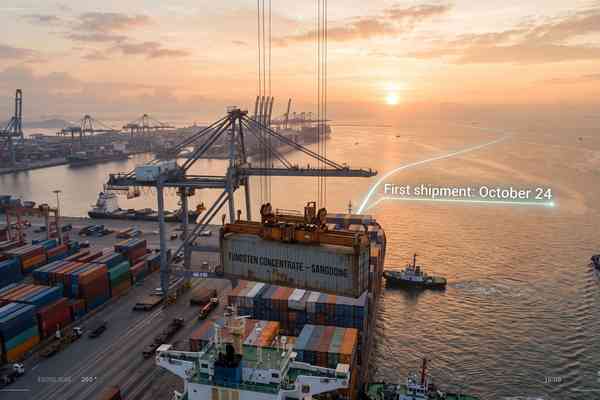
Almonty Industries is currently benefiting not only from a strong tungsten price but, above all, from a geopolitical realignment. With recent tensions in the Middle East and ongoing trade and security debates, securing critical raw material supply chains has become a higher priority for Western economies. Dependence on China is particularly high when it comes to tungsten, which is why the scheduled ramp-up of the Sangdong mine in South Korea in July 2026 has taken on significance far beyond the company's own boundaries. The average price for ammonium paratungstate of approximately USD 3,075 per MTU indicates that the market remains tight and that additional, reliable production volumes are gaining value both strategically and economically.
Operationally, this shift is already measurable. In the second quarter of 2026, revenue rose by 498% to CAD 43.0 million, operating mining income reached CAD 26.1 million, and net income stood at CAD 181.8 million, following a loss of CAD 59.2 million in the same quarter of the previous year. Even more important than the jump in earnings, however, is the increased predictability. The expanded offtake agreement with Global Tungsten & Powders runs for 21 years, raises the guaranteed minimum offtake by 40%, and is expected to generate approximately USD 30 million in additional revenue through the new pricing formula. In a market where security of supply for industry, electronics, and defence is increasingly valued more highly than the cheapest spot price, this significantly improves the quality of Almonty's future cash flows.
Almonty has also put itself in a very strong financial position. The oversubscribed USD 800 million convertible senior notes offering issued in June 2026 increased cash on hand to approximately USD 870 million and created the flexibility to, among other things, fully repay a KfW loan. This allows the company to work simultaneously on additional projects in the US and on the Iberian Peninsula without having to overextend itself financially as it continues ramp-up and expansion in South Korea. Further momentum came from its inclusion in the Russell 1000 and Russell 3000 indices, while the initiated and completed delisting from the ASX has simplified the capital market structure. The authorized share buyback of up to USD 300 million remains a point of debate. It signals management's belief that the current share price is too low, but it also runs counter to capital discipline, project financing, and strategic capital reserves.
On the stock market, Almonty remains caught between ongoing revaluation and the risk of profit-taking. With the stock trading around USD 16.75, the analyst targets published to date range between USD 23.00 and USD 33.00, implying significant upside potential. For this to materialize, Sangdong must continue to ramp up production steadily, and preparations for the second phase of expansion must proceed as planned. Most recently, the investment company Jefferies initiated coverage and rated Almonty a "Buy" with a price target of USD 26.25. The current valuation discount is nonetheless not illogical, as commodity companies must repeatedly prove, after reaching the first milestone, that production, cost control, and capital allocation remain robust even at full capacity. If Almonty succeeds in demonstrating this, nothing will stand in the way of a shift in perception—from a specialty stock to a strategically important tungsten supplier to the West. If, on the other hand, operational delays or misguided incentives in fund use persist, the market's current caution would be justified.
From a technical analysis perspective, the stock is trading at approximately USD 16.75, above the rising MA 50 and MA 200 but below the MA 20. These lines sit at USD 15.38 and USD 15.11, respectively, and form key support levels, while the MA 20 at USD 17.40 acts as resistance. However, due to investors' wait-and-see attitude, the capital market is not pricing in either the upcoming second phase of expansion in South Korea or the remaining assets in the US and Europe accordingly. Given the available liquidity, the current price level represents an attractive risk-reward ratio, especially during price pullbacks.
Rheinmetall Nearly Halved: Buying Opportunity or Plunge Below EUR 1,000?
Rheinmetall shares came under pressure again this week. The stock has lost about 1.8% so far and briefly fell to EUR 988. This meant it dipped below the psychologically important EUR 1,000 mark, albeit only very briefly, and recovered to EUR 1,020 during yesterday's trading session. Since the start of the year, however, the stock has already fallen by 35%; over the past year, it has lost nearly 43%. From its 52-week high of EUR 2,008, Rheinmetall is now nearly 50% below that level after its share price halved. Its market capitalization has thus shrunk to around EUR 47.53 billion.
At first glance, the plunge seems surprising. After all, Rheinmetall continues to benefit from rising defence spending in Germany and other NATO countries. In the first half of 2026, the defence contractor increased its revenue by 39% to EUR 5.23 billion. Operating profit even jumped by 74% to EUR 786 million. In the second quarter alone, operating profit rose by 115% to EUR 562 million. The order backlog also supports rising share prices. The so-called Rheinmetall backlog reached EUR 80.5 billion at the end of June, up 44% from the previous year. Business in military vehicles, ammunition, and air defence systems performed particularly strongly. In the Air Defence segment, revenue rose by 62% in the first half of the year, while operating profit more than doubled to EUR 76 million.
But investors are now taking a closer look. Operating free cash flow deteriorated in the first half of the year, from minus EUR 631 million to minus EUR 1.62 billion. Rheinmetall attributes this, among other things, to delayed advance payments, higher receivables, growing inventory levels, and the expansion of production capacity. The market therefore wants to see not only full order books but also reliable cash flows resulting from them.
The cancellation of the German F126 frigate program is also weighing on the company. Rheinmetall had pinned its hopes on this major contract following the acquisition of Lürssen's naval division. After the cancellation, the group reduced its 2026 revenue forecast by EUR 300 million to between EUR 13.7 and 14.2 billion. While this still represents strong growth compared to the previous year's EUR 9.94 billion, it shows how sensitive the stock is to delays and the loss of major projects.
From a technical analysis perspective, the situation remains precarious. The share price is trading below the 20-day moving average MA 20 at approximately EUR 1,120, the 50-day moving average MA 50 at around EUR 1,100, and the 200-day moving average MA 200 near EUR 1,390. As a result, all key moving averages are trending downward. If the stock also closes below EUR 1,000, the focus could initially shift to EUR 950 and subsequently to the annual low of around EUR 900.
Analysts, however, remain optimistic. In early September, Deutsche Bank reaffirmed its "Buy" recommendation with a price target of EUR 1,800. Based on the current price, this represents upside potential of just under 80%. Fundamentally, Rheinmetall remains a growth story, but following the sharp decline, the market is demanding evidence of improved cash flow and reliable execution of its multi-billion-euro orders. The EUR 1,000 mark will now determine whether bold investors get a chance to buy in or whether the next wave of selling begins.
Fortum is benefiting from the Google power deal as a potential AI winner, but after the price jump, the utility must first prove this will translate into sustained business growth. Almonty is gaining strategic importance as a Western tungsten supplier, but it must underpin its revaluation with a stable mine ramp-up and disciplined capital allocation. Rheinmetall is showing strong operational growth, but weak free cash flow and project uncertainties are keeping the stock under pressure and making the EUR 1,000 level a key technical threshold.
Conflict of interest
Pursuant to §85 of the German Securities Trading Act (WpHG), we point out that Apaton Finance GmbH as well as partners, authors or employees of Apaton Finance GmbH (hereinafter referred to as "Relevant Persons") may hold shares or other financial instruments of the aforementioned companies in the future or may bet on rising or falling prices and thus a conflict of interest may arise in the future. The Relevant Persons reserve the right to buy or sell shares or other financial instruments of the Company at any time (hereinafter each a "Transaction"). Transactions may, under certain circumstances, influence the respective price of the shares or other financial instruments of the Company.
In addition, Apaton Finance GmbH is active in the context of the preparation and publication of the reporting in paid contractual relationships.
For this reason, there is a concrete conflict of interest.
The above information on existing conflicts of interest applies to all types and forms of publication used by Apaton Finance GmbH for publications on companies.
Risk notice
Apaton Finance GmbH offers editors, agencies and companies the opportunity to publish commentaries, interviews, summaries, news and the like on news.financial. These contents are exclusively for the information of the readers and do not represent any call to action or recommendations, neither explicitly nor implicitly they are to be understood as an assurance of possible price developments. The contents do not replace individual expert investment advice and do not constitute an offer to sell the discussed share(s) or other financial instruments, nor an invitation to buy or sell such.
The content is expressly not a financial analysis, but a journalistic or advertising text. Readers or users who make investment decisions or carry out transactions on the basis of the information provided here do so entirely at their own risk. No contractual relationship is established between Apaton Finance GmbH and its readers or the users of its offers, as our information only refers to the company and not to the investment decision of the reader or user.
The acquisition of financial instruments involves high risks, which can lead to the total loss of the invested capital. The information published by Apaton Finance GmbH and its authors is based on careful research. Nevertheless, no liability is assumed for financial losses or a content-related guarantee for the topicality, correctness, appropriateness and completeness of the content provided here. Please also note our Terms of use.