December 16th, 2022 | 08:50 CET
Altech Advanced Materials, BYD, Apple - With this innovation Germany becomes an energy driver
Germany is known for its engineering. With Altech Advanced Materials, a new type of battery is paving its way that trumps all previous storage capacities. Together with Fraunhofer IKTS, the Heidelberg-based company is breaking new ground. BYD is also planning another battery plant, but in the USA. So far, the Chinese carmaker has held back in the consumer market there, preferring to focus on electric buses. But it will soon be adding another EV brand to its international portfolio. Apple will soon have to prepare itself. To comply with competition law, the EU demands that the Cupertino-based company open up its iPhone and iPad systems to other app stores. Find out what this means for sales here.
time to read: 4 minutes
|
Author:
Juliane Zielonka
ISIN:
ALTECH ADV.MAT. NA O.N. | DE000A2LQUJ6 , BYD CO. LTD H YC 1 | CNE100000296 , APPLE INC. | US0378331005
Table of contents:
Author

Juliane Zielonka
Born in Bielefeld, she studied German, English and psychology. The emergence of the Internet in the early '90s led her from university to training in graphic design and marketing communications. After years of agency work in corporate branding, she switched to publishing and learned her editorial craft at Hubert Burda Media.
Tag cloud
Shares cloud
Altech Advanced Materials - New battery for industry 90% more effective
Heidelberg-based Altech Advanced Materials aims to outperform the lithium-ion battery market for electric mobility with innovative and high-performance anode materials based on high-purity aluminum oxide (HPA).
As part of the battery joint venture with Fraunhofer, Altech Advanced Materials AG plans to produce battery packs specifically designed for operation with renewable energy in commercial and industrial grid infrastructure. cerenergy® is Fraunhofer IKTS' technology platform for ceramic-based high-temperature batteries. With cerenergy®, batteries can be developed and manufactured to withstand higher temperatures and have a longer life than conventional batteries. The new batteries are more durable, cost-effective and efficient.
The global market for battery storage systems is expected to grow from USD 4.4 billion in 2022 to USD 15.1 billion in 2027 and to over 3,000 GW in 2050. Experts predict that the grid storage market will grow by approximately 28% annually.
The advantages of the new technology are convincing because Altech, in its cooperation with Fraunhofer IKTS, relies on using available and cost-effective raw materials. The batteries are unaffected by the surrounding temperatures, are 100% recyclable, and have an efficiency of over 90%.
CEO Uwe Ahrens explains: "This battery is not combustible. We work with a solid ceramic cylinder. Furthermore, common salt is used instead of lithium. From this "list of ingredients" alone, it can be deduced that the supply of basic materials will not play a major role in our new business field compared with cobalt, lithium or copper in the lithium-ion battery. The target group for our battery will initially be industry. Overall, however, the future field of application is vast. Individual modules of 10 kW each can be flexibly connected to form storage systems, or individual modules can be used independently in private households." The full interview can be found here.
BYD - Another EV brand to add to the portfolio in 2023
Chinese automaker BYD Co. is considering building a battery plant in the US but has no plans to sell its electric cars there at this time. "Currently, we do not plan to sell in the US; we need to better understand what the next steps are first," says BYD Executive Vice President Stella Li. "We will continue investing in electric school buses and battery components, but we have not decided yet on private vehicles."
In 2023, the group plans to launch a new electric car brand for private and professional use. The new brand will complement Yangwang, a premium brand to be launched in the first quarter of 2023 as announced last month. BYD decided to remove gasoline vehicles from its portfolio this year. Doing so allowed the Company to benefit from government subsidies granted by the Chinese government specifically for electric vehicles.
The automaker, which also makes plug-in hybrid cars, was the top-selling car brand in China in the first four weeks of November, brokerage data show, surpassing Volkswagen.
Apple - EU demands opening for external app stores on iPhones and iPads
Until now, the Apple system was considered a closed store. But that will soon be over because according to Bloomberg, the Company will allow alternative app stores on its iPhones and iPads in Europe in order to comply with competition law, which it has previously appealed.
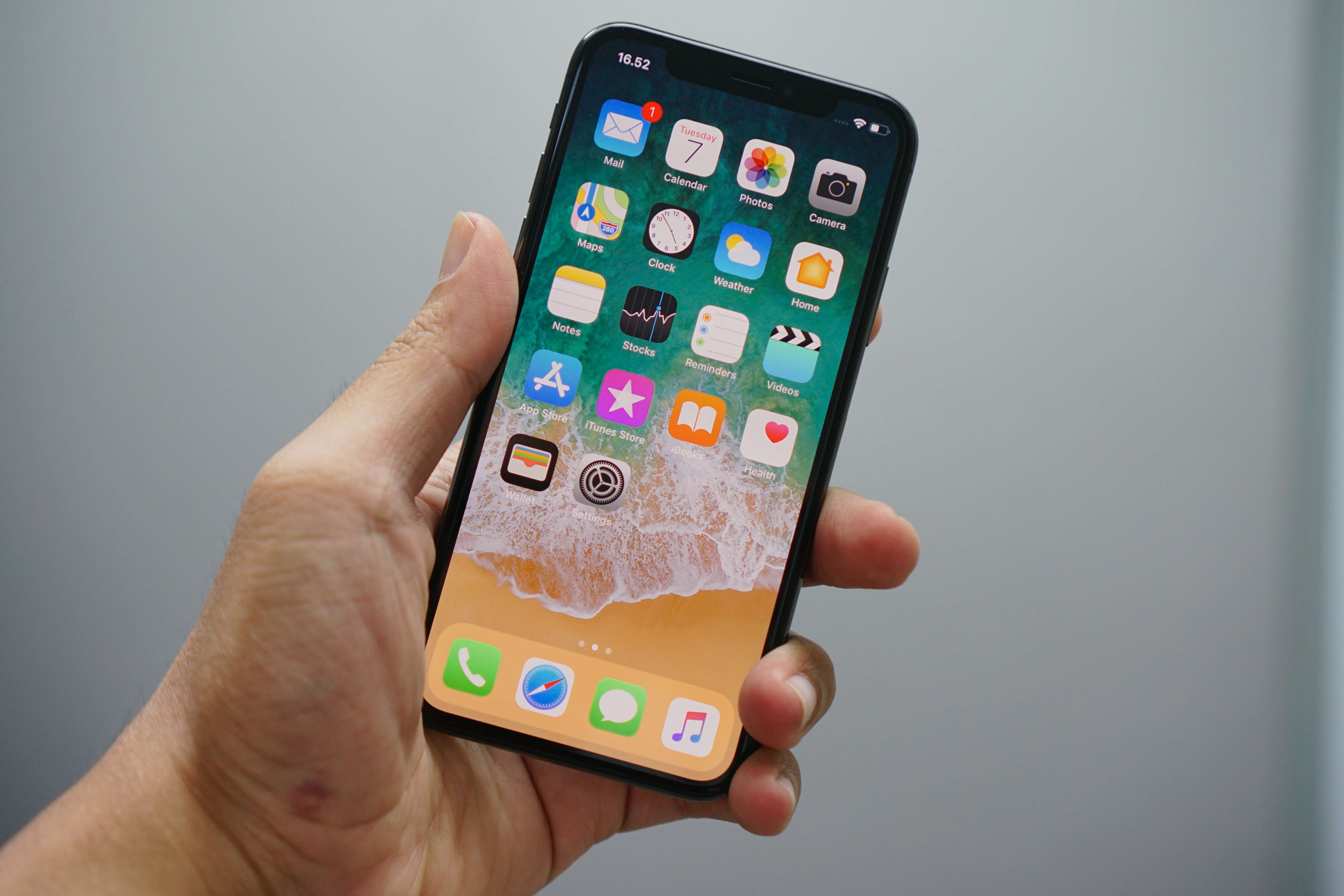
Opening up to outside app stores could represent a drop in revenue for Apple's fast-growing services business. That is because competitors such as Amazon, Meta and Microsoft would already be waiting in the wings. According to a study by mobile analytics firm Sensor Tower, USD 10 billion worth of transactions were made through the App Store last year. App makers are the primary beneficiaries, receiving at least 70% of the funds. Apple charges up to 30% for in-app purchases from other vendors.
Enforcement of the European Union Digital Markets Act is expected to begin mid-2024. The law requires major tech companies to open their systems to competitors to increase consumer choice. The major "gatekeepers," as the law calls them, face fines of up to 10% of annual global revenue for violations.
The energy transition situation has never been as tense as it is today. It is, therefore, all the more gratifying that the next generation of industrial batteries is being developed in Germany, which is 90% more powerful than conventional models. Thanks to the new type of casing, the energy bundles can also be used regardless of outside temperatures. BYD in the US is also focusing on battery production. As reserved as they appear there in the consumer market for EVs, they are bold in their in-house portfolio, which will be supplemented by another brand in 2023. European app developers can also look forward to an addition from 2024. According to competition regulations, Apple must allow stores from external app providers that are intended for iPhone and iPad applications. It remains to be seen how much this will affect possible revenue losses.
Conflict of interest
Pursuant to §85 of the German Securities Trading Act (WpHG), we point out that Apaton Finance GmbH as well as partners, authors or employees of Apaton Finance GmbH (hereinafter referred to as "Relevant Persons") may hold shares or other financial instruments of the aforementioned companies in the future or may bet on rising or falling prices and thus a conflict of interest may arise in the future. The Relevant Persons reserve the right to buy or sell shares or other financial instruments of the Company at any time (hereinafter each a "Transaction"). Transactions may, under certain circumstances, influence the respective price of the shares or other financial instruments of the Company.
In addition, Apaton Finance GmbH is active in the context of the preparation and publication of the reporting in paid contractual relationships.
For this reason, there is a concrete conflict of interest.
The above information on existing conflicts of interest applies to all types and forms of publication used by Apaton Finance GmbH for publications on companies.
Risk notice
Apaton Finance GmbH offers editors, agencies and companies the opportunity to publish commentaries, interviews, summaries, news and the like on news.financial. These contents are exclusively for the information of the readers and do not represent any call to action or recommendations, neither explicitly nor implicitly they are to be understood as an assurance of possible price developments. The contents do not replace individual expert investment advice and do not constitute an offer to sell the discussed share(s) or other financial instruments, nor an invitation to buy or sell such.
The content is expressly not a financial analysis, but a journalistic or advertising text. Readers or users who make investment decisions or carry out transactions on the basis of the information provided here do so entirely at their own risk. No contractual relationship is established between Apaton Finance GmbH and its readers or the users of its offers, as our information only refers to the company and not to the investment decision of the reader or user.
The acquisition of financial instruments involves high risks, which can lead to the total loss of the invested capital. The information published by Apaton Finance GmbH and its authors is based on careful research. Nevertheless, no liability is assumed for financial losses or a content-related guarantee for the topicality, correctness, appropriateness and completeness of the content provided here. Please also note our Terms of use.