July 3rd, 2026 | 08:40 CEST
A Multi-Billion AI Infrastructure Boom: Secure a Decisive Edge Now with Standard Uranium, AMD, and Super Micro Computer
The AI revolution is shifting its focus. While public debate continues to revolve around algorithms and cloud platforms, the true center of power has long since shifted to the depths of physical infrastructure. After all, without sufficient energy, high-performance chips, and scalable server architectures, even the best AI code remains ineffective. The exploding power demand of modern data centers is turning uranium into a strategic resource, while semiconductor supply chains groan under immense demand, and system integration is becoming the new supreme discipline. Whoever controls these three pillars of the digital future holds the key to the industry's next phase of growth. We take a closer look at one candidate from each sector: Standard Uranium, AMD, and Super Micro Computer.
time to read: 5 minutes | Author: Armin Schulz
ISIN: STANDARD URANIUM LTD. | CA85422Q8487 | TSXV: STND , OTCQB: STTDF , SUPER MICRO COMPUTER INC | US86800U3023 | NASDAQ: SMCI , ADVANCED MIC.DEV. DL-_01 | US0079031078
Table of contents:
Author

Armin Schulz
Born in Mönchengladbach, he studied business administration in the Netherlands. In the course of his studies he came into contact with the stock exchange for the first time. He has more than 25 years of experience in stock market business.
Tag cloud
Shares cloud
Standard Uranium: Drilling Successes Underscore Exploration Potential
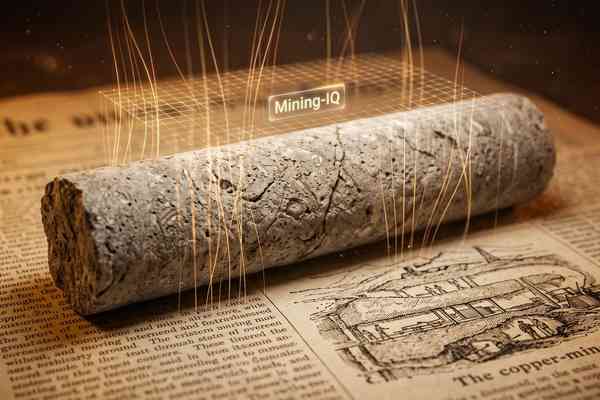
The first drill hole of this year's campaign at the Davidson River Project delivered the highest radioactivity reading ever recorded, at 1,650 counts per second over 2 m. The team also encountered significantly stronger rock alteration than in previous programs. This is a clear indication of uranium-bearing fluids that circulated through the fault zones, transforming the host rock into clay minerals. The structural association of radioactivity with fracture zones confirms the company's exploration model, which is based on comparable deposits such as Arrow or Triple R. With two drill rigs in operation, nearly a quarter of the planned 8,000 m has already been drilled; the season runs through September. The results to date underscore the potential for a significant discovery in the basement rock and justify continuing the program along the most promising target corridors.
The project covers 30,737 ha along the same structural trends that also host the billion-class Arrow and Triple R deposits. The latest geophysical techniques, including passive seismic data from Fleet Space Technologies and AI-powered target generation by GoldSpot Discoveries, have significantly improved accuracy. The alteration patterns are similar to those of neighbouring deposits. This is an important indicator for further exploration, as variations in intensity help the team work its way step by step toward the most promising zones. The two surveyed corridors are about 10 km apart and illustrate the scale of the overall project, which spans 70 km along various fault zones, with the Warrior Trend still awaiting testing.
Demand for nuclear fuel is booming. Worldwide, 440 reactors are in operation, with another 70 under construction, and the Climate Conference has committed to tripling capacity by 2050. Added to this is the growing demand from AI data centers for baseload power, which is driving utilities to enter into direct contracts with nuclear power plants. The supply gap starting in 2030 is foreseeable, and the Athabasca Basin is the best place to close it. The company also uses a project-generator model that covers administrative costs and limits dilution. With a market capitalization of approximately CAD 13.4 million and geology identical to that of its billion-dollar neighbours, the risk-return profile is quite attractive for investors looking to strike it big. The stock is currently trading at around CAD 0.095.
AMD: The Underrated CPU Supercycle in the AI Boom
While the market is riveted on AMD's Instinct GPUs and its battle against Nvidia, a fundamental shift has taken place behind the scenes. The server CPU is becoming the strategic nerve center of the AI ecosystem. Agent-based AI workloads, that is, systems that plan and make decisions autonomously, require unprecedented CPU performance for orchestration, data management, and workflow control. AMD has recognized this and has promptly doubled its total addressable market (TAM) for server CPUs from USD 60 billion to over USD 120 billion by 2030. This is not a marketing exaggeration, but the direct result of binding customer requests from the major hyperscalers.
The roadmap unveiled in June outlines a clear strategy. EPYC "Venice" is already in mass production and, for the first time, offers a three-tier heterogeneous approach with performance, efficiency, and low-power cores. The partnership with Meta, spanning multiple generations and 6 gigawatts of installed capacity, is a testament to trust. While competitor Intel is catching up with Xeon 6+ and Nvidia is pushing into the market with its own Vera CPUs, AMD has a decisive lead with its early 2-nm manufacturing and plans to shift part of its production to TSMC's Arizona plant, which mitigates geopolitical risks.
The financial figures speak for themselves. Data center revenue grew by 57% to USD 5.8 billion, and free cash flow tripled to USD 2.6 billion. Analysts have showered the stock with price targets of up to USD 700. Wells Fargo, UBS, and Cantor Fitzgerald significantly raised their targets in June. The core argument is that, as agent-based AI becomes more widespread, CPU racks will become an indispensable component of every AI infrastructure. AMD benefits from this in two ways: first, from the growing number of units per GPU cluster, and second, from fully standalone CPU racks dedicated solely to orchestration tasks. AMD is not just a GPU provider, but a full-stack infrastructure player. The stock is currently trading at around USD 540.88.
Super Micro Computer: Between the AI Boom and Financial Challenges
Server specialist Super Micro Computer is undergoing a period of realignment. The company has evolved from a pure hardware manufacturer into a provider of holistic AI infrastructure solutions. This strategy is beginning to bear fruit. The gross margin rebounded to around 10% in the last quarter, after standing at just under 6.3% in the previous quarter. The reason lies in the changed customer mix. While a single hyperscaler used to account for nearly two-thirds of revenue, the company now focuses on NeoClouds, Sovereign AI, and enterprise customers. Software revenue has already multiplied, and management is targeting USD 1 billion for this year.
But growth comes at a price. The company is effectively self-financing its massive order backlog of approximately USD 39 billion. Operating cash flow was deeply in the red in the third quarter at minus USD 6.6 billion. Inventory skyrocketed to over USD 11 billion, and the cash conversion cycle doubled to 106 days. Customers are often unable to put the AI systems they have ordered into operation as planned because the necessary on-site infrastructure is lacking. Super Micro is sitting on expensive components and has to take out loans. Total debt climbed to around USD 9 billion.
Added to this are regulatory uncertainties. The latest raids on Taiwanese offices over alleged export violations involving Nvidia chips show that compliance risks are very real. The company is cooperating with the authorities, but these incidents are part of a longer history of governance issues. For investors, this means high potential meets significant risks. The coming quarters will show whether the margin improvement is sustainable and whether the capital measures can resolve the liquidity issues. The stock is currently trading at around USD 27.65.
The AI revolution is shifting its center of power to physical infrastructure. Standard Uranium is addressing the growing energy needs of data centers with spectacular drilling successes in the Athabasca Basin. AMD is benefiting from the underestimated CPU supercycle and positioning itself as the backbone for agent-based AI workloads. Super Micro Computer, on the other hand, is struggling with massive liquidity problems and governance risks, even as its order backlog points to immense demand. The key to the next wave of AI growth lies in strategic control of these three pillars.
Conflict of interest
Pursuant to §85 of the German Securities Trading Act (WpHG), we point out that Apaton Finance GmbH as well as partners, authors or employees of Apaton Finance GmbH (hereinafter referred to as "Relevant Persons") currently hold or hold shares or other financial instruments of the aforementioned companies and speculate on their price developments. In this respect, they intend to sell or acquire shares or other financial instruments of the companies (hereinafter each referred to as a "Transaction"). Transactions may thereby influence the respective price of the shares or other financial instruments of the Company.
In this respect, there is a concrete conflict of interest in the reporting on the companies.
In addition, Apaton Finance GmbH is active in the context of the preparation and publication of the reporting in paid contractual relationships.
For this reason, there is also a concrete conflict of interest.
The above information on existing conflicts of interest applies to all types and forms of publication used by Apaton Finance GmbH for publications on companies.
Risk notice
Apaton Finance GmbH offers editors, agencies and companies the opportunity to publish commentaries, interviews, summaries, news and the like on news.financial. These contents are exclusively for the information of the readers and do not represent any call to action or recommendations, neither explicitly nor implicitly they are to be understood as an assurance of possible price developments. The contents do not replace individual expert investment advice and do not constitute an offer to sell the discussed share(s) or other financial instruments, nor an invitation to buy or sell such.
The content is expressly not a financial analysis, but a journalistic or advertising text. Readers or users who make investment decisions or carry out transactions on the basis of the information provided here do so entirely at their own risk. No contractual relationship is established between Apaton Finance GmbH and its readers or the users of its offers, as our information only refers to the company and not to the investment decision of the reader or user.
The acquisition of financial instruments involves high risks, which can lead to the total loss of the invested capital. The information published by Apaton Finance GmbH and its authors is based on careful research. Nevertheless, no liability is assumed for financial losses or a content-related guarantee for the topicality, correctness, appropriateness and completeness of the content provided here. Please also note our Terms of use.