May 18th, 2026 | 07:00 CEST
Volatus Aerospace - A Multi-Billion-Dollar Pipeline Meets Explosive Growth Potential
The global drone market is rapidly emerging as a strategic sector of the future. Geopolitical tensions, rising defence budgets, and the need for autonomous monitoring of critical infrastructure are driving massive demand for modern aerial and data systems. Companies like Volatus Aerospace, which combine hardware, software, and operational services, stand to benefit disproportionately. The Canadian firm is consistently expanding its role as an integrated aerospace platform and has now reported the highest Q1 gross margins in the company's history. At the same time, the NATO-related order pipeline continues to grow, while new software solutions could generate additional recurring revenue.
time to read: 4 minutes | Author: Stefan Feulner
ISIN: VOLATUS AEROSPACE INC | CA92865M1023 | TSXV: FLT , OTCQB: TAKOF
Table of contents:
Author

Stefan Feulner
The native Franconian has more than 20 years of stock exchange experience and a broadly diversified network.
He is passionate about analyzing a wide variety of business models and investigating new trends.
Tag cloud
Shares cloud
Drones Are Becoming a Billion-Dollar Market in the Security Industry
The global market for drones and autonomous systems is poised for a long-term boom. Modern conflicts are increasingly demonstrating the crucial role of unmanned systems in reconnaissance, surveillance, and defence. At the same time, demand is also rising sharply in the civilian sector. Energy providers, infrastructure operators, and offshore companies are increasingly relying on drone solutions to inspect pipelines, power lines, or wind farms. Experts expect a market volume of more than USD 20 billion by 2030 for the drone defence sector alone.
Volatus Aerospace has deliberately positioned itself broadly in this environment. The company does not see itself as a traditional drone manufacturer, but rather as an integrated aerospace platform. Its business model combines drones, manned aviation, data services, training, and proprietary software solutions. This creates multiple revenue streams across the entire value chain. Particularly attractive are the recurring revenues from long-term service contracts as well as the new SaaS platform SKYDRA™ for planning and simulating drone defence systems. According to the company, long-term margins of up to 85% could be possible here.
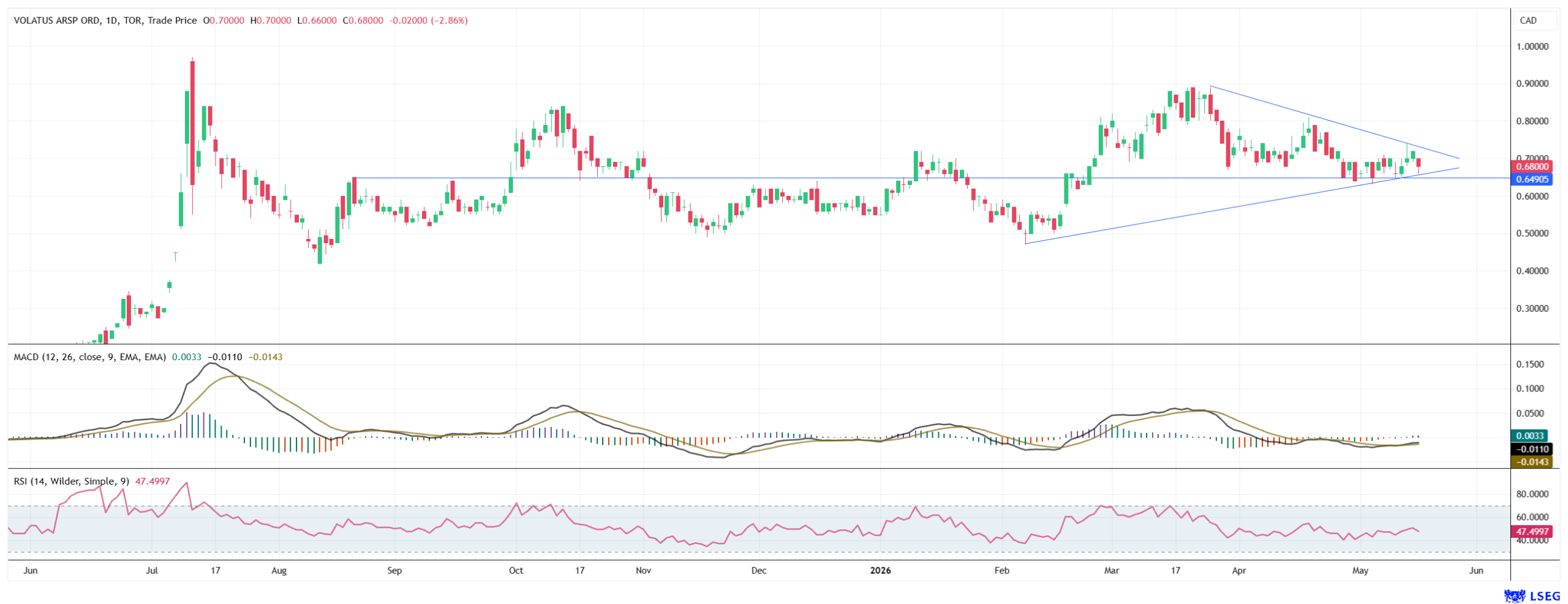
Record margins despite delayed NATO deliveries
The figures for the first quarter of 2026 show operational progress. Revenue of CAD 5.63 million was nearly on par with the prior-year level of CAD 5.71 million. This was primarily due to delays in defence contracts. The first tranche of a NATO ISR training system, worth CAD 4.5 million and originally planned for Q1, was postponed to the second quarter due to temporary supply chain issues; however, deliveries have since begun.
Profitability developed particularly positively. Gross profit rose to CAD 1.97 million, up from CAD 1.83 million in the same quarter of the previous year. At 35%, the gross margin reached the highest Q1 level in the company's history. This was primarily due to a higher proportion of service revenue and consistent cost discipline. In the long term, management aims for margins of 35% to 40%.
Although adjusted EBITDA was negative at CAD 3.15 million, Volatus is currently investing heavily in the expansion of its defence division, research & development, and international positioning. Nearly CAD 290,000 was invested in the V-Cortex™ AI autonomy platform and the Condor XL program alone. At the same time, the company maintains a solid balance sheet, with CAD 31.7 million in cash and CAD 36.4 million in working capital.
NATO Contracts and Canada Strategy Provide Tailwind
Strategically, Volatus could hardly be better positioned at the moment. With its new Defence Industrial Strategy, Canada is pursuing a comprehensive national defence strategy for the first time. A total of CAD 81.8 billion is to be reinvested, with approximately 70% of procurement contracts awarded to Canadian companies. Unmanned systems and autonomous technologies are explicitly among the prioritized areas.
At the same time, Volatus is consistently expanding its NATO connections. In the first quarter, the company secured a NATO contract for RPAS operator training. Additionally, at the end of the quarter, the company received a multi-year specialized training contract with a NATO-affiliated ministry with a total volume of up to CAD 2.1 million. At the same time, the advisory board was further expanded to include high-ranking former NATO and US military representatives.
Volatus is also driving its expansion forward technologically. A new center for defence manufacturing and system integration is being built in Mirabel, Québec. The company plans to invest more than CAD 10 million in this project in the near term. At the same time, Volatus is collaborating with Sentinel R&D to develop a Canadian interceptor drone and is continuing to expand in the commercial sector into offshore wind power, heavy-lift drones, and international training programs.
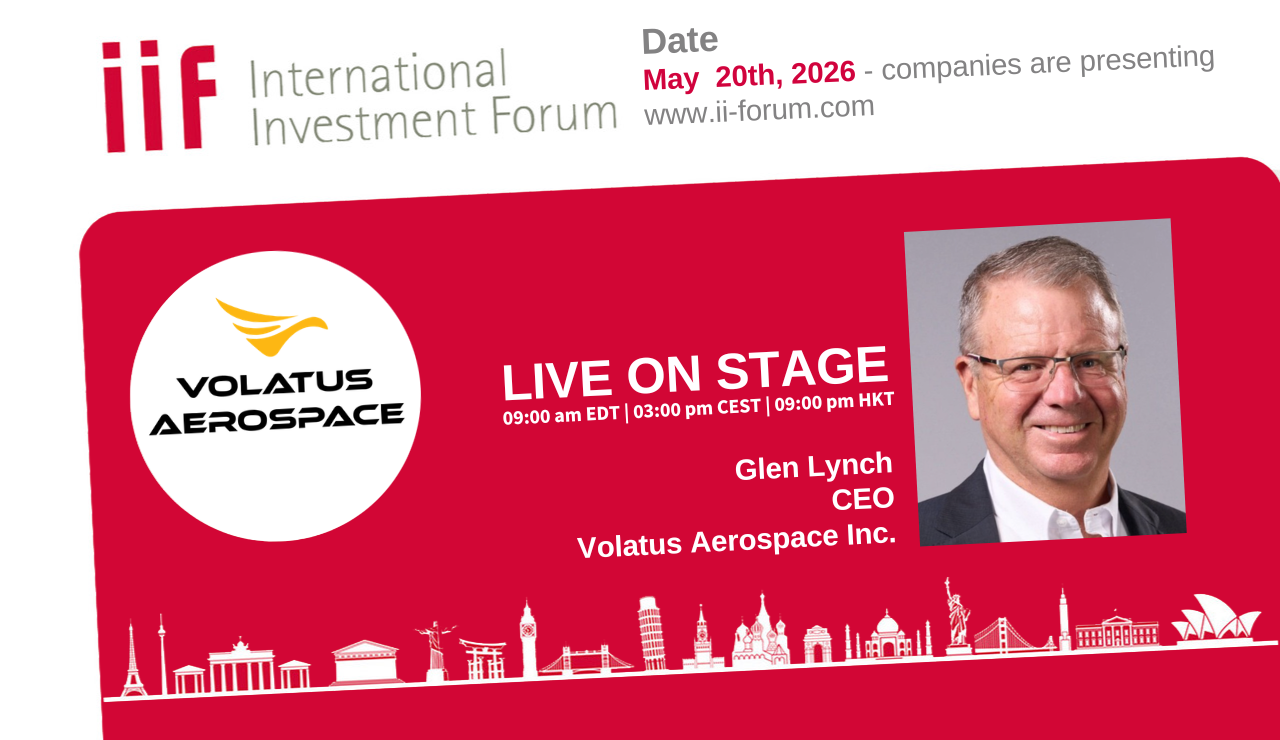
SKYDRA™ and Recurring Revenue Could be Game-Changers
A central component of the growth strategy is the new SaaS platform SKYDRA™. The cloud-based drone defence solution could enable Volatus to enter the market for high-margin, recurring software revenue. At the same time, the operational base is growing steadily. Multi-year infrastructure contracts, over 75,000 flight hours in the pipeline, and international training programs are creating an increasingly stable revenue structure.
Management anticipates that 2026 could be a year of significant growth. The delayed NATO deliveries are now underway, while the defence and infrastructure pipeline continues to fill up. With its combination of hardware, training, services, and software, Volatus Aerospace has an unusually broad portfolio in the booming drone market.
Volatus Aerospace is increasingly evolving into an integrated provider of autonomous aviation and security solutions. First-quarter figures show that, despite temporary delays, the company has made operational progress while significantly increasing its margins. The combination of a defence boom, proximity to NATO, long-term infrastructure contracts, and the development of high-margin software revenue appears particularly promising.
With SKYDRA™, new NATO contracts, and the expansion of Canadian production capacity, Volatus could benefit significantly from the global rise in demand for autonomous systems in the coming years. Should the company successfully convert its extensive order pipeline into revenue while further expanding recurring revenue, the stock's potential is likely far from fully priced in.
Conflict of interest
Pursuant to §85 of the German Securities Trading Act (WpHG), we point out that Apaton Finance GmbH as well as partners, authors or employees of Apaton Finance GmbH (hereinafter referred to as "Relevant Persons") may hold shares or other financial instruments of the aforementioned companies in the future or may bet on rising or falling prices and thus a conflict of interest may arise in the future. The Relevant Persons reserve the right to buy or sell shares or other financial instruments of the Company at any time (hereinafter each a "Transaction"). Transactions may, under certain circumstances, influence the respective price of the shares or other financial instruments of the Company.
In addition, Apaton Finance GmbH is active in the context of the preparation and publication of the reporting in paid contractual relationships.
For this reason, there is a concrete conflict of interest.
The above information on existing conflicts of interest applies to all types and forms of publication used by Apaton Finance GmbH for publications on companies.
Risk notice
Apaton Finance GmbH offers editors, agencies and companies the opportunity to publish commentaries, interviews, summaries, news and the like on news.financial. These contents are exclusively for the information of the readers and do not represent any call to action or recommendations, neither explicitly nor implicitly they are to be understood as an assurance of possible price developments. The contents do not replace individual expert investment advice and do not constitute an offer to sell the discussed share(s) or other financial instruments, nor an invitation to buy or sell such.
The content is expressly not a financial analysis, but a journalistic or advertising text. Readers or users who make investment decisions or carry out transactions on the basis of the information provided here do so entirely at their own risk. No contractual relationship is established between Apaton Finance GmbH and its readers or the users of its offers, as our information only refers to the company and not to the investment decision of the reader or user.
The acquisition of financial instruments involves high risks, which can lead to the total loss of the invested capital. The information published by Apaton Finance GmbH and its authors is based on careful research. Nevertheless, no liability is assumed for financial losses or a content-related guarantee for the topicality, correctness, appropriateness and completeness of the content provided here. Please also note our Terms of use.