July 16th, 2026 | 07:05 CEST
Turning Data into Returns: The Strategies Behind Palantir and S&P Global—How Aspermont Combines Data and Commodities
Digitalization is creating a veritable flood of data. But raw data in its unstructured form has no economic value. It is like a raw material that must first be refined and contextualized through in-depth industry expertise. Anyone who wants to stay competitive today must base their decisions on high-quality, processed data. Industry estimates consistently show that data analysts and data scientists spend, on average, more than 50% of their daily work time searching for and formatting data sets. It is no wonder that, according to market researchers, the global data monetization market is projected to grow to as much as USD 25 billion by 2034. In this article, we explore who is leading the way in this fast-paced environment and what innovative approaches are available.
time to read: 3 minutes | Author: Nico Popp
ISIN: ASPERMONT LTD. | AU000000ASP3 | ASX: ASP , PALANTIR TECHNOLOGIES INC | US69608A1088 , S&P GLOBAL INC | US78409V1044 | NASDAQ: SPGI
Table of contents:
Author

Nico Popp
At home in Southern Germany, the passionate stock exchange expert has been accompanying the capital markets for about twenty years. With a soft spot for smaller companies, he is constantly on the lookout for exciting investment stories.
Tag cloud
Shares cloud
Costly Data Silos and the Drive for Standards at S&P Global
Although S&P Global achieved total revenue of USD 15.3 billion and an operating margin of 42% in fiscal year 2025, it is feeling the impact of shifting customer demands in the age of artificial intelligence. To remain competitive at the intersection of data provision and artificial intelligence in the future, the group carried out a far-reaching restructuring of its market intelligence division. The operating model was split into the core divisions of Kensho Data & Platforms and Enterprise Solutions. In doing so, S&P Global is responding to the need to leverage its in-house data sets for agent-based workflows using modern algorithms. At the same time, the commodities sector, which S&P serves through its in-house brand, Platts, demonstrates the importance of standardized benchmarks such as Platts Dated Brent as a basis for settlement in the oil sector.
Palantir, Digital Twins, and a Game-Changer
Palantir is taking a different approach, operationalizing unstructured data directly within large corporations. Thanks to the Foundry data operations platform and the Artificial Intelligence Platform, which embeds state-of-the-art generative language models directly into secure corporate networks, Palantir is at the cutting edge of technology. However, the so-called ontology layer is considered the game-changer for Palantir. Rather than mapping data in tabular formats, it enables the representation of even complex relationships and connections. Digital twins are also being used by Palantir's customers. While these sometimes tie up skilled personnel, they also offer tangible benefits. The energy company Kinder Morgan uses the system to manage unpredictable fluctuations in gas demand on the Texas market, and wastewater treatment plant operators report energy savings thanks to the technology.
Aspermont Takes Commodity Intelligence to the Next Level with Mining IQ
In an era where commodities are becoming increasingly important, the time has come for Aspermont, the specialized B2B media company that, thanks to its 560-year brand history in the commodities sector, has also made a name for itself as a data pioneer. With the official launch of the AI data platform Mining IQ in the fourth quarter of fiscal year 2025, the company has broken new ground. Mining IQ's technical architecture uses large language models to link the publisher's fully digitized text archives, which have grown over nearly two centuries, with a structured database containing data on countless commodities projects. This unique system is divided into five specialized pillars—ranging from identifying forgotten deposits to developing predictive models for future production. The market's demand for this technology is underscored by a contract signed in 2025 with mining giant Rio Tinto worth more than AUD 550,000. Under the agreement, Rio Tinto secured exclusive access to the AI-powered integration of 200 years of historical archives from the Mining Journal. Following a six-month exclusivity period, Aspermont plans to offer this enhanced historical mining knowledge to the global market through a standardized subscription service.
Aspermont on the Verge of Scaling Up: What Does the End of the Traditional User License Mean?
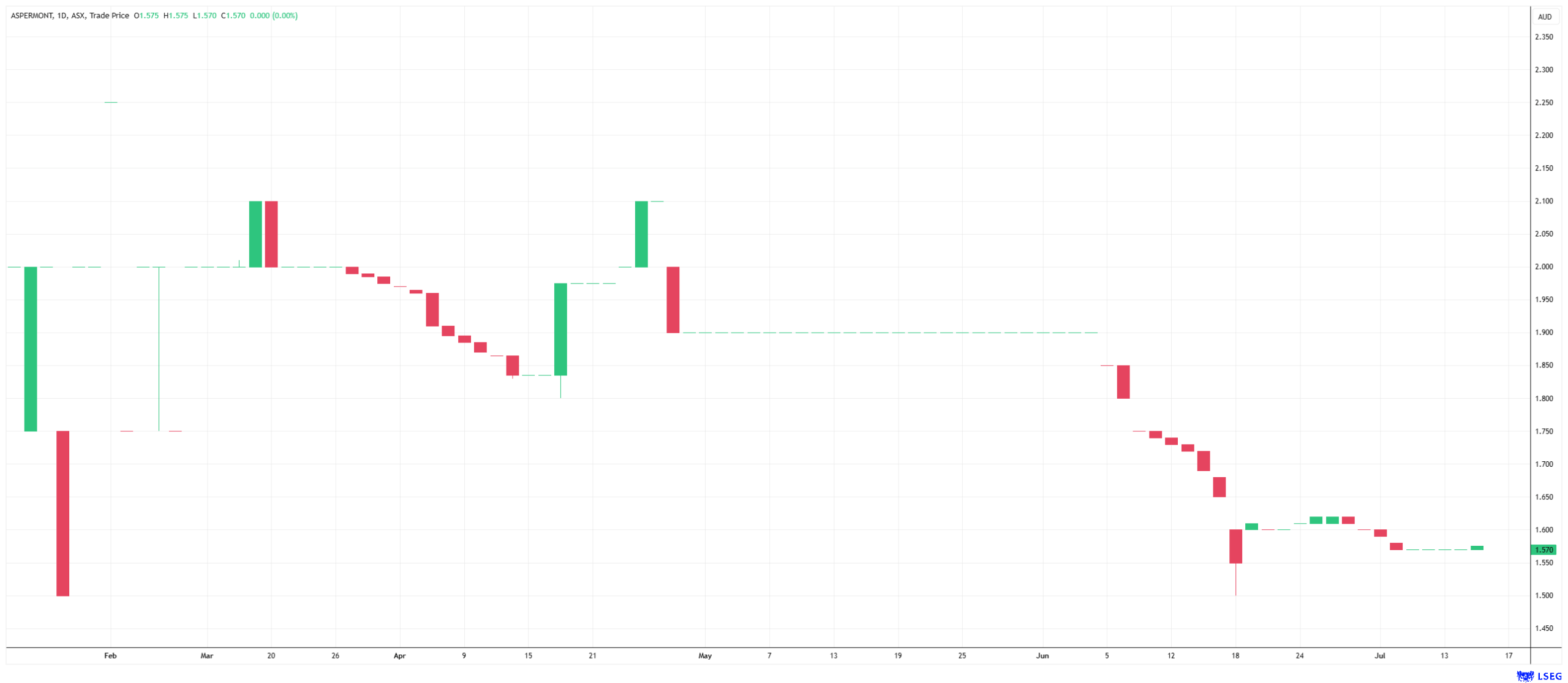
The planned transition to comprehensive licenses for business customers is expected to drive up average revenue per user. Since a single licensed account is used by an average of 5.4 departments in large corporations, Aspermont will, in the future, tie the price to the total value of the business decisions made based on the data. If this shift is successful, it should positively impact revenue. Of course, the transformation is not without risk. Slower customer growth on the new platform or other delays could push back the achievement of the ambitious profitability targets. However, thanks to its excellent gross margin of over 60% and a high customer retention rate of around 100%, Aspermont is exceptionally well-positioned to take the global commodities data market by storm with its expertise. Following the recent share price consolidation, the stock is no longer classified as a penny stock. Aspermont combines an innovative business model with deep expertise in the booming commodities sector. This combination sets the company apart, and the stock appears to be establishing a solid base at current levels.
Watch YouTube videoConflict of interest
Pursuant to §85 of the German Securities Trading Act (WpHG), we point out that Apaton Finance GmbH as well as partners, authors or employees of Apaton Finance GmbH (hereinafter referred to as "Relevant Persons") currently hold or hold shares or other financial instruments of the aforementioned companies and speculate on their price developments. In this respect, they intend to sell or acquire shares or other financial instruments of the companies (hereinafter each referred to as a "Transaction"). Transactions may thereby influence the respective price of the shares or other financial instruments of the Company.
In this respect, there is a concrete conflict of interest in the reporting on the companies.
In addition, Apaton Finance GmbH is active in the context of the preparation and publication of the reporting in paid contractual relationships.
For this reason, there is also a concrete conflict of interest.
The above information on existing conflicts of interest applies to all types and forms of publication used by Apaton Finance GmbH for publications on companies.
Risk notice
Apaton Finance GmbH offers editors, agencies and companies the opportunity to publish commentaries, interviews, summaries, news and the like on news.financial. These contents are exclusively for the information of the readers and do not represent any call to action or recommendations, neither explicitly nor implicitly they are to be understood as an assurance of possible price developments. The contents do not replace individual expert investment advice and do not constitute an offer to sell the discussed share(s) or other financial instruments, nor an invitation to buy or sell such.
The content is expressly not a financial analysis, but a journalistic or advertising text. Readers or users who make investment decisions or carry out transactions on the basis of the information provided here do so entirely at their own risk. No contractual relationship is established between Apaton Finance GmbH and its readers or the users of its offers, as our information only refers to the company and not to the investment decision of the reader or user.
The acquisition of financial instruments involves high risks, which can lead to the total loss of the invested capital. The information published by Apaton Finance GmbH and its authors is based on careful research. Nevertheless, no liability is assumed for financial losses or a content-related guarantee for the topicality, correctness, appropriateness and completeness of the content provided here. Please also note our Terms of use.