August 18th, 2026 | 07:05 CEST
The US Energy Market as a Return Engine: Between Record Profits and Billion-Dollar Niche Markets—ExxonMobil, Occidental and Zefiro Methane
The US energy sector currently offers investors exceptional opportunities for returns. While established industry giants are generating historically massive cash flows thanks to record production levels, highly profitable niche markets are slowly coming into focus. The drivers behind this trend are stricter regulations and the enormous energy demand of new AI data centers, which makes the removal of legacy pollution an absolute necessity. From reliable dividends to growth drivers to explosive scaling potential. Read here to find out which three US-focused stocks are currently benefiting the most from this structural supercycle.
time to read: 7 minutes | Author: Stefan Bode
ISIN: ZEFIRO METHANE CORP | CA98926D1069 | NEO: ZEFI , OCCIDENTAL PET. DL-_20 | US6745991058 , EXXON MOBIL CORP. | US30231G1022
Table of contents:
Author

Stefan Bode
A native of the Eichsfeld region in the heart of Germany, he has more than 30 years of experience in the capital markets, with broad expertise spanning financial markets, history, and geopolitics. He founded his own business more than 20 years ago while still a student and today advises clients, foundations, and asset managers across four continents.
Tag cloud
Shares cloud
Occidental Petroleum Shares Rise 36%: The Costly Buffett Factor Behind the Oil Price Rally
Occidental Petroleum shares (WKN: 851921 | ISIN: US6745991058 | Ticker: OXY) are currently trading at around USD 57.70 (EUR 50.40), corresponding to a market capitalization of just under USD 58 billion. Since the start of the year, the share has gained 36%; on a 52-week basis, it is up 29%. The quarterly dividend, which increased to USD 0.28, promises a dividend yield of about 1.9%. The high oil price is providing a tailwind. However, the quarterly results released on August 5 show that there is more to the rally than meets the eye. In the second quarter of 2026, revenue rose year-over-year from USD 5.26 billion to USD 8.07 billion. Earnings for common shareholders jumped from USD 288 million to USD 2.81 billion, around USD 2.75 per share. On an adjusted basis, earnings were USD 2.40. The difference resulted from valuation gains on trading positions, hedges, and equity investments.
Occidental achieved USD 96.78 per barrel of crude oil, 38% more than in the first quarter. Production exceeded forecasts at 1.433 million barrels of oil equivalent per day. The oil and gas business earned USD 2.8 billion before taxes. Midstream and Marketing surprised with an adjusted profit of approximately USD 960 million. Cash flow was particularly strong. Continuing operations generated USD 5.09 billion in operating cash flow. Including discontinued operations, net operating cash flow totaled USD 4.27 billion. Before changes in working capital, operating cash flow stood at USD 4.6 billion; after capital expenditures, free cash flow amounted to USD 3.0 billion.
Total capital expenditures for the past quarter amounted to USD 1.78 billion, although the sale of OxyChem in the first quarter injected USD 9.46 billion into investing cash flow. Financing cash flow in the second quarter was negative USD 2.15 billion. This included USD 1.79 billion in debt repayment and USD 430 million in dividends to common and preferred shareholders. As a result, financial debt has fallen from USD 20.4 billion to USD 11.8 billion since the end of 2025. After deducting USD 4.2 billion in cash, net debt effectively stands at only USD 7.6 billion. The annual interest expense has decreased by approximately USD 630 million compared to 2025.
Berkshire Hathaway is particularly interesting. The conglomerate shaped by Warren Buffett, now led by CEO Greg Abel, holds 264.94 million Occidental shares. This represents a 26.6% stake, making Berkshire the largest single shareholder, with Buffett serving as chairman of the board. In addition, Berkshire holds preferred shares worth approximately USD 8.5 billion. These stem from the financing of the 2019 Anadarko acquisition and cost Occidental an 8% dividend, most recently amounting to approximately USD 679 million annually. Added to this are subscription rights to 83.9 million shares at USD 59.59. Furthermore, Berkshire acquired OxyChem for USD 9.7 billion in early 2026.
Management aims to reduce the remaining debt to below USD 10 billion, then build cash to repay the Berkshire preferred shares starting in August 2029. This is expected to free up an additional USD 700 million annually. Larger share buybacks will remain a secondary priority until then. The dividend, on the other hand, is to grow cautiously, only at a pace that ensures it remains sustainable even at low oil prices.
Occidental expects over USD 4 billion in additional annual cash flow by 2030. About 85% of this is expected to be achievable even with significantly lower oil prices. From a technical analysis perspective, the stock is trading above all key moving averages. The next hurdle is at USD 60. Above that, the 52-week high of USD 67.45 could come back into focus.
Zefiro Methane: Beneficiary of the US Energy Boom
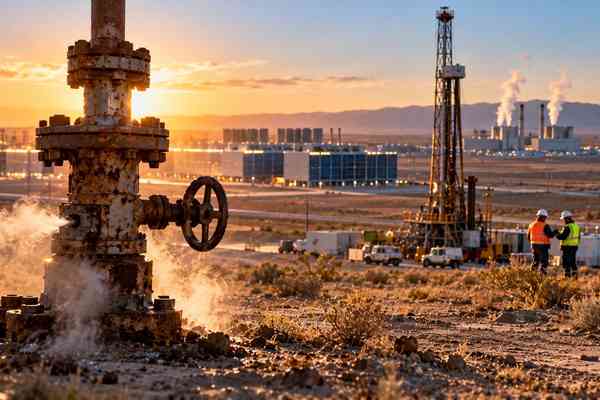
Zefiro Methane shares (WKN: A3DVHU | ISIN: CA98926D1069 | Ticker: Y6B) offer exposure to a massive market for the remediation of orphaned wells in the US. The cost of plugging approximately two million abandoned US oil and gas wells is estimated at over USD 280 billion. This niche market is being driven significantly by stricter regulations in US energy policy. Media attention, including the documentary "The Hazard Below," underscores the relevance of this underestimated danger. As a result, Zefiro is increasingly coming into the public eye and, consequently, attracting the attention of institutional investors.
The latest quarterly figures confirm the strategic realignment and demonstrate the company's fundamental strength. In the first nine months of 2025/26, revenue rose by nearly 36% to USD 33.19 million. Operating profit (EBITDA) turned from a loss to a clear profit, reaching USD 3.10 million. This turnaround underscores the company's successful scaling in a highly fragmented market environment. For 2026/27, GBC analysts forecast revenue of USD 57.92 million with EBITDA of USD 10.02 million.
At the same time, the liquidity situation showed particularly strong improvement. On an operating basis, Zefiro Methane generated a robust cash flow of USD 4.12 million over three quarters. This cash inflow was used to significantly reduce debt and strengthen the balance sheet. A solid capital base is crucial, as management is consistently driving forward vertical integration. This financial stability enables the company to manage the entire value chain, from measurement to reclamation, independently.
At the operational level, the group is making targeted investments in capacity expansion. The acquisition of assets from Viking Well Service by the subsidiary Plants and Goodwin added five drilling rigs, increasing the group's annual revenue capacity by around USD 10 million. This expansion into 13 US states is essential to meeting the demand for large-scale projects. An outstanding example of efficiency is a USD 5 million project in Louisiana that was completed ahead of schedule. Such references strengthen the company's competitive position and demonstrate its ability to execute projects on time.
From a macroeconomic perspective, the company benefits from the expansion of infrastructure for AI data centers. Before new power plants can be built to meet the enormous demand for electricity, contaminated sites must be remediated. Zefiro serves as an indispensable "enabler" in this regard, resolving critical bottlenecks in the US energy boom. The high-margin carbon credits business promises to provide additional earnings momentum starting in late 2026/27. Despite the volatility typical of small-cap publicly traded companies, this stock offers an attractive mix of market growth potential, backed by a widening moat provided by regulation and specialized expertise.
ExxonMobil Approaching All-Time High: Permian Record and USD 17 Billion in Free Cash Flow
ExxonMobil shares (WKN: 852549 | ISIN: US30231G1022 | Ticker: XOM) are currently trading at around USD 160, with a market capitalization of approximately USD 662 billion. This makes ExxonMobil one of the 25 most valuable publicly traded companies in the world—roughly between Visa and Johnson & Johnson. Since the beginning of the year, the stock is up 31%, while its 52-week gain stands at nearly 50%. The annualized dividend of USD 4.12 per share translates into a yield of around 2.6%.
The quarterly results released on July 31 show why the market is reevaluating the oil giant. In the second quarter of 2026, total revenue rose from USD 81.51 billion to USD 116.02 billion compared to the same quarter a year earlier. Net income doubled from USD 7.08 billion to USD 14.53 billion, or USD 3.48 per share. On an adjusted basis, it was USD 14.68 billion, or USD 3.52 per share. While ExxonMobil fell slightly short of analysts' high expectations, it still delivered its highest quarterly profit in four years. Crucially, it was not just the oil price that helped. The upstream business, which handles exploration and production, earned USD 7.93 billion. Energy Products, which includes refineries and fuels, contributed USD 5.47 billion, following a loss of USD 1.26 billion in the first quarter. The chemicals business also improved its profit to USD 1.13 billion.
Daily production stood at 4.514 million barrels of oil equivalent. Due to conflicts in the Middle East, it was slightly lower than in the previous quarter. Outside the affected region, however, ExxonMobil achieved its highest production in more than two decades. In the Permian Basin, a new record was set, exceeding 1.8 million barrels of oil equivalent per day. Cash flow was particularly strong. ExxonMobil generated USD 23.56 billion in operating cash flow. Excluding working capital increases, this figure would have been USD 25.65 billion. After investments and other cash outflows, free cash flow totaled USD 17.24 billion. Of this amount, USD 9.4 billion went directly to shareholders: USD 4.3 billion in dividends and USD 5.1 billion through share buybacks.
Capital expenditures totaled USD 6.8 billion. Net debt was reduced by more than USD 7 billion during the quarter. At the end of June, total debt of USD 42.4 billion was offset by approximately USD 10.6 billion in cash, bringing the net debt ratio down to a low 10.7%. Management views the combination of upstream operations, refining, chemicals, and specialty products as a key advantage. Since 2019, the company has achieved structural cost savings of USD 16.3 billion. At the same time, Permian production is expected to grow by an average of 9% annually through 2030. In Guyana, the fifth floating production platform is scheduled to begin operations in the fourth quarter, adding 250,000 barrels of capacity per day. Investments of USD 27-29 billion are planned for 2026.
The stock initially reacted cautiously because adjusted earnings slightly missed expectations. However, the USD 150 mark held, and the price subsequently rose to around USD 160. From a technical perspective, ExxonMobil is trading above all key moving averages; the 200-day moving average stands at about USD 141. Above USD 160, the historic all-time high of around USD 176 comes into focus. However, high expectations and dependence on the oil price remain the most significant risks.
Occidental Petroleum has stood out in recent quarters thanks to massive debt reduction, strong cash flow, and the confidence of its anchor shareholder, Warren Buffett and Berkshire Hathaway. Zefiro Methane is growing highly profitably in the estimated USD 280 billion niche market for well plugging, thanks to US regulations. ExxonMobil is shining with record production in the Permian Basin and generated USD 17.24 billion in free cash flow in the reporting quarter.
Conflict of interest
Pursuant to §85 of the German Securities Trading Act (WpHG), we point out that Apaton Finance GmbH as well as partners, authors or employees of Apaton Finance GmbH (hereinafter referred to as "Relevant Persons") currently hold or hold shares or other financial instruments of the aforementioned companies and speculate on their price developments. In this respect, they intend to sell or acquire shares or other financial instruments of the companies (hereinafter each referred to as a "Transaction"). Transactions may thereby influence the respective price of the shares or other financial instruments of the Company.
In this respect, there is a concrete conflict of interest in the reporting on the companies.
In addition, Apaton Finance GmbH is active in the context of the preparation and publication of the reporting in paid contractual relationships.
For this reason, there is also a concrete conflict of interest.
The above information on existing conflicts of interest applies to all types and forms of publication used by Apaton Finance GmbH for publications on companies.
Risk notice
Apaton Finance GmbH offers editors, agencies and companies the opportunity to publish commentaries, interviews, summaries, news and the like on news.financial. These contents are exclusively for the information of the readers and do not represent any call to action or recommendations, neither explicitly nor implicitly they are to be understood as an assurance of possible price developments. The contents do not replace individual expert investment advice and do not constitute an offer to sell the discussed share(s) or other financial instruments, nor an invitation to buy or sell such.
The content is expressly not a financial analysis, but a journalistic or advertising text. Readers or users who make investment decisions or carry out transactions on the basis of the information provided here do so entirely at their own risk. No contractual relationship is established between Apaton Finance GmbH and its readers or the users of its offers, as our information only refers to the company and not to the investment decision of the reader or user.
The acquisition of financial instruments involves high risks, which can lead to the total loss of the invested capital. The information published by Apaton Finance GmbH and its authors is based on careful research. Nevertheless, no liability is assumed for financial losses or a content-related guarantee for the topicality, correctness, appropriateness and completeness of the content provided here. Please also note our Terms of use.