
Cancer
Commented by Nico Popp on July 23rd, 2026 | 07:40 CEST
The Patent Cliff Could Cost Billions: How Bayer and Merck & Co. Respond—and How Vidac Pharma Is Gaining Momentum
Leading oncology centers have long recognized that the fight against cancer cannot be won with just one active ingredient. It is increasingly clear that lasting treatment success depends on combining multiple therapeutic approaches. For years, oncologists relied heavily on conventional chemotherapy. Yet tumours consistently prove resilient and demand more complex therapies. Since patents on many active ingredients are expiring anyway, new, complementary forms of therapy are gaining prominence. One of these therapies targets the disrupted energy metabolism of cancer cells and shows promise. We examine the market and introduce an exciting biotech company that few experts are familiar with.
Read
Commented by Nico Popp on July 7th, 2026 | 07:35 CEST
Pulling the Plug on Cancer: Agios Pharmaceuticals, Revolution Medicines, and Vidac Pharma
Without health, everything else is nothing. In recent years, companies in the pharmaceutical and biotech sectors have already achieved major successes when it comes to easing the suffering of the chronically ill and of cancer patients. Progress is increasingly being made thanks to innovative platform approaches that make it possible to combine different technologies. One example is thermodynamic and metabolic platforms. We examine the latest trends and explain how investors can also benefit from innovations in biotechnology.
Read

Commented by Armin Schulz on June 24th, 2026 | 08:30 CEST
Cancer remains the hottest bet in the pharmaceutical market: Bayer, Vidac Pharma, and Pfizer are competing for the next generation of therapies
The oncology market is the most dynamic segment of the pharmaceutical industry. While global heavyweights are positioning their multibillion-dollar pipelines, a small biotech company is banking on a scientific approach that directly targets the metabolism of tumour cells. For investors, the key question is whether the future of cancer treatment will be defined by broad-based therapies, targeted antibody-drug conjugates, or precise interventions at the cellular metabolic level. The differing approaches taken by Bayer, Vidac Pharma, and Pfizer promise to set the course not only medically but also financially for the coming decade.
Read
Commented by Nico Popp on June 18th, 2026 | 07:35 CEST
The Secret Mechanism That Kills Cancer Cells: What Revolution Medicines and Merck & Co. Need to Learn from Vidac Pharma
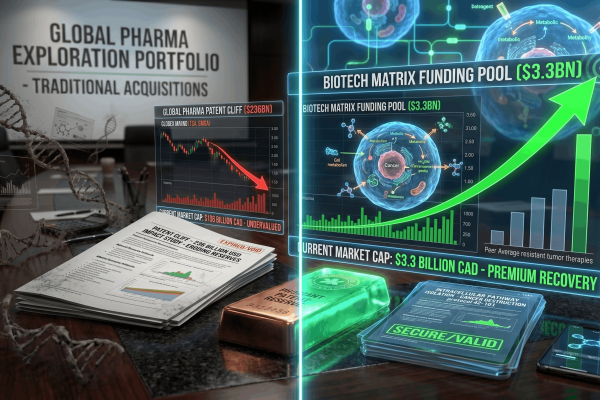
There is, without exaggeration, a looming "patent cliff" of enormous scale: an estimated USD 236 billion in annual revenue losses are forcing the biopharmaceutical industry to find new paths forward. Pharma giants must replace dwindling blockbuster revenues by strategically acquiring innovative oncology platforms, as conventional cancer therapies are increasingly reaching their limits. This innovation pressure is triggering a consolidation wave in which research-driven biotech companies with protected mechanisms of action are moving into the center of potential takeover activity. In particular, intracellular and metabolic treatment approaches are rapidly gaining importance in the fight against treatment-resistant cancers. We take a look at Revolution Medicines' successes and identify the next potential high-flyer.
Read

Commented by Stefan Feulner on June 15th, 2026 | 07:40 CEST
Nurix, BioNxt Solutions, Zealand Pharma: New Therapies Ignite the Imagination
The biotech sector is currently experiencing tremendous momentum. Therapies for obesity, diabetes, autoimmune diseases, and neurological conditions, in particular, rank among the largest growth markets in the healthcare industry. The booming GLP-1 market for weight loss and metabolic disorders alone is expected to reach a volume of tens of billions of USD in the coming years. At the same time, new classes of active ingredients and innovative delivery technologies are providing fresh momentum. Investors find themselves in an environment where clinical advances and technological innovations can trigger significant increases in value.
Read
Commented by Tarik Dede on June 11th, 2026 | 07:05 CEST
Wave of Biotech Acquisitions: Eli Lilly, Vidac Pharma, and GSK in the Spotlight
Cancer remains one of humanity's greatest scourges, and at the same time, it is by far the largest healthcare market of all. But the old-school pharmaceutical giants are running out of oncology pipeline candidates, and now smaller, far more innovative players are increasingly being acquired. The M&A market is currently experiencing extremely dynamic times. This week, for example, GSK announced the acquisition of Nuvalent for USD 10.6 billion in cash. Gilead Sciences, in turn, struck a deal in April with the German company Tubulis—for a total of USD 5 billion. Shortly thereafter, Eli Lilly offered up to USD 7 billion for Kelonia Therapeutics, just to name a few of this year's deals. That is why we are taking a look at the opportunities in the sector today and putting the stocks of Eli Lilly, Vidac Pharma, and GSK under the microscope!
Read

Commented by Armin Schulz on June 3rd, 2026 | 07:25 CEST
Opportunities in the Oncology Market: Positioning for the Next Billion-Dollar Catalyst with BioNTech, Vidac Pharma, and Pfizer
An aging population is driving rapid increases in healthcare spending. A trillion-dollar market is emerging in the cancer sector, as over 30 million new cases are expected annually by 2040. As traditional chemotherapy approaches its limits, new technologies and ideas are needed. Those who set the course today can benefit from this transformation, even if not every approach will succeed. The key question remains: which companies possess the key technologies to benefit from this boom? Three players are coming into particular focus: BioNTech with its mRNA platform, Vidac Pharma with a patented metabolic approach, and Pfizer with its multi-billion-dollar acquisitions.
Read

Commented by Fabian Lorenz on May 26th, 2026 | 07:30 CEST
Caution with BioNTech! Novo Nordisk Accelerates! Buying Opportunity in Vidac Pharma Stock?
Investor sentiment around Novo Nordisk is improving. Shares of the Danish pharmaceutical giant appear to be breaking out of the downtrend that began in the summer of 2024, with investors responding positively to recent developments. At Vidac Pharma, the latest announcement seems to have gone largely unnoticed. Yet it could mark the beginning of interest from strategic investors. There is even speculation about a potential full takeover of the oncology specialist. With a market capitalization of only around EUR 33 million, any acquisition would likely require a substantial premium. While investors may be knocking on Vidac's door, sentiment toward BioNTech has deteriorated. The company's founding couple is stepping down, and locations are being closed. And now analysts are also questioning the quality of the company's product pipeline.
Read
Commented by Nico Popp on May 14th, 2026 | 07:50 CEST
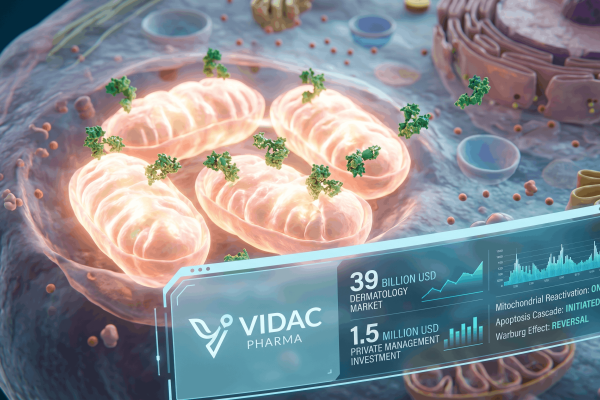
Checkmate for Cancer: What Eli Lilly and Bayer Can Learn from Vidac Pharma
Modern medicine is on the cusp of groundbreaking innovations in which the regulation of cellular energy metabolism, known as metabolic correction, is becoming a decisive strategy. While traditional cancer research has relied primarily on the destruction of cells using toxic agents for decades, researchers now recognize that the key to success may lie in the precise control of enzymatic processes. In light of this, value creation is shifting away from the conventional "sledgehammer approach" toward correcting cellular dysregulation. We highlight three exciting companies and focus in particular on metabolism pioneer Vidac Pharma.
Read

Commented by Armin Schulz on April 30th, 2026 | 07:00 CEST
Weight-Loss Injections, Cancer Cell Inhibitors & the Power of Algorithms: Adding Potential to Your Portfolio with Novo Nordisk, Vidac Pharma, and Evotec
The healthcare market faces a paradoxical scenario in 2026. Public health funds are groaning under record spending, while groundbreaking technologies are redefining medicine. AI-driven drug discovery and personalized therapies promise efficiency gains, but regulatory hurdles and price wars are causing stock prices to fluctuate. In this complex landscape, the wheat is being separated from the chaff. Three distinct biotech strategies could now provide the decisive edge. Novo Nordisk dominates the mass market for metabolic diseases, Vidac Pharma is tackling cancer in novel ways, and Evotec is digitizing the entire drug discovery process.
Read