
AI

Commented by Carsten Mainitz on September 11th, 2026 | 08:25 CEST
Knowledge Becomes Currency! Opportunities for Aspermont, Palantir and Rio Tinto?
Knowledge is power. And those who can sell it at scale can turn it into a lucrative business model. That is precisely what the long-established mining publisher Aspermont is pursuing. The Australian company is using artificial intelligence to transform its nearly 200 years of expertise in the global commodities industry into high-quality data products. The potential for scaling is enormous. Mining giant Rio Tinto is already on board as a client, which can be seen as a major vote of confidence. Palantir, in a different area, demonstrates just how strong demand for data-driven decision-making is becoming and how profitable scalable digital business models can be. What specific opportunities are available to investors?
Read
Commented by Stefan Feulner on September 11th, 2026 | 07:55 CEST
Ivanhoe Mines, Power Metallic Mines, Rio Tinto: Commodity Giants on the Offensive
Copper is more expensive than ever before. On the LME, the price temporarily climbed to over USD 14,600 per metric tonne. At the same time, demand is growing due to power grids, data centres, electric mobility, and defence spending, while new mines take years to reach production. The industry's response to the current situation is clear. Major mining companies are securing additional deposits, while exploration companies are seeking to define the mines of tomorrow through new resource discoveries.
Read
Commented by André Will-Laudien on September 10th, 2026 | 09:40 CEST
AI: The Game-Changer for Industry - VW, Strategic Resources, BYD and NIO in Focus
The next major upheaval is here! Industry is facing a radical transformation as artificial intelligence disrupts established market structures at record speed. Industrial companies and service providers alike must adapt now to avoid falling behind in global competition. In this context, the long-established German manufacturer VW is under immense pressure to accelerate its digitalization efforts and finally resolve its software issues. The electric mobility market, long driven by highly sophisticated algorithms, is proving particularly dynamic. The Chinese giant BYD is impressively showing how vertical integration and smart manufacturing can drive unprecedented market share. But premium competitor NIO is not resting on its laurels either and is setting new standards in vehicle connectivity and autonomous driving systems. Furthermore, innovative players in the raw materials sector, such as Strategic Resources, are coming into focus as they aim to play a decisive role in the AI-driven value chain. The spectrum ranges from traditional industry through digital disruption to the procurement sector—a compelling area of activity for dynamic investors.
Read
Commented by André Will-Laudien on September 10th, 2026 | 09:30 CEST
Gas Crisis This Winter? NU E Power, E.ON, Nordex and Siemens Energy in Focus
Created and Published on Behalf of NU E Power Corp.
A key question raised yesterday during the 2027 Bundestag budget debate: Is Europe facing a gas crisis this coming winter? Brussels appears to be backtracking significantly and is looking for suppliers, while the goal is to avoid artificially driving up prices. One thing is clear: European energy policy and commodity markets are currently high on the EU's agenda. Following the extreme turbulence of recent years, Europe once again faces the challenge of filling national gas storage facilities fully and in a timely manner to prevent shortages during the cold season. As a result, the ongoing uncertainty surrounding fossil fuel supplies is shifting the strategic focus ever more rapidly toward climate-neutral alternatives. Against this backdrop, established energy companies and innovative industry pioneers are playing an increasingly important role in the transformation of the energy sector. Industry giant E.ON is demonstrating its fundamental strength as an indispensable operator of critical energy infrastructure, while the businesses of wind and turbine specialists Siemens Energy and Nordex are also developing very well. In Canada, NU E Power is pursuing forward-looking concepts that could contribute to the evolving energy landscape. The following analysis takes a closer look at the developments shaping the sector.
Read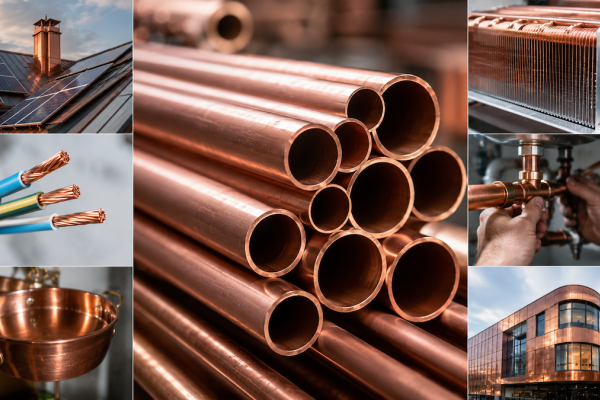
Commented by Fabian Lorenz on September 10th, 2026 | 08:05 CEST
Nebius Sends Shockwaves! Buy or Sell Siemens Energy? Power Metallic Mines with Top News
Power Metallic Mines could offer an interesting buying opportunity following the recent "sell on good news" reaction. After a 50% rally, profit-taking recently pushed the copper stock down from CAD 1.50 to 1.30. The reason? The resource update for the promising polymetallic exploration project has delivered convincing results. Based on the analysts' price target, the stock has more than 100% upside potential. Nebius also had a major development recently. The company is becoming the preferred infrastructure partner for Palantir's sovereign AI solutions. The AI stock is back in rally mode. And what about Siemens Energy? The stock has been trading sideways for some time now. Analysts are also divided over where it is headed next, with price targets ranging from EUR 100 to EUR 245. So, should you buy or sell?
Read
Commented by Tarik Dede on September 9th, 2026 | 07:20 CEST
Comeback, Orders, Monopolies: Rheinmetall, Almonty Industries and Micron Technology in Focus
The summer was highly volatile and eventful for the stock markets. War, oil prices, the dollar, interest rates, and extreme moves in chip stocks drove share prices and generated plenty of headlines despite the summer lull. The fact is, however, that the real trading season is only getting underway now. With Labor Day on Monday in North America, the unofficial summer break is effectively over. Many investors have returned to their screens and are likely looking for attractive stocks. Trading volumes should therefore pick up significantly across the markets. The extreme price swings have created opportunities. Some of the most promising opportunities are likely to be found primarily in AI, defence, and commodities. That is why today we are taking a look at the stocks of Rheinmetall, Almonty Industries, and Micron Technology.
Read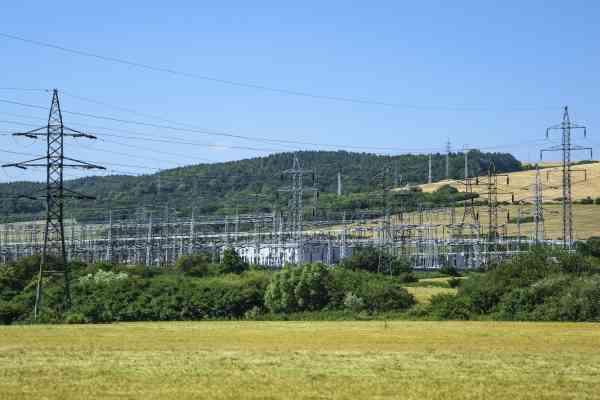
Commented by Stefan Bode on September 9th, 2026 | 06:50 CEST
Three Stock Market Stories at the Intersection of AI, the Power Boom and Margin Recovery – Infineon, Nordex and RE Royalties
When capital flows into AI, power infrastructure, and the energy transition, the most exciting stock market opportunities often emerge at the intersection of prevailing trends and actual valuations. This is where robust order books, new revenue models, and rising margins meet already-high investor expectations. The following commentary highlights the opportunities arising from this mix, where the numbers are already convincing—and where the market still demands proof of a sustainable revaluation.
Read
Commented by Armin Schulz on September 7th, 2026 | 08:00 CEST
Siemens, First Hydrogen and SpaceX Aim to Profit from the USD 200 Billion Tech Supercycle Driven by AI, Robotics and Space
We are heading into a new economic era shaped by three interconnected megatrends: artificial intelligence, robotics and the exploration of space. While AI provides the cognitive framework, robotics translates this intelligence into physical actions, and space is emerging as the ultimate source of raw materials, energy and data bandwidth. Together, these technologies will not merely automate processes; they will shape the industries of tomorrow. Analysts estimate that investment in this AI-driven hardware offensive could reach up to USD 200 billion. As an investor, you cannot afford to miss this trend. We therefore take a closer look at the strategies of Siemens, First Hydrogen and SpaceX.
Read
Commented by Lars Winter on September 4th, 2026 | 07:40 CEST
Data, Chips and the Big AI Business: Aspermont, Broadcom and Hewlett Packard in our Stock Check
Artificial intelligence is about more than the race to develop the fastest processor. High-quality data, networks and servers are equally important. Broadcom and Hewlett Packard Enterprise are already generating billions from the expansion of AI infrastructure. Australian micro-cap Aspermont, by contrast, is only at the beginning of its transformation—with correspondingly significant opportunities and risks. We take a closer look at these three interesting stocks in our stock check.
Read
Commented by Stefan Feulner on September 4th, 2026 | 07:20 CEST
Cerebras, Volatus Aerospace, Standard Lithium: 3 Markets Poised for a Breakthrough
The next wave of investment is well underway. Billions are flowing into new AI data centres, Western nations are securing critical raw materials, and companies are increasingly automating tasks that previously had to be carried out by people, aeroplanes or helicopters. For investors, this creates opportunities that extend far beyond the well-known technology giants. Of particular interest are companies that provide the infrastructure for this development.
Read