July 17th, 2026 | 09:05 CEST
Siemens Energy, HPQ Silicon, BYD: A Clear Course Set
The race for the technologies of the future is rapidly gaining momentum. Artificial intelligence, electric mobility, energy storage, and the global expansion of power grids are triggering a wave of investments worth billions. At the same time, innovative battery materials, hydrogen solutions, and modern energy technology are becoming increasingly important. Companies that develop these key technologies or benefit from the rising demand could secure a strong market position early on and emerge as major winners of the global transformation in the long term.
time to read: 4 minutes
|
Author:
Stefan Feulner
ISIN:
HPQ SILICON INC | CA40444L1031 | TSXV: HPQ , OTCQB: HPQFF , SIEMENS ENERGY AG NA O.N. | DE000ENER6Y0 , BYD CO. LTD H YC 1 | CNE100000296
Table of contents:
Author

Stefan Feulner
The native Franconian has more than 20 years of stock exchange experience and a broadly diversified network.
He is passionate about analyzing a wide variety of business models and investigating new trends.
Tag cloud
Shares cloud
Siemens Energy: Everything Under One Roof
The energy company Siemens Energy has previously operated in cooperation with its subsidiary Siemens Gamesa Renewable Energy. Now, changes are in store within the group. It is planning a comprehensive rebranding and will operate on the market as Omterra in the future. Under this new brand, the company's existing core business and its wind energy division will be consolidated. The phased implementation of this process will begin before the end of this year. The background to this is a fixed-term agreement for the use of the old brand, which was concluded following the company's spin-off from Siemens AG in 2020.
With the adoption of the new name, license fees payable to the former parent company will no longer apply. These expenses most recently amounted to 1.2% of revenue, corresponding to approximately EUR 300 million in the past fiscal year. The one-time expenses for the brand change, spread over several years, are expected to be significantly lower than the annual licensing costs. This step does not change the company's fundamental strategic direction.
On the financial market, the company's future development is currently viewed with mixed opinions. Barclays Bank is cautious in its assessment and cites a target price of EUR 130. Analysts justify this by assuming that business volume for gas turbines may have peaked.
Positive assessments, on the other hand, come from JPMorgan and Jefferies, which have set price targets of EUR 235 and EUR 215, respectively. JPMorgan also forecasts that the future elimination of licensing fees is likely to boost the group's profit margin sooner than previously expected. In the long term, the international expansion of energy grids is seen as a key growth factor. Additionally, the high electricity demand from new data centers in the field of artificial intelligence is driving sustained high demand for energy technology.
HPQ Silicon: New Push into Industry and Defence
HPQ Silicon is consistently driving its transition from a technology developer to an industrial company. Together with its French partner Novacium, the company is strengthening its sales and business development teams with experienced managers from the industrial and defence sectors. This is complemented by a strategic partnership with Offset Links, which is intended to facilitate access to international markets such as Australia and the MENA region. HPQ holds the exclusive marketing rights for Novacium technologies in North America, thereby laying the groundwork for more rapidly tapping into new industrial applications and potential major customers.
HPQ's business model is based on three future markets: silicon anode materials for higher-performance lithium-ion batteries, innovative processes for the production of fumed silica, and decentralized hydrogen systems. All three areas benefit from structural growth drivers such as electrification, artificial intelligence, rising energy demand, and the expansion of resilient supply chains. The "fumed silica" technology is now particularly advanced.
Following successful pilot trials, the company produced commercial-grade fumed silica directly from quartz. Independent validation, a letter of intent for a production facility with an annual capacity of 1,000 metric tonnes, and intensive discussions with potential industry partners mark the transition to the commercialization phase. At the same time, HPQ and its subsidiary, HPQ Silica Polvere, are exploring joint ventures, licensing models, royalty agreements, and in-house production capacity. PyroGenesis's planned investment in HPQ Silica Polvere further underscores confidence in the technology.
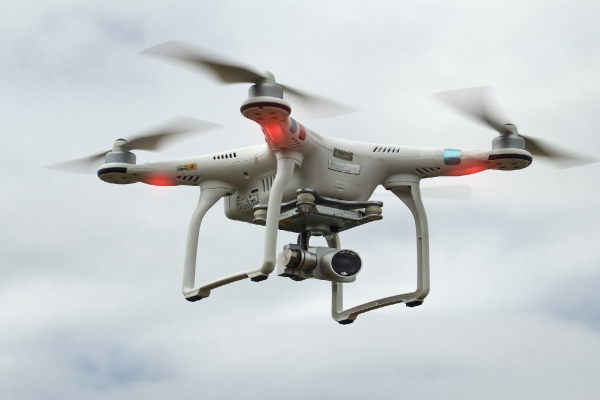
HPQ Silicon is also reporting progress in battery materials. In collaboration with Novacium, next-generation silicon anodes have been developed that enable significantly higher energy densities and are already attracting interest from the European drone and defence sectors. The portfolio is complemented by mobile hydrogen solutions based on METAGENE technology.
With several technologies on the verge of commercialization, growing industry interest, and a market capitalization of approximately EUR 45 million, HPQ Silicon has significant potential to benefit from the global megatrends in energy storage, defence, and decarbonization.
BYD: New Model, Refined Strategy
Chinese automaker BYD recently unveiled its new all-electric supercar, the Denza Z, which is seeing high demand. The company received over 1,000 reservations within the first five days following the unveiling. But what makes this vehicle so special? The vehicle is equipped with three electric motors that deliver more than 1,500 hp of system output and enable acceleration from zero to 100 km/h in just under two seconds. The price varies significantly depending on the market. In its home market of China, the model starts at about USD 100,000, while customers in the United Kingdom will have to invest about USD 192,000. Delivery of the first units is scheduled for late 2026.
In addition to this new product, the group is restructuring its international brand presence. In international markets, the existing "Dynasty" and "Ocean" model series will be marketed under the unified main brand BYD. Furthermore, management is consolidating the sales activities of the sub-brands "Denza" and "Fang Cheng Bao." The luxury brand "Yangwang" will remain independent. To achieve its export target of 1.5 million vehicles sold, the company is investing in its own infrastructure. By March 2027, 6,000 new fast-charging stations are to be built outside China, with 3,000 locations planned for Europe.
These strategic measures and strong product demand are also reflected in the company's valuation on the capital market. In a recent study, analysts at the investment bank CLSA expressed a positive outlook, forecasting a further increase in sales in the second half of 2026 and reaffirming the company's global market leadership.
The global expansion of energy, battery, and mobility infrastructure is creating long-term winners. With its rebranding and booming grid business, Siemens Energy is setting the stage for higher margins. HPQ Silicon is on the verge of commercializing several key technologies and could benefit from the megatrends of AI, defence, and energy storage. BYD is consistently expanding its global market position and reinforcing its leadership in electric mobility.
Conflict of interest
Pursuant to §85 of the German Securities Trading Act (WpHG), we point out that Apaton Finance GmbH as well as partners, authors or employees of Apaton Finance GmbH (hereinafter referred to as "Relevant Persons") may hold shares or other financial instruments of the aforementioned companies in the future or may bet on rising or falling prices and thus a conflict of interest may arise in the future. The Relevant Persons reserve the right to buy or sell shares or other financial instruments of the Company at any time (hereinafter each a "Transaction"). Transactions may, under certain circumstances, influence the respective price of the shares or other financial instruments of the Company.
In addition, Apaton Finance GmbH is active in the context of the preparation and publication of the reporting in paid contractual relationships.
For this reason, there is a concrete conflict of interest.
The above information on existing conflicts of interest applies to all types and forms of publication used by Apaton Finance GmbH for publications on companies.
Risk notice
Apaton Finance GmbH offers editors, agencies and companies the opportunity to publish commentaries, interviews, summaries, news and the like on news.financial. These contents are exclusively for the information of the readers and do not represent any call to action or recommendations, neither explicitly nor implicitly they are to be understood as an assurance of possible price developments. The contents do not replace individual expert investment advice and do not constitute an offer to sell the discussed share(s) or other financial instruments, nor an invitation to buy or sell such.
The content is expressly not a financial analysis, but a journalistic or advertising text. Readers or users who make investment decisions or carry out transactions on the basis of the information provided here do so entirely at their own risk. No contractual relationship is established between Apaton Finance GmbH and its readers or the users of its offers, as our information only refers to the company and not to the investment decision of the reader or user.
The acquisition of financial instruments involves high risks, which can lead to the total loss of the invested capital. The information published by Apaton Finance GmbH and its authors is based on careful research. Nevertheless, no liability is assumed for financial losses or a content-related guarantee for the topicality, correctness, appropriateness and completeness of the content provided here. Please also note our Terms of use.