December 23rd, 2025 | 08:50 CET
Money printing presses unveiled in 2026! Where to invest now? TUI, RE Royalties, Lufthansa, and Airbus
In an inflationary environment, investors are looking for stability. What could be better suited than equity investments that pay high dividends and also follow sustainable principles? RE Royalties operates a successful business model that combines both ideas. The travel industry has also been trying to reduce its carbon footprint for years. How far have efforts to bring about a fundamental change come? TUI, Lufthansa, and Airbus showed decent returns in 2025. But what does the future hold?
time to read: 5 minutes | Author: André Will-Laudien
ISIN: TUI AG NA O.N. | DE000TUAG505 , RE ROYALTIES LTD | CA75527Q1081 , LUFTHANSA AG VNA O.N. | DE0008232125 , AIRBUS SE /UNSP.ADRS | US0092791005
Table of contents:
Author

André Will-Laudien
Born in Munich, he first studied economics and graduated in business administration at the Ludwig-Maximilians-University in 1995. As he was involved with the stock market at a very early stage, he now has more than 30 years of experience in the capital markets.
Tag cloud
Shares cloud
RE Royalties – Invest with foresight and strong dividends
Sustainable investments are gaining importance not only for ethical reasons, but also from an economic perspective. This is because companies that meet clearly defined impact criteria often have advantages in terms of access to financing, enjoy a higher reputation on the capital market, and retain investors over more extended periods of time. Market studies also show that sustainable business models manage risks better and are more resilient to economic and geopolitical upheavals. Impact investing thus combines financial stability with social added value, making it a meaningful component of modern capital markets.
**RE Royalties operates in this environment with its clearly focused business approach. The Company operates in a dynamically growing market for sustainable financing, in which renewable energy is increasingly becoming the focus of institutional investment strategies. RE Royalties has transferred a royalty and licensing concept familiar from traditional commodity financing to the renewable energy sector and finances projects in the solar, wind, hydropower, and energy storage segments. Instead of operating plants itself, the Company provides project-related, non-dilutive capital and receives long-term contractually secured revenue shares in return. This results in predictable revenue streams and a broadly diversified investment portfolio with more than 100 commitments to date.
Operationally, the growth strategy is already having a significant impact: letters of intent with a total volume of around CAD 50 million for new projects in North America and the Maldives underscore the expansion course that has been set. The project pipeline includes high-quality projects in the areas of renewable generation, storage solutions, and decentralized energy supply, which further broadens the earnings base.
In addition, the restructuring of an existing loan to Powerbank for CAD 3 million, including improved interest rates and a supplementary royalty structure, demonstrates the Company's negotiating skills and the long-term orientation of its partnerships.
The almost complete repayment of the Series 1 green bonds issued five years ago is also of strategic importance. The underlying green bond framework has been awarded the highest "dark green" category by S&P Global Ratings, meeting particularly stringent ESG requirements. On the environmental side, the financed projects make a demonstrable contribution to reducing emissions and the global energy transition. In the area of governance, the appointment of Alexa Blain to the Board of Directors strengthens expertise in the fields of impact investing, climate finance, and institutional capital allocation. The combination of growing deal flow, active business development, and consistent risk management underscores the Company's commitment to sustainably scaling recurring cash flows while ensuring the stability of the portfolio. The distribution policy also remains relevant for income-oriented investors. In January, RE Royalties will pay a dividend of CAD 0.01, while the Company will switch its dividend structure to an annual payout in the future.
CEO Bernard Tan explains his business strategy in an interview with Lyndsay Malchuk.
TUI - Sustainable travel is increasingly in demand
With the arrival of Sebastian Ebel in October 2022, TUI has modernized its ESG strategy and placed it on a sustainable footing. Under his leadership, sustainability is no longer a "nice-to-have" but an integral part of the Company's DNA, firmly anchored in its strategy, operational measures, and performance targets, both in the environmental and social and governance areas. With its "People, Planet, Progress" agenda, the
Company is pursuing specific measurable goals, including a reduction in CO₂ emissions of around 24% in the flight segment, 46% in the hotel business, and 27% in the cruise segment by 2030 compared to the base year 2019. These climate targets have been validated by the Science Based Targets Initiative (SBTi), thus creating a scientifically sound basis.
Under Ebel, TUI is driving forward the use of alternative fuels and already uses photovoltaic systems in hotels in more than 19 countries to generate its own electricity. In addition, efficiency measures such as modern energy concepts, e-mobility, and sustainable cooling and waste solutions are being implemented. ESG is also firmly anchored at the governance level, as sustainability indicators are part of the variable remuneration of the Executive Board. Overall, Ebel pursues a data-based, long-term ESG approach that combines environmental impact, financial stability, and social responsibility. In 2025, TUI shares successfully broke out of the sub-EUR 6 range and, despite a large capital increase, once again exceeded the EUR 9 mark. On average, 11 out of 15 analysts on the LSEG platform can imagine a 12-month development to EUR 11.15. That is a good 25% potential for the coming year!
Lufthansa and Airbus – New aircraft save over 30% in resources
Lufthansa and Airbus are also working closely together to achieve measurable environmental benefits through modern aircraft technology. A key lever is fleet renewal, with Lufthansa increasingly focusing on fuel-efficient models such as the A320neo and A350. These consume up to 25% less fuel, thereby measurably reducing CO₂ emissions. Airbus is contributing to this with lightweight composite materials, improved engines, and optimized aerodynamics. The focus is on reducing energy consumption per seat-kilometre. Another lever is the use of digital flight and maintenance systems to optimize routes and make maintenance intervals more efficient. Both companies are also investing in the use of sustainable aviation fuels (SAF), which, depending on the blend, can reduce CO₂ emissions by up to 80% over the life cycle. At the same time, Airbus is researching disruptive future technologies such as hydrogen-based propulsion systems, while Lufthansa is strategically supporting and preparing for these developments. Both stocks could outperform the DAX by between 12% and 15% in 2025. According to experts at LSEG, Airbus will reach the EUR 226 mark in 2026, while Lufthansa is expected to remain stuck at around EUR 8. Let's see if things turn out differently.
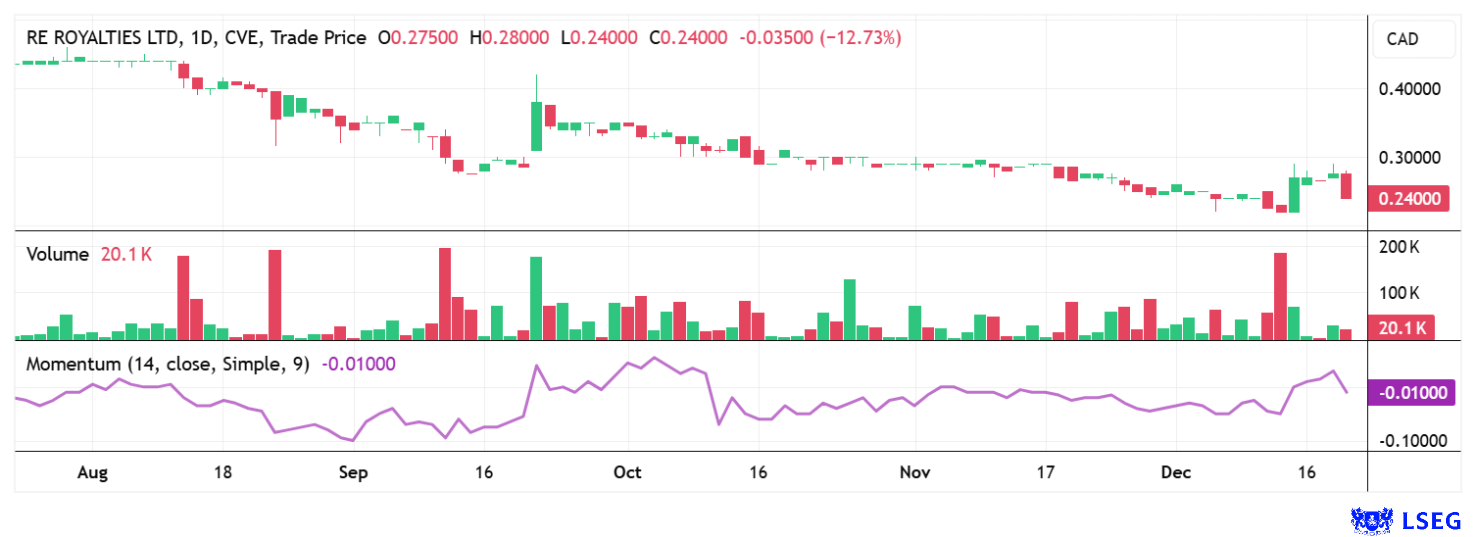
Companies must act responsibly today! RE Royalties is a prime example of a modern impact investment that combines consistent ESG alignment with structural growth in the renewable energy sector. At the same time, a look at established stocks such as TUI, Lufthansa, and Airbus shows that even large industrial and service companies have long been using ESG as a strategic value driver and combining economic recovery with sustainability. While these corporations are gradually transforming their business models, RE Royalties is addressing the sustainability trend directly at the source of financing for the energy transition.
Conflict of interest
Pursuant to §85 of the German Securities Trading Act (WpHG), we point out that Apaton Finance GmbH as well as partners, authors or employees of Apaton Finance GmbH (hereinafter referred to as "Relevant Persons") currently hold or hold shares or other financial instruments of the aforementioned companies and speculate on their price developments. In this respect, they intend to sell or acquire shares or other financial instruments of the companies (hereinafter each referred to as a "Transaction"). Transactions may thereby influence the respective price of the shares or other financial instruments of the Company.
In this respect, there is a concrete conflict of interest in the reporting on the companies.
In addition, Apaton Finance GmbH is active in the context of the preparation and publication of the reporting in paid contractual relationships.
For this reason, there is also a concrete conflict of interest.
The above information on existing conflicts of interest applies to all types and forms of publication used by Apaton Finance GmbH for publications on companies.
Risk notice
Apaton Finance GmbH offers editors, agencies and companies the opportunity to publish commentaries, interviews, summaries, news and the like on news.financial. These contents are exclusively for the information of the readers and do not represent any call to action or recommendations, neither explicitly nor implicitly they are to be understood as an assurance of possible price developments. The contents do not replace individual expert investment advice and do not constitute an offer to sell the discussed share(s) or other financial instruments, nor an invitation to buy or sell such.
The content is expressly not a financial analysis, but a journalistic or advertising text. Readers or users who make investment decisions or carry out transactions on the basis of the information provided here do so entirely at their own risk. No contractual relationship is established between Apaton Finance GmbH and its readers or the users of its offers, as our information only refers to the company and not to the investment decision of the reader or user.
The acquisition of financial instruments involves high risks, which can lead to the total loss of the invested capital. The information published by Apaton Finance GmbH and its authors is based on careful research. Nevertheless, no liability is assumed for financial losses or a content-related guarantee for the topicality, correctness, appropriateness and completeness of the content provided here. Please also note our Terms of use.