November 20th, 2026 | 05:55 CET
Invest now, cash in later: Deutsche Telekom, RE Royalties and Fresenius on a growth trajectory
In turbulent stock markets, investors seek stability. Dividend stocks are often seen as a rock in a storm: the payout provides a sense of security, regardless of what the share price is doing. But even a rock can develop cracks. Even a long-standing dividend aristocrat like Fresenius had to suspend its dividend once in recent years – and emerged stronger as a result. Sometimes, voluntarily forgoing a payout is the better choice. Deutsche Telekom cut its dividend to invest in growth, thereby jolting its share price out of its lethargy. RE Royalties is now taking a similar approach.
time to read: 5 minutes | Author: Jens Castner
ISIN: RE Royalties Ltd | CA75527Q1081 , DT.TELEKOM AG NA | DE0005557508 , DE0005785604
Table of contents:
Author
Jens Castner
The Nuremberg native brings over three decades of capital markets experience, backed by a career shaped by deep market insight and a genuine passion for investing. His journey began in 1994 through an investment club among colleagues – a formative experience that sparked a lifelong dedication to identifying compelling investment opportunities.
Following senior editorial roles at Nürnberger Nachrichten, €uro am Sonntag, and €uro, he went on to serve as Editor-in-Chief of the renowned investor magazine Börse Online from 2014, where he played a key role in shaping high-quality financial journalism for a broad investor audience.
Tag cloud
Shares cloud
Fresenius: Even aristocrats can stumble
No German company has reliably raised dividends for as long as Fresenius. For 29 consecutive years, the Bad Homburg-based healthcare group increased its payout and was thus regarded as the only dividend aristocrat in the DAX. This is the term for companies that raise their dividend for at least 25 consecutive years. But after the pandemic years, profit warnings from dialysis subsidiary Fresenius Medical Care and expensive acquisitions weighed heavily on the group. For 2022, the dividend remained unchanged for the first time; for 2023, the management board scrapped it entirely. The trigger was state energy aid for the Helios hospitals, which entailed a ban on distributions.
Management made a virtue of necessity. Together with the aid payments, the suspension was intended to noticeably reduce leverage. Under CEO Michael Sen, a radical restructuring followed, with a clear focus on the pharmaceuticals division Kabi and the hospitals. "It is now around EUR 3 billion less", Sen summed up at the 2026 annual general meeting, referring to the debt.
Shareholders had to wait only one year for the payout to return. For 2024, there was once again EUR 1.00 per share, followed by EUR 1.05 for 2025. The share price has roughly doubled since its 2023 low and currently stands at around EUR 53. Based on the payout of EUR 1.18 expected by analysts for this year, the yield is admittedly only just over 2% – a consequence of the sharp rise in the share price. In return, the dividend now rests on a significantly more solid foundation.
Deutsche Telekom: A wake-up call through a cut
At Fresenius, the suspension was forced; at Telekom, it was deliberate. Shareholders had been spoilt in the early 2010s. For the 2010 to 2012 financial years, the management board had pledged a minimum dividend of EUR 0.70 per share. At times, the yield exceeded 6%. But the high payout tied up money needed for network expansion in Germany and growth in the US. In December 2012, then CEO René Obermann set a new course: for 2013 and 2014, the payout would be just EUR 0.50.
Many investors felt snubbed. In retrospect, however, the move was a breakthrough. The freed-up capital went into faster connections and the merger of T-Mobile US with its competitor MetroPCS. The US subsidiary developed into the group's growth engine. Telekom shares left their years of sideways trading behind and have since delivered substantial capital gains for their holders.
Dividend hunters are now getting their money's worth again too. For the 2025 financial year, there was EUR 1.00 per share, more than ever before. For 2026, management has already indicated EUR 1.10. "In a world where so much can no longer be relied upon, reliability makes a real difference", said current CEO Tim Höttges at the annual general meeting. At a share price of around EUR 26, the announced payout equates to a yield of more than 4%.
RE Royalties: Following in Telekom's footsteps
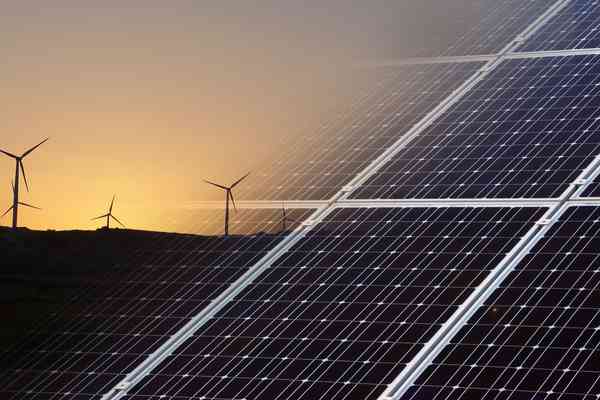
Pay out less, but grow more strongly: RE Royalties may also be following this path charted by Telekom. The Canadian company's business model originates in the commodities sector. Instead of building its own solar or wind farms, the company provides capital to smaller developers. In return, a share of the facilities' revenues flows to Vancouver, a so-called royalty (licence fee). The portfolio now comprises more than 100 such interests in solar, wind, hydropower, biogas and storage projects in North and South America as well as Asia. In the video with IIF presenter Lyndsay Malchuk, CEO Bernard Tan explains the appeal of the business model:
A biogas project in Wisconsin shows how the model continues to generate returns. The operator has repaid a USD 4.6 million loan in full. Nevertheless, RE Royalties is still entitled to annual payments of USD 184,000 for another 10 years. The returned capital can be put to work again. Royalty revenues alone rose from CAD 0.62 million to CAD 0.88 million in the first half. The partnership with US company Solaris Energy shows the intended direction of travel. So far, USD 4.8 million has flowed into 16 decentralised solar installations. A non-binding letter of intent (LOI) from the summer envisages financing of up to USD 67.5 million.
From paymaster to growth stock?
For a long time, the stock was particularly popular with dividend hunters. For many years, it paid CAD 0.01 per share each quarter. At the current share price of CAD 0.26 (EUR 0.15 to EUR 0.17 on German trading venues), that equates to a yield of over 15%. In December 2025, however, the board of directors switched to annual payouts. The reason: greater financial flexibility for the growing number of projects in the pipeline. The most recent dividend of CAD 0.01 was paid in January. The stock market reacted with disappointment, as many investors interpreted the new policy as a disguised cut.
However, this is by no means a done deal. The board of directors is expected to decide on the size of the next payout in December. And even if the payment were smaller, it would not be a disaster. The money would remain in the company – at a time when it is needed for new projects and refinancing. A dividend of just CAD 0.01 would equate to a yield of around 3.8%, while CAD 0.02 would mean just under 7.7%. However, a growth stock appeals to a different group of investors than a reliable dividend payer. This likely explains some of the current share price weakness. For professional and high-net-worth investors, there is also a high-yielding alternative to the shares: a green bond paying 7.5% interest per year. Ordinary retail investors are, however, excluded from this placement.
Future projects at half price
Further upside potential is offered by the strategic review that the board of directors launched in March with consultancy PwC. It ranges from partnerships and new financing to the sale of the entire company. Management reports talks with interested parties. No wonder, as RE Royalties would be a bargain for investment firms with substantial financial resources. The market capitalisation of just over CAD 11 million represents only a fraction of the more than CAD 86 million invested in royalty projects since the company was founded. A buyer would, however, also have to assume around CAD 35 million in bond debt. Nevertheless, the company's value is roughly twice what the current share price suggests.
Conflict of interest
Pursuant to §85 of the German Securities Trading Act (WpHG), we point out that Apaton Finance GmbH as well as partners, authors or employees of Apaton Finance GmbH (hereinafter referred to as "Relevant Persons") may hold shares or other financial instruments of the aforementioned companies in the future or may bet on rising or falling prices and thus a conflict of interest may arise in the future. The Relevant Persons reserve the right to buy or sell shares or other financial instruments of the Company at any time (hereinafter each a "Transaction"). Transactions may, under certain circumstances, influence the respective price of the shares or other financial instruments of the Company.
In addition, Apaton Finance GmbH is active in the context of the preparation and publication of the reporting in paid contractual relationships.
For this reason, there is a concrete conflict of interest.
The above information on existing conflicts of interest applies to all types and forms of publication used by Apaton Finance GmbH for publications on companies.
Risk notice
Apaton Finance GmbH offers editors, agencies and companies the opportunity to publish commentaries, interviews, summaries, news and the like on news.financial. These contents are exclusively for the information of the readers and do not represent any call to action or recommendations, neither explicitly nor implicitly they are to be understood as an assurance of possible price developments. The contents do not replace individual expert investment advice and do not constitute an offer to sell the discussed share(s) or other financial instruments, nor an invitation to buy or sell such.
The content is expressly not a financial analysis, but a journalistic or advertising text. Readers or users who make investment decisions or carry out transactions on the basis of the information provided here do so entirely at their own risk. No contractual relationship is established between Apaton Finance GmbH and its readers or the users of its offers, as our information only refers to the company and not to the investment decision of the reader or user.
The acquisition of financial instruments involves high risks, which can lead to the total loss of the invested capital. The information published by Apaton Finance GmbH and its authors is based on careful research. Nevertheless, no liability is assumed for financial losses or a content-related guarantee for the topicality, correctness, appropriateness and completeness of the content provided here. Please also note our Terms of use.